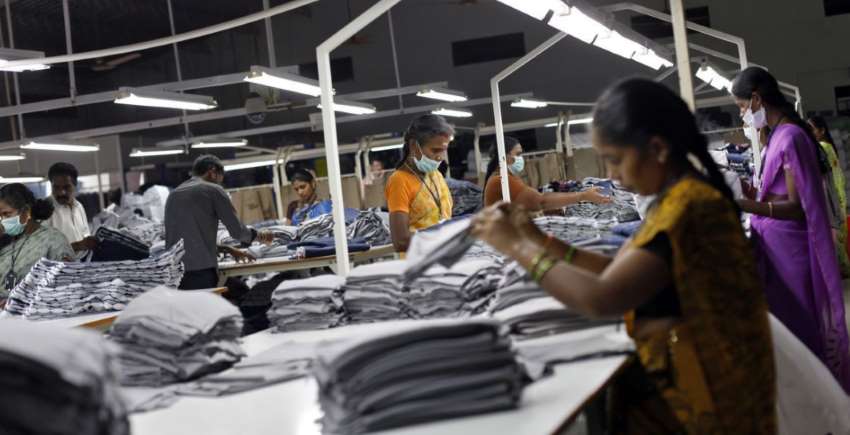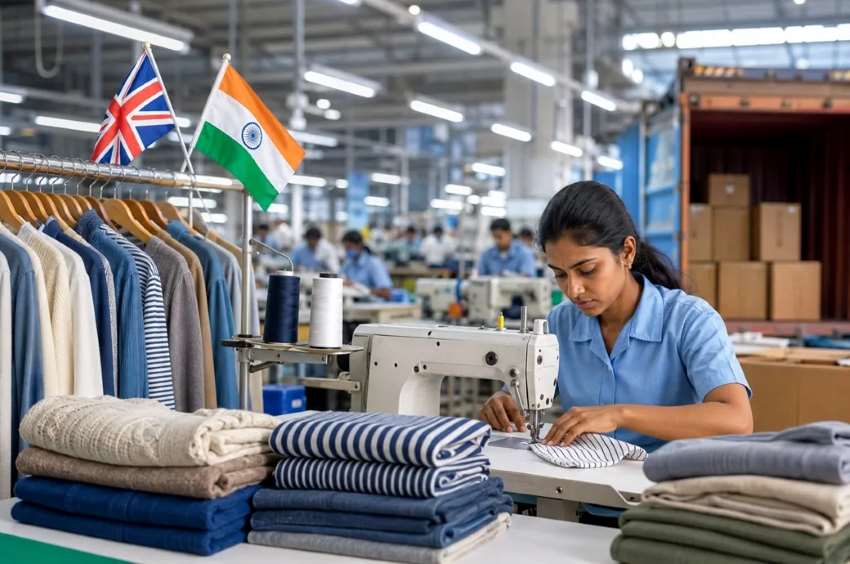
Today, competitive advantage is no longer determined solely by production speed or low-cost manufacturing in global fashion industry. Instead, regulatory intervention, customs reforms and sustainability mandates are becoming equally powerful forces shaping international retail. For nearly a decade, cross-border digital marketplaces showcased how data-driven manufacturing could outperform traditional fashion supply chains built around seasonal forecasting. Today, however, the removal of long-standing customs exemptions and growing environmental scrutiny are forcing these companies to rethink the economics that powered their rapid ascent. The result is a transformation where algorithms remain central to demand generation, but localized inventory, regional distribution networks and regulatory compliance are becoming equally critical.
Algorithms replace fashion forecasting
The disruption began with a reimagining of apparel production. Rather than committing to hundreds of thousands of garments months before consumers expressed interest, technology-led fashion platforms developed an operating model based on real-time demand signals. Consumer browsing behaviour, click-through rates and purchase patterns are translated into production decisions almost instantly.
Instead of manufacturing thousands of pieces upfront, new designs are initially produced in micro-batches of only 100 to 200 units. Successful products are rapidly replenished, while unsuccessful designs disappear before accumulating costly excess inventory. This asset-light model reduces markdowns and warehouse costs that have traditionally eroded profitability across legacy apparel retailers.
Its commercial success remains evident in online sales performance. According to Grips Intelligence, flagship platform shein.com generated monthly online revenues of approximately $869.4 million in May 2026, comfortably surpassing several established digital fashion competitors. Supporters argue that eliminating inventory inefficiencies allows retailers to transfer operational savings directly to consumers at a time when inflation continues to pressure household spending.
Sustainability pressure moves centre stage
Operational efficiency, however, has run into environmental policy issues. European regulators are challenging the environmental consequences of ultra-fast fashion, arguing that increasing consumption cycles generate excessive textile waste while overwhelming emerging circular economy systems. Data published by OurFashionFix, between 4 per cent and 9 per cent of textiles entering the European Union are destroyed before ever reaching consumers, revealing the scale of surplus production across the industry.
France has emerged as one of the strongest advocates for regulatory intervention. Beginning January 1, 2026, the country introduced legislation targeting ultra-fast fashion that includes a prohibition on influencer advertising and a mandatory €5 environmental surcharge per garment, scheduled to increase to €10 by 2030. Traditional apparel companies contend that ultra-low-priced synthetic garments undermine recycling economics because the materials often cost more to recover than their resale value, weakening investments in textile circularity. Rather than focusing solely on production emissions, regulators are targeting consumption patterns themselves.
De minimis ends, logistics become more expensive
The biggest commercial challenge, however, is emerging from customs policy. For years, low-value direct-to-consumer shipments benefited from generous de minimis exemptions that allowed parcels to enter major markets without import duties. That advantage enabled global digital retailers to ship individual orders directly from manufacturing centres while avoiding many costs faced by traditional importers.
That model is rapidly disappearing. On July 1, 2026, the European Union abolished its €150 de minimis customs exemption, replacing it with a temporary €3 customs duty per item classification on low-value imports.
Additional regulatory costs continue to accumulate. Rising international airfreight rates and a separate EU parcel handling fee of roughly €2 per shipment, expected later in 2026, further increase landed costs. For low-priced apparel, these combined expenses can increase checkout prices by 10-12 per cent, reducing margins and weakening one of cross-border retailers' strongest competitive advantages. According to Kavout, despite continued revenue expansion, net profits declined by approximately 40 per cent, falling to around $1 billion during the initial phase of logistics disruption. The industry's challenge is no longer attracting consumers it is preserving profits while dealing with expensive international fulfilment.
Financial reality reflects a shift
The industry's evolution can be seen in changing valuations, logistics strategies and operating structures.
Table: Comparative financial and operational track
|
Metric |
2022 Performance |
2024 Supply transition |
2026 regulatory inflection |
|
Estimated Market Valuation |
$100 bn |
$66 bn |
$40-50 bn |
|
Global Net Income (Est.) |
$1.2 bn |
$1.0 bn |
$1.8 bn |
|
Primary Logistics Channel |
Direct Point-to-Point Airfreight |
Hybrid Sea-Air Corridors |
Regional Distribution Centers |
|
EU Tariff Vulnerability |
0% (Full De Minimis Exemption) |
0% (Full De Minimis Exemption) |
€3 Flat Duty Per Item Line |
The table illustrates a broader migration away from direct international shipping toward regional inventory hubs that can reduce customs complexity and improve delivery economics. While profit is projected to recover, that improvement depends on infrastructure investment rather than simply expanding online demand.
Localisation becomes competitive advantage
The regulatory environment is also influencing corporate strategy. Following prolonged scrutiny in Western markets over supply-chain transparency and sourcing practices, the China Securities Regulatory Commission approved a Hong Kong stock market listing on July 10, 2026, with the public offering expected later this year at an estimated valuation of $40-50 billion.
The move is more than a capital-raising exercise. Researchers at the University of Delaware argue cross-border e-commerce is entering a phase where localized operations are becoming indispensable. Companies are increasingly expected to establish regional fulfilment centres, maintain onshore inventory and strengthen local supply partnerships to withstand trade barriers and evolving compliance requirements. This is a significant departure from the earlier model of shipping individual orders directly from Asian factories to Western consumers.
Next competitive frontier
Shein's journey encapsulates the industry's broader transformation. Founded in Nanjing in 2008 and now headquartered in Singapore, the company built one of the world's largest fashion marketplaces through technology-enabled micro-batch production and rapid product iteration. Yet the same business model now faces mounting regulatory scrutiny, higher logistics costs and changing customs frameworks.
The broader lesson extends well beyond one company. Fashion's next competitive advantage will not simply come from producing garments faster. It will depend on balancing algorithmic efficiency with resilient regional supply chains, regulatory compliance and sustainability expectations. As governments dismantle the tax and customs structures that enabled frictionless cross-border commerce, the industry is entering an era where localization not globalization alone will define retail leadership.