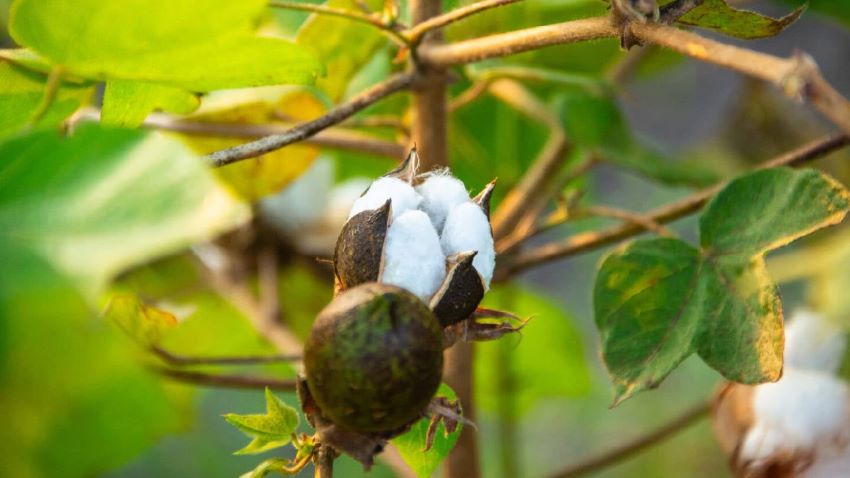
Cotton has traditionally been an important cash crop in Malawi. The crop is grown on about 30,000 hectares and supports about 1,20,000 small holder farmers, three ginning companies and three main input providers.
Because of a number of cotton development initiatives, the average yield has increased. The crop is often cultivated with maize and other drought-tolerant small grains.
Cotton production has declined largely because of mixing of different grades, limited grading by farmers and polypropylene contamination, declining productivity, low Ginning – Out – Turn etc. Recent years have also witnessed a decline in area under cotton cultivation due to a shift from cotton production to other crops because of reduced international prices and the inefficiencies in the sector.
Agriculture accounts for 33 per cent of GDP while manufacturing accounts for only 12 per cent. Nearly 22 per cent of the GDP comes from the distribution sector and is mainly accounted for by trading.
Under utilisation of ginning capacity is a matter of concern. The textile industry too has been declining. Until the 1990s there was an integrated cotton textile and garment chain in Malawi with inter-sector linkages. Since then the chain has in effect been broken.
Presently, the garment industry is small and is generally focused on low value garments suitable for the mass market and discount stores.
- 1
- 2
- 3
- 4
- 5
- 6
- 7
- 8
- 9
- 10
Cotton markets hold firm as tariffs, higher supply reshape global fiber economic…
In a year marked by tariff escalations, geopolitical brinkmanship and a recalibration of global trade flows, the international cotton market... Read more
Beyond Cotton How Kapok could redefine sustainable insulation in textiles
In the lush, humid heart of Southeast Asian rainforests stands a giant, a silent sentinel of the forest canopy. Growing... Read more
Bharat Tex 2026: Redefining the global textile value chain
Union Minister of Textiles, Giriraj Singh, has officially unveiled Bharat Tex 2026, signaling a significant leap in India’s influence over... Read more
Intertextile Shanghai Spring 2026: A hub for global textile innovation
The textile industry’s pulse is quickening as Intertextile Shanghai Apparel Fabrics – Spring Edition prepares to open its doors from... Read more
Moscow Fashion Week 2026: Blending sustainable innovation with timeless glamour
Scheduled to run from March 14-19, 2026 in Moscow, Russia, the Moscow Fashion Week (MFW) is cementing its status as... Read more
The Store as Stage: How fashion is crafting immersive consumer worlds
The North American fashion retail sector in 2026 is shedding its product-first identity and shifting towards a model that values... Read more
Turning the supply chain upside down, on-demand production reshapes apparel
The global fashion industry, long celebrated for its creativity and scale, is facing a structural reckoning. For decades, retailers and... Read more
Intertex Milano 2026 - A global nexus for textile innovation
Intertex Milano is set to return this summer, confirming its status as a premier international destination for the textile and... Read more
Primark at crossroads as AB Foods weighs spin-off amid digital and Lefties press…
The long-standing supremacy of Europe’s budget fashion champion, Primark, is facing a test. As of February 2026, Associated British Foods... Read more
Vietnam, Bangladesh, Cambodia drive US apparel imports in 2025
The 2025 year-end data for the US apparel sector reveals an industry in structural flux. Despite aggressive tariff measures and... Read more