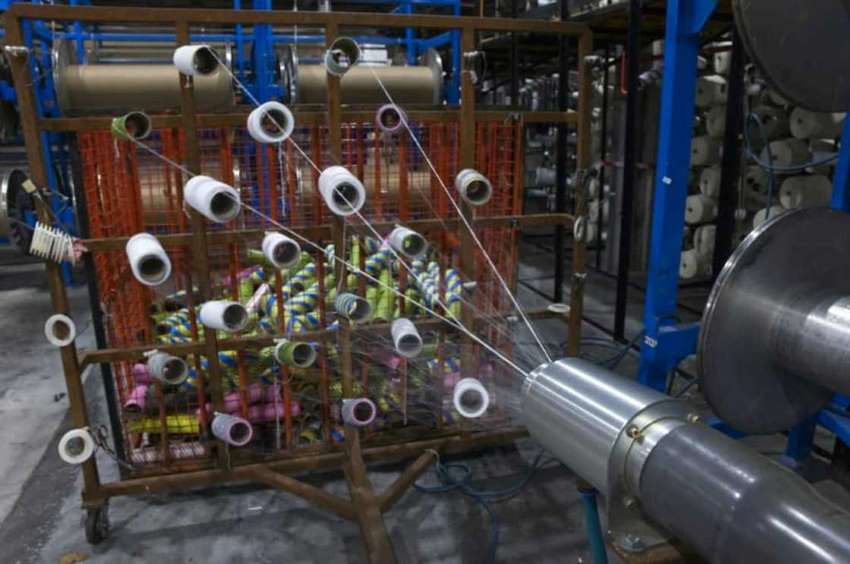
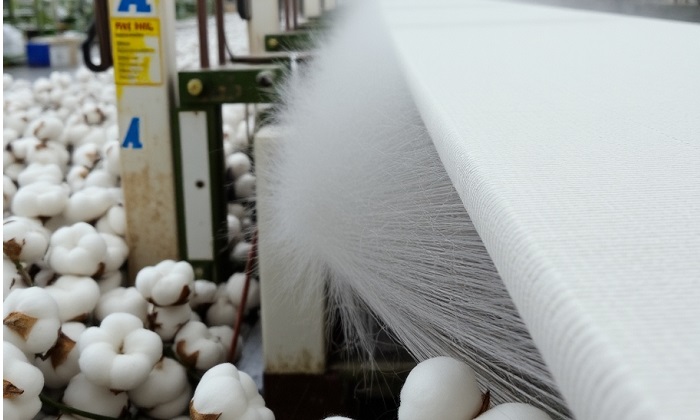
A group of knits unit owners, who use imported machinery in Tirupur knitwear cluster, will be launching a Special Purpose Vehicle (SPV) for product diversification from apparels to home textiles or value-added products and set up training and testing facilities through the consortium approach. The project is first of its kind in the Tirupur cluster. About 70 per cent of the initial capital will be drawn as grants-in-aid from different government sponsored schemes with an aim to produce the requisite skilled workforce and ensure business expansion.
Nearly 25 knitting units which use high-end imported machinery have joined the initiative. The training institute, planned under SPV project, will impart skills needed for workers in a scientific manner as well as train another set of people on maintenance and repair of the costly imported machines so as to bring down the cost and loss of time incurred due to break down of the appliances.
Once the scientifically trained workforce is ready, the industry would be able to diversify the product range from readymade garments to even home textiles and niche denim products as well as value-added sports and leisure wear through the knitting method.
The proposed testing laboratory is aimed at helping knitters carry out commercial batch-wise testing of fabrics and yarns for various properties at minimal service charges.
- 1
- 2
- 3
- 4
- 5
- 6
- 7
- 8
- 9
- 10
Zombie inventory and shrinking margins inside China’s fashion returns meltdown
China’s digital fashion market, long celebrated as the world’s most sophisticated test bed for e-commerce innovation, is facing a destabilising... Read more
Circularity by Design: How EU rules are turning data into fashion’s new currency
The European fashion sector has entered a compressed transition window. Two regulatory confirmations: the revised EU Textile Labelling Regulation (effective... Read more
The Lyst Reset: Chanel and Dior rewrite luxury’s power index
The global luxury hierarchy has been quietly rewritten, and not by sales alone. In Q1 2026, Chanel rose to the... Read more
Inventory, not expansion, defines winners in global apparel
The 2025 fiscal year has crystallised that revenue growth and operational health are no longer moving in tandem. In an... Read more
From growth-at-all-costs to cash discipline, the new economics of DTC fashion
The global direct-to-consumer apparel market is entering a correction phase, as fashion brands across the US, Europe and the UK... Read more
Britain’s Forgotten Growth Engine: Why policy gaps are undermining fashion and t…
Britain’s fashion and textile industry, often framed through the lens of creativity and design, is emerging as a case study... Read more
Beyond price rallies structural reform can strengthen India’s cotton economy
India’s cotton economy is entering a decisive phase, where firmer prices and tighter arrivals in the 2026-27 season have given... Read more
Polyester volatility redraws India’s textile industry competitive map across Asi…
India’s synthetic textile industry has entered a phase of cost instability as polyester staple fibre (PSF) prices rise across domestic... Read more
The £7 Billion Question: Who pays for fashion’s ‘free rental’ habit?
The global fashion industry is facing an uncomfortable paradox: its most valuable customers may also be its most destructive. A... Read more
India, China Bangladesh face fresh headwinds as global apparel markets rebalance
Global apparel trade is entering a more uneven recovery phase, with demand growth persisting but losing uniform momentum across major... Read more