
Vietnam’s pact with the Eurasian Economic Union (EAEU) which took effect in October 2016 has enabled the country to access a market of 183 million people with a GDP of nearly $2.2 trillion. The union include: Russia, Belarus, Kazakhstan, Armenia and Kyrgystan.
Currently about 900 Vietnamese exporters are active in the EAEU market, with key exports including seafood, coffee, rubber, tea, rice, apparel, woodwork products and confectionery. From 2017, there has been a strong increase in Vietnam’s import of Russian food, coal, steel, paper products and chemicals, while healthy growth has been recorded for Vietnamese shipments of mobile phone components, apparel and farm produce to Russia.
In fact, Vietnam-Russia trade makes up 90 per cent of total trade revenue between the country and the EAEU, while trade between Vietnam and Belarus and Armenia in 2016 even recorded a decrease from 2015. The reason: Vietnam has a long-time trade partnership with Russia and an inadequate understanding about other EAEU markets.
So Vietnam-EAEU trade has fallen short of potential, staying at just over $3 billion on an annual average. Vietnamese enterprises have to study these markets and boost their product quality to maximize trade before the EAEU signs free trade agreements with more nations.

- 1
- 2
- 3
- 4
- 5
- 6
- 7
- 8
- 9
- 10
Denim mills diversify into hemp blends to cut cotton dependence
Commercial textile mills are expanding hemp-cotton fabric portfolios beyond niche sustainable collections, developing blends for mainstream denim, stretch trousers, lightweight... Read more
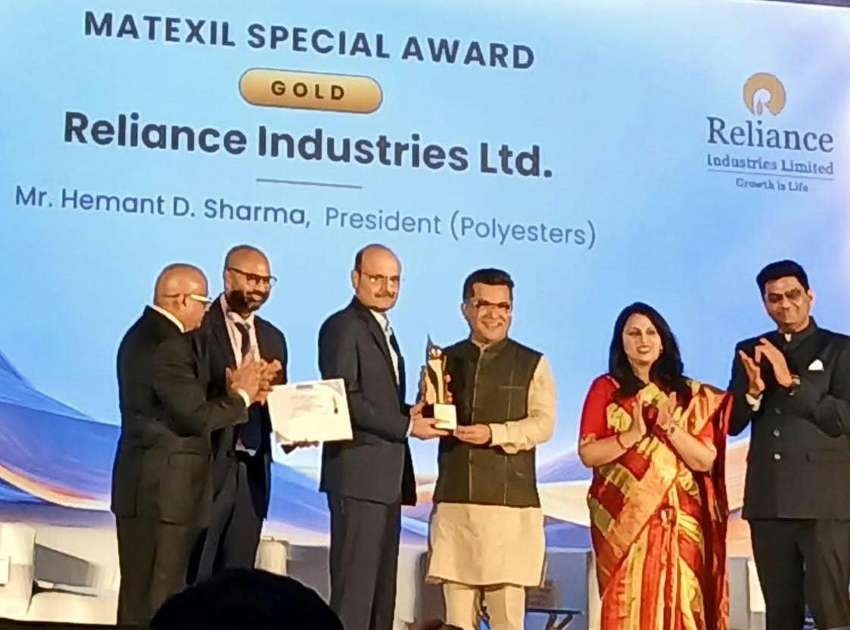
Industrial Giants and Composite Specialists Sweep MATEXIL Export Awards: Driving…
Indian synthetic and technical textile exporters captured international market share across high-value fibre, filament, blended yarn, and engineered fabric categories,... Read more
Upstream Scale and Advanced Materials: Reliance Industries anchors India’s polye…
At a transformational moment when the Indian textile sector is targeting an aggressive expansion to 350 billion dollars in total... Read more
Resilience Under Pressure: Bhadresh Dodhia on how Indian textile exporters navig…
Global textile exporting is not an enterprise for the faint-hearted. Facing relentless volatility in raw material pricing, demands from international... Read more
Regulatory Modernization and Mandatory Digital Governance: Textile Commissioner …
India’s textile and apparel sector, an ecosystem sustaining more than 50 million livelihoods, stands at an operational turning point driven... Read more
Scaling India's Manmade Fibre Base to 18 Million Tonnes: MATEXIL outlines road t…
India stands before a decisive commercial inflection point in its global textile positioning, holding massive upstream manufacturing volumes while capturing... Read more
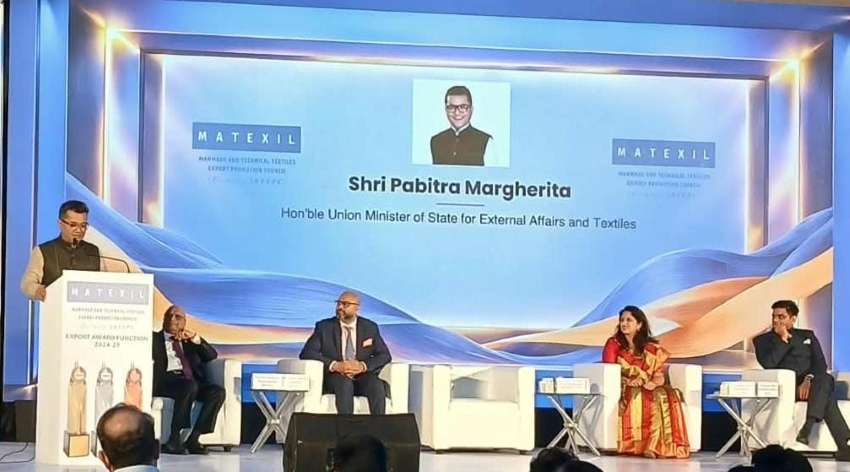
Global Economic Diplomacy and Relaxed PLI Thresholds: Minister Pabitra Margherit…
India’s textile sector is undergoing a structural repositioning on the world stage, combining bilateral free trade negotiations, aggressive economic diplomacy,... Read more
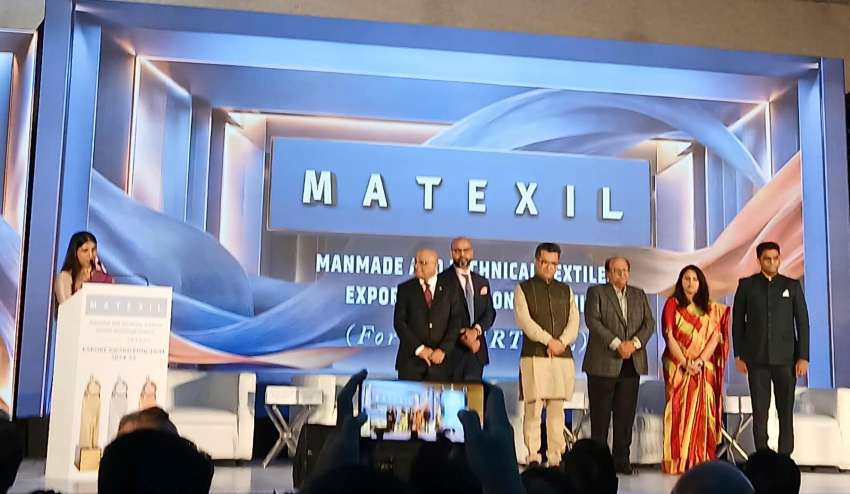
Export ambition and policy realignment anchor MATEXIL Export Awards in Mumbai
The Manmade and Technical Textiles Export Promotion Council convened the MATEXIL Export Award Function in Mumbai on 31 October 2026,... Read more
Sweat-masking yarns, circular fibres shape activewear’s next phase
The global activewear market, valued at almost $458 billion in 2026 and projected to be over $850 billion in the... Read more
Recycled Denim: The missing link between waste collection and yarn production
The Dutch Denim Deal’s industrial trials have highlighted a persistent challenge in textile circularity: mechanically recycled post-consumer cotton can be... Read more