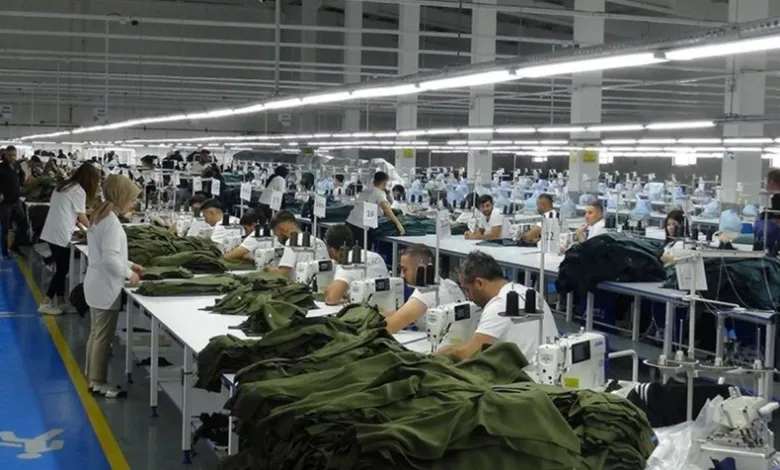
Since the third quarter of last year, foreign investments in Vietnam’s textile and apparel sector have increased due to domestic textile-garment enterprises’ high-quality products and short delivery times. Vietnam’s apparel sector has attracted a large volume of FDI. Some 137 projects were approved in 2014 with a total registered capital of nearly $1.75 billion.
Early last year, when the United States, the largest buyer of Vietnam's textiles and garments, withdrew from the Trans-Pacific Partnership, FDI capital injected into the local textile-garment sector dipped and tended to flow to other markets with a lower-cost workforce and lower import duties, such as Cambodia, Myanmar and Bangladesh. Vietnam has inked 16 bilateral and multilateral free trade agreements, including CPTPP and EVFTA, which will take effect in the near future, creating numerous opportunities for local textile-garment producers.
Import duties of the European Union, Vietnam’s second largest importer, currently ranging from ten per cent to 12 per cent, will be cut to zero when EVFTA comes into force. South Korea may overtake Taiwan to become the largest investor in Vietnam’s textile-garment sector in the near future as this country has clinched a two-way FTA with Vietnam and a cooperation agreement with the European Union.

- 1
- 2
- 3
- 4
- 5
- 6
- 7
- 8
- 9
- 10
Spykar accelerates offline expansion: plans 100 new stores across India
A titan of the Indian denim-first fashion scene, Spykar has officially unveiled an aggressive retail growth strategy. As consumer demand... Read more
The Inventory Illusion: Rethinking the Zara benchmark in a volatile retail era
For over a decade, the global fashion industry has treated the Zara playbook as the gold standard of inventory efficiency.... Read more
Retail Without Retail: How Walmart’s depot network is turning space into logisti…
Walmart is fundamentally rewriting the commercial real estate and retail logistics playbook with the rise of its ‘Walmart Depots’ a... Read more
Global textile regulation tightens, forcing realignment across fashion supply ch…
Global fashion and consumer goods supply chains are entering a decisive regulatory transition as Extended Producer Responsibility (EPR) frameworks for... Read more
Luxury’s new power axis, US dominance, China reset, Gulf surge
As the post-China luxury order takes shape, the US is emerging as the industry’s most dependable growth engine, while Japan,... Read more
India’s $9 Billion Landfill Blind Spot How trashed clothes hold the key to globa…
A massive economic windfall is sitting uncollected in India’s landfills, and the key to unlocking it lies in rethinking how... Read more
Red Sea crisis reshapes textile trade routes, challenges India’s export margins,…
Global apparel trade is now in a new operational phase where geopolitical stability and logistics reliability are as important as... Read more
EU’s textile waste rules enter enforcement phase, raising alarms across fashion …
Europe’s apparel and textile industry is approaching one of its most significant regulatory transitions in decades. As the European Union... Read more
Corporate fashion adopts reverse logistics to unlock the $367 bn resale market
Global fashion retailers are rapidly changing their business models around resale, repair, and textile recovery as the secondhand apparel market... Read more
Tariff Shock 2026: Forced-labor enforcement is repricing global fashion trade
Washington’s latest trade intervention signals a break in the global apparel sourcing patterns. The Office of the United States Trade... Read more