The land allotted to cotton cultivation in India has increased this year compared to 2016. Farmers who have basic irrigational access harvest about 12 to 15 quintals per acre, depending upon the availability of drip irrigation. Cotton is relatively harder than soybean, which can be washed off in heavy rainfall. It can also be picked four to five times despite rains and at least twice if the weather isn’t favorable.
Cotton is sowed after the second week of June, with the first harvest or picking taking place 120 days post sowing, in its 175 to 180 day span. Farmers generally have to bear the cost of picking which comes at Rs 6000 per acre. Pesticides like Confidor, Actara and Polo amount to Rs 4000 an acre, excluding the Rs 200 labor on each round of spraying the chemical. Other expenses include weeding, fertilizer, and seeding.
This year the best among the crop choices left for a farmer which yield better returns in the kharif season was cotton. Farmers require immediate compensation for picking the cotton and using pesticides. Traders themselves came to buy the kapas (raw unginned cotton) straight from farmers at Rs 5600 per quintal this February compared with Rs 4000 in the previous year.

- 1
- 2
- 3
- 4
- 5
- 6
- 7
- 8
- 9
- 10
Cellulosics challenge polyester dominance in global fibre market
The global textile raw-materials market has entered a phase where plant-based and regenerated cellulosic fibres have gain ground against fossil-fuel-derived... Read more
From cotton to MMF cost equation is rewriting global textile trade
The global textile and apparel trade has grown from $560 billion in 2006 to $914 billion in 2025, reveals the... Read more
Polyethylene stretch yarn challenges elastane’s hold on activewear
The global activewear, denim and intimate apparel markets have built a substantial business around stretch. But the same fibre combinations... Read more
Automation Meets Italian Design: FFI Srl unveils ‘Next-Gen Robotics’ to help bra…
At the recently concluded autumn edition of Ready to Show inside Hall 10 at Fiera Milano-Rho—staged alongside the Milano Fashion... Read more
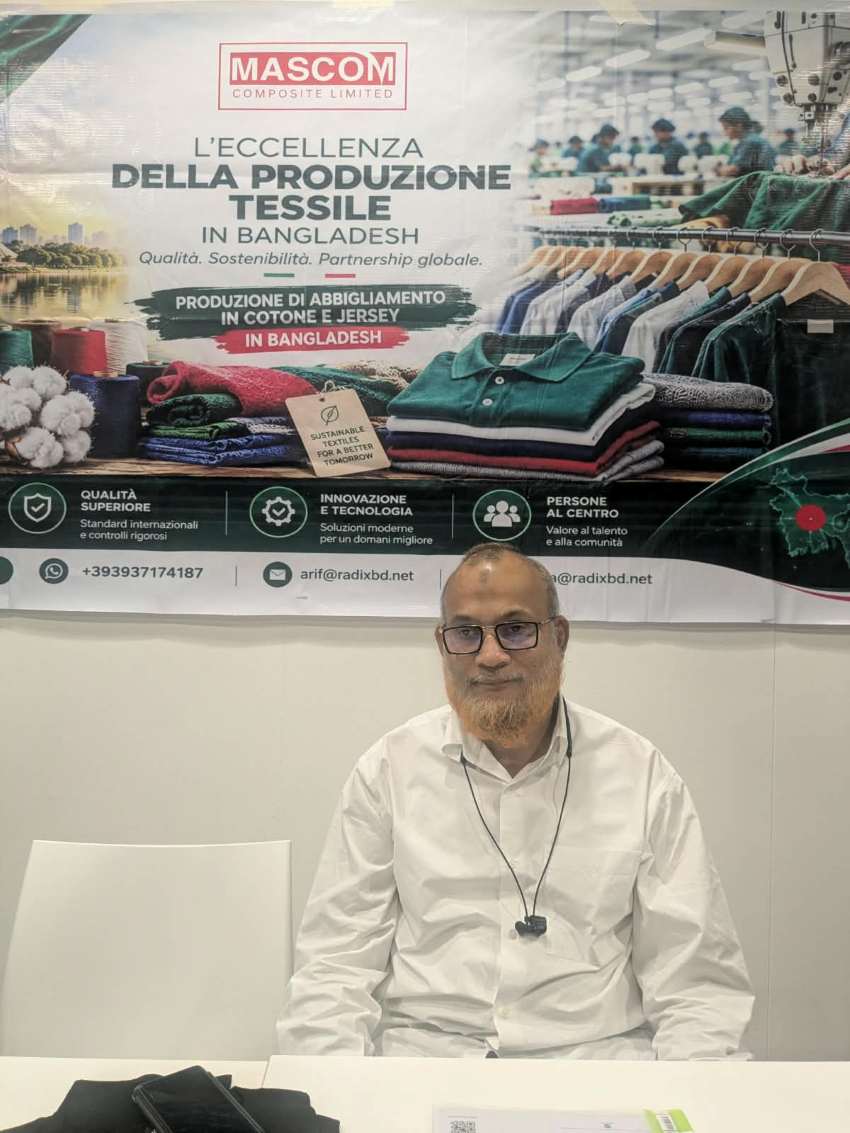
From Dhaka to Milan: Mascom Composite backs Southern Europe’s sports and lifesty…
While the trade floor of Ready to Show Milano inside Hall 10 at Fiera Milano-Rho placed a heavy spotlight on... Read more
How surging silver prices are reshaping ‘Mid-Tier’ fashion jewellery
Escalating global bullion volatility and raw material pricing pressures are forcing a fundamental reassessment across the mid-tier fashion jewellery trade.... Read more
Milano Fashion & Jewels: How ‘Re-Engineered’ heritage crafts are driving hig…
A counter-movement against industrial uniformity is reshaping European bijouterie, transforming authentic craftsmanship into a powerful lever for high-margin boutique growth.... Read more
The "Total Look" Retail Revolution: The integration of jewellery, acce…
The conventional boundaries separating fashion jewellery, ready-to-wear and leather goods, have collapsed on the international retail floor. At the September... Read more
Why Rules of Origin could limit India’s FTA gains
India’s growing network of trade agreements promises lower tariffs and wider market access for its textile and apparel exporters. But... Read more
India-New Zealand FTA opens tariff-free route for textile exporters
The India-New Zealand Free Trade Agreement (FTA), which comes into force on October 20, 2026, creates a new tariff-free corridor... Read more