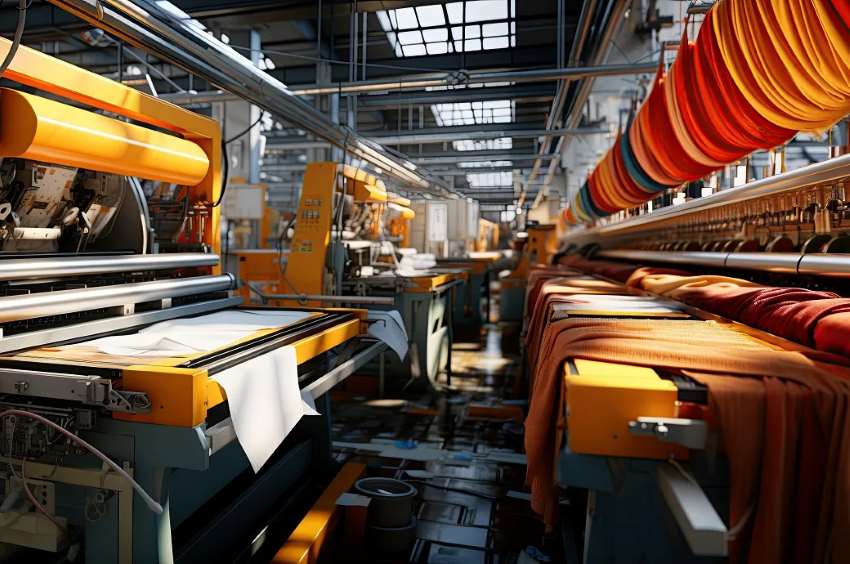
The fashion industry is merging with the technological revolution. This includes Augmented Reality, Virtual Reality, Animation, Social Shopping, Machine Learning etc. This initiative will not only enhance consumer experience but also redefine the standards of the industry. One of the notable aspects of this progression is that it can restructure the production, marketing, and customer services. JITGM (Just In Time Garments Manufacturing) is a process based on the Augmented Reality concept. Consumers can use this technology to analyse the different elements such as fabric, color, prints, style via AR images. The application will provide different variants of the finished products. The final order will be placed based on approval and selection. Companies can print, cut, sew and dispatch the garment within 48 hours and make the delivery to the consumers.
High demand for clothes in the global market has adversely impacted the environment. The textile industry utilises excessive water and electricity for production. The dyes and chemicals used cause pollution and disrupt the natural ecosystem. Companies and research institutions are continually working on various techniques to minimise the damage. This has also led to the invention of efficient machinery that would lower resource consumption and deliver quality products.
- 1
- 2
- 3
- 4
- 5
- 6
- 7
- 8
- 9
- 10
Redefining what responsible production looks like
India's textile and apparel sector has set the global benchmark for sustainability at scale, and two clusters are leading the... Read more
China’s duty-free revival meets a reality check as Hainan shifts from VICs to va…
Hainan’s retail recovery is beginning to look less like a cyclical rebound and more like a rewiring of China’s domestic... Read more
Zombie inventory and shrinking margins inside China’s fashion returns meltdown
China’s digital fashion market, long celebrated as the world’s most sophisticated test bed for e-commerce innovation, is facing a destabilising... Read more
Circularity by Design: How EU rules are turning data into fashion’s new currency
The European fashion sector has entered a compressed transition window. Two regulatory confirmations: the revised EU Textile Labelling Regulation (effective... Read more
The Lyst Reset: Chanel and Dior rewrite luxury’s power index
The global luxury hierarchy has been quietly rewritten, and not by sales alone. In Q1 2026, Chanel rose to the... Read more
Inventory, not expansion, defines winners in global apparel
The 2025 fiscal year has crystallised that revenue growth and operational health are no longer moving in tandem. In an... Read more
From growth-at-all-costs to cash discipline, the new economics of DTC fashion
The global direct-to-consumer apparel market is entering a correction phase, as fashion brands across the US, Europe and the UK... Read more
Britain’s Forgotten Growth Engine: Why policy gaps are undermining fashion and t…
Britain’s fashion and textile industry, often framed through the lens of creativity and design, is emerging as a case study... Read more
Beyond price rallies structural reform can strengthen India’s cotton economy
India’s cotton economy is entering a decisive phase, where firmer prices and tighter arrivals in the 2026-27 season have given... Read more
Polyester volatility redraws India’s textile industry competitive map across Asi…
India’s synthetic textile industry has entered a phase of cost instability as polyester staple fibre (PSF) prices rise across domestic... Read more