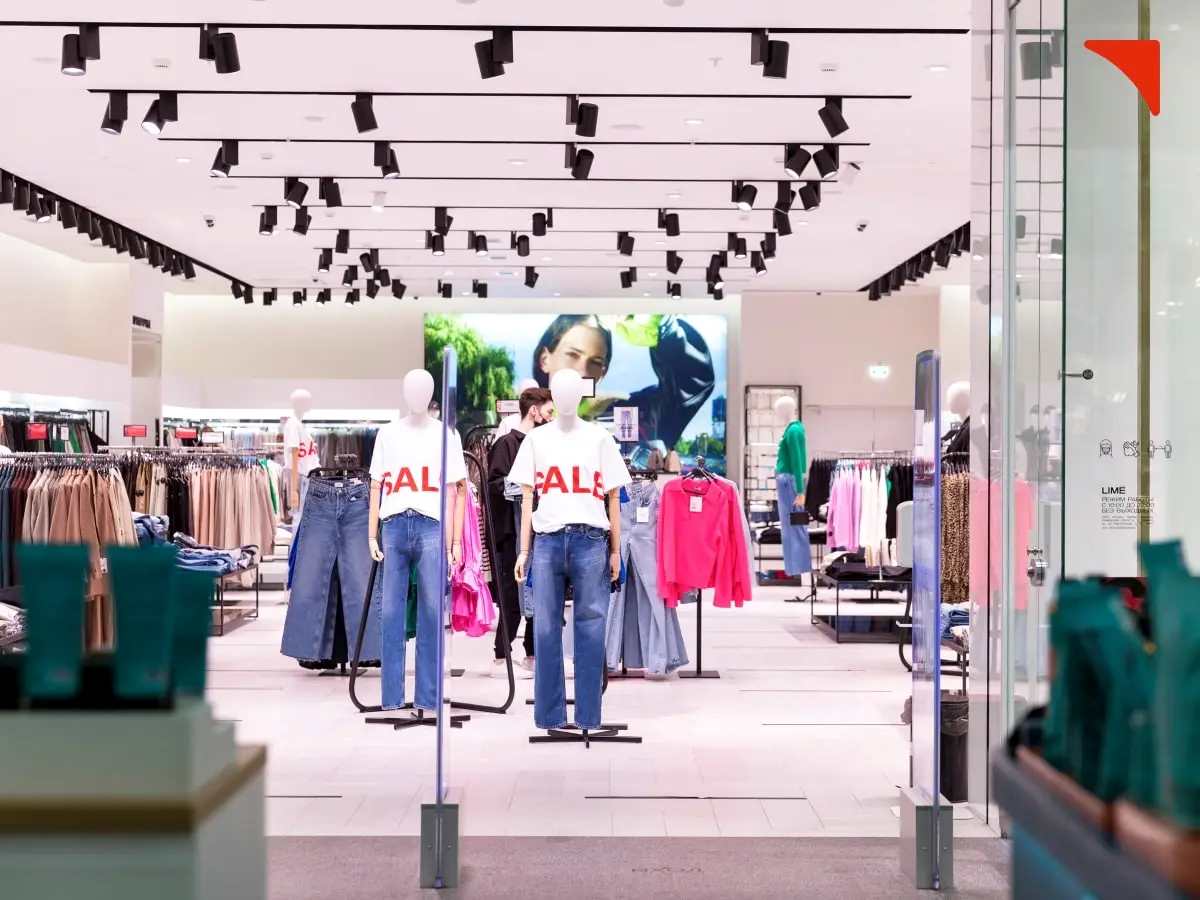
The global apparel industry is no longer dressing for occasions. It is dressing for continuity. What began as a pandemic-era relaxation of wardrobes has hardened into a permanent reset for fashion retail. Across offices, airports, malls, and digital storefronts, formality has steadily ceded ground to function. Tailoring has given way to stretch. Structure has surrendered to softness. And ‘casual’, once shorthand for weekends, has become the default language of everyday life.
The most telling evidence of this shift is not emerging from denim’s historic heartland in the US but from Southeast Asia. New consumer data shows Singapore and the Philippines overtaking Western markets in their embrace of casual attire, underscoring how the next phase of global apparel growth is being shaped far from traditional fashion capitals. This reordering of demand has boosted the casual wear economy projected to reach $667.63 billion in 2026, transforming sourcing strategies, retail technology, and product design worldwide.
From pandemic habit to wardrobe staple
Casualization has matured from a temporary behavioral adjustment into a structural consumer preference. During lockdowns, comfort became essential. But even as offices reopened, the appetite for restrictive dress codes failed to return. Instead, hybrid work, urban commuting, and digitally mediated lifestyles entrenched the need for adaptable clothing that transitions seamlessly between environments.
The result is a retail environment where comfort is no longer a category; it is the baseline expectation. At a global level, the casual wear market is now growing at a CAGR of 3.89 per cent, steady rather than explosive, but powerful enough to steadily capture share from formalwear and occasion-based segments. This kind of sustained, predictable growth is particularly attractive to brands seeking resilience amid macroeconomic volatility.
Southeast Asia the epicenter of casual demand
Fresh consumer insight data reveals a surprising geographic leadership in casual adoption. While the US has long been culturally synonymous with jeans and t-shirts, its dominance is fading in relative terms. Singapore and the Philippines now lead the world in casual affinity, with adoption rates that outpace every Western economy surveyed.
Table: Casual wear preference by country
|
Country |
Regular casual wearers |
|
Philippines |
84% |
|
Singapore |
82% |
|
Australia |
80% |
|
United Kingdom |
76% |
|
United States |
69% |
|
Italy |
68% |
|
Germany |
36% |
The table illustrates a clear power shift. The Philippines tops the chart with 84 per cent of respondents identifying casual wear as their default mode of dress, closely followed by Singapore at 82 per cent. Both markets benefit from year-round tropical climates, dense urban commuting patterns, and digitally integrated lifestyles that reward mobility and comfort.
Australia and the UK form a second tier of high adoption, reinforcing the idea that relaxed dress codes are increasingly normalized across Anglo markets. The US, often perceived as the archetype of casual fashion, surprisingly trails behind these peers at 69 per cent.
Germany stands out as a European anomaly. With only 36 per cent leaning toward casual attire, consumers there demonstrate stronger preferences for streetwear, vintage aesthetics, and alternative style codes, highlighting that casualization is not universally defined but culturally mediated.
For brands, this table is more than demographic trivia. It signals where growth capital and merchandising focus should migrate. Southeast Asia is no longer merely a sourcing base; it is rapidly becoming a demand engine.
Redefining casual from basics to engineered utility
If the geography of casual wear is changing, so too is its definition as the modern consumer is no longer satisfied with soft cotton staples. Instead, expectations now mirror the performance standards once reserved for sportswear. Breathability, stretch recovery, wrinkle resistance, and moisture management have entered everyday wardrobes.
Retailers increasingly describe these upgraded essentials as ‘nu-niforms’, garments that blur the line between professional and leisure settings. A commuter might wear the same technical trousers from a morning meeting to an evening workout, or an overshirt that functions equally as outerwear and office attire. This evolution reflects deeper consumer priorities. Surveys indicate that 64 per cent of shoppers now rank durability and material integrity above brand prestige, a signal that quality and longevity are overtaking logo-driven purchasing behavior. The implication is clear: engineering matters as much as aesthetics. Fabric science is becoming the new branding.
Performance casual becomes a strategic moat
Few companies illustrate this shift better than Uniqlo and Levi’s, both of which have quietly repositioned themselves as performance-first casual specialists. Uniqlo’s LifeWear strategy, which integrates technical properties into minimalist silhouettes, has allowed the company to carve out a 12.2 per cent global market share in the casual segment. Moisture-wicking office trousers, stretch denim, and thermo-regulating layers allow the brand to sell comfort as infrastructure rather than trend. Levi’s, meanwhile, has modernized its core denim offering through stretch blends and hybrid fits that prioritize mobility, enabling it to stay relevant even as younger consumers drift toward athleisure.
What unites both approaches is the understanding that casual wear is no longer about looking relaxed. It is about performing better throughout the day.
AI moves to the storefront
As physical comfort becomes table stakes, the competitive battlefield is increasingly digital. Retailers are discovering that casual shoppers, who purchase frequently and across multiple micro-ocassions, demand speed and personalization. This has led to the rise of ‘agentic commerce’, where artificial intelligence or AI systems act as personal shopping assistants.
By 2026, 25 per cent of consumers are expected to purchase fashion directly through AI intermediaries, bypassing traditional browsing entirely. These assistants recommend size, fit, and style based on behavioral data, reducing friction and returns. Platforms deploying AI-driven recommendations report measurable performance gains. Product clicks have risen by roughly 20 per cent, while conversion rates jump as much as 70 per cent when shoppers engage with algorithmic suggestions.
For retailers operating in high-volume casual categories, these efficiencies translate directly into margin protection. Faster discovery means fewer abandoned carts. Better sizing means fewer costly reverse logistics. Casual wear, in essence, is becoming both physically and digitally frictionless.
Casual’s dominance in a $1.44 trillion industry
The global fashion industry now stands at $1.44 trillion in value, and casual wear commands an outsized share of that pie.
Table: Global apparel landscape: 2026 snapshot
|
Metric |
Value |
|
Global apparel market size |
$1.44 tn |
|
Casual segment share |
36.70% |
|
Casual wear market value |
$667.63 bn |
|
Casual CAGR |
3.89% |
|
India apparel revenue forecast |
$109.5 bn |
|
India volume growth (2026) |
3.60% |
This data highlights how central casual has become to industry economics. With a 36.7 per cent share, the segment accounts for more than one-third of total global apparel revenues, effectively acting as the industry’s stabilizing core. India’s projected $109.5 billion apparel revenue underscores the importance of emerging markets in sustaining growth. And this growth is increasingly tied to nearshoring, faster replenishment cycles, and tech-enabled supply chains, all of which align naturally with the high-turnover nature of casual basics.
Nearshoring reduces lead times for replenishing best-selling essentials. AI-native logistics improve forecasting accuracy. Together, these shifts help brands satisfy consumers who expect constant availability of everyday staples.
Supply chains follow the casual consumer
Behind the scenes, sourcing strategies are evolving just as rapidly as merchandising. Companies are investing in regional production hubs and shorter supply loops to respond quickly to demand spikes. Casual wear’s predictability makes it ideal for this model. Unlike seasonal fashion, which risks obsolescence, everyday essentials generate steady, replenishable demand.
This shift favors countries with strong textile ecosystems and scalable manufacturing capacity, including India, Vietnam, and parts of Southeast Asia. The same regions leading consumption are increasingly capturing value creation as well. The result is a tighter, faster, more localized apparel value chain designed around speed rather than spectacle.
Comfort as the new currency of fashion
Taken together, these trends reveal a profound rebalancing of the fashion industry. Casual wear is no longer a secondary category tucked behind formal collections. It has become the operating system of modern wardrobes. Geography has shifted leadership toward Southeast Asia. Product design now emphasizes engineering over ornamentation. Retail is being rebuilt around AI. And supply chains are reorganizing for velocity.
The companies that succeed in this environment will not be those chasing runway theatrics. They will be the ones mastering everyday reliability.
In 2026, fashion’s most powerful statement is no longer about standing out. It is about fitting seamlessly into life. And increasingly, that life is dressed casually.