FW
Nike aims for total renewable energy by 2025
Nike plans to use 100 per cent renewable energy by 2025. Currently, Nike already uses 80 per cent renewable energy. Nike is looking to improve its sustainability credentials by focusing on materials. Almost 80 per cent of the brand’s carbon footprint comes from the sourcing materials and manufacturing. Nike is one of the largest users of recycled polyester in the world.
The company did its first recycled garment in 2006. But now recycled polyester alone reuses more than a billion plastic bottles a year. Space Hippie, a new shoe line Nike debuted last year, is made of 90 per cent recycled materials. Seventy per cent of all products made by Nike have at least some recycled material in them, but Nike wants to aim higher. Nike tracks the percentage of recycled material used in each product. Nike has an alternative to leather called Flyleather. Currently, Flyleather is made from 50 per cent recycled leather material.
While Nike’s commitment to 100 per cent renewable energy by 2025 applies only to own offices, stores and factories, encouraging manufacturing partners to make the switch to renewable energy will help bring down the company’s overall emissions. Nike has also been focused on using the weight it has in the manufacturing space to influence its partners.
Centric Brands, WHP Global buy Joe’s Jeans
Centric Brands and WHP Global Partner have teamed up on a deal to buy the premium denim brand Joe’s Jeans. Centric and WHP have a definitive agreement and court approval for the deal, under which WHP will own the brand’s intellectual property, outside of China. Centric will continue to operate the business under a long-term exclusive license for its core categories and geographies.
Centric Brands which itself was caught with too much debt in the pandemic and went through bankruptcy court, coming out with a restructured balance sheet — has a portfolio of over 100 owned and licensed brands and sales of about $2.5 billion. In addition to Joe’s, the company makes men’s and women’s apparel under license for Buffalo, Hervé Léger and Izod.
Joe’s Jeans is trading hands just as denim picks back up. The brand was part of the wave of names driving the premium denim rush in the first decade of this century but times were leaner as consumers and the industry pivoted to athleisure looks. Now, after more than a year of lockdowns and leggings, and with a more casual approach to return to work and life, jeans are seeing a stronger comeback. A new denim cycle is gathering steam.
Bangladesh exports to the US up 43 per cent
Bangladesh’s apparel exports to the United States in September 2021 grew by 43 per cent reveals latest OTEXA stats. The trend indicates buyers have shifted a portion of their sourcing to Bangladesh from China.
Readymade garment exports to the US from Bangladesh in January to September 2021 increased by 26.37 per cent. Apparel imports by the US from Vietnam in the nine months of 2021 increased by 15.11 per cent. Vietnam’s apparel exports to the US in September, however, grew only one per cent as factories in the country were closed due to a surge in Covid infection cases.
Readymade garment imports by the US from India in January to September of 2021 grew by 33.29 per cent. US apparel imports from China in the first nine months of 2021 grew by 25.13 per cent. Apparel exports by Cambodia to the US in January to September 2021 increased by 14.97 per cent. Readymade garment imports by the US from Indonesia in the nine months of 2021 increased by 7.45 per cent. Apparel exports by Mexico to the US in January to September of 2021 increased by 30.19 per cent.
Overcoming the pandemic shock, the US economy has started performing well and buyers have placed additional work orders to meet an increased demand for apparel items.
GST hike on garments to impact sales, employment in India’s textiles sector
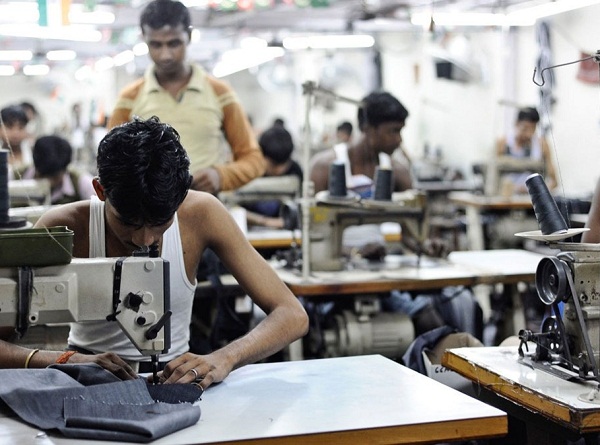
The planned GST hike on garments priced less than Rs 1,000 from January 1, 2022 is likely to increase prices of 80 per cent final products, opine experts. The government had decided to increase the Good and Services Tax (GST) rate on readymade garments and fabrics in September this year. The planned hike is likely to affect almost 85 per cent of the garment market in India, as per reports. It will create a greater stress on the working capital requirements of the industry, especially the Micro, Small and Medium Enterprises.
Majority of industry to be impacted
The government had proposed the hike to correct the problem of Inverted Duty Structure faced by a small segment of the textile value chain. The duty structure involves levying higher taxes on input and lower tax on output of the final product. Though the GST Council has addressed this issue for many other industries, it continues to persist for footwear, textiles, pharmaceuticals and fertilizers.
However, the issue impacts only 15 per cent of the textile sector while the proposed GST hike is likely to increase prices of 85 per cent products, say experts. Furthermore, the continued shutdown of retail outlets in the country is likely to force domestic garment industry to continue operating at 65 per cent of pre-COVID levels.
Effect on employment levels
The industry also faces a 20 per cent decline in employment as most units have either scaled down or shut operations due to the pandemic. Though the festive season looks optimistic and encouraging, it may not last long as the GST hike on clothes below 1,000 may severely hit the textile industry, particularly MSMEs, says Kumar Rajagoplan, CEO, Retailers Association of India.
As a solution, the Clothing Manufacturers Association of India has urged the government to impose a uniform 5 per cent GST across the entire value chain. The sharp increase in cost of raw materials such as yarn, fabric, fuel, packaging materials and transportation is likely to hit sales even more.
Sales drop as raw material costs surge
Sales are likely to drop by over 50 per cent as people have lost their capacity to spend. The prices of raw materials have also shot up significantly. In such a situation, hike in GST rates to 12 per cent will hit the industry hard, adds Sajjan Raj Mehta, Karnataka Hosiery and Garments’ Association.
Young Chinese now prefer homegrown sportswear brands
The sports apparel market in China has long been dominated by American and European brands but in recent years, consumers, especially young people, are now shown more interest towards Chinese brands. One such brand is Li Ning. This sportswear brand was launched in 1990 by Li Ning, a gymnast and gold medalist. Anta is another Chinese sportswear brand rapidly gaining popularity.
Both Li Ning and Anta are enjoying strong earnings. In the first six months of 2021, Li Ning’s sales were up 60 per cent from a year earlier, while Anta also posted a 60 per cent sales increase. Behind the two brands’ brisk earnings is support from people from the GenerationZ -- or those born after the mid-1990s who are currently in their late teens and early 20s. Li Ning brand represents Chinese culture and elements and is enhancing Chinese consumers’ empathy towards their country. The China logo is written in Chinese on Li Ning shirts. In China’s market for sports apparel, excluding shoes, Anta and Li Ning have shares of 11.9 per cent and 8.2 per cent.
However powerful Western brands, such as Nike and Adidas, remain formidable even in the Chinese market. Li Ning and Anta still need to improve the quality of their products.
Vietnamese textile exports up five per cent over last year
Vietnamese textile exports for nine months in 2021 were up 5.6 per cent over the same period last year, says a CCF Group report. The main destinations were: the United States, the European Union and Japan. Eexports to the United States were up 11.1 per cent, to the European Union up 2.4 per cent and to Japan down 11.6 per cent. The main export commodities were apparel, cloth, fiber, non-woven fabric, textile accessories.
Vietnam depends heavily on imports of raw and auxiliary materials for textile production. Imports of raw materials by the textile and leather shoes industry in the first nine months of 2021 were up 26.9 per cent over the same period last year. Of these, imports from China had a 52 per cent share, up 31 per cent over the same period last year. Other imports were from South Korea, Taiwan and the United States.
The apparel, textile, footwear, and electronics industries in Vietnam have been most harshly affected by the COVID-19-related shutdown. There are more than 6,000 factories in Vietnam, which employ more than three million workers. Production shutdowns at footwear manufacturers have already caused supply chain disruptions for major brands, some of whom have begun using airfreight to get their products out of Vietnam as quickly as possible amid a shipping crunch.
Brands team-up with Cordura for work wear
Cordura is collaborating with brands and designers in women’s work wear. Designer Stina Peters is working with Cordura to introduce youthful designs and inspirational concepts into today’s work wear for women. For her Cordura fabrics have built-in durability which makes her designs for work wear even more sustainable.
Dickies and Cordura worked on a new collection for tradeswomen, featuring products designed to provide durability, all-day warmth, comfort and unrestricted movement. The leggings provide both maximized comfort and a range of motion. The fabric knee and rear patches are enhanced with a DWR trim to provide extra integrity and protection to these sturdy leggings.
The brand Crafter Collection selected Cordura fabrics to revolutionise the fit of women’s work wear. It collaborated with Cordura on all three of their women’s industry wear products.
Similarly, Dovetail and Cordura have jointly delivered a tough, sustainable work pant. Dovetail’s latest Maven and Britt style pants with No Fade Black Cordura denim are up to four times stronger than regular cotton denim and have a comfy stretch. There’s also a built-in long-lasting softness that comes from the supple wood-based Lenzing Tencel branded modal fibers used. These fibers come from a blend of sustainable wood sources.
Cordura is a brand belonging to Invista and is renowned as an innovative leader in producing advanced fabrics, known for their strength and durability.
Lee and Pendleton partner for a capsule
Heritage American brands Lee and Pendleton Woolen Mills have partnered for a curated capsule for a unique apparel and blanket collection that celebrates American craftsmanship. This limited-edition drop reimagines essentials from the brands’ almost 300 years of combined apparel experience. Original Lee styles such as the Lee 101 Jean, Union-Alls and Storm Rider Jacket have been remixed with exclusively designed Pendleton patterns. Each legacy pattern has been reimagined in new colorways with fabric produced in the US. Pendleton is known for its use of beautiful colors and patterns. Lee has taken a fresh design approach and incorporated Cone Mills’ selvedge denim to make this collection heirloom quality with stunning craftsmanship.
The collection includes men’s and women’s jeans, shirts, jackets and Union-Alls, as well as a limited-edition woolen blanket made of an exclusive Pendleton stripe design. The styles feature some of the last remaining American selvedge denim from Cone Denim’s White Oak Mill, which closed in 2017.
Lee and Pendleton are two heritage American brands. Lee is an iconic apparel brand known for its timeless style. Pendleton Woolen Mills is a family-owned lifestyle brand rooted in the Pacific Northwest. Lee’s authentic American heritage brand echoes Pendleton’s dedication to quality, design and textile innovation.
US apparel imports up 17 per cent in September
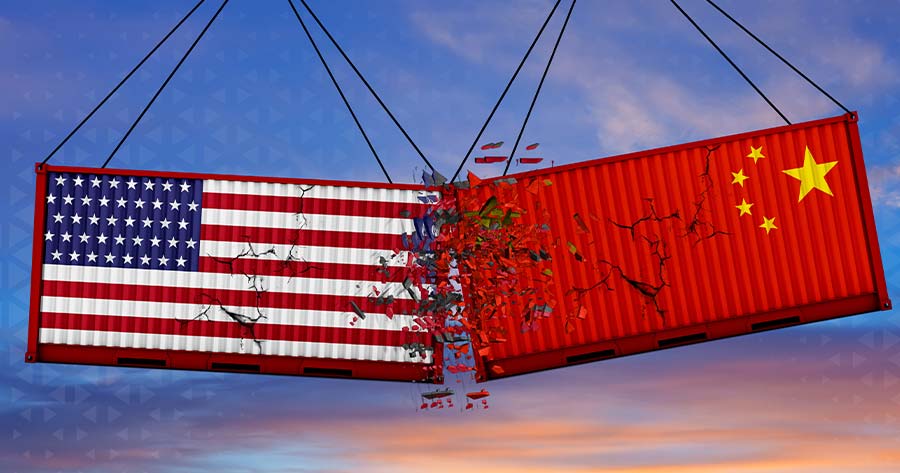
Latest Commerce Department’s Office of Textiles & Apparel (OTEXA) figures reveal US apparel imports increased 17.1 per cent in September. Shipments from Cambodia rose two per cent, up 10.71 per cent in the nine-month period. This came after a 29 per cent decline in July year on year was followed by 18 per cent rise in August. Apparel shipments from China increased 25.2 per cent in September compared to a year earlier. This outpaced a 15.6 per cent rise in August; year to date, apparel imports from China were up 33.22 per cent. Despite ongoing Sino-US tensions and ongoing tariffs imports from China has been on the rise.
With COVID related factory shutdown in Vietnam imports fell 4.6 per cent in September compared to a year earlier to 345.11 million sq. mt. equivalents (SME), according to OTEXA. It may be noted that Vietnam’s apparel exports to the US had increased a year-over-year 22.3 per cent in August. For the first nine months of 2021, Vietnam’s apparel shipments were still up 19.19 percent to 3.37 billion SME.
Imports from Bangladesh increased 42 per cent for September and were up 33.83 per cent year to date. Shipments from India rose a year over year 31.8 per cent and increased 41.89 per cent year to date. Imports from Indonesia were up 33.1 per cent for September and 14.39 per cent in nine months. Imports from Pakistan increased 18.3 per cent year over year and rose 50.02 per cent year to date.
US imports from Honduras rose 2.3 per cent in September but were up 35.95 per cent year to date. Shipments from Mexico increased 15 per cent year over year in September and imports from El Salvador were up 6.3 per cent for the month and gained 50.12 per cent year to date.
Columbia Sportswear’s Q3 sales up 15 per cent
For the third quarter Columbia Sportswear Company’s sales grew by 15 per cent. The strong operating performance came amid unprecedented supply chain challenges. Despite delayed inventory receipts which impacted US wholesale shipments, favorable gross margin performance and expense management fuelled above plan earnings.
Columbia Sportswear is an innovator in active outdoor lifestyle apparel and footwear. Sales from Columbia grew by 16 per cent whereas Sorel sales dipped by four per cent. Prana and Mountain Wear sales increased to $36.4 million and $28.7 million respectively. Sales across all the regions increased in double digits during the quarter: US, Latin America and Asia Pacific, Europe, Middle East, Africa and Canada. During the third quarter, the American sportwear manufacturer's gross profit surged to $408.3 million while selling, general and administrative expenses were $280.1 million. Moreover, operating income rose to $133.4 million.
Early-season fall 2021 sell-through was encouraging and the global marketing campaign to support the largest innovation launch in the company's history, omni-heat infinity, was off to a great start. The brand believes it can achieve mid-teens or better net sales growth in 2022, on top of the low-twenties per cent growth anticipated in 2021, and is excited about its innovative product pipeline and the momentum it sees across the brand portfolio.