FW
Brands opt to overhaul operations to reach sustainability goals
"The realisation that fashion is one of the most polluting industries in the world is also impacting consumer behavior. For instance, Swedish climate activist Greta Thunberg took a zero-emissions sailboat to New York for the UN’s climate conference this summer instead of the regular airplane. Similarly, brand H&M has launched an initiative to use only recycled or sustainably sourced material by 2030. The company plans to reduce or offset more greenhouse gas emissions than its entire production process emits by 2040."
 Fashion comes at a cost. Even though fast-fashion retailers are quickly churning out fresh, low-priced styles that attract trend-seekers into stores, they are also creating a lot of unwanted clothes that usually end up in landfills due to changing fashion trends. As the United Nations Environment Program reveals, the garments industry generates about 10 per cent of the global greenhouse gas emissions. It also consumes more energy than aviation and shipping combined as one trash truck’s worth of textiles is either burned or sent to a landfill every second. Luxury clothing brand Stefano Rucci regularly burns its unsold products. Similarly, Swedish fast-fashion giant Hennes & Mauritz, better known as H&M has around $4.3 billion of unsold inventory in hand. To dispose off this unsold inventory, the company had to offer more discounts and it couldn’t stop stocking up on new styles.
Spurt in demand for secondhand clothes
Growing concern about unsold goods has not escaped the customer’s eyes as they are now opting for more sustainable options. A Neilsen Survey revealed, last year, US shoppers bought $128.5 billion worth of sustainable versions of quick-selling goods such as groceries and toilet paper. Also around 48 per cent of Americans surveyed expressed their willingness to change their consumption habits to reduce their environmental impact. Around 53 per cent of these shoppers also expressed their willingness to give up a brand-name product in order to buy an environmentally friendly one.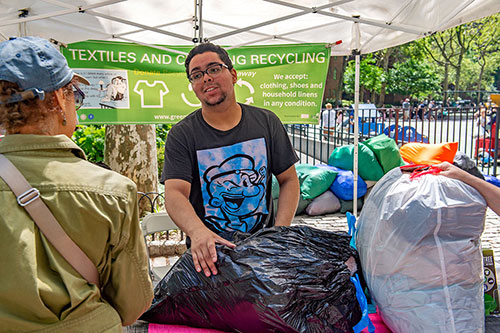
Instead, these shoppers are turning to secondhand dealers like online marketplaces ThredUp and Poshmark. Both websites sell discarded clothes at lower prices which are instantly snapped up by buyers. ThredUP receives around 100,000 items of used women’s and children’s clothes a day. The company buys a few of these items and then lists them for sale on its online marketplace. Till now, it has raised over $380 million in funding through its sale of these second clothes.
Recycling gains ground
The realisation that fashion is one of the most polluting industries in the world is also impacting consumer behavior. For instance, Swedish climate activist Greta Thunberg took a zero-emissions sailboat to New York for the UN’s climate conference this summer instead of the regular airplane. Similarly, brand H&M has launched an initiative to use only recycled or sustainably sourced material by 2030. The company plans to reduce or offset more greenhouse gas emissions than its entire production process emits by 2040.
On its part, Fast-fashion pioneer Forever 21 has launched a textile- and shoe-recycling program in stores around LA and is looking into using recycled products. Similarly, Adidas is experimenting with personalised gear to cut down on returns, increase customer satisfaction and reduce inventory. Others brands launching eco-friendly initiatives include: Ralph Lauren, which announced plans to use 100 per cent sustainably sourced key materials by 2025, and designer Tracy Reese, whose collection for bohemian-inspired retail chain Anthropologie used non-harmful dyes.
The industry is thus adopting a comprehensive, holistic approach that includes a complete overhaul of manufacturing, distribution and materials.
Indonesia produces 15 per cent more apparel
In the third quarter of 2019 Indonesia’s apparel production grew by 15.29 per cent.
Indonesia has given priority to developing the textile and clothing industry. The industrial structure has been integrated from upstream to downstream. Encouragement is being given to exports of textile products. Several strategic steps have been taken, including encouraging the expansion of market access and restructuring of machinery and equipment. There has been an increase in production in textile and apparel production centers.
Indonesia is tightening restrictions on textile imports. The restriction is aimed at protecting domestic producers of products such as certain types of yarns, fabrics and other goods. The reasoning is that products that can be produced domestically should no longer be imported. Textile importers have to gain approval before they can ship in textile goods. With economic growth, and a shift in demand from basic clothing to functional clothing, such as sportswear, the national textile industry is building production capabilities and increasing economies of scale in order to meet the demand in domestic and export markets. The country’s textile industry has weakened in the past three years due to an influx of imported textiles combined with sluggish consumption by Indonesian consumers. Textile fabrics imports rose 74 per cent between 2016 and 2018. And import of textile products, such as some types of synthetic yarns, doubled in the three years to 2018.
Nottingham Trent University works on wearable computer
Nottingham Trent University is developing the world’s first wearable computer. The project aims to create a manufacturing process to enable complex electronic circuitry to be embedded into yarns on an industrial scale. The research group – which has already pioneered technologies such as clothes embedded with solar cells to charge mobile phones will develop the process for creating electronic yarns – or complex e-yarns circuitry – which is undetectable to the wearer – will allow for the development of wearable electronics as sophisticated as computers. This could mean that in the future a T-shirt or a jacket could be used as a mobile phone, with the collar being used to speak into. But to the naked eye it would appear like any other item of clothing and none of the technology would be felt by the wearer. The garments would also be fully washable and wearable, like any other form of clothing. But embedded into the yarn of the fabrics would be high-tech electronics which can monitor heart rate, blood-oxygen levels, be used as a communications device and more.
The project will involve various stages which will include the development of prototype demonstrators which will be tested with industrial partners. Aims will include the creation of a pilot production line which works at speed and at low cost.
Textile spinners demand removal of cess levied on waste cotton
The Open-end Spinners Association has demanded the removal of market committee cess on waste cotton, which is a raw material used by mills. G Arulmozhi, Secretary of the association revealed that 50 per cent of the 450 open-end spinning mills in the state use cotton waste from textile mills as raw material.
However, these mills face competition from the units in other states due to the 1 per cent market committee cess levied on waste cotton. The open-end mills in the state consume nearly 10 lakh kg, buying waste cotton from textile mills across the state and even from Gujarat and Andhra Pradesh. The cess should have been removed after the introduction of GST (Goods and Services Tax), but it was not done.
Members of the association met officials concerned as well as the Textile Minister of Tamil Nadu several times and sought the removal of the cess on waste cotton. But the government is yet to notify removal of the cess.
Tanzania to promote textile trade at CIIE 2019
Tanzania plans to promote trade at the second China International Import Expo (CIIE) being held in Shanghai. The event will also enable the country to promote investments in agriculture, mining and fisheries sectors. Tanzania benefited from the first CIIE held in 2018 by recording a growth in the number of tourist arrivals from China to Tanzania. Statistics show that about 30,000 Chinese tourists visited Tanzania last year.
Tanzania also plans to promote joint ventures between Tanzanian and Chinese investors. The country plans to get the needed capital for expanding its existing businesses besides acquiring the knowhow and the technology to transform the business operations. The government also plans to provide incentives to investors in the textiles factories.
Wrangler to enter China next year
Wrangler will be launched in China in the first quarter of 2020. The go-to-market strategy will focus on digital, launching with a large digital partner. Wrangler’s wholesale revenue in the US declined three per cent in the third quarter. The brand’s US wholesale performance was flat year to date but revenue is expected to improve in the fourth quarter.
Wrangler and Lee are a part of Kontoor Brands. The fashion-forward Wrangler Heritage collection with modern styling pays tribute to the brand’s authentic western legacy. Customization laser technology is used to personalize the product. This technology allows the brand, or in the future its retail partners, to elevate the consumer experience through both customized design and heightened convenience. Asia and specifically China will be a focal point for international expansion overall. Lee’s revenue increased eight per cent constant currency in China during the third quarter, including a 10 per cent comp store increase, as it continues to leverage 20-plus years of business as a leading premium lifestyle brand in the region. Category extensions, which include expanding further into tops, outerwear and accessories, are being pursued aggressively for Lee and Wrangler. In addition, channel evolution, which includes taking both brands into select new points of wholesale distribution and direct-to-consumer, with a sharp focus on digital, will be undertaken.
Cotton USA allows mills to share best practices
The Cotton USA mill exchange program provides an opportunity for mills to share best practices in cotton yarn manufacturing, from cotton procurement to cotton yarn production.
Among Cotton USA’s objectives are to demonstrate that US cotton can improve efficiency and that US cotton quality is superior to cotton grown in other regions. While educating mills about the superior qualities of US cotton is its immediate goal, the ultimate goal is to sell more US cotton. Cotton USA wants mills to use more US cotton.
The six countries represented in the mill exchange program—Vietnam, Thailand, Indonesia, India, Bangladesh and Pakistan—are expected to consume more than 54 million bales, which accounts for 45 per cent of global cotton consumption.
Cotton USA offers innovations like new performance materials and origin tracing technology. The aim is to inspire the textile industry with new ideas, technologies and opportunities that propel businesses forward and help its partners rise to meet growing customer expectations and build business opportunities. Becoming a Cotton USA licensee can benefit businesses. The Cotton USA mark is of high value to consumers and can drive both preference and higher prices. Cotton USA is dedicated to providing the entire supply chain with networking opportunities, ongoing education, and the latest research and technological innovations.
Indorama Rama launches Deja
Deja is Indorama Venture’s new 100 per cent rPET fiber brand. It is available in various forms such as recycled flake, pellet, fiber and filament for use in multiple applications. With unique access to Indorama’s global recycling sources Deja has complete traceability from source to supply. Deja enables conscientious converters to differentiate and to increase their margin along the supply chain, giving consumers the confidence they need to select sustainable, purposeful products.
Based in Thailand, Indorama Ventures, a global chemical producer, has operating sites in 31 countries on five continents and a global manufacturing footprint across Africa, Asia, Europe and North America. It continues to build durable competitive advantages through its diversified portfolio, supported by a responsible approach to sustainable business, people and the environment, creating value for society and for customers. Deja is derived by recycling 4.17 billion plastic bottles a year and transforming them into extraordinary, innovative, product ingredients. Deja enables forward-thinking companies to make a decision based on performance and innovative future-proofed materials. Indorama has been at the forefront of the process in developing the technology to convert PET bottles into highly usable products for over 40 years. The company’s heritage in pioneering recycling technology for global applications has ensured consistent delivery and innovation in changing and challenging environments.
Kontoor Brands’ revenue down nine per cent
Kontoor Brands’ revenue for the third quarter decreased nine per cent year-over-year. It was a tough third quarter for the company, weighed down by US retail woes and global distribution problems. During the quarter, US revenue was down nine per cent on a reported basis and 6 per cent compared with 2018 adjusted revenues. International revenue was down 11 per cent on a reported basis. These were partially offset by growth in China and favorable timing of shipments in Europe.
Net income for the quarter dropped 80 per cent. Ebitda declined ten per cent on an adjusted basis. Adjusted ebitda margin decreased 50 basis points to 14.1 per cent. Gross margin increased 30 basis points to 40.1 per cent on a reported basis. On an adjusted basis, gross margin was up 20 basis points to 40.9 per cent. Increases were primarily due to the impacts of restructuring and quality-of-sales initiatives, as well as a favorable channel mix, which more than offset the negative impact of strategic actions taken in India and the pressure from foreign currency. Operating income was down 67 per cent.
The company continues to expect second-half revenue to improve relative to the first half of 2019, with the fourth quarter benefiting the most from strategic actions.
MarediModa records 3 % increase in visitors
More than 3,100 buyers, from Italy, France, Spain, England and Germany were witnessed at the 18th edition of MarediModa, the international European textile fair. The event, held from November 5-7, 2019 at the Palais Des Festivals in Cannes, wrapped up with a 3 per cent increase in visitors. It recorded a significant increase in visitors from the United States with the 110 European companies previewing their collections for summer 2021.
“It was one of the best editions in recent years both in terms of numbers and quality in the ambiance and as far as visitor consent is concerned,” commented Claudio Taiana, Chairman of the show.
“The work developed by David Shah on trend forecasting, the new area dedicated to trends, the conferences, the in-depth analysis of themes, the installations, and the highly convivial moments that animated the halls of the Palais Des Festivals this year were all greatly appreciated. Our salon undoubtedly represents an absolute reference point in the beachwear, underwear, and sports sectors thanks to growing interest on the part of large worldwide brands in European fabric of controlled origin who share a desire for speeding-up things regarding issues of sustainability; these increasingly important issues are the ones which are currently being addressed in our companies,” he added.
The winners of The Link, 2019 contest were also awarded. The contest is dedicated to fashion designers from over one hundred of the best-known European schools.