FW
BCI brands source 45 per cent more better cotton in 2018
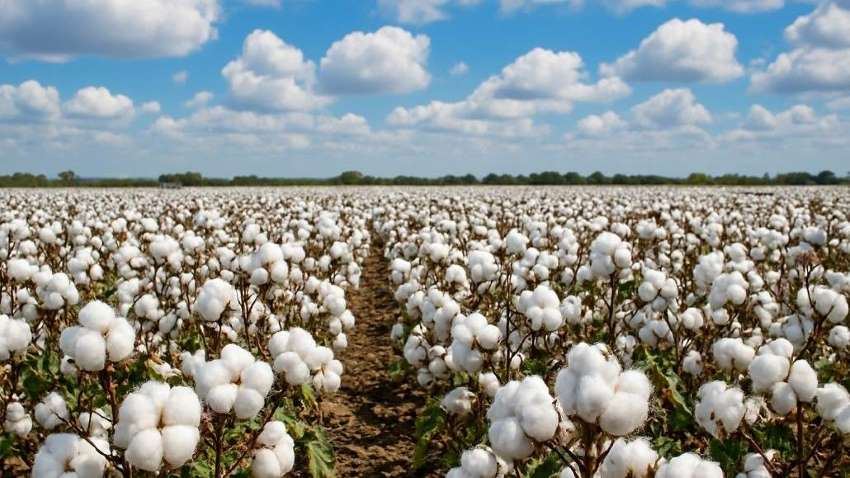
BCI retailer and brands including Hennes & Mauritz AB, IKEA Supply AG, Gap Inc., adidas AG, and Nike Inc. sourced 45 per cent more Better Cotton in 2018 than in 2017. This enabled BCI to invest in training and support for an increased number of farmers.
In the 2017-18 cotton season, the organisation along with its 69 on-the-ground partners trained two million cotton farmers in 21 countries on sustainable agricultural practices. This drove the volume of more sustainably produced cotton available on the global market to a new level.
By 2020, BCI aims to train 5 million cotton farmers in adopting more sustainable agricultural practices and improving their livelihoods. To achieve this, it will focus on the diverse social, environmental and economic challenges faced by cotton farmers around the world, from drought in Australia to flooding in China and gender equality in Pakistan.
Gap Inc to source 100 per cent sustainable cotton by 2025
Gap has announced it will derive 100 per cent of its cotton from more sustainable sources by 2025. Cotton’s strong fibers are used in a significant portion of products across Gap Inc. brands, and its cultivation spurs economic opportunity by supporting livelihoods in many communities.
However, much of the world’s cotton is grown in areas where people have difficulty accessing clean water due to pollution and droughts – a situation further exacerbated by climate change. By sourcing sustainably farmed and sourced cotton, the company is supporting farmers who use water efficiently through better irrigation practices.
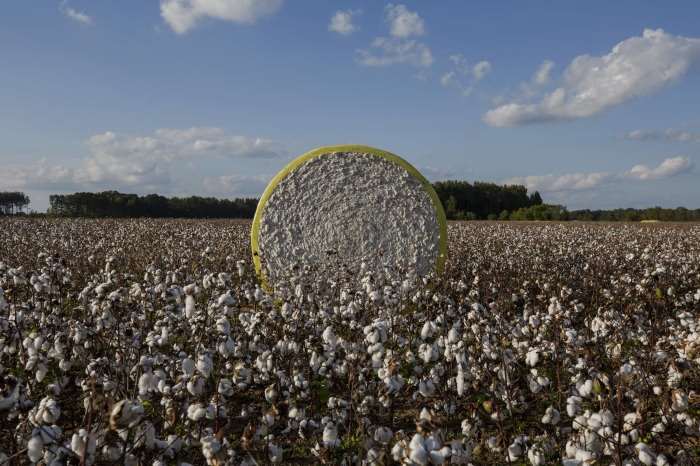
Gap’s commitment to sustainability includes sourcing Better Cotton Initiative (BCI) cotton, and cotton that is organic, recycled, and verified American or Australian grown.Gap began sourcing Better Cotton in 2016. BCI is a long-term multi-stakeholder initiative that develops and promotes good farm practices, allowing more cotton to be grown while reducing water and chemical use and protecting both working conditions and biodiversity.
In BCI’s latest global ranking of top companies who source sustainably grown BCI cotton by volume, Gap Inc. ranked on the fourth position. The company also plans to conserve a total of 10 billion liters of water by the end of 2020.
Pure London to focus on S/S ’20 women’s wear collections and ethical brands
"Pure London, the Festival of Fashion scheduled from July 21 to 23, 2019 at Olympia London, will showcase the S/S ’20 collections of new brands and designers. The event, alongwith 700 brands, will feature inspiring and educational content, talks and keynote speakers discussing topics including sustainability, the circular economy, social media and e-commerce strategies, new technology and retail innovations, and sustainable styling sessions."
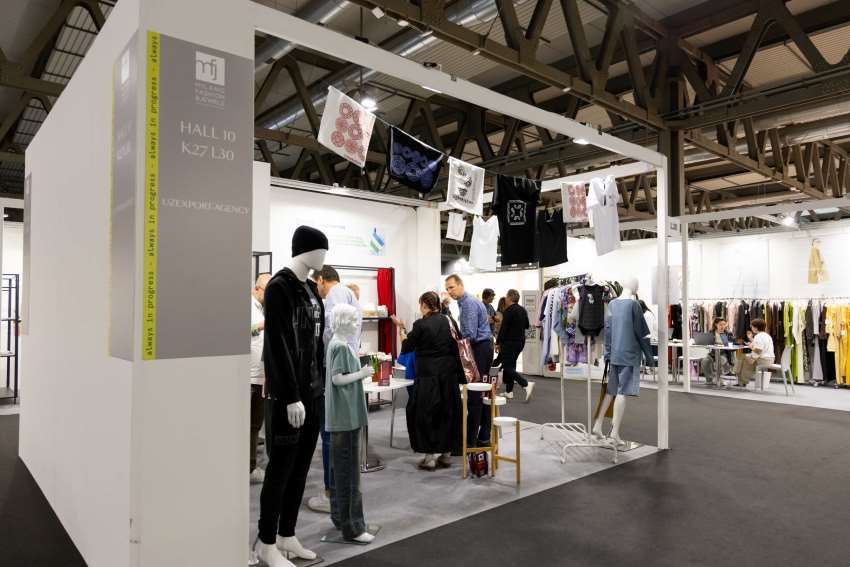
 Pure London, the Festival of Fashion scheduled from July 21 to 23, 2019 at Olympia London, will showcase the S/S ’20 collections of new brands and designers. The event, alongwith 700 brands, will feature inspiring and educational content, talks and keynote speakers discussing topics including sustainability, the circular economy, social media and e-commerce strategies, new technology and retail innovations, and sustainable styling sessions.
The Pure Conscious Section, with its focus on supporting and championing responsible fashion and sustainable brands, will offer the best in ethical fashion. Pioneers of ethical and sustainable fashion, People Tree alongside responsible brands including Ulsto, Komodo, Menestho, Mimush, AfterLife Project, Scarabaeus Sacer, and Raw Angel Apparel will display their offerings at the event.
Exciting new premium designers, and ready to wear women’s wear brands will include Didriksons, Nightporter,  Magnolia Pearl, Valentina Poltronieri, Caraclan, Two Point Two, Yaaf London, Hera Concept, Lang N Lu, Concreto, and STAŠA, alongside favourites including Religion, Rino&Pelle, Thais & Stroe, Vilagallo, Bitte Kai Rand, POM Amsterdam, Thought, Pour Moi, Sofie Schnoor, indi & Cold, Moutaki, Soaked in Luxury, Nice Things, Onjenu, Yerse, Saint Tropez and Godske. After a successful first season in February, MOS MOSH returns with its sought-after collection of luxury jeans, tailoring, delicate tops, rugged jackets and fine leather garments.
The event will also feature accessories and footwear brands including: Decielis, iDeal of Sweden, Kookii B, and Fay Bijoux. Visitors will also see returning footwear and accessory favourites Bulaggi, CARA, Alpe, Ipanema, One Hundred Stars, Lemon Collections, Powder, Tilley & Grace, Belle & Flo, Eliza Gracious, Seeberger, Sence Copenhagen, Nour, Big Metal, Love Rocks, and Christina Brampti. Women’s ski label H. Holderness joins the Athleisure section alongside Cheekfrills, MilaVitsa, and NUX.
NCTO & AAFA oppose new tariffs on Mexican exports
The National Council of Textile Organizations (NCTO) and American Apparel & Footwear Association (AAFA) have opposed the proposed tariff escalation for all US imports from Mexico. These organisations have sent a letter to the American President Donald Trump stating that raising tariffs on US imports from Mexico will hurt US workers. Currently, hundreds of thousands of American workers are deployed in production and other key value chains that depend on the North American trade partnership with Mexico, which is the market for half of all U.S. textile exports.
These planned tariffs will also disrupt and distract congressional passage of the pending U.S.-Mexico-Canada Agreement (USMCA), a key administration priority. Besides, it threatens the country’s trade relationship with Mexico and the competitive advantage it offers in terms of thousands of American jobs in the apparel, footwear, travel goods, and textile industries.
Brune partners Indian cricket team for World Cup 2019
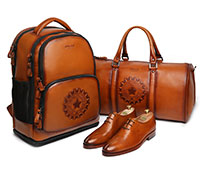 “We are absolutely ecstatic on having been chosen as the preferred travel choice by BCCI for World Cup 2019,” says Tabby Bhatia, Founder, Brune. The premium leather and accessories brand was recently chosen as the supplier of a customised travelling kit comprising bags and shoes for entire Indian team for World Cup 2019. “This partnership has given our brand a new dimension and further validated our bespoke services in the best possible way, ” he adds.
The entire range comprises of 110 bags in the trendiest ‘yellow shade. Each of these bags has been designed to complement the dapper ‘cricketer’ look and the sassy persona of the cricketers. Also, Brune’s uber stylish classy formal yellow tan shoes will be sported by the entire team at the official dinner and ambassador meet in Wales.
Setting new benchmarks
Voganow.com, the most vibrant online store has two brands under it: Brune and Bareskin. Brune, established in 2015, offers a wide variety of formal shoes ranging from brogues, oxfords, tassels to monk strap and varied choices in bags ranging from duffle, trolley, backpacks, messenger to a laptop briefcase.
The brand is setting new benchmarks by customising name initials and hand finishing. In this short span, the brand has carved a niche and is gaining wide popularity among celebrities. The brand has also customised an entire travelling range for the maverick youth icon and cricketer Virat Kohli with his name initials and hand painted moccasins for endearing persona from cricket industry, Yuvraj Singh, Harbhajan Singh for their wedding outfits.
VF Corp hikes spending on China
VF Corp plans to divert more investment toward Asia, with a specific focus on China. China is the company’s fastest growing market. VF Corp’s China revenue jumped by an annual 22 per cent in the year ending March 30, compared with 11 per cent growth for the Asia-Pacific region overall. The company has unveiled a new Asia-Pacific head office on the doorstep of mainland China, where an ecosystem of long-term suppliers and manufacturers enables it to produce some of its high-quality outdoor gear. VF Corp has a network of supply chain partners throughout the Asia-Pacific region, with a significant presence in Vietnam, Cambodia, India, Bangladesh.
VF Corp owns popular brands like The North Face, Vans, and Timberland. Though there is significant room for the growth of VF Corp’s brands in China the amount will depend in part on designing products tailored for the market. The growth in China revenue, and the opportunity to meet Chinese demand with products made domestically, is one reason why VF Corp has no plans to alter its supply chain or manufacturing partnerships in response to the trade war. That is despite the threat of US tariffs on a broad range of consumer goods including those that make up the bread-and-butter of VF Corp’s brands.
US retailers look at higher prices with new tariffs
American companies rely on China for some portion of their manufacturing. The new tariffs could force them to change where and how they make their products. It means costs could jump, and those higher costs could get passed on to consumers. But increasing prices would lead to a drop in sales, so they are focused on preserving margins. There have been a number of duty adjustments but this is the first time it’s affecting apparel in a major way. In the past, it was focused on other products and materials. Brands that are built on the idea of selling luxury apparel at low and transparent markup prices are bracing for tariffs on the garments they make in China.
Clothing companies already face varying customs duties, based on fabrics and garment type, when they bring goods into the United States. The impact of the tariffs on retailers will depend a lot on how reliant they are on Chinese manufacturers. It may end up benefiting extra low-priced retailers, which have already moved away from the country to cheaper nations in recent years. The US has threatened to impose new tariffs on nearly everything that comes to the United States from China.
US apparel imports up six per cent
For the first quarter the United States’ apparel imports surged 6.06 per cent as compared to the same period of the prior year. Bangladesh’s apparel exports to the US grew 16.12 per cent. Vietnam’s exports grew 13.55 per cent. In terms of volume, Vietnam’s apparel exports to the US jumped 12.75 per cent while Bangladesh’s escalated by 11.85 per cent.
Among the top 10 apparel exporting destinations, Bangladesh registered the highest percentage-wise growth though in value-wise earning from exports, the country stood at third rank in the tally. Indonesia’s apparel exports to the US jumped 5.76 per cent. Indonesia which had continuously been falling for months experienced growth this time. India’s jumped 12.07 per cent. India compressed the gap with Indonesia and India is expected to bridge this gap in the next two months. China’s export volume to the US jumped 0.85 per cent while the export value plunged 0.70 per cent. China slashed its price margins to tap more orders from the US and sustain for a longer term amid the ongoing trade war scenario.
In 2018 US textile and clothing imports rose in value terms to their second highest level on record and in volume terms to a record high.
Trade war to benefit Vietnam the most
Quite a few countries are benefiting from the ongoing trade war between the United States and China. However, it’s Vietnam that is expected to benefit the most, followed by Taiwan and Chile. Besides these three, Malaysia, Argentina, Hong Kong, Mexico, Korea, Singapore and Brazil are the other countries among the top beneficiaries. Vietnam will gain 7.9 per cent of GDP from trade diversion, followed by Taiwan (2.1 per cent of GDP), Chile (1.5 per cent), Malaysia (1.3 per cent) and Argentina (1.2 per cent).
US import substitution has benefitted Vietnam, Taiwan and Korea in electronic products; Malaysia in semiconductors; and Korea and Mexico in motor vehicle parts. China’s import substitution has led to beneficiaries in copper (Chile), soybeans (Argentina, Brazil, Chile and Canada); gold (Singapore, Hong Kong and South Africa); natural gas (Malaysia, Australia); and aircraft (France and Germany).
A major risk for the US is the likely impact on the electronic products it sources from China. For India, the benefit is pegged at 0.2 per cent of 2019 GDP. Petrol, bitumen mineral, articles of cement, concrete or stone, parts and accessories from motor vehicles, taps, valves, pipe tanks carpets and other textile floor coverings are some of the products where India stands to gain.
Global textiles growing at six per cent
The global textile market is growing at six per cent. The abundance of natural fibers, especially cotton in the US, China and India, is contributing significantly to the growth of the global textile market. Natural fibers include those obtained from plants and animals, like cotton, silk, linen, wool, hemp, jute and cashmere. These fibers are widely used to manufacture apparel, construction materials, medical dressings and automobile interiors. Silk is used in upholstery and apparel, and is available in fine and coarse varieties. Wool and jute are used as textiles for their resilience, elasticity and softness.
Cotton is the most widely used raw material in the global textile industry owing to its excellent durability. Polyester’s market share will grow further thanks to properties such as high strength and shrink resistance. Innovations in the textile industry will also have a positive impact on the market and contribute to its growth. For example, several companies are launching heating technology to keep clothes warm during winter through infrared heat absorption. Another impactful innovation is the development of jeans made from post-consumer cotton waste. The growing demand for textiles in developing economies and capacity expansions by vendors in the textile industry are other major aspects that are expected to boost the growth of the global textile market.