FW
United Colors of Benetton to increase sourcing from Bangladesh
Global fashion brand United Colors of Benetton plans to increase apparel sourcing from Bangladesh. As per Fashion Network, the company will collaborate with Bangladesh Garment Manufacturers and Exporters Association (BGMEA) suppliers in Bangladesh to build their capacities in manufacturing apparel products that have higher market demand.
The RMG industry in Bangladesh has diversified focus on non-cotton and other high-end material segments, said Monica Joshi, Head-Operations, Benetton Asia-Pacific at a recent meeting with BGMEA. On the occasion, Faruque Hassan, President assured Benetton of complete support to expand its suppliers’ base and sourcing volume in Bangladesh.
Hassan further said, an increase in yarn, chemicals and other raw materials prices has pushed up production costs in garment manufacturing. The industry needs to stabilize prices and empathize with supply chain partners to make the supply chain sustainable.
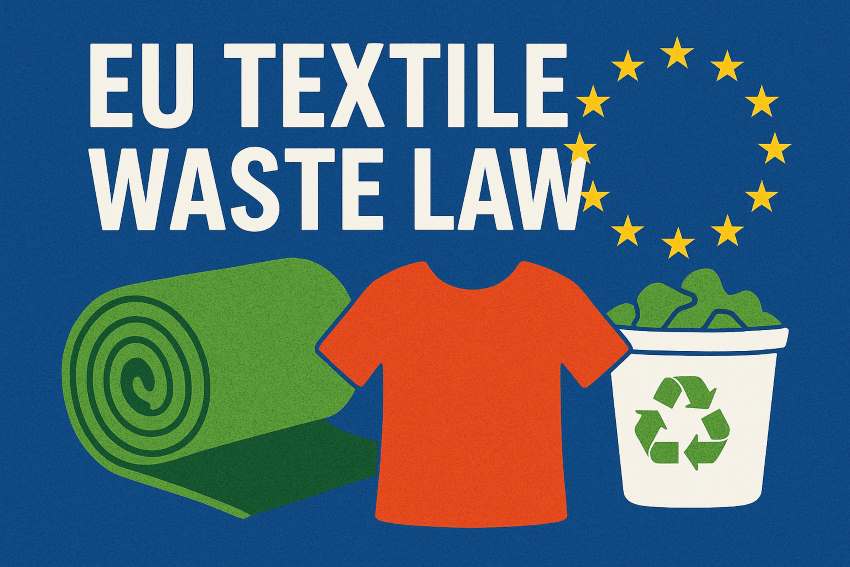
Eleven countries urge EU for strategy to curb waste in textiles
In a joint paper sent last week, eleven European countries—Austria, Belgium, Denmark, Finland, France, Germany, Luxembourg, the Netherlands, Norway, Spain and Sweden—urged the European Commission to formulate a strategy to implement ambitious measures to crack down on waste in the textiles industry.
The countries urged the commission to introduce an ambitious and comprehensive strategy covering the entire value chain.
They said, this will help Europe achieve its climate ambitions and make its textile industry more competitive and sustainable.
Annually, European citizens consume 26 kg of textiles, out of which 11 kg are discarded due to ‘fast fashion’ trends. The strategy will make sustainable textiles the norm and open the way to a cleaner and healthy future.
The joint paper was proposed after the Netherlands invited EU countries in June to discuss sustainability in textiles. It was sent to European Commission leaders, including Environment Commissioner VirginijusSinkevicius and EU Climate Chief FransTimmermans. The letter called for clear, ambitious targets for textile collection, reuse, and recycling.
The countries urged the Commission to explore materials having textile-to-textile recycled content requirements, which would boost recycling rates. They also called for more research in decipher ways to encourage the longer use of clothes and prevent the destruction of unsold garments, which some shops end up doing.
The signatories also urged for a mandatory label to curb Greenwashing amongst brands.
Fast Retailing’s revenues surge by 6.2%
Revenues of Uniqlo-owner Fast Retailing surged by 6.2 per cent to £13.72 billion in the year that ended 31 August 2021.
As per the Apparel Resources, the company’s operating profit also surged by 66.7 per cent to £1.6 billion during the period. It attributed this majorly to Uniqlo operations.
Uniqlo International’s year-on-year revenues rose by 10.2 per cent to post £5.9 billion, while its operating profit jumped by 121.4 per cent to £714 million.
The brand’s online sales grew by 20 per cent in the said period.Region-wise, it posted record performance in China all through the year, while sales improved in Europe and North America since May 2021 following easing of restrictions.
However, there was fall in revenues and profits from south Asia and southeast Asia regions owing to continuous increase in COVID-19 cases. The brand has over 2,200 stores in 25 markets including Japan.
Kornit Digital to organize Kornit Fashion Week Los Angeles +Industry 4.0 event
Digital textile printing technology leader, Kornit Digital will organize Kornit Fashion Week Los Angeles + Industry 4.0 Event from November 02 to 05, 2021 in Los Angeles, California (US).
As per Apparel Resources, the exhibition will celebrate innovations in fashion technology and showcase Kornit’s visionary alternative model for creating environmentally-responsible fashion that unleashes endless creativity, driven by real-time demand, eliminating waste while transcending supply chain challenges – the future of fashion, delivered by digital.
Demonstrating Kornit’s far-reaching capabilities for maximizing creativity while minimizing carbon footprint, the event will include a fashion runway presentation incorporating 22 visionary fashion designers, in 17 individual shows spanning all four days of the event.
Each designer will launched new collections produced with end-to-end digital means, in a fraction of the time normally required, sustainably and with exponentially more design freedom. These include designs by ViviBellaish, threeASFOUR, Guvanch NYC, Naot, Asher Levine, and others from Los Angeles, New York, Tel Aviv, Paris, etc.
Reebok’s new collection retains 15% more heat
Reebok’s new apparel collection, Thermowarm+Graphene, helps retain heat 15 per cent more heat by printing graphene on the internal side of the clothing. The new collection includes hoodies, jackets and pants. It is now available globally on Reebok's online store, with prices ranging from $70 to $140. Reebok plans to release more options in the collection in the future.
According to Reebok, the collection demonstrates the first commercially-priced use of graphene in sportswear. The graphene-infused technology has been integrated in over a dozen silhouettes ranging from performance running leggings to outerwear jackets, offering consumers an assortment that fits into a variety of athletic lifestyles. All these garments feature a strategically placed
Thermowarm+Graphene grid print in the most pivotal heat retention zones where it would most benefit consumers – in garment hoods, shoulder panels and upper leg panels. When wearing a Thermowarm+Graphene apparel piece, body heat will be absorbed and retained across the entire graphene-infused printed panels to help the consumer stay warmer in cold temperatures.
Total number of LEED Certified garment factories in Bangladesh reaches 150
With one more Bangladesh factory, the Denim Processing Plant acquiring the Leadership in Energy and Environment Design (LEED) certificate, the total number LEED certified garment factories in the country has grown to 150.
The certificate from the US Green Building Council (USGBC) will steady the country's global top position in green revolution in the textile and readymade garment sector, says Bangladesh Garment Manufacturers and Exporters Association (BGMEA).
In all Bangladesh will have 44 platinum, 93 gold, nine silver and four lead-rated certificates. The country owns nine out of the top 10 environment-friendly garment factories in the world. It also houses 39 of the top 100 global platinum factories in the world
In May 2012, Bangladesh's Vintage Denim Studio was recognized as the first LEED platinum certified factory in the world.
Apparel entrepreneurs in the country have stepped up their investments in green initiatives post the 2013 Rana Plaza building collapse, which killed 1,134 people and injured more than 2,000.
As per Faruqe Hassan, President, BGMEA, these have helped recover the image of the industry and also the country.
Garment exports by Cambodia surge 11.40% to $8,2417 billion
Cambodia’s garment exports surged by 11.40 per cent to $8.2417 billion during January-September 202 as against the same period last year, shows data by the General Department of Customs and Excise.
As per Garment Manufacturers Association in Cambodia, garment sector in the country managed to avoid sliding into negative territory despite COVID. The sector has been gaining market share due to the unprecedented challenges arising from political issues and COVID-19 ramifications of competing countries, says a report by the The Phnom Penh.
Hong Vanak, Director, International Economics, Royal Academy of Cambodia, says, the rise in garment exports bodes well for economic activity in the Kingdom, as other countries reel under the severe conditions wrought by COVID-19.
He said the government is also striving to streamline the local investment and business environment to instill confidence among businesspeople and investors amid expanding market access to a range of countries.
It has signed new FTAs with China, South Korea and other markets to make Cambodia, a better investment destination, he underlined.
In 2020, Cambodia’s garment exports plunged by 10.44 per cent to $9.50171 billion as against $10.60986 billion in 2019, according to the Ministry of Commerce.
Cifra launches new shapewear range
Cifra has launched a new high-tech shapewear range that uses patented WKS technology to create without size constraints and prevent skin markings.
As per a Textile Focus report, through this collection Cifra focuses on the plus size market and sustainability With Step and OekoTex certified traceability, the company provides strict transparency across the production chain, which extends to partner selection, from yarn suppliers to dye houses.
Cifra’s eco-friendly collection comprises items manufactured from recycled yarns such as Econyl, Renycle, Qnova, as well as biodegradable Amni-Soul eco and natural yarns merino wool and Tencel, all of which are produced with zero waste owing to the Zero Waste initiative. The collection will be on display at Performance Days in December and Ispo in January.
A textile manufacturer, CifraSpA offers natural fabrics such as cotton, wool, micro modal, and silk. The company serves customers in Italy.
Current textile business scenario positive: ITMF survey
As per the 10th ITMF Corona-Survey conducted by International Textile Manufacturers Federation (ITMF) among companies around the world in all segments of the textile value chain, the current business situation is mostly positive.
A report by the Knitting Industry shows, around 48 per cent of respondents business to improve March 2022 while 13 per cent foresee gloomy days.
Upstream segments are seen to be faring better than downstream ones since the recovery is under way. Supply chain disruptions are the leading cause for delay in recovery of upstream segment as delays in the supply of raw and intermediate materials accumulates down the value chains.
Furthermore, the shows a significant rise in order intake in September on a global level compared to May and July 2021 and companies anticipate a further increase in the next six months. Order backlogs are expected to remain stable. However, differences between regions and segments may remain.
Turkey’s cotton business to strengthen in upcoming period
Expected rise in the cotton harvested area, production, imports and total domestic consumption is expected to strengthen Turkey’s cotton business in the upcoming period. As per reports, cotton harvested area will increase due to favorable weather conditions, rising global cotton prices, better yield and increased incentives from the Turkish government.
From 0.57 million hectares in market year (MY) 2019-20, Turkey’s area under cotton harvest will rise again by 28.57 per cent to reach 0.45 million hectares in MY 2021-22.
Cotton production will rise by 19.05 per cent from 0.75 million metric tonne in MY 2019-20 to 0.75 million metric tons in MY 2021-22. Turkey imported 1.02 million metric tonne of cotton in MY 2019-20 and 1.16 million metric tonne in MY 2020-21. It is now expected to import 1.18 million metric tonne in MY 2021-22.
Turkey’s cotton consumption is expected to expand by 10.61 per cent to 1.83 million metric tonne in MY 2021-22.