FW
Asian apparel factories face danger of rising sea level
 A new analysis by researchers at Cornell warns, rising sea levels threaten to take large apparel producing areas across Jakarta, Phnom Penh, India, Bangladesh, Guangzhou, Columbo and Ho Chi Minh City underwater by 2030. The research uses the open-source factory database, classified under, the Open Apparel Registry (OAR)
According to this research, in order to survive, these factories need to shift to a higher ground. The analysis emphasizes that the industry cannot wait any longer to take action towards a more sustainable future. It needs to use cases for data and the potential from it to inform crucial decisions around policy, investment, sustainability and ESG initiatives in the global fashion sector.
Standardized format for disclosing information
The OAR - a not for profit –can help the industry improve data quality in the apparel sector by addressing specific industry challenges and creating a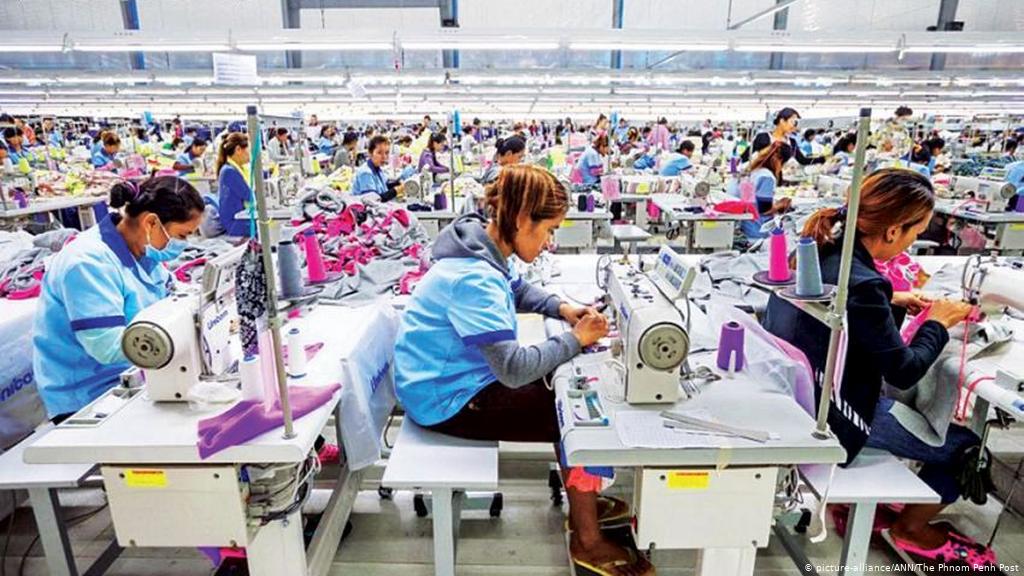 standardized format for disclosing facility information, making data publicly available to all industry stakeholders, cleaning and matching facility data and enabling organizations to connect disparate data sets. Its report has been released to assist stakeholders looking to support similar ventures, given the urgency of issues facing the apparel sector, says Natalie Grillon, Executive Director.
The OAR’s tool allocates a unique ID to all garment facilities across the world. The tool data is used by major global brands, civil society organizations, factory groups, multi-stakeholder initiatives and certification schemes. The data is received by over 400 contributors and mapped facilities 1800 subscribers and contains over 68,000 facilities, has received data from over 400 contributors and mapped facilities in more than 120 countries.
Powered by a sophisticated algorithm
The Open Apparel Registry (OAR) is a neutral, open-source tool mapping garment facilities worldwide and allocating a unique ID to each. With over 68,000 facilities in the database, data in the tool is contributed and used by organizations all over the world, including major global brands, civil society organizations, multi-stakeholder initiatives, certification schemes, factory groups, etc. The data is organized and presented in such a way that it improves the lives of some of the most vulnerable workers in global supply chains.
At its heart, the OAR exists to drive improvements in data quality for the benefit of all stakeholders in the apparel sector. Powered by a sophisticated name- and address-matching algorithm, the tool creates one common, open registry of global facility names and addresses, with an industry-standard facility ID. These OAR IDs do not replace any existing ID schema, rather they serve as a ‘central source of truth,’ enabling interoperability across systems and creating a collective understanding of shared connections at the facility level.
PolyUbags three TechConnect awards
The Hong Kong Polytechnic University (PolyU) was awarded three prestigious prizes at this year’s TechConnect World Innovation Conference and Expo (TechConnect) in Washington DC.
PolyU research teams excelled in the area of “Materials & Manufacturing” with two innovations being awarded TechConnect 2021 Global Innovation Awards. The PolyU innovators had developed a nature-inspired ‘sweatable’ textile material capable of ultra-fast sweat dissipation; as well as inventing an environmentally friendly technique to synthesizing MXenes – a promising energy storage material designed to meet rising global energy demands.
In the area of “AI, Data, Cyber & Software”, PolyU has developed 3D LiDAR-aided GNSS precise positioning technology that allows highly robust centimetre-level global positioning in urban environments for automated driving, which also received a TechConnect 2021 Global Innovation Award.
PolyU is the only higher education institution in Hong Kong this year that received the awards, which recognise the top 15 per cebt of submitted technologies based on their potential positive impact in different technological areas. Other awarded innovators include those from global-renowned universities, institutes and laboratories, including several national laboratories affiliated with the US Department of Energy. It is the fifth year that PolyU research teams have been awarded the prestigious prizes at the world's largest multi-sector event for fostering development and commercialising innovations.
Garmon Studio joins Stella Blu for a sustainable capsule collection
Application laboratory of Garmon Chemicals, Garmon Studio has joined Stella Blu, a denim fabric manufacturer that aims to be the resource for innovative, novel and exciting indigo fabrications, to create a completely sustainably and recycleable capsule collection, celebrating The Jeans Redesign’s July 2021 updated guidelines for denim circularity.
The collaborative effort honors the mission of The Jeans Redesign, a project of the Ellen MacArthur Foundation that provides a framework for the denim industry to scale practices for a circular economy. The capsule collection was developed using all the principles of denim circularity to give a tangible example of how the denim supply chain can achieve greater sustainability.
The capsule collection was presented at Denim Première Vision, an event dedicated to the world of denim, its trends, its market and its unique community. Held in Milan at SuperstudioPiù, Denim Première Vision is the first in-person event after nearly two years of pandemic-induced digital-only events, making it the ideal setting to announce the collaboration.
In line with the latest needs for traceability and transparency in the denim industry, Garmon Studio and Stella Blu worked together to present a capsule collection that is durable, recyclable and made with safe materials and processes. reserving our planet and its living beings, is a true demonstration of alignment, transparency and real circularity in the denim industry.
Material Exchange to acquire agency portion of OlahInc
Virtual marketplace Material Exchange will acquire the agency portion of denim consultancy and events business Olah Inc. As per a Sourcing Journal report, the acquisition will help the platform expand into expert services with a special focus on sustainability. For more than 60 years, Olah Inc. has served the denim and sportswear industries with its educational offerings, evolving from a Canadian textile agency to a multi-faceted New York-based consultancy.
In recent years, the company has doubled down on its sustainability content, releasing focused reports and hosting educational series as part of its newly launched Transformers Foundation, a nonprofit that actively addresses and facilitates change in the denim supply chain.
Initiated in July 2020, the Material Exchange partnership aims to complement the Olah Inc.-owned Kingpins shows and allow exhibitors to showcase their textiles year-round. The digital format aims to provide denim brands with tools for sourcing denim and denim-related fabrics in real-time and view detailed product data on demand. Soon after, Kingpins debuted Kingpins Exchange, an online denim marketplace and digital denim showroom created in partnership with Material Exchange that Olah described as the “Netflix” of materials sourcing. Using the platform, companies can essentially source denim on demand.
Brazil’s textile brand Savyon participates in Interfiliere
Held in September in Paris, French trade show Interfilière saw the participation of the Brazalian textile brand Savyon, which was supported by Texbrasil (Internationalization Program for the Brazilian Textile and Fashion Industry) – the result of a partnership between Abit (Brazilian Textile and Apparel Industry Association) and Apex-Brasil (Brazilian Trade and Investment Promotion Agency).
As per a Texbrasil report, the company has been in the market for more than 50 years. It s one of the main jacquard manufacturers in the country and develops elaborate wefts for several segments. One of them is the beach, intimate and fitness fashion, focus of the French fair.
For the company, Interfiliere had a good outcome, considering the unstable post-pandemic scenario in Europe. Because of travel restrictions, the September edition had mainly French buyers.
Savyon has been present in Europe for more than 20 years and, besides France, also operates in Italy and England.
Global PSF market to grow at 5.2% CAGR from 2020-27
The global market for Polyester Staple Fibers (PSF) is projected to grow at 5.2 per cent CAGR over 2020-2027 to reach a revised size of $37.7 billion by 2027. This was stated in the report tilted “Polyester Staple Fibers (PSF) – Global Market Trajectory & Analytics” by ResearchAndMarkets.com
As per Textile Focus, the apparel segment is projected to record a 5.9 per cent CAGR and reach $18.9 billion by the end of the analysis period. After an early analysis of the business implications of the pandemic and its induced economic crisis, growth in the home furnishing segment is readjusted to a revised 5 per cent CAGR for the next 7-year period.
World`s second largest economy, China is forecast to reach a projected market size of $7.9 billion by the year 2027 trailing a CAGR of 8 per cent over the analysis period 2020 to 2027.Other noteworthy geographic markets including Japan and Canada are forecast to each grow at 2.8 per cent and 4.7 per cent respectively over the 2020-2027 period. Within Europe, Germany is forecast to grow at approximately 3.2 per cent CAGR.
Mahlo to participate in second virtual Innovative Textile and Apparel Show
Mahlo plans to participate in the second virtual edition of the Innovative Textile and Apparel Show featuring textile machinery experts from across the world. The Bavarian machine builder will present process optimization in a digital environment. Its exhibits will include process control systems such as the Patcontrol PCS for pattern recognition and the Famacont PMC for controlling weft and stitch course density also contribute to high-quality textile production and finishing. Mahlo aims to support manufacturers in optimizing their production processes and thus also the end product in a cost-efficient way.
Mahlo will focus on the Qualiscan QMS quality measurement system. The modularly designed system, which consists of sensors and measuring frames, measures, logs and controls critical parameters such as basis weight, moisture or layer thickness across the entire fabric width. Depending on the application and task, different measuring methods are used for this purpose.
Global spun yarn market to grow by 2% CAGR by 2026
Currently estimated to be worth 52.5 million tonne, the global spun yarn market is projected to grow at 2 per cent CAGR to reach a revised size of 59.3 million tonne by 2026.
As per a Textile Intelligence report, Cotton, one of the segments analyzed in the report, is projected to record a 1.9 per centCAGR and reach 34.8 million tonne by the end of the analysis period. After a thorough analysis of the business implications of the pandemic and its induced economic crisis, growth in the polyester segment is readjusted to a revised 2.5 per cent CAGR for the next seven-year period. These are the findings of a new study released by StrategyR.
The spun yarn market in the US is estimated at 14.5 million tonne in the year 2021. World`s second largest economy China is forecast to reach a projected market size of 11.3 million tonne by the year 2026 trailing a CAGR of 3.8 per cent over the analysis period. Other noteworthy geographic markets such as Japan and Canada are forecast to grow at 0.3 per centand 1.4 per cent respectively over the analysis period. Within Europe, Germany is forecast to grow at approximately 0.8 per cent CAGR.
adidas launches additional share buyback program
adidas has decided to launch an additional share buyback program. Starting on October 18, 2021, the company plans to buy back shares worth € 450 million until the end of the year. Taking into consideration the share buyback completed at the end of September, adidas will buy back shares in a total amount of € 1 billion in 2021. Including the dividend payment of € 585 million in May, the company will return nearly € 1.6 billion to its shareholders this year.
adidas’ new strategy, ‘Own the Game,’ s expected to generate substantial cumulative free cash flow until 2025. The company plans to share the majority of it – between € 8 and € 9 billion – with its shareholders through dividend pay-outs as well as through share buybacks. In this context, adidas had launched a share buyback program in July which was completed successfully at the end of September. Between July 1 and September 30, 2021, the company bought back 1,851,522 shares for a total amount of € 550 million.
China’s cotton yarn imports rise by 7.9 % in August
Cotton yarn imports of China in Augustincreased by 7.9 per cent to reach 168.9kt and up 0.8 per cent on the month. As per a CCF Group report, imports amounted to about 1,400kt cumulatively in January-August increasing by 22.6 per cent year on year, and 3.6 per cent from the same period of 2019.
According to export data of foreign markets in August,cotton yarn exports of Vietnam saw a small decrease on the month partly because the pandemic delayed the export. The control and prevention measures in southern zone surrounding Ho Chi Minh have been eased, but the spinners still ran at low rate amid severe pandemic. On the other hand, orders of mills in central and southern zones performed well. Therefore, overall exports to China did not slump and remained relatively stable. In Sep, this situation may sustain. Cotton yarn exports of Pakistan in Aug increased. They were ordered in Jul when the buying sentiment of siro-spun yarn in China was mild. Sep arrivals to China are expected to increase further. Aug arrivals from India and Uzbekistan have not been released, but looking from yarn and apparel exports, India’s Aug exports is assessed to decline slightly on the month and Uzbekistan’s may remain stably upward. It is initially estimated that cotton yarn imports of China in Sep from Vietnam is at 69kt; from Pakistan 23kt, from India 25kt, from Uzbekistan 25kt and from other regions 25kt.
Arrivals of cotton yarn imports of China in September declined, and the sales were reported to be slow. The traditional peak season did not show bullish sentiment it should have been. On the contrary, downstream operating rate slid sharply weighed by dual control on energy consumption and electricity restriction. Cotton yarn was sold slowly and traders lowered prices with upset mindset. However, looking from the inventory, structural issues were relieved.