FW
Levi Strauss & Co expects Q4 revenues to grow by 21%
Levi Strauss & Coexpects holiday-quarter net revenue growth of 21 per cent from a year earlier, while analysts were expecting growth of 22 per cent.
Levi also expects fourth-quarter earnings per share to be between 38 cents and 40 cents per share, compared with analysts average expectation of 40 cents per share.
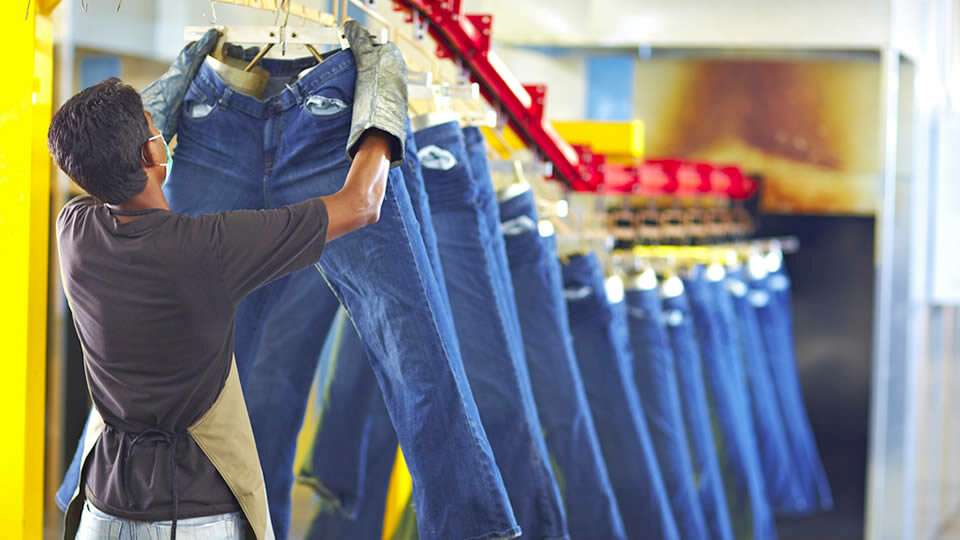
Boosted by an uptick in demand for jeans from people refreshing their wardrobes as they returned to normal social life following easing pandemic restrictions, the company beat third-quarter revenue and profit estimates,
Net revenue for the company rose to $1.50 billion from $1.06 billion in the third quarter ended August 29. Analysts on average had expected $1.48 billion, according to IBES data from Refinitiv.
The company’s shares rose by 2 per cent in extended trading after its board approved a $200 million share repurchase plan. The company has a market capitalization of $49.49 billion, according to Refinitiv data.
Levi also benefited from a reopening of the economy in its European markets and investments in its direct-to-consumer business.
Analysts expect Levi to face less supply pressure than peers due to its minimal reliance on Vietnam, an apparel manufacturing hub that has seen several factories close due to COVID-19 outbreaks and lower usage of the congested West Coast port.
Government policies help boost Bangladesh’s textile export: BTMA
The supportive policies of the government have boosted investment in Bangladesh’s primary textile sector to $12 billion, says Mohammad Ali Khokon, President, Bangladesh Textile Mills Association (BTMA). He also noted the contribution of textile and clothing in total export revenue was 82 per cent.
In FY 2020-21, Bangladesh earned $38.35 billion in export revenues of which textile and clothing export was $31.45 billion, Khokon said while addressing a program arranged by Cotton Council International, US and Bangladesh Cotton Association (BCA) marking World Cotton Day 2021.
The sector is helping the country to retain foreign exchange and enriching the foreign reserve as well, he added.
Khokon said in fiscal year 2020-21, Bangladesh imported 8.2 million bales of cotton. He further said the cotton import from the US is expected to increase to 14% in the coming year. He also requested US Ambassador to Bangladesh Earl R Miller and Brazil Ambassador to Bangladesh Joao Tabajara de Oliveira Junior to press their governments to increase cotton export to Bangladesh.
Denim Premiere Vision’s next edition to be a hybrid show
After nearly two years of digital-only events, Denim Première Vision will hold its next edition as a hybrid trade show from October 13-14 at SuperstudioPiù in Milan and online.
A platform for players across the global denim supply chain to showcase their concepts for Spring/Summer 2023, the event will also be an opportunity for education. In-person trend presentations, workshops and press conferences will be complemented with “synergistic” virtual talks available to view from Oct. 11-15.
Exhibitors include weavers, fashion manufacturers, laundries, finishers, accessory makers and technology developers from Italy, France, Spain, Turkey, Japan, Morocco, Pakistan, Egypt and China, among others.
The Milan show is also chance for Denim Première Vision to return to its roots as a leading voice fashion and trend forecasting. In addition to trend seminars, physical events will include a presentation by PG Denim that will blend history, theater and denim. On the second day of the show, garment dyeing company TintesEgara will host a sustainable dye workshop in collaboration with anthropologist and artisan Emina Batik. The workshop will examine how to use old batik techniques to dye a fabric with natural and indigo dyes, using as little water and energy as possible.
Gokuldas Exports launches QIP to raise Rs 300 crore
Apparel maker and exporter Gokuldas Exports has launched a qualified institutional placement offering (QIP) to raise Rs 300 crore from institutional investors including Goldman Sachs, HSBC, Nippon and others. The company plans to use the funds for repayment or prepayment of all or a portion of its borrowings, financing working capital requirements, inorganic growth opportunities and for making strategic acquisitions, entering into a new business line, the company said in its offer document filed with stock exchanges.
Incorporated in 2004, Gokaldas Exports is one of the largest manufacturer and exporter of apparels in India with an annual turnover of $200 million.
SRTEPC applauds government for approving 7PM MITRA parks
Dhirubhai R Shah, Chairman, SRTEPC has applauded the government for approving to set up of the 7 PM MITRA parks. These parks will play will provide a ready-made international quality manufacturing platform in plug and play mode, he added. The government of India recently approved setting up of 7 PM Mega Integrated Textile Region and Apparel (MITRA) Parks across Indi.a First announced in the Union Budget for 2021-22, the proposal aims to realize the government’s vision to build an Aatmanirbhar Bharat and position India strongly on the Global textiles map. The integrated ecosystem will help in further growth of textile segment in the economy in general and the MMF textile sector in particular which is rare globally, added Shah.
The 7 PM MITRA parks will be setup at Greenfield Brownfield sites located in different states. Maximum Development Capital Support (DCS) of Rs 500 crore to all Greenfield PM MITRA and Rs 200 crore to Brownfield PM MITRA will be provided for development of common infrastructure and Rs 300 crore of Competitiveness Incentive Support (CIS) will also be provided to each PM MITRA park for early establishment of textiles manufacturing units in PM MITRA. State government support will include provision of 1,000 acre land for development of a world class industrial estate.
The parks will have facilities such as an incubation centre and plug & play facility, developed factory sites, roads, power, water and waste water system, common processing house & CETP and other related facilities. They will also have workers’ hostels and housing, logistics park, warehousing, medical, training and skill development facilities
According to Shah, the parks will boost production and export of international quality MMF textiles viz., manmade fibre, MMF yarns, MMF fabrics and MMF made-ups, and garments in India. This will also help India to increase market share in overseas markets and position India a one of the textile leaders.
Nike emerges the hottest selling brand amongst teenagers: Survey
Nike is the hottest selling footwear and apparel brand amongst teenagers in the Piper Sandler’s 42nd semi-annual survey this Fall. The brand garnered 27 per cent votes in the apparel category, followed by American Eagle at 7 per cent, and PacSun, Adidas, and Lululemon at 5 per cent. Nike’s vote share was larger in footwear at 57 per cent. Vans came next with 11 per cent, followed by Adidas, Converse, and Foot Locker. In September, Nike reported 16 per cent rise in Q1 revenues to $12.2 billion. The results fell short of estimates of $12.46 billion in revenues from a survey of analysts.
Like other footwear brands, Nike has been significantly impacted by ongoing factory closures in Vietnam, the second largest supplier of footwear to the United States behind China. Nike had almost two months of no unit production in Vietnam when two of its footwear suppliers in Vietnam stopped production in July. Vietnam accounted for 51 per cent of Nike’s footwear and 30 per cent of apparel units last year.
Clothing was the number one spending priority for teens at 22 per cent for the first time since 2014. Athletic emerged as a dominant category in the footwear and apparel sector. These categories are dominated by legacy brands like Nike and Adidas, smaller challengers such as Lululemon and Gymshark are widening their reach.
Denmark Trade Council organizes webinar with BGMEA
The Trade Council of Denmark-Bangladesh, in collaboration with BGMEA on October 5, 2021 organized a webinar to create awareness about technological solutions from Denmark for green building and industrial processes. As per a Textile Today report, the webinar aimed to facilitate the sustainable economic transition of Bangladesh. The country has the highest number of green garment factories in the world with 148 LEED-certified green factories by the USGBC, said Faruque Hassan, President, BGMEA.
The association is working on industrial symbolize, digitalization, product development, and innovation to take Bangladesh textile and RMG to the next level. The country has already launched a large number of projects for sustainable production with LEED. It currently has 135 LEED certified projects while 500 new projects have been registered for LEED certification, by U.S. Green Building Council. In 2021, Bangladesh received the USGBC Regional Leadership Award.
Khondkar Morshed Millat, General Manager, Sustainable Finance Department (SFD), Bangladesh Bank added, the central bank of Bangladesh is passionate about green banking, green financing, and sustainable financing since 2009. It has taken efforts to prioritize based on their contribution towards sustainability with respect to environmental, social, economic, and governance issues that are in conformity. Its primary objective is to help steer private capital to activities that benefit the environment in the long term.
Bangladesh Bank has four types of funds for the manufacturers who work on green energy, green product, and initiatives. If an ideal fund size for green building and green industry is almost BDT 1.50 to 2.00 billion. Against this requirement, the maximum fund from the BB refinancing scheme will be BDT 0.20 billion for green building and 0.50 billion for green industry and the rest will be on the owner’s bank’s own finance and equity, Milllat added
Chinese fashion brands eye overseas expansion
Chinese-owned fashion brands are looking to expand abroad, sparking a trend of new labels being established in the country with the goal of international growth, says Yishu Wang, Co-founder, Half a World, a firm that offers marketing advice to brands seeking to expand overseas. Fashion labels, including Shang Xia, Icicle and Fosun Fashion Group, are opening flagship stores in Paris and hiring French designers. Founded a decade ago by Jiang Qiong Er and French luxury group Hermes International, Shang Xia started out as a lifestyle brand focused on showcasing Chinese craftsmanship and then expanded into ready-to-wear fashion.
While the label is well-known in China, it has yet to achieve broader commercial success. Shang Xia showed its commitment to Paris when it held its first fashion show on the official Paris Fashion Week, sending a lineup of models in polished suits in bright colours along a circular runway. The label recently set up a design studio in Paris to complement production in Shanghai.
Shang Xia executives said they are seeking to broaden their customer base among younger consumers, add new stores in Asia this year and push into the digital realm beyond China next year.
Fosun Fashion Group has been working to revive the historic French label Lanvin with younger, international consumers in mind, and hired Bruno Sialelli French designer from LVMH-owned Loewe label for the job. For spring ’22 ready-to-wear runway show in Paris, the designer showed slim party dresses, worn by models in towering platform shoes with flared heels, along with an array of handbags and a new pair of futuristic sneakers – accessories are key to the label’s growth strategy.
Vietnam’s garment exports stagnate due to labor shortage
As per the Vietnam Textile and Apparel Association (VITAS) garment and textile firms in the country are unable to complete export orders due to severe labor shortages and broken supply chains. Many workers in South Vietnam migrated to their hometowns as the fourth and most intense COVID-19 wave caused many textile companies to close or operate at partial capacity between July and September. Around one million workers in the sector, quit their jobs or stayed away from work with or without pay, says VITAS.
Supply chains continue to be broken as most foreign clients shifted their orders to other countries. Many companies in the regions adopted the stay-at-work and commute-to-work models, but they could only get 10-30 percent of their employees back to work. This resulted in garment and textile exports falling by 9 percent month-on-month in September to $3 billion. This year, VITAS expects exports to reach $33.5-34 billion if the pandemic continues until early December, $36-36.5 billion if until November and $37.5-38 billion if it is controlled by October.
Dolce & Gabbana sells nine-piece collection of digital NFTs
Dolce & Gabbana sold a nine-piece collection of digital NFTs or nonfungible tokens at an auction held on September 30. A report suggests, the brand also sold some actual couture for a total of 1,885.719 Ether (Ethereum cryptocurrency), or the equivalent of nearly $5.7 million. The sale has increased cryptocurrency’s value by 10 per cent— making the collection worth $6.1 million as the payment to Dolce & Gabbana will be made at market rates rather than values at the auction’s close. The purchasers included Pranksy and Seedphrase, two leading NFT collectors; Boson Protocol, a company building a crypto-commerce protocol; and Red DAO, a decentralized autonomous organization formed in the crypto community to invest in digital fashion.
The project was conceived in April by Shashi Menon, the Dubai-based publisher of Vogue Arabia, and Founder and CEO, UNXD Together, they created Collezione Genesi — or the Genesis Collection. Five pieces of the collection are physical creations, designed and executed by Dolce & Gabbana, with virtual iterations by UNXD for the metaverse: two versions of The Dress from a Dream, in gold and in silver, both with shimmering beads and crystal accents;
The four other pieces are solely digital: three richly embroidered men’s jackets and The Impossible Tiara, made of gems that can’t quite be found on Earth. Based on sketches by the brand’s designers, Domenico Dolce and Stefano Gabbana, they were constructed by UNXD, using the Polygon blockchain.