FW
Indo Count to showcase expanded Pure Earth range at New York Home Fashions Market
Indo Count plans to showcase its expanded Pure Earth range at the New York Home Fashions Market.
As per a Home Textiles Today report, the company will showcase three distinctive bedding innovations.These new offerings will appeal to environmentally conscious customers who value sustainable, renewable products which enhance comfort and provide better sleep while incorporating the newest technologies to reduce environmental impact and resources required for manufacturing, says GautamSareen, SVP– marketing
The product offering features a sustainable blend of cotton and biodegradable polyester – a blend aimed at reducing the persistence of plastic microfiber pollution in oceans and waterways from laundering, and plastic accumulation in landfills. The construction is designed to mimic the comfort and hand of conventional cotton and polyester while providing a lower polluting footprint.
Adds KK Lalpuria, Executive Director and CEO, advancements to the Pure Earth sheets complement the company’s commitment to sustainable processes to create an incredible new line of products that feel good while doing good for the environment and consumer.
Yarn Expo Autumn to host 430 suppliers
To be held from October 9 to 11, 2021, Yarn Expo Autumn will host around 430 leading suppliers at the National Exhibition and Convention Center (Shanghai). The suppliers will showcase a wide range of products from innovative fancy yarns to high-end cashmere yarns, and functional chemical fibres to quality cotton and sustainable regenerated fibres. Covering 27,000 sq. mt, Yarn Expo Autumn will also have an overseas zone featuring yarn and fibre exhibitors from countries and regions including Hong Kong, India, Switzerland, Taiwan, the US and Vietnam.
The exhibition also offers an online business matching platform for buyers who cannot physically attend the show. Buyers can select their suppliers and arrange online meetings through h AI-driven matching recommendations, instant messaging and video call functions. The trade show will feature latest developments and market trends at themed areas and fringe program events, including the China Fibre Fashion Trends Display Zone organized by the China Chemical Fibre Association, the China Knitted Yarn Fashion Trends presented by the China Knitting Industry Association and the New Fibre New World – Textile Materials Innovation Forum. Various other product presentations will be led by industry experts, business leaders and scholars.
Yarn Expo Autumn is organized by Messe Frankfurt (HK) and the Sub-Council of Textile Industry, CCPIT.
Kering appoints Thierry Marty President, North & South-East Asia Pacific
Kering has appointed Thierry Marty, President of North & South-East Asia Pacific regions including Japan, Korea, South-East Asia, Australia and New Zealand, effective from October 1, 2021. Marty will be based in Seoul and report to Jean-François Palus. He has over 20 years of luxury experience in Asia, and has lived in Singapore, Tokyo and Seoul. He started his career at Deloitte before joining LVMH in 1995.
A global luxury group, Kering manages the development of a series of renowned fashion including Gucci, Saint Laurent, Bottega Veneta, Balenciaga, Alexander McQueen, Brioni, Boucheron, Pomellato, DoDo, Qeelin, Ulysse Nardin, Girard-Perregaux, as well as Kering Eyewear. The organization enables its houses to set new limits of creative expression while ensuring a sustainable industry growth.
Grasim Industries to initiate action against DCIT for tax demand
Grasim Industries aims to initiate action against income tax department for demanding Rs 8,334 crore as capital gains tax on sale of shares in a group firm. Grasim Industries has accused the Deputy Commissioner of Income Tax (DCIT) of imposing a capital gain tax on the value of shares, without considering that the shares were issued to the shareholders pursuant to the scheme of arrangement and no consideration was received by the company which could be subjected to tax.
DCIT has raised a demand for the assessment year 2018-19 with regards to the company’s merger with Aditya Birla Nuvo and Aditya Birla Financial Services. The commissioner has valued the shares issued by the resulting company Aditya Birla Capital at Rs 24,037 crore as the sale consideration for transfer of undertaking and has made the addition of capital gains of Rs 22,772 crore to the income of the company as part of scrutiny assessment for the AY 2018-19. Earlier, the DCIT had sought dividend distribution tax for the same deal in 2019, which was stayed by the Bombay High Court.
APTMA to add 100 new textile plants in 2021
Gohar Ejaz, Patron-in-Chief, All Pakistan Textile Mills Association (APTMA) announced plans to add 100 new textile plants this year by investing $5 billion in the industry. As per a Daily Times, Ejaz says the new plants will help Pakistan boost textile exports and create 500,000 new jobs. Addressing the annual general meeting of the association at APTMA House, Ejaz said, the association hopes to achieve the current year’s textile export target of $21 billion.
Pakistan’s towel exports grew by 32 percent in FY21-22, garment exports grew by 19 percent, knitwear exports by 37 percent and bedwear exports by 29 per cent. Ejaz assured cotton farmers would get Rs 600 billion instead of Rs 200 billion paid to them last year. He said that cotton yarn is sufficiently available in the country for consumption in the value-added sector for export purposes as is evident from 25 per cent decline in cotton yarn export in quantitative terms from 0.522 million tonne in 2018 to 0.390 million tonne during 2021 and 26 percent in value terms.
Domestic production of cotton yarn was about 3.5 million tonne, of which 90 percent was used for value-added sector while only 10 percent was being exported, added Ejaz
Fast Retailing commits to minimize microfibers impact by 2030
Japanese holding company of brands like Uniqlo, Helmut Lang, Comptoir des Cotonniers, among others Fast Retailing has committed to minimize the impact of microfibers on the environment by signing the Microfiber 2030 Commitment. As per Spin off, established by The Microfiber Consortium (TMC), Microfiber 2030 Commitment aims to eliminate the environmental impact from microfibers.
The agreement mandates signing companies to conduct tests on their products and manufacturing processes, and contribute data to build an industry-wide database and assessment system. The agreement aims to encourage 80 per cent member companies to adopt research-based microfiber standards in their products and manufacturing processes, so that the release of microfibers into the environment is appropriately managed.
Fast Retailing will conduct prescribed fabric testing annually through 2023 and provide the data to TMC. This will be combined with data from member companies in a database, and used to develop tools and resources for the entire industry to achieve the Commitment. Fast Retailing will utilize this data and knowledge to implement measures to limit microfibers from its products and manufacturing processes and, by expanding best practices to the industry as a whole, contribute to achieving the Commitment.
C&A to modernize 400 stores across Europe
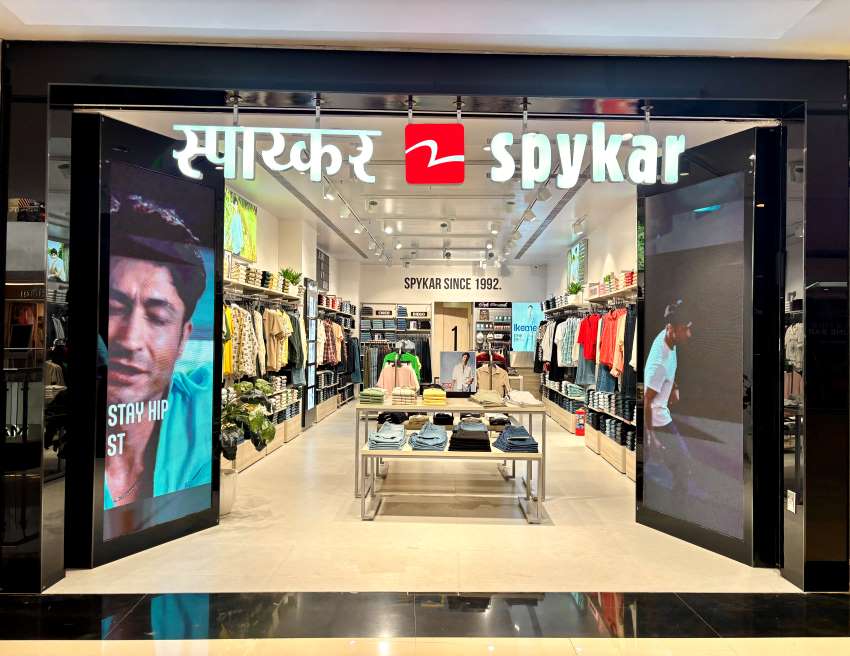
Apparel retailer C&A plans to modernize 400 stores across Europe in upcoming months. As per a Textile Today report, the new stores will combine corporate identity (CI) and communication to enhance customers’ shopping experiences. C&A will first modernize stores in Germany in Dusseldorf Schadowstraße, Trier, Berlin Köpenick and Oberhausen. The brand cleaned its showrooms to allow products to take centre stage, especially the denim collection.
C&A is a Belgian-German-Dutch chain of fast-fashion retail clothing stores, with European head offices in Vilvoorde, Belgium, and Düsseldorf, Germany. It has stores in many European countries. It serves only the largest markets of Asia, North America and South America. C&A's brands include Angelo Litrico, Avanti, Canda, Clockhouse, Here+There, Palomino, Rodeo, Westbury, Yessica, Yessica Pure and, Your Sixth Sense. The company was founded in 1841 as a Dutch textile company, taking its company name from its founders initials.
Industry not guilty of hoarding foreign currency, says JAAF
Responding to an article published in Daily FT on September 28, Sri Lanka’s Joint Apparel Association Forum (JAAF) said the accusation of hoarding foreign currency against them is baseless as it accounted for almost 40 per cent of the total exports and 52 per cent of merchandize exports in addition to 6 per cent of the national GDP. In an article titled ‘Exporters hoarding $ 2.76 b in earnings overseas: CB’, the Central Bank of Sri Lanka accused exporters of hoarding foreign currency export earnings. JAAF refuted all allegations and recommended legal action against companies that did not comply with the directives of full repatriation and conversion of 25 per cent.
JAAF also disputed the rationale advanced in the article in justification of enforced conversion of foreign currency earnings to rupees. It further noted controls of repatriation and conversion of foreign currency earnings were only implemented in the past year. In the same time, the national economy contracted by 3.6 per cent and the rupee fell by 7.5 per cent against the dollar. Between November 2019 and the present day, Sri Lanka’s reserves fell from $ 7.5 billion down to $ 2.8 billion. As such, the current foreign exchange crisis taking place in the country cannot possibly be attributed primarily to the practices of exporters broadly.
Moreover, international banks are increasingly wary of discounting Letters of Credit to Sri Lankan banks, resulting in already stretched supply chains facing even further difficulties. The Sri Lankan Apparel industry has never backed away from its responsibilities in ensuring operational continuity and continuous flow of foreign exchange earnings into the country, it added.
G-III Apparel Group, Inter Parfums team up for development of fragrances
G-III Apparel Group and Inter Parfums, Inc have entered into a long-term global licensing agreement for the creation, development and distribution of fragrances and fragrance-related products under the iconic Donna Karan and DKNY brands. Inter Parfums, Inc. will take on the exclusive license, effective July 1, 2022.
Jean Madar, Chairman & CEO, Inter Parfums, Inc. states, these global lifestyle brands will make excellent additions to the company’s portfolio. With this agreement, the company is gaining several well-established and valuable fragrance franchises, most notably Donna Karan Cashmere Mist and DKNY Be Delicious, as well as a significant loyal consumer base around the world. It also plans to launch new fragrances under these brands in 2023.
Morris Goldfarb, Chairman and CEO, G-III Apparel Group, adds, Inter Parfums ability to develop fragrances for an impressive portfolio of brands, combined with their extensive worldwide distribution capabilities, are a testament to their leadership position in the fragrance market. G-III is very pleased to partner with Inter Parfums in the next chapter of developing fragrance for the Donna Karan and DKNY brands.
M&S responds to British campaigners call to reduce waste and plastic use
Spurred on campaigners including veteran naturalist and broadcaster David Attenborough and Swedish teen activist Greta Thunberg, British retailers including Marks & Spencer have responded by cutting waste and their use of plastic.
Marks & Spencer has pledged to achieve zero carbon emissions across its own operations, its entire supply chain and products by 2040, ten years ahead of a government target for Britain. The brand launched a sustainability program in 2007 and in 2012 became the first major carbon neutral retailer for its direct emissions.
It aims to cut its total carbon footprint by a third by 2025 and has committed to zero deforestation in sourcing palm oil and soy by 2025, using more sustainable fibres by 2025 and supporting suppliers to advance lower carbon farming methods. To get customers on board, the retailer will now reward the 12.5 million members of its "Sparks" loyalty scheme with treats if they donate unwanted clothes to British-based charity Oxfam.
Last month, M&S upgraded its profit outlook after a jump in demand for food in its home market and an online clothes sales surge indicated a turnaround plan was working.