FW
Australia to host next edition of apparel sourcing expo in November
An apparel and textile sourcing expo will be held in Australia, November 12 to 14, 2019. This will attract some of the world’s leading apparel, accessories, textiles and footwear suppliers. More than 4,000 trade visitors are expected from Australia’s large fashion retailers, niche fashion brands, start-up labels, online outlets and independent fashion designers.
A runway program will showcase the collections of emerging and established fashion designers. Seminars will provide buyers valuable market insights and business tips. Seminars focused on the Australian market will also feature at the show and provide an opportunity for exhibitors to learn more about how to target the Australian market and understand more local trends and seasonality. In 2018, the expo attracted more than 720 manufacturers and agents from China, India, Pakistan, Bangladesh, Hong Kong, Indonesia, Vietnam etc. The 2019 edition is expected to attract an even wider participation.
India will be present for the seventh time. India is well-regarded in Australia as a quality and reliable supplier of textiles and apparel. In 2018, 130 companies from India participated, they included the Apparel Export Promotion Council, Wool and Woolen Export Promotion Council, and Handloom Export Promotion Council.
TEA requests banks to pass on repo rate reduction to exporting units
Tirupur Exporters' Association (TEA) has requested banks to pass on the reduction of repo rate by 25 paise to exporting units. The knitwears garment exporting units, particularly the MSMEs, would benefit by this as they have been suffering due to macro-economic changes.
Only few banks have passed on the benefit to the customers by which the real intention of the RBI for reduction of policy repo rate could not be achieved. The reduction of interest would pave way for the growth of investment and exports.
'Made in Rwanda' campaign boosts textile exports in the country
The “Made in Rwanda” campaign is helping to increase exports by small and medium businesses in different industries. Since 2017, Rwanda’s total exports have increased by 69 percent. Rwanda doesn’t have a market for their creations. The products are exported to the US, where they are sold in more than 100 boutiques for prices ranging from $28 to $225.
The textile industry in the country, like in most East Africa, had been dormant but then governments in the region decided to phase out and eventually ban the import of second-hand clothes. Handspun Hope is the only company in Rwanda engaged in processing wool for clothing. The company teaches women how to make hand-made knit apparel out of merino sheep and angora rabbit wool.
Handspun Hope imports merino sheep from Kenya and employs local farmers to look after them. After the farmers shear the sheep, the wool is collected and brought to Handspun Hope’s workshop, where it goes through many stages before products are made.
Labor shortage hits Surat units
The Surat textile cluster is facing a labor shortage. These units are heavily dependent on migrant labor, especially from Uttar Pradesh, Bihar, Orissa and Rajasthan. These workers haven’t returned after Holi and have taken a prolonged vacation especially in view of the elections. And this is happening at a time when textile units are flooded with orders for fabrics, dress materials, sarees and home furnishing due to the peak marriage season. Production has fallen by nearly 30 per cent. On an average, the daily minimum dispatch of textiles from Surat to other cities is around Rs 125 crores, but this has fallen to Rs 90 crores.
Surat’s textile cluster is one of the biggest textile clusters of India. Mandap cloth manufacturers in Surat and neighboring places are facing a similar issue. Surat is the biggest manufacturer of mandap cloth in the country with more than 250 units manufacturing only mandap cloth. There are nearly 1000 other units manufacturing mandap cloth as well as other fabrics. Surat’s textile cluster consists of more than 6.50 lakh power looms, nearly 4.50 lakh process houses and about 70,000 traders who add value in terms of making dress material, sarees and readymade garments. The industry is often plagued with labor absenteeism in case of natural calamities or disasters in the states from where migrant laborers hail.
Bangladesh tanneries need upgradation to increase global footprint
Bangladesh has the potential to expand its share of leather and leather products in the global market if it can make its tanneries fully compliant with international standards. This is possible since Bangladesh has the advantage of a secure domestic supply of raw hides and skins and can gain from a higher value addition by making products from processed leather. Since China is moving toward high-end markets of leather and related goods including footwear this has created opportunities for countries like Bangladesh. For Bangladesh, leather is the second largest earner of foreign currency after garments.
However, for now solid waste is not treated properly in the leather industry. Sludge is not properly managed, dumping yards are open and poorly managed and the drainage systems require more maintenance. Pipelines and motors used in central effluent treatment plants are not capable of taking the load of the peak season. Tanneries need incentives for better environmental management and ensuring occupational safety.
Bangladesh needs tanneries compliant with a Leather Working Group (LWG) standard. LWG is made up of member brands, retailers, leather manufacturers, chemical suppliers and technical experts that have worked together to develop an environmental stewardship protocol specifically for the leather manufacturing industry.
US suffers as trade deal with China hangs in a limbo
"The ongoing trade standoff between the US and China is likely to affect not only the Chinese but also the US apparel industry. The war is already taking a toll on supply chains, with apparel companies pulling their sourcing away from China and moving to other Asian countries. These issues were the highlight of discussion at this year’s American Apparel & Footwear Association’s (AAFA) Executive Summit."
 The ongoing trade standoff between the US and China is likely to affect not only the Chinese but also the US apparel industry. The war is already taking a toll on supply chains, with apparel companies pulling their sourcing away from China and moving to other Asian countries. These issues were the highlight of discussion at this year’s American Apparel & Footwear Association’s (AAFA) Executive Summit.
There is concern across the board about the ongoing crisis. President Trump has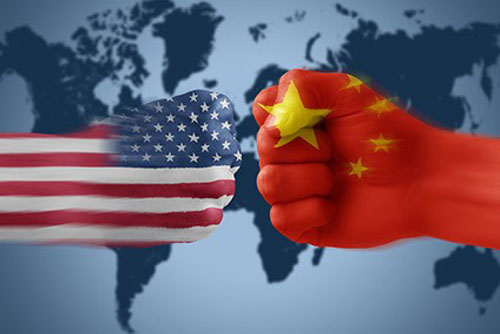 twice extended the deadline for a deal with China and the industry has been collectively holding its breath. In February, he delayed tariff and increase citing “substantial progress” on issues including IP and technology transfer. US Treasury Secretary Steven Mnuchin and US Trade Representative Robert Lighthizer will now work towards a final deal with a delegation of government officials from China scheduled to come to Washington for additional talks.
Deal needs upgradation
The trade deal between Washington and Beijing needs evaluation on several fronts. It requires a breakthrough including market access for the United States into China, as well as some structural reforms. The US has also demanded provisions for protecting IP and eliminating forced transfers of US technology. Negotiations will also determine whether these provisions are enforceable. Also, there’s a lot on the line from an image perspective, with the US administration setting high expectations for outcomes.
The negotiators will have to work on multiple fronts. One of the biggest hurdles in the enforcement of this deal is ensuring China actually follows through in areas such as opening its economy and respecting IP rights and technology ownership. Negotiators will also have to deal with issues such as the unpredictable behavior of President Trump and the uncertainty it throws into the process often compromising efforts by others.
Political crises hangs over the US
The next few weeks will be crucial for both the country as it will determine which country is more desperate for the deal. In the past five months, the economies of both the countries have suffered, although China’s slowing growth can be attributed to its deleveraging process, not the trade war. In 2007, China exports amounted to 37 per cent of its GDP, today this figure has declined to just 20 per cent, making the trade deal less important for China.
However, it doesn’t mean China doesn’t want the deal. But everything points toward the fact that US needing it more, especially given the political fallout that will result from continued tariffs going into the election season.”
Expansion by major denim brands heat up the global jeans market
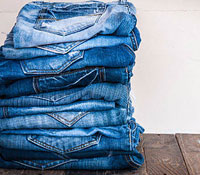 Competition in the $60 billion global jeans market is heating up with major denim brands chalking out robust expansion plans. While Levi Strauss & Co. is going for an Initial Public Offering (IPO) to raise about $587 million, VF Corp plans to hive-off Wrangler and Lee into new entity Kontoor Brands. Gap and Old Navy also plan to demerge into two separate public companies to increase their market share. With mounting pressure from the Wall Street to increase volumes, these initiatives will generate fresh funds for expansion.
Fresh funds to fuel expansion
The Levi’s IPO, through which the company aims to raise up to $587 million, provides funds for retail, category and international expansion. The brand is on a roll right now and the infusion of cash will allow it to further expand its retail footprint.
The company plans to deepen its presence in emerging markets like China, India and Brazil, in order to drive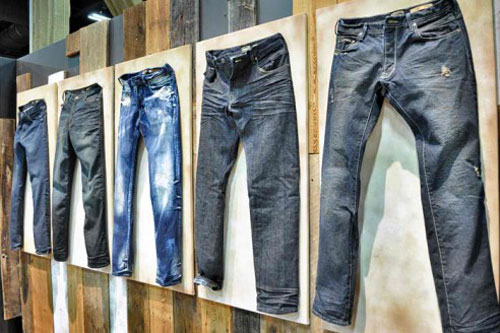 long-term growth. Its net revenue in top five markets including the United States, France, Germany, Mexico and the United Kingdom collectively increased to $3.5 billion in fiscal year 2018. The company plans to expand across these markets though a combination of new stores, expanded wholesale relationships and an increased e-commerce presence. It might even acquire some other business and strengthen further their position in the market place.
Mixed response for the VF Corp’s Kontoor spinoff
The Kontoor spinoff has garnered a mixed response. Andreas Kurz, a former CEO at Hugo Boss USA, Diesel USA and 7 for All Mankind, doesn’t think the spinoff is a good move for Wrangler and Lee because the brands had benefitted over the years from VF’s structure. He feels, the company by separating from VF is creating additional costs in areas like sourcing, legal and overhead, thus making it less efficient.
Stefano Aldighieri, President of Another Design Studio, however believes the Kontoor spinoff will enable VF to create an independent powerhouse, which can reassert its dominant position in the jeans market. He believes it to be a great opportunity for VF to refresh the Wrangler brand and possibly expand it from its traditional Western wear market and to finally relaunch Lee and make it again the leading brand that it used to be.
Levi’s to strengthen men’s bottoms business
While Levi’s plans to maintain its core brand positioning, it will also enhance other labels. The brand is actively focused on maintaining and strengthening its men’s bottoms business, which will continue to be a key driver of its operating results.”
The company will also invest in marketing and advertising to increase engagement with brands, including TV, digital and influencer marketing. In addition, it will target value-conscious consumers through the Signature by Levi Strauss & Co. and Denizen brands sold through wholesale accounts, growing its business with accounts such as Walmart and Target.
Diverification to maximise focus
The Gap-Old Navy breakup will enable each company to maximise focus and flexibility, align investments and incentives to meet its particular business needs and optimise cost structures for greater profitability. However, it will also reduce the diversification that the brand provides to overall entity. It is indeed difficult for brands to stay on course when their demanding shareholders expect short term profit at all times. How these brands balance this pressure and continue to grow, remains to be seen.
US and China closer to a trade deal
The trade deal that the US and China are crafting would give China time until 2025 to meet commitments on commodity purchases and allow American companies to wholly own enterprises in the Asian nation. Under the proposed agreement, China would commit by 2025 to buy more US commodities, including soybeans and energy products, and allow 100 per cent foreign ownership for US companies operating in China.
The limited time frame raises questions about how much a deal would reshape the longer-term economic relationship. While some progress is being made, resolving more contentious issues such as the forced transfer of technology is taking longer. The US is pushing for China to front-load a big chunk of the commodities purchases in the first two years the agreement is in place.
One of the key issues is what will happen to the tariffs the two sides have imposed about $360 billion of each other’s goods in the past nine months. At least some of the tariffs may stay in place. The text will also include benchmarks, likely set at 90 days and 180 days after signing, by which China is asked to fulfill key pledges. The US wants the right to take unilateral, proportional action against China if it fails to abide by the rules.
Preference for sustainable products increases amongst buyers
A survey by McKinsey & Company and Camera Nazionale della Moda Italiana, Italian fashion’s governing body shows, sustainability has become an increasingly important factor in what buyers choose to stock. Researchers surveyed buyers at the most important international department stores including Saks Fifth Avenue and Barneys in New York, Takashimaya in Japan, Printemps in France, and Hyundai in South Korea. They shared the results at the Italian group’s third international roundtable on sustainability in Milan on March 26, 2019.
As per the survey, buyers expected to double their purchases of sustainable products over the next five years, raising it from 23 per cent of their total budgets to 42 per cent. A quarter of those surveyed had also stopped selling a brand or product that fell short on sustainability. What mattered most to store buyers was how a brand sources its fabrics, its transparency, and the treatment of workers at the factories making its clothes. They were ready to even pay a small premium for sustainable products.
MSI needs better data inputs, improved transparency
Research funded by Australian Wool Innovation claims the Sustainable Apparel Coalition’s Material Sustainability Index (MSI), a product-focused tool that compares the sustainability of different textile materials, also needs better data inputs, improved transparency, to account for microfibre pollution and to consider the full lifecycle of products.
Researchers Dr Stephen Wiedemann and Dr Kalinda Watson performed a comprehensive analysis of the Sustainable Apparel Coalition’s MSI in a bid to provide a “constructive contribution” to increasing the reliability and quality of information in the rating system, which is increasingly an important reference tool by many international apparel brands and retailers.
Among key recommendations are the tool is improved to adhere global standards and guidelines for best practice in LCA. A key issue the researchers have is that the tool in its current guise excludes the product use phase and end of life.
The research also argues for microplastic pollution to be included in the MSI, although in fairness to the SAC, there is not – as yet – a universally agreed upon means of measuring microfibre impact, and the SAC has already told us that as soon as one is available, it will be incorporated.
The researchers claim the quality of data in the MSI is, in many instances, poor. They point out that it is common practice in LCA – and other fields of science – to report the scientific confidence in the results, indicating whether the differences are meaningful or just ‘noise’.