FW
Coats opens three innovation hubs
Coats the world’s leading industrial thread company, has opened three Innovation Hubs in EMEA and Asia. The Innovation Hub-EMEA in Bursa, Turkey was opened recently. It followed the opening of the Innovation Hub-Asia inShenzhen, China on March 28. The Innovation Hub-America the first of the series is in North Carolina, US and opened in October 2018.
These dedicated centres at key locations around the world enable Coats to collaborate with a range of innovation partners including customers, brands, suppliers, universities and start-ups. They will develop pioneering new products and processes in Apparel and Footwear and hi-tech products for end uses in automotive, Oil & Gas, protective wear and telecommunications by providing creative and inspiring spaces where an innovative idea can be developed collaboratively and rapidly worked up into a prototype design which is then manufactured in a stand alone pilot factory.
Brazil adds major fashion company to its slavery 'dirty list'
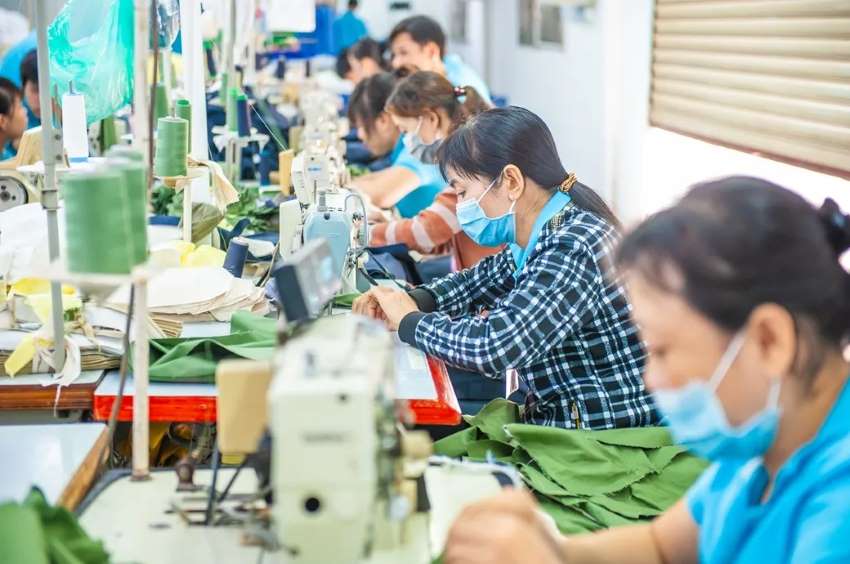
The maker of two of Brazil’s biggest fashion brands Fabula Confecçao e Comercio de Roupas was named in the country’s “dirty list” of companies that engage in slave labor. The company outsourced manufacture of its A.Brand and Animale clothing to three workshops in São Paulo that kept Bolivians in slavery-like conditions. While Fabula does not own the workshops at issue, it was found by labor inspectors to be the real employer since the workshops took orders from Fabula and only serviced its brands.
Animale and A.Brand are two of the most well-known luxury brands owned by Grupo Soma, which owns Fabula. Soma has about 4,700 employees and had revenue of more than 1.2 billion reals ($312.28 million) in 2018, according to its website. Names are added to the “dirty list” after an internal government process that can take years. Once added, a name stays on the list for two years. Nearly 190 companies are listed, most of them farms and construction companies.
China’s plus sizers get attention
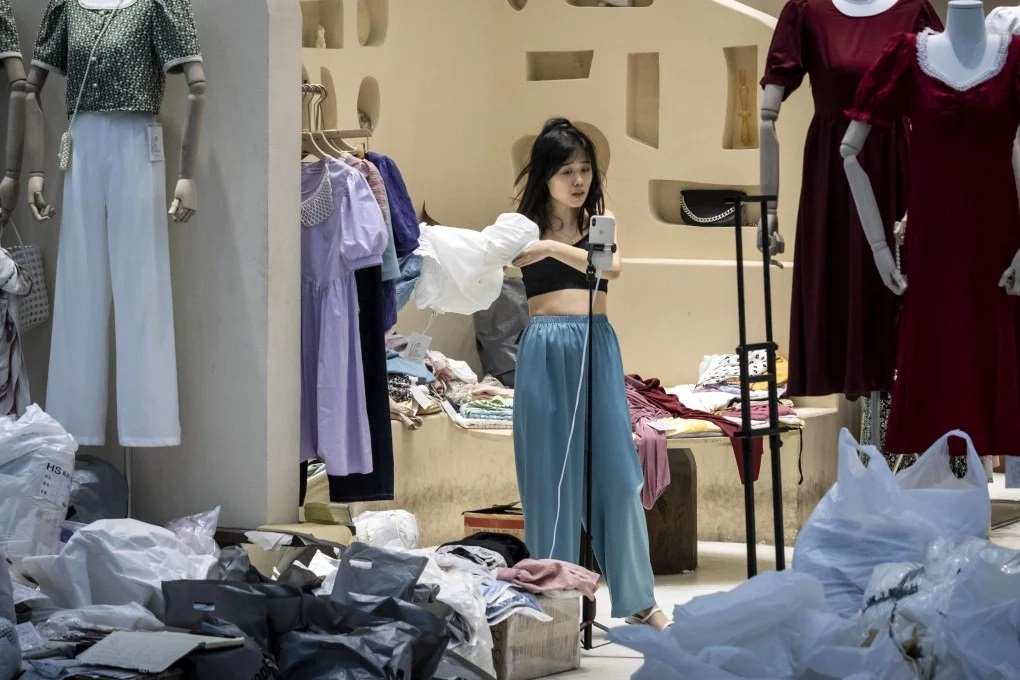
China’s plus-size fashion market presents a huge opportunity for brands. As much as six per cent of the Chinese population is classified as obese, though in wealthier cities where people have access to unhealthy fast food that figure could reach 20 per cent.
A small group of mostly new retailers serves the full-figured market using tried-and-true techniques involving key opinion leaders and WeChat communities. Some like startup Garden Lis only hire designers with a minimum of four years’ experience conceptualizing clothing for plus-size women, which the brand defines as adults weighing between 130 and 180 pounds. Garden Lis also has franchise stores selling its premium style-forward clothing in sizes from L to 6XL.
MsShe, for its part, leverages influencers to get its products in front of its target demographic. The brand has ten full-figured women on staff tasked with giving every new style a dry run and then showing customers how to incorporate these pieces into their existing wardrobes. Another newbie, Muzi Lixiang, has amassed more than 8,00,000 fans and followers since it arrived on the scene in 2016. The company requires employees to weigh at least 150 pounds to ensure that they can relate to their customers.
Western plus-size players could gain share and grow their revenue by serving this market.
Asia Pacific growth to be hampered: ADB
The Asia-Pacific region is expected to grow 5.7 per cent this year, predicts the Asian Development Bank. For 2020, the region is forecasted to grow 5.6 per cent, which would be the slowest since 2001. The trade conflict between China and the United States could undermine investment and growth. Uncertainties stemming from US fiscal policy and a possible disorderly Brexit are other risks.
China’s economy will probably grow 6.3 per cent this year. Beyond trade risks, China’s growth will also be retrained by restrictions on shadow banking, which is expected to limit credit expansion even as fiscal stimulus provides some offset. By region, South Asia will remain the fastest growing in Asia Pacific, with the Asian Development Bank predicting an expansion of 6.8 per cent this year and 6.9 per cent next year. From an estimated seven per cent growth in 2018, India's economy is projected to expand at a faster pace of 7.2 per cent in 2019 and 7.3 per cent in 2020 as lower policy rates and income support to farmers boost domestic demand.
This year’s growth forecast for Southeast Asia has been trimmed to 4.9 per cent from an earlier estimate of 5.1 per cent as Malaysia, Singapore, Philippines and Thailand are expected to grow slower than previously thought.
L Brands on revival mode
L Brands is losing its sheen mainly due to the dwindling performance of its brand Victoria’s Secret. Victoria’s Secret sales dropped five per cent in the fourth quarter of fiscal 2018. Meanwhile, comparable sales fell three per cent while comparable store sales (comps) tumbled seven per cent. L Brands is focusing on restructuring Victoria’s Secret, which was once known as the success formula for mass-market lingerie in the United States. The company plans to shut down 53 Victoria’s Secret stores in fiscal 2019, which failed to generate the desired results. Also, the company has relaunched the brand’s swimwear category. With this move, the company aims at boosting seasonal sales and store traffic.
Additionally, L Brands has sold its luxury lingerie brand La Senza. Further, in order to focus on its core product categories, L Brands plans to close operations at the luxury fashion accessories store Henri Bendel. L Brands’ gross margin has been contracting year over year for the past few quarters. For fiscal 2019, its gross margin rate is likely to decrease year over year, mainly due to lower merchandise margins. Also, SG&A costs are expected to increase year over year, stemming from higher wage rate and inflation-related pressure. Further, L Brands’ balance sheet doesn't look healthy, owing to a high debt level.
Kornit Digital launches breakthrough innovation and technology
Kornit Digital, a global market leader in digital textile printing innovation, recently unveiled the game-changing Kornit NeoPoly Technology, which is the industry’s first digital, industrial process for high-quality printing on polyester. The new ground-breaking Kornit NeoPoly Technology addresses these challenges with a new process and ink set implemented in the renowned Kornit NeoPigmentTM process. Kornit’s new process handles polyester applications without compromising on design, run size, substrate or labor.
The breakthrough technological innovation is achieved by an innovative ink set and a physical and chemical process specifically developed for low temperature curing, and polyester enhancing functionalities developed to maintain fabric characteristics and provide superior fastness. This unique process prevents dye migration on polyester. The inks are Oeko-Tex and Eco-Passport certified and do not contain PVCs or other toxic ingredients.
The first system equipped with the Kornit NeoPoly Technology is the new Kornit Avalanche Poly Pro, a member of Kornit’s world-class reliable, highly productive industrial platform. The single-step Poly Pro is the perfect system for the industry, enabling easy and cost effective short-runs and on-demand printing on polyester garments.
ITTA signs MoU with TTTA
Indian Technical Textile Association (ITTA) – the apex body of Technical Textile manufacturers has signed an MoU with the Taiwan Technical Textiles Association (TTTA) to promote the Technical Textile Industry in both the countries. The MOU would facilitate Indian and Taiwanese companies to form joint ventures for technical textile manufacturing in either of the countries. Also, companies from both the countries would be able to collaborate for sharing technical knowledge and compliment the supply chain with trade of technical textile materials.”
ITTA office would facilitate Indian companies to trade and form joint ventures with TTTA members.
Kering sells Volcom to US-based Authentic Brands
Volcom is a sports and lifestyle brand. It was acquired by Kering in 2011. The sale follows Kering’s decision to focus on the development of its luxury houses. The disposal will not have a material impact at the group level, either in terms of net result from discontinued operations (a non-significant capital loss) or cash flow (proceeds from disposal).
Kering manages the development of a series of renowned houses in fashion, leather goods, jewelry and watches like Gucci, Saint Laurent, Bottega Veneta, Balenciaga and Alexander McQueen. By placing creativity at the heart of its strategy, Kering enables its brands to set new limits in terms of its creative expression while crafting tomorrow’s luxury in a sustainable and responsible way. Kering is enhancing its omni-channel capabilities. Kering is working on a suite of apps, the first of which is a store experience app that enables sales associates in-store to access stock levels in real time to provide their customers with a fully personalized service. Via the app, sales associates know instantly if a specific size or color is available in-store or if it can be ordered from other stores; they can also give customized styling recommendations.
India’s apparel exports may fall by five per cent this year
India’s apparel exports are estimated to fall by four per cent or five per cent this year. Though exporters are targeting new countries, India has not been able to capitalise on the opportunity, mainly because of the cost advantage enjoyed by Bangladesh and Vietnam. The problem is further compounded by increasing competition from other exporting nations such as Cambodia and Bangladesh which enjoy lower labor costs than India. Demand from key import markets such as the Middle East, France, Sri Lanka and Sudan has been continuously on the decline in recent months. Exports have fallen between 16 per cent and 49 per cent.
Tamil Nadu is India’s biggest apparel exporter, followed by Maharashtra, Delhi, Karnataka and Punjab. These five states account for over 92 per cent of India’s apparel exports. The major exporting countries are the US, the EU (mostly Germany, France, Belgium, Spain, and the Netherlands), the UK, and the UAE. These four markets import 75 per cent of India’s apparel shipments. Markets that have seen an increase in demand for Indian apparels in the past two years include the US, UK, Japan, Chile and Israel. Overall, exports in these markets have risen between 23 per cent and 51 per cent.
Pitti Uomo June edition to showcase 11 Chinese designers
The most promising new names on the Chinese fashion scene will star next June in Florence at Pitti Uomo 96’s guest nation project, promoted by the Pitti Immagine Discovery Foundation in collaboration with the Shanghai Fashion Week. The project will showcase 11 Chinese designers, and culminate in a show by the creative duo in charge of Chinese label Pronounce, Yushan Li and Jun Zhou, also featuring on the catwalk a deconstructed version of the Converse Jack Purcell sneakers.
For the occasion, Pitti Uomo will also host an exhibition by Leslie Zhang, one of China’s foremost fashion photographers. The 11 labels taking part in the guest nation project are 8on8 by designer Gong Li, who was awarded a Grand Prix LVMH Scholarship, Danshan, Ffixxed Studios, Junwei Lin, Percy Lau, Private Policy, Pronounce, Samuel Guì Yang, Staffonly, The Flocks and Untitlab.