FW
Walmart unveils project to reduce carbon emissions
Walmart has unveiled a project to use renewable power for half of its operations by 2025, and to cut its emissions by roughly 18 percent by that timeline, according to its 2020 Environmental, Social & Governance Report.
As per a Reuters report, Walmart and the retailers are undertaking the program in a tie-up with the UN group COP26 High Level Climate Action Champions, as well as the business organization the World Business Council for Sustainable Development. The retailer has also collaborated with the United Nations group, a global business organization, and other major retailers including H&M, Ikea and Kingfisher plc.
The initiative, billed the “Race to Zero Breakthroughs,” aims to cut emissions to curb the rise of global temperatures to within 1.5 degrees, according to the groups.
The retailer has previously emphasized its efforts to target its supply chains, and to nudge suppliers toward reporting their own lowered emissions. In its Project Gigaton campaign, Walmart has outlined a goal of avoiding some 1 billion metric tons of emissions by 2030. More than 2,300 suppliers have joined the effort since it began in 2017, according to Walmart’s website.
Protect garment workers from COVID-19, urges Human Rights Watch
Human Rights Watch has urged the Sri Lankan government, factory owners, and the international clothes brands sourcing from Sri Lanka to protect the safety and employment rights of garment workers during the COVID-19 pandemic.
Meenakshi Ganguli, Director-South Asia, Human Rights Watch, the Sri Lanka’s garment workers are entitled to work in safety and be properly paid even when they fall sick or need to quarantine. She urged the government and employers to fully implement existing agreements and guidelines, be transparent about COVID-19 infections in factories, and provide for workers’ welfare instead of intimidating and silencing them.”
As per the International Labor Organization, one in seven Sri Lankan women are employed in the garment sector. There have been repeated outbreaks in garment factories since April. Yet, five labor rights activists from four organizations have received complaints from workers that factory managers pressured workers to work without adequate occupational health and safety measures.
All five said that numerous workers from different factories complained to them that they lost pay when they fell sick or needed to quarantine. The activists said that the police or military personnel had intimidated them to stop them from speaking out.
Human Rights Watch urged the government and factory owners to take effective steps to isolate workers who test positive, and ensure that those receiving treatment or in isolation or quarantine receive full pay. It also urged the government to distribute relief packages to workers irrespective of which part of the country they come from, and follow ;previously agreed safety measures and guidelines.
Texprocil urges for the notification of RODTEP rates
In an interactive meeting with Piyush Goyal, Union Cabinet Minister of Textiles and Darshana Jardosh, Minister of State for Textiles, Manoj Patodia, Chairman, Texprocil urged for the notification the RODTEP rates at the earliest and also maintaining the RoSCTL rates for Made ups under the RODTEP scheme.
He also requested the minister to remove the custom duty on Cotton as the variety of extralong staple branded cotton and contamination free cotton which was mainly imported and not available as yet in India in sufficient commercial quantities.
Patodia highlighted that the Cotton textile sector is one of the few sectors that had achieved a positive growth in 2020-21 despite the pandemic situation.
Patodia pointed out, exports of Cotton textiles (including raw cotton) during this period reached $ 10723 million as against $ 9,799 million in 2019-20 registering a growth of 9.43 per cent.
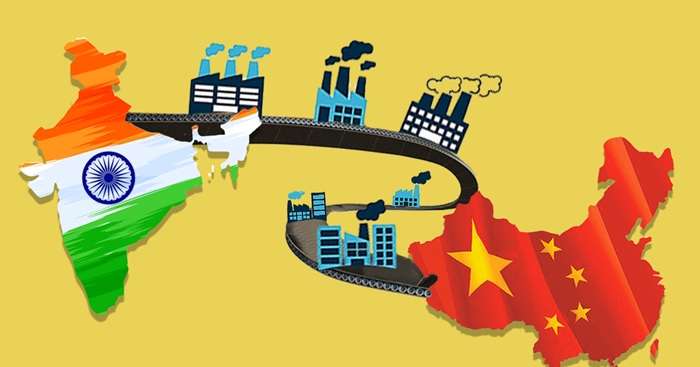
Patodia also urged Goyal to include the textiles and clothing sector upfront in the ‘pre-negotiation scoping phase’ or any envisaged ‘early harvest ‘ program to overcome the disadvantage faced by the Indian exporters due to duty concessions already granted by UK to competing nations like Bangladesh , Pakistan, Vietnam , Turkey and Sri Lanka.
Similarly he also requested that the Indo- EU FTA should be expedited which will help the Indian exporters to overcome the disadvantages of tariff preferences given to competing countries and create a level playing field .
Japanese apparel companies plan to ban Xinjiang cotton
Major Japanese apparel companies are planning to stop using cotton grown in China's Xinjiang Uygur Autonomous Region. As per NHK World, the firms are reviewing their supply chains amid allegations that the material is produced with forced labor.
Apparel company World plans to stop selling items made with cotton from the Xinjiang region. The move will help the company address human-rights issues.
Sporting-goods firm Mizuno also plans to discontinue using cotton products made in Xinjiang and is reviewing its supply chain for the same. But the operator of Muji-brand household-goods stores will continue using Xinjiang cotton in its products as a recent. recent inspection found no major violations, including forced labor.
Allegations that ethnic Uyghur minorities in the Xinjiang region are being subjected to forced labor have drawn worldwide criticism. Beijing denies that the practice is taking place.
There have been boycotts in China of foreign brands that have come out against using Xinjiang cotton.
Growth in China’s garment sector stabilizes from January-May 2021
Growth in the China's garment sector stabilized in the first five months of 2021 as income, profits and production grew, reports MenaFN.
As per the Ministry of Industry and Information Technology (MIIT), from January to May, the combined operating income of 12,451 main enterprises in the sector grew by 13.20 per cent to 525.1 billion yuan.
The total proceeds of these enterprises grew by 27.87 per cent to 23.5 billion yuan in the period, while the production of the companies increased 20.89 percent over one year earlier to 9.075 billion pieces.
China's online retail sales of clothing goods increased 28.2 percent year on year in the first five months, while the country's garment and accessories exports increased by 48.3 percent year on year to $56.6 billion.
ASOS enters into a JV with Nordstorm for Topshop garments
British online fashion retailer ASOS has entered into a joint venture with department store Nordstorm to sell brand Topshop garments at its stores in an effort to reach more US and Canadian customers.
As per a Reuters report, US-based Nordstrom will buy a minority interest for an undisclosed sum in the Topshop, Topman, Miss Selfridge and HIIT brands, which ASOS bought from the administrators of the collapsed Arcadia Group for $364 million earlier this year.
ASOS, which sells fashion aimed at 20-somethings, would keep operational and creative control over the brands. The joint venture also paves the way for a broader tie-up with Nordstrom to deepen ASOS's presence in North America
Nordstrom would become the British firm's first-ever retail partner, and will look to launch its brands on Nordstrom.com and in select retail stores, ASOS said.
Duerkopp Adler to participate in CISMA 2021
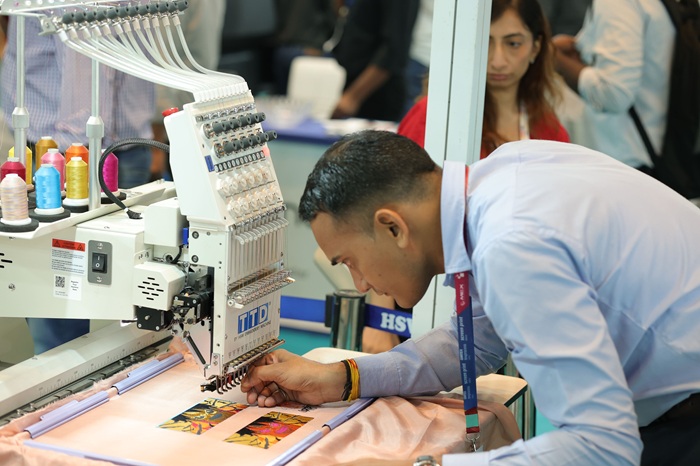
After a gap of two years, leading German sewing technology company Duerkopp Adler will participate in CISMA 2021 which will be held from September 26-29, 2021 at the Shanghai New International Centre in Shanghai, China.
As per Apparel Resources, Duerkopp Adler will be represented in the Shanggong Group (SG Group) booth. The company will focus more on flexible automation products as well as innovative and digital highlight machines and systems. It will showcase new models of the digitalized and highly developed M-TYPE Delta platform.
Duerkopp Adler will also showcase a wide range of special machines and automats for medium-heavy industrial applications as well as for garment production. The product range will be complemented by another highlight – QONDAC – that’s the future shaping network solution for the industry, as claimed by Duerkopp Adler.
It’s worth noting here that CISMA will take place at the Shanghai New International Expo Center (SNIEC) from 26 to 29 September 2021.
AFWA files complaint against H&M for labor abuses
The Asia Floor Wage Alliance (AFWA) has filed a complaint against fashion brand H&M in Bengaluru for alleged labor abuses at a its supplier factory in 2020. As per Fashion Network, the brand collaborated with several local labor unions for the purpose.
The legal complaints against H&M arose from a report by AFWA which it launched at its online event on July 7, according to the AFWA website. The report was titled ‘Money Heist: COVID-19 Wage Theft in Global Garment Supply Chains’ and looked at alleged labour violations in the garment industry in countries including India and Sri Lanka by brands including Levi’s, Asics, DKNY, and H&M among others.
Using the findings in its report, AFWA has filed a legal complaint in Bengaluru to request that H&M be held jointly liable for what it alleges were labour abuses at one of its garment supplier factories. AFWA argues that H&M had full control of the factory workers’ subsistence and continued employment. Many garment workers faced destitution when clothing companies cancelled orders last year due to the pandemic and they faced no work and no pay without a safety net.
Gap takes the online-only route as pandemic shutters stores
 One more retailer is moving away from physical stores to the online platform. US-based Gap Inc has pulled down shutters in the UK to become an online-only retailer, following the footsteps of contemporaries Debenhams, Topshop, etc.
Till 2008, Gap was known as the world’s largest fashion retailer. However, sales declined over the years as it sought to maintain an appealing mid-market product range at right price. As per Fashion Law, the retailer was challenged by growing competition from lower-priced retailers – such as H&M and Primark – and a spurt in online fashion startups.
Stiff competition and changing fashion choices induced downfall
Gap faced stiff competition not just from market leaders like Next, Amazon and ASOS but also smaller and more specialized retailers, such as ultra-fast fashion company Boohoo, Compelled to move online by the pandemic, these companies performed reasonably well during the pandemic. Boohoo acquired high street brands such as Dorothy Perkins and Oasis besides teaming up with several beauty brands.
Another disadvantage for Gap was the moving of younger consumers to social commerce where they could pre-purchase and buy garments and accessories, and engage in post-purchase chat and entertainment thereafter. Some of these consumers also bought fashion items from secondary market sites such as Depop and Vinted.
Gap also struggled to adjust to the online trading environment. The company was unable to cover the lockdown induced losses and considered a smaller player in the market.
Dissatisfactory store experience
Besides, COVID-19 impact and millennial consumers’ changing fashion choices, Gap also suffered from its inability to provide a satisfactory store experience to consumers. On the other hand, new market entrants attracted consumers with more focused and aspirational offers. They also explored augmented reality and virtual reality devices to personalize consumers’ shopping experiences.
Gap failed to address these trends in the UK market, and sales and marketing formula based on a broad range of clothing for all ages at reasonable prices also proved to be highly unsuccessful. The retailer’s high store rents and increased operating costs also prevented it from reinventing store and product offerings. Its move to online retail thus seems to be an ideal solution to the current crisis.
Second-round bids for Reebok to be submitted by August 02
The deadline for submitting the second round of bids for purchase of sports brand Reebok from parent company Adidas, has been set on August 02. As per Women’s Wear Daily, Adidas hopes to complete the sale deal by the end of this year.
One of the potential buyers for Reebok includes brand management firm headed by Jamie Salter, the Authentic Brands Group. The group already controls the intellectual property of Shaquille O’Neal, the brand’s ambassador during the 1990s.
Another potential bidder for Reebok is WHP Global, the owner of the Joseph Abboud, Anne Klein and Toys “R” US labels, Headed by Yehuda Shmidman, WHP has received $350 million in equity commitments from funds managed by Oaktree Capital Management
Other private equity firms on the short list to buy Reebok include Advent International, Cerberus Capital Management, CVC Capital Partners and Sycamore Partners.
Adidas bought Reebok for $3.8 billion in 2006 and the price tag now is expected to be around $2.4 billion. In its most recent earnings release on May 7, Adidas only said it has incurred costs of 60 million euros related to the intended divestiture of Reebok in the first quarter, and is reporting all income and expenses for the brand as discontinued operations.