FW
Walmart to close stores on Thanksgiving day
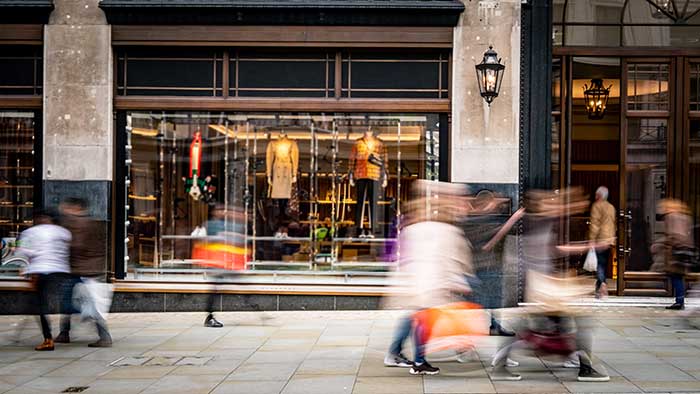
For the second consecutive year, Walmart will close its US stores on the Thanksgiving Day.
As per Economic Times, the nation's largest retailer and biggest private employer ants to give workers time off for all their hard work and dedication to the company. It follows the decision by Target Corp., which announced back in January it would be closing its stores again on the annual late-November turkey feast.
The move shows the lasting effects of the pandemic on the retail industry's strategies, even as the health virus ebbs. For almost a decade, Black Friday store shopping had been kicked off with big crowds on the Thursday of Thanksgiving and expanded into Friday. However, last year, given safety concerns, most stores were closed on Thanks giving.
Walmart, like other stores, successfully pushed more sales online to reduce crowds in its stores. But, even as safety protocols relax, the Bentonville, Arkansas-based retailer apparently believes that not having the Black Friday kickoff on Thanksgiving won't hurt its business.
Given the clout of Walmart and Target, other major retailers will likely follow their lead again this year.
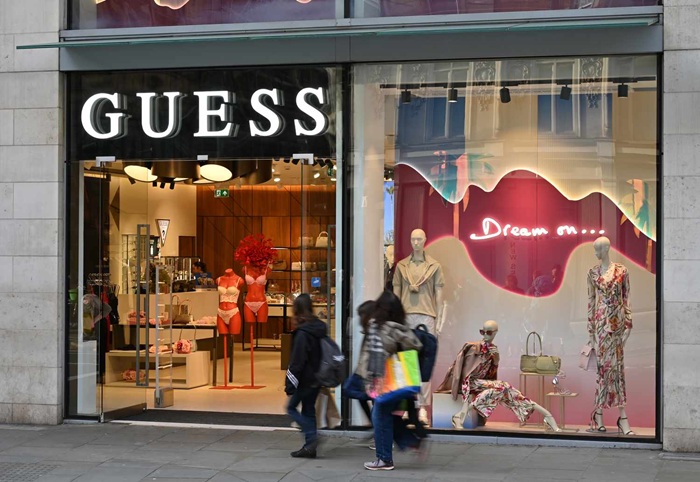
Victoria’s Secret accused of contract violations by landlord
Victoria’s Secret’s landlord has accused the company of prematurely ending itsstay at the Westfield World Trade Center Shopping Center, located in downtown Manhattan, in alleged violation of a lease agreement.
In a complaint filed in late May in New York state court, Westfield made claims for more than $30 million to retailer alleging that it had refused to pay rents and backed out part way through from a 12-year lease that was meant to end in 2029. As per Women’s Wear Daily, the suit seeks more than $4.2 million in unpaid rent and roughly $28 million in damages for the alleged violation of the lease.
The dispute centers on a point of contention facing mall tenants and their landlords around the country as retailers have closed thousands of stores during the pandemic. When major tenants leave a mall during a crisis, what happens to those left behind?
Lease agreements sometimes address these scenarios through what are known as co-tenancy clauses. Such provisions may allow tenants to reduce their rent or leave their premises during their lease term, if they can show other important tenants have already left.
Victoria’s Secret allegedly invoked such co-tenancy failures and sought to terminate its lease. But Westfield argues in its suit that the retailer had not shown evidence for its claim about such co-tenancy issues.
New Fortune Initiative ranks PVH as the ninth most progressive company
The Fortune’s Measure Up list ranked PVH on the ninth position in the ranking of the top 20 most progressive companies in diversity and inclusion. As per reports, the list analyzes and scores diversity and inclusion data of ranked Fortune 500 companies. PVH also ranked this year on the 67th annual Fortune 500 list at No. 404.
The Measure Up initiative aims to make diversity, equity and inclusion disclosure and performance a critical metric for successful businesses.
Fortune partnered with Refinitiv, one of the world’s largest providers of financial markets data and infrastructure, to analyze diversity and inclusion data sourced from 2020 and 2019 public disclosures. Fortune found from the companies listed on the Fortune 500 list, 256 had published racial data last year, but only 22 had published a full breakdown of the percentage of minorities in their companies and reported metrics for representation in management and on the board, as well as for their racial pay gap.
Softbank Vision Fund plans $600 million investment in Flipkart
Softbank Vision Fund is negotiating with Flipkart to invest around $600-700 million three years after its exit from the Indian online retailer.
As per Economic Times, the funding is part of a larger $2 billion round which could see the participation of a group of sovereign wealth funds like Abu Dhabi’s ADQ, Canada’s CPPIB, as well as the company’s existing investors such as GIC and Qatar Investment Authority.The transaction is likely to value the Bengaluru-based firm at $25-30 billion, sources said.
The invesment could lead to Flipkart pushing back its plans for an initial public offering (IPO) in the US. Flipkart will stay on as a private company for longer than what was being earlier talked about. The company has been preparing to go public by early next year, as reported earlier.
The Canada Pension Plan Investment Board (CPPIB) is expected to join the fundraise along with existing backers such as GIC of Singapore and Qatar Investment Authority.
If the deal materialises, it will be yet another big move by the Masayoshi Son-founded SoftBank in India’s e-commerce market. It had earlier tried to bring about a merger between its portfolio firm Snapdeal and rival FlipkartIn 2017. But, the deal was scuppered largely because of opposition from Snapdeal. The conglomerate went ahead to back Flipkart, only to sell its entire 21 percent share holding to Walmart a year later for about $4 billion.
Sixty one per cent brands believe pandemic boosted sustainability demand: Survey
According to a recent US Cotton Trust Protocol survey, 61 per cent of brands and retailers believe that the pandemic has boosted demand for sustainable products. As companies work towards delivering more sustainable options to meet this growing consumer demand, findings also show 65 per cent of respondents agree that data is important to their future sustainability goals.
Around 63 per cent of brands and retailers stated that the pandemic has had a positive impact on their proactive investment in sustainability with 42 per cent focusing on sourcing sustainably produced raw materials. The US Cotton Trust Protocol underpins and verifies U.S. cotton’s sustainability progress through sophisticated data collection and independent third-party verification, enabling brands and retailers around the world to more confidently source U.S. cotton.
Over the past 35 years, U.S. cotton growers have put real work into the sustainability of their operations. During these years, they have used 79 per cent less water and 54 per cent less energy, reduced greenhouse gas emissions by 40 per cent, all while reducing land use by 42 per cent. Conservation growing practices have further improved soil health, reducing loss and erosion by 37 per cent and increasing soil carbon levels.
MaglificioRipa develops fabrics from new anti-viral yarn
MaglificioRipa has developed a new generation of fabrics made with the new Amni Virus Bac Off yarn, one that guarantees permanent anti-viral action and therefore protection from risks of contamination.
The anti-viral properties of the yarn were tested by an independent laboratory following the international textile protocols outlined in the ISO 18184 standard (standard for the determination of antiviral activity of textile products).
The technology of this new yarn ensures that the antiviral and antibacterial agent does not migrate onto the skin or into the environment. Unlike garments treated with dyeing finishes that have limited functionality and lose their function with washing, the antiviral and antibacterial properties of the Amni Virus-Bac Off polyamide are, in fact, permanent, which in turn means benefits for garments in that they remain unchanged over time, confirming the sustainability of the process.
The Amni polyamide fiber, soft and easy to wash, also guarantees freshness, and comfort, contributing to the thermal well-being of the wearer. The fabrics from this special collection, which will be presented in the next few days, retain all the characteristics of Ripa fabrics, such as elasticity, soft to the touch, freshness, and comfort, and are suitable for sportswear, underwear, athleisure, travelwear, and leisurewear.
High freight charges and yarn prices dampen prospects for Indian apparel exporters
Though apparel exporters in India are witnessing a surge in orders, high freight and yarn prices are acting as a dampener in the competitive export environment.
As per Tribune India, exporters in US and Europe don’t want to be dependent on China fully for exports and aim to divert some of their sourcing to other countries.
Initially, during the second wave of COVID in India, international players had moved 10-15 per cent of orders to countries such as Vietnam, Sri Lanka and Bangladesh. Concerned over the situation, the exporters had a dialogue with their clients and they were able to win their confidence and orders have started picking up, says Lalit Thukral, President, Noida Apparel Exporters Cluster.
However, though exporters are witnessing a surge in orders, high yarn price is acting as a stumbling block. The prices have risen by 50 per cent in the past few months, informs Harish Dua, President, Knitwear and Apparel Exporters Organization
With the surge in orders, major apparel hubs such as Ludhiana, Jalandhar, Panipat, Gurugram and Noida are likely to be benefitted. Europe and the US are India’s biggest markets for garment exports.
According to the exporters, since December 2019, freight charges have gone up by almost 300 per cent on major routes.
APTMA grants Rs 100 million funds to the government
Adil Bashir, Chairman, APTMA, granted Rs100 million to Abdul RazzakDawood, Advisor to Prime Minister on Commerce and Investment for Pavilion of Pakistan in Dubai Expo 2020 to be held from October 01, 2021 to March 31, 2022.
As per Global Village Space, Dubai Expo 2020 was originally scheduled for 20 October 2020 – 10 April 2021. However, due to the COVID-19 pandemic in the United Arab Emirates, it was postponed.
Continuing its legacy of being a Prime Trade Organization representing the entire textile value chain, APTMA on behalf of all its members supports the Dubai Expo for the collective benefit of the entire Textile Chain.
Chairman also apprised the Minister on the effective performance of the textile value chain industry; working at full capacity, for the first time in over a decade as a direct consequence of the Government’s policies, especially Regionally Competitive Energy Tariffs.
Bashir thanked the government for its relentless efforts in resolving the issues of the textile industry to increase exports rapidly. He also assured the Minister that the Textile sector is ready to meet all the challenges and invest in expanding production base to achieve a target of $26 billion of exports by the year 2023.
Global Fashion Group’s worldwide operations become carbon neutral
Global Fashion Group has achieved carbon neutrality across its operations in Australia, New Zealand, Southeast Asia, Latin America and the CIS.
As per an Insider Retail report, the group now uses 100 per cent renewable energy across its nine fulfilmentcentres across the globe, used by subsidiary businesses such as The Iconic and Zalora, while offsetting any carbon generated by purchasing high quality carbon credits from renewable energy projects across China, India and Brazil.
Australia’s The Iconic led the way in getting the business off the grid, shifting its own operations to a renewable energy provider in 2020, while fulfilmentcentres in other parts of the world purchased Renewable Energy Certificates to offset their own operations.
JaanaQuaintance, Chief Sustainability Officer, Global Fashion Group, the group has reached an inflection point as a global community whereby the impetus for the transition to a low carbon economy is undeniable. Formalizing its carbon mitigation strategy is an important step to support the group’s transition to carbon neutrality. While the purchase of offsets and renewable energy certificates will not distract it from true reduction efforts, they mark an important milestone in GFG’s journey.
China to collaborate with BRI nations during the 14th Five-Year Plan
To reduce dependence on the United States and Australia, China aims to collaborate with nations participating in the Belt and Road Initiative (BRI) during the 14th Five-Year Plan (2021-25), says Li Fuguang, Head, Institute of Cotton Research under the Chinese Academy of Agricultural Sciences.
Central Asia's potential in cotton production will help China meet import demand of 2 million metric tonne, Li adds.
Cotton production in Central Asia covers nearly 2 million hectares, and the environment there is similar to the Xinjiang Uygur autonomous region, which accounts for 84.9 per cent of cotton production in China.
China will focus on introducing cotton cultivation technology to Uzbekistan in the next five years, and keep advancing it in Tajikistan and Kyrgyzstan, he added.
It will also beef up efforts to modernize of the sector by upgrading systems and cultivating innovation in key technologies.
The country plans to strengthen the collection and utilization of cotton germplasm resources, explore excellent gene sources, and create excellent resources with high yield, good quality and wide adaptability, according to the academy.
The China Cotton Industry Alliance, a non-profit led by the institute, will play a major role in improving cotton quality and integrating the entire industry chain.