FW
Bangladesh needs to focus on new markets, products to increase RMG exports
 Ignoring the disruptions caused by the pandemic, Bangladesh needs to explore new markets and products. As per a Textile Today report, Bangladesh needs to diversify exports to new Asian destinations such as Japan, India and China. These countries have shown a greater resilience to COVD-19 disruptions and maintained their growth levels even during the pandemic.
Zero-duty benefits and strong consumer base spur exports
Till date, Bangladesh has exported garments worth over $1billion to Japan and India. Its exports to China, have also been growing owing to a strong demand for Bangladeshi-made garment items from Chinese people. These three countries have emerged as the main destinations for Bangladesh-made garment items owing their rising income levels and privileges they offer to Bangladesh as a Least Developed Country (LDC).
As an LDC, Bangladesh enjoys zero-duty benefit on its garment exports to all these three countries both for woven and knitwear items. Hence, it has been increasing exports to these countries significantly every year. It needs to continue focusing on emerging markets in the pandemic to maintain profitability. All these three markets have a strong consumer base. Japan’s garment retail market is worth $45billion while India’s market is estimated at $50billion. China’s domestic clothing retail market is expected to be worth $300 billion and Australia’s worth $40billion. Hence, Bangladesh has a great opportunity to increase its share in these markets during COVID-19 times.
Garment exports fall in FY 2019-20
In fiscal 2019-20, Bangladesh registered a 34.86 per cent fall in garment exports over fiscal 2019-20. Garment exports reached $329.96 million against $506.54 million in previous fiscal. Exports to China was $391.01 million and to India worth $0.42 billion, reveals Export Promotion Bureau (EPB) and Bangladesh Garment Manufacturers and Exporters Association (BGMEA) stats.
Though Bangladesh’s exports to India sustained even during the pandemic, growth momentum was slow. In FY 2019-20, Bangladesh’s exports to India declined 15.70 per cent while exports to Japan declined 11.80 per cent to $0.96 billion from $1.09 billion in fiscal 2018-19.
Another market that witnessed a decline in exports from Bangladesh is Australia. In the fiscal 2019-20, Bangladesh’s garment exports to Australia dropped 16.48 per cent to S$0.60 billion from $0.71 billion in the fiscal 2018-19. Garment exports to its three traditional markets also declined in the fiscal 2019-20. Exports to EU declined 18.87 per cent year-on-year to $17.14billion; US exports fell 16.09 per cent to $5.14 billion; and to Canada it fell 25.70 per cent to $0.87 billion.
Production expansion, key to boost exports
Besides emerging markets, Bangladesh needs to focus on product diversification. It needs to expand to manmade fiber garments which are in great demand globally. It also needs to focus on knitwear and produce them in bulk quantities. Personal Protective Equipment (PPE), isolation bed sheets, masks and towels’ are some other items Bangladesh needs to focus on.
Faruque Hassan, President, BGMEA, attributes the current growth in Bangladesh’s garment exports to US to reopening of stores and the US’ government stimulus to its citizens. Exports to Asian markets like Japan and China are also expected to rebound soon. However, exports to India may not rebound due to a spike in COVID-19 cases in the country.
ITMA ASIA +CITME 2020 to have 66 Italian participants
Around 66 Italian textile machinery manufacturers will participate in the upcoming ITMA ASIA + CITME 2020, which will take place in Shanghai at the National Exhibition and Convention Center from June 12 to 16, 2021.
Of these, 21 manufacturers will be presenting their technology offerings within National Sector Groups organized by ACIMIT, the Italian Association of Textile Machinery Manufacturers, and the Italian Trade Agency.
With an occupied area of about 3,200 square meters, Italy is among the main exhibiting Countries attending the event, as it has been the case in the previous editions. ITMA ASIA + CITME is, then, a first step towards normality for many companies in the sector, after more than a year in which even the exhibition activity has stopped.
ICAC to hold annual plenary meeting in December
International Cotton Advisory Committee (ICAC) will hold its annual Plenary Meeting from December 06-09, 2021.
For the first time ever, the ICAC will conduct the event virtually due to the continuing uncertainty caused by the coronavirus pandemic. While that’s unfortunate, the skills that the Secretariat have been acquiring in 2021 will be maximized in coming years by including a virtual component to all future Plenary Meetings.
Registration for the meeting is free to all. It will focus on the theme‘‘Fortifying the Cotton Supply Chain: New Approaches to New Challenges.’he World Café topic will be ‘Challenges and Opportunities for Sustainability’The Open Technical Session is on ‘Advances and Challenges of Hybrid Cotton Technology’. The meeting will be held on the Interprefy platform to accommodate simultaneous interpretation in English, Spanish, French, Russian and Arabic.
Formed in 1939, the ICAC is an association of cotton producing, consuming and trading countries. It acts as a catalyst for change by helping member countries maintain a healthy world cotton economy; provides transparency to the world cotton market by serving as a clearinghouse for technical information on cotton production; and serves as a forum for discussing cotton issues of international significance. The ICAC does not have a role in setting market prices or in intervening in market mechanisms.
Black Tree to raise investments worth Rs 20 crore
Fast fashion business Black Tree plans raise Rs 20 crore in investment in exchange for a 10 per cent stake in the business as it plans to expand offline with a franchise model.
As per Fashion Network, Black Tree plans to open branded stores on a franchise model. The business is offering brand and market analysis support and what it describes as “zero stock risk”. The business is self-funded to date aims to launch its first funding round to facilitate this expansion.
The business recently launched its hyperlocal delivery by courier as it aims to ameliorate its logistics for online shopping. The business aims to further cut down its delivery times to just one hour in some areas, it announced on its website.
The youth-focused brand has a presence in India, China, and Thailand, says Kundan Kumar, Founder and CEO. It aims to tap into the expanding millennial urban consumer market with a focus on value fashion.
AAFA releases study on imports
The American Apparel & Footwear Association (AAFA) joined eight other business organizations to release “Imports Work for American Workers,” an economic impact study which found that imports support more than 21 million American jobs.
The study focuses on the net impact of imports on US jobs — including statistics on sectors such as retail, apparel, transportation, manufacturing and consumer technology. The study also looks at how imports support jobs in states across the U.S. as well as trade policy initiatives pending before Congress and the administration with the potential to preserve or diminish import-related jobs.
The study finds that imports support more than 21 million American jobs across the country, including a net positive number in every US state. The 10 states accounting for the largest number of import-related jobs are California, Florida, Georgia, Illinois, New Jersey, New York, Ohio, Pennsylvania, Texas and Virginia.
Imports from key trading partners — including Canada, China, the European Union and Mexico — support a net positive number of US jobs.
Import-related jobs are good jobs that pay competitive wages. Nearly 8 million of the jobs related to importing are held by minorities and 2.5 million jobs are held by workers represented by unions.
The vast majority (96 percent) of companies who import are small or medium-sized businesses. US trade policies, many now pending before Congress and the administration, have the potential to either support or hurt these jobs.
The American Apparel & Footwear Association, the American Chemistry Council, the Consumer Technology Association, the National Foreign Trade Council, the National Retail Federation, the Retail Industry Leaders Association, the U.S. Chamber of Commerce, the U.S. Fashion Industry Association and the U.S. Global Value Chain Coalition commissioned the study, which was prepared by Laura M. Baughman and Dr. Joseph F. Francois of Trade Partnership Worldwide, LLC.
The study is being released during ‘World Trade Week’ as part of ‘World Trade Month’ to highlight the essential role that imports play in the U.S. and global economy.
Fast Retailing protests against blocking of Uniqlo shirts by US customs
Fast Retailing has criticized the US Customs Department for blocking Uniqlo brand shirts in January saying they violated a ban on cotton products produced in China’s Xinjiang region. Fast Retailing said, Uniqlo uses cotton sourced from sustainable sources only. The brand has mechanisms to identify potential violations of human and workers’ rights.
China has criticized the US move. Zhao Lijian, Foreign Ministry spokesman said, Xinjiang has no forced labor and the US is using bullying tactics. He urged companies to oppose these irrational acts by the US. A US Customs document dated May 10 said a shipment of Uniqlo men's shirts was impounded on January, 5 at the Port of Los Angeles due to a suspected violation of the ban.
Techtextil North America to offer new textile sourcing opportunities
To be held in Raleigh from August 23-25, 2021, Techtextil North America will provide visitors with an opportunity to source the latest innovations and supply chain solutions for the technical textiles and nonwovens industries, and see textile products ranging from high-tech fibers, functional apparel fabrics and smart textiles to composites and nonwovens.
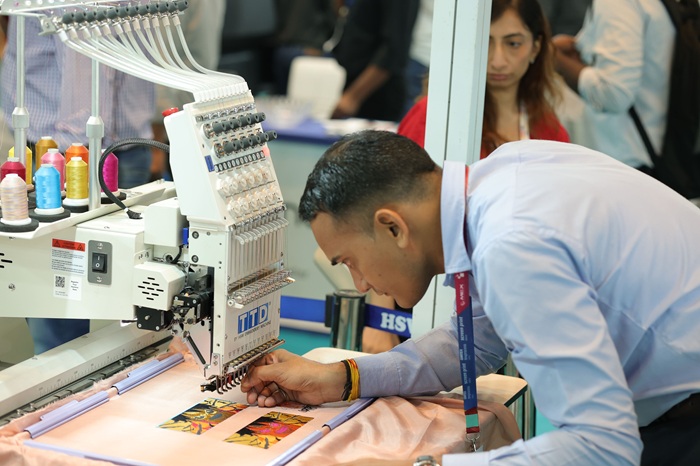
The 2021 edition of Techtextil North America will include the first-ever Texprocess Americas pavilion, supported by The Sewn Products Equipment & Suppliers of the Americas (SPESA). It will feature manufacturers and distributors of machinery, equipment, parts, supplies, systems, technology, supply chain solutions, and other products and services used for the development of sewn products. As per Global Textile Source, the pavilion is designed to foster new business opportunities and strategic partnerships between exhibitors and attendees.
In addition to the pavilion, SPESA will once again co-locate its Advancements in Manufacturing Technologies Conference with Techtextil North America in 2021. The conference features presentations and panel discussions from SPESA members about their products. The show will also include the newly added Textile Care Pavilion. Powered by the Clean Show, the pavilion will showcase the latest products & technologies for the textile care sector – from treatment to finishing to after-market care
Fashion for Good launches new project to address textile recycling issues
Fashion for Good has launched the Sorting for Circularity Project to address the challenge of textile recycling. The project brings together key brands and industry leaders from across Europe to conduct a comprehensive textile waste analysis using more accurate, innovative Near Infrared (NIR) technology This research will lead to an open digital platform to match textile waste from sorters with recyclers, enabling their alignment and building an infrastructure towards greater circularity in the years to come.
Funding for the project is being provided by Laudes Foundation and facilitated by brand partners, adidas, Bestseller and Zalando, as well as Inditex as an external partner. Fashion for Good partners Arvind Limited, Birla Cellulose, Levi Strauss & Co, Otto and PVH Corp. are participating as part of the wider working group. Circle Economy leads the creation and implementation of the methodology, with support from Refashion, to assess textile waste composition. The analysis will provide the most representative snapshot of textile waste composition generated in Europe.
Findings from this research will enable sorters to take action through the support of a digital platform that matches their textile waste with recyclers. This open-source platform will bring greater transparency, spark greater harmonization between the industries, and ensure the learnings contribute to foundational change for the industry at large.
RMG factories to reopen fully by next week: BGMEA
BGMEA informed that most RMG factories plan to open in phases and go into full-scale operation within a week. As per Dhaka Tribune, most RMG workers in Bangladesh could not go to their native villages on Eid holidays due to a government ban on travel and unavailability of public transport. However, most owners have not opened their factories as yet. Those that have opened are yet to go into production in full swing as they do not have work orders, adds SM Mannan Kochi, Senior Vice President, BGMEA. Workers are also yet to receive the second set of stimulus packages, he says.
Salauddin Swapan, Acting President, IndustriALL Bangladesh Council (IBC), informs, most factories will start working in full force from next week. Babul Akhter, President, of Bangladesh Industrial and Garment Workers Federation (BIGWF), agrees with this.
Macy’s expects net sales to grow by 25 per cent in 2021
US fashion retailer Macy’s, expects net sales for 2021 to grow between 25 and 28 per cent over 2020 to reach between $21.7 billion and $22.2 billion. The company’s e-commerce sales are expected to reach around $8 billion this year. In first quarter, Macy’s witnessed a sales rise of 56 per cent to $4.71 billion. The retailer’s e-commerce sales too rose 34 per cent from the same period in 2020. Macy’s sales surged 63.9 per cent on owned-plus-licensed basis over last year. However, comp sales fell by 10 per cent when compared to 2019.
The retailer’s net income in Q1 shot up by more than 100 per cent to $103 million partly due to pullback on expenses. Sales of women’s apparels increased 29 percentage points and men’s apparels by 13 points. Jeff Gennette, CEO, Macy’s, said the retailer gained from government’s direct relief to consumers and its rapid vaccine distribution across the country.