FW
Santa Fe Indian Market to go virtual
The annual Santa Fe Indian Market fashion show, will go virtual this year on August 16, 2020.
The event will showcase the work of seven designers, including Santa Fe Navajo designer Orlando Dugi’s debut of a capsule collection and behind-the-scenes film. Each designer will be spotlighted with a teaser on the market’s web site the week of August 10, culminating in the August 16 event A question-and-answer session will follow with the designer, who uses traditional hand-dyeing, weaving and beading techniques on eveningwear, but not in the “Santa Fe zigzags and blue skies” way one might expect.
The other designers showcased also reflect the breadth of indigenous fashion, Bear Robe said, mentioning Skawannati, a Mohawk digital artist who will be bringing her stylish avatar to real life in the show; Korina Emmerich (Coast Salish Territory, Puyallup) whose New York-based Emme brand focuses on social justice and uses upcycled textiles; Sage Paul, a member of English River First Nation and the founder of Indigenous Fashion Week Toronto, whose tactile clothing has reflected such personal moments as her struggles with miscarriage; Dene beadwork artist Catherine Blackburn; Ojibwe accessories designer Delina White and Taos Pueblo avant-garde designer and former “Project Runway” contestant Patricia Michaels.
USFIA releases Seventh Fashion Industry Benchmarking Study
The United States Fashion Industry Association (USFIA) has released the seventh annual Fashion Industry Benchmarking Study that details respondents’ outlook on business, their sourcing practices, utilization of Free Trade Agreements and preference programs, and views on trade policy.
The study surveyed executives from 25 leading fashion brands, retailers, importers, and wholesalers, including some of the largest brands and retailers in the country. It was conducted in conjunction with Dr. Sheng Lu, Associate Professor, Department of Fashion & Apparel Studies, University of Delaware.
Sourcing executives showed the lowest level of confidence in the five-year outlook since the inception of this report. The number of respondents who were either optimistic or somewhat optimistic about their outlook for the next five years dropped from 64 to 57 per cent. One-third of the respondents reported being ‘somewhat pessimistic’ or ‘pessimistic.’ Hundred per cent respondents reported ‘supply chain disruption’ as the most significant impact of COVID-19 on their business operations. Many respondents saw garment factories that make their products struggling with a labor and raw materials shortage or facing a substantial cost increase in shipping and logistics, and barriers to conducting regular factory audits because of COVID-19.
Despite COVID-19 related disruptions, sourcing executives may continue to diversify to Asian countries. Reshoring for Made-in-USA production may also increase in the next two years, the study says.
Apparel Impact Institute expands mill improvement program
The Apparel Impact Institute (Aii), which scales up textile mill improvements by using the National Resources Defense Council’s Clean by Design methodology, is expanding its program to include not just foundational low-key projects, but also intermediate- and advanced-level initiatives that can reduce environmental impacts worldwide.
This year, Aii is augmenting its signature program for energy and water efficiency for textile mills with a pilot project that incorporates best practices for chemistry and wastewater management. For this program, AII is taking a multi-stakeholder approach, receiving both financial and strategic support from institutions like HSBC, IDH, the Schmidt Family Foundation and Stitching Doen and brands and retailers such as Burberry, Gap, Target, Levi Strauss, New Balance, Puma and PVH Corp.
Since 2017, Aii’s programs have helped hundreds of facilities in mainland China, Taiwan, India and Vietnam, verify savings and identify opportunities for further improvement. In addition, Its Clean by Design methodology has demonstrated an excellent environmental and financial return on investment with expecting to recoup their investments in 14 months.
Shandong Ruyi refutes claims of Lycra sale
Fashion conglomerate Shandong Ruyi has refuted claims of selling to textile maker Lycra and is instead looking to publicly float the business. Debt-laden Shandong Ruyi Technology Group (Ruyi) bought control of The Lycra Company (Lycra) from the US conglomerate Koch Industries for $2.6 billion in 2019, borrowing about $1 billion for the deal. Lycra's weakening financial performance has prompted some of its creditors to hire restructuring firm Alvarez and Marsal (A&M) as an adviser, fearing Lycra may default.
Ruyi believed Lycra would be better valued via an IPO, rather than a trade sale. Last year Ruyi had suggested it could list the company on China's new tech-focused STAR market. Ruyi holds 53.4 per cent of Lycra, with Koch Industries holding 22.2 per cent and Itochu Group subsidiary CFC holding 15.5 percent. Minority shareholders own the remaining 8.9 per cent.
Madhya Pradesh government to set up textile tourism circuit
The Madhya Pradesh government will set up a textile tourism circuit in Chanderi, Maheshwar, Srangpur and Bagh districts. These places are famous for fabrics and prints and also help to get tourist for their palaces, temples and archaeological sites. The government also plans to set up textile parks in these places where tourists can buy directly from weavers. It would reduce the price of products to around 40 per cent as there is no middle men involved in the process. The buyers would also be offered options to customize their dress material designs.
From carpet weaving to using different kinds of embroidery styles, textile printing, weaving of the silk and many other traditions, Madhya Pradesh has carved a special identity for itself. Weavers, printers and designers in the state keep themselves updated with the ongoing trends for catching up the pace. The initiatives are being undertaken by the MP Handicraft and Handloom Development Corporation. Chanderi and Maheshwar are fast emerging as tourist destination in the country.
Bangladesh ships apparels worth $3.24 billion in July: EPB
Bangladesh earned $3.24 billion from apparel shipment in July though the amount is 1.98 per cent lower than a year ago, shows data from the Export Promotion Bureau (EPB). Of the total garment shipment, knitwear exports grew by 4.30 per cent year-on-year to $1.75 billion while woven exports fell 8.43 per cent to $1.49 billion. Earnings from apparel shipment in April, May and June stood at $0.37 billion, $1.23 billion and $2.28 billion respectively.
Personal protective equipment (PPE), masks and other hospital textiles made it to the list of new export items for Bangladesh as a good number of buyers are placing work orders for these items amid the pandemic. If more retail stores reopen in Europe and the US, garment exports from Bangladesh will grow further as the pandemic has failed to dampen the demand for basic apparel items, exporters said.
Sweater factories have now put their best foot forward to meet the deadline for the shipments of August, September and October, said Mostafa Sobhan Rubel, Managing Director of Dragon Sweaters. If the current state of business continues, Abdullah Al Mahmud Mahin, Managing Director, Mahin Group expects his company's earnings this year to be 20 per cent less than last year's, but if a coronavirus vaccine arrives by mid-September, they may witness about a 15 per cent jump in profit.
Bangladesh will start to see stronger export figures from the first quarter of 2021 as more clothes are being bought online, with a massive 76 per cent rise in online sales in the US, said AK Azad, Managing Director, Ha-Meem Group. His factories are running at more than 60 per cent capacity at present.
Work orders are slowly coming back with the knitwear sector is doing better than woven products, said Azimul Islam, Managing Director, Alif Group
Manhattan to close 230,000 small businesses permanently
According to the group, Partnership for New York City, in addition to national chains nearly one third of Manhattan’s 230,000 small businesses are likely to close for ever as restaurants and bars struggle to pay rent with social distancing sapping business. So far, landlords are trying to avoid price cuts as they wait for a rebound. Still, they’re losing patience amid pressure to make their own debt payments. Lawsuits are piling up as many tenants continue to withhold rent payments.
Vornado Realty Trust, a major New York landlord, wrote off $36 million in rent, including for the lease on JC Penney’s store at the Manhattan Mall. While some landlords are reaching deals to defer rent, some defaulters are refusing to leave. Tenants of Boston Properties Inc have refused to give up their space despite not paying rent for months. Lack of new leases could force landlords to turn to pop-ups, flexible lease arrangements and payment deferrals to find tenants, according to Jay Norris, CEO of Guesst, a digital retail platform.
South African designers can help rejuvenate apparel manufacturing: Study
A study by the Department of Trade Industry and Competition (DTIC) and the South African Cotton Cluster (SACC ) views South African fashion designers can help revive manufacturing and create jobs in the country post COVID-19. Titled, ‘Assessing the Economic Value of the Designer Fashion Sector in South Africa’, the study concludes designers have substantial growth opportunities within an evolving local middle-class market estimated to be worth approximately R180 billion.
It notes the sector can aggressively target the growing upper-middle class of South Africa. It also identifies opportunities for this segment to position itself in line with changing societal trends and influences, particularly when it comes to growing the ‘slow fashion’ segment of the clothing market. Researchers note that international markets have already begun to shift their buying behavior towards ‘slow fashion’ which favors small-scale, responsibly-produced products. The South African designer clothing sector is incredibly well-placed to adopt this slow fashion mentality and cater to this growing trend, says the study.
US’ yearly apparel imports fall by 43 per cent
Latest data from OTEXA shows, US apparel imports fell 43 per cent on Y-o-Y basis in June ’20. The total imports valued at $3.97 billion as against $6.94 billion in the same month of 2019. However, imports surged by 49.81 per cent in June ’20 over May ’20. The performance in June was the best amongst all three months of April, May and June. The total value of apparel imports in April was $3.41 billion.
In volume-terms, US apparel imports slumped by 34 per cent on Y-o-Y basis to 1,500 million SME. Its imports from China tumbled by 49 per cent in June ’20 to $1.15 billion with fall volumes being 32 per cent on Y-o-Y basis. However, on a monthly basis, there was a massive rebound of 59.60 per cent in the Chinese shipment to the USA in June ’20 over May ’20.
US’ imports from Vietnam declined 20 per cent to $848.87 million. However, its monthly imports from the country in June ’20 increased by 35.92 per cent. Yearly imports from Bangladesh declined 56 per cent in June’20. However its monthly imports surged by 36.62 per cent to $230.15 million. And imports from India declined 63 per cent in June ’20 over June ’19 to hit $113.45 million from its apparel exports. However, its monthly imports in June’20 surged by 80.13 per cent over May ’20.
US retail bankruptcies reach a record high
 As the pandemic stretches on, retail bankruptcies have reached an all time high in a decade. COVID-19 is bleeding the US retail industry with around 43 retailers filing for bankruptcies so far, says S&P Global Market Intelligence report. Latest retailers to go into administration include Le Tote, owner of Lord & Taylor, and Tailored Brands, parent company of Men’s Wearhouse. There have already been more retail bankruptcies in the US this year than in the past eight years, reveals S&P Global. The pandemic has compounded retailers’ challenges already facing a dip in sales due to consumers growing preference for online shopping. What’s more the list retailers who filed for bankruptcy in the last few months include some of the biggest names and brands.
Brooks Brothers
The men’s apparel maker Brooks Brothers filed for bankruptcy on July 8, listing liabilities of between $500 million and $1 billion. Simon Property Group and Authentic Brands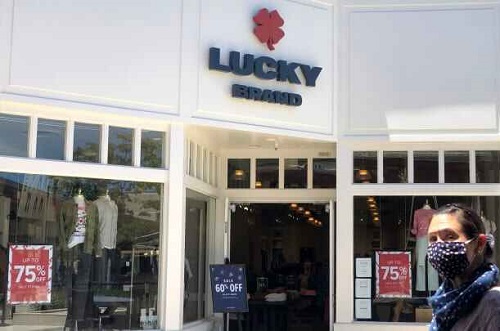 Group hope to salvage at least 125 stores of the apparel maker’s stores through their $350 million bid.
Ascena Retail Group
Listing more than $1 billion in liabilities, Ascena Retail Group, filed for bankruptcy 11 on July 23, 2020. It plans to permanently close majority of its Justice stores along with a few Ann Taylor, Loft, Lane Bryant and Lou & Grey stores. It will also close all of its plus-size Catherines stores.
Le Tote
The fashion rental start-up and owner of department store Lord &Taylor filed for bankruptcy on July 2. It listed between $100 million and $500 million in estimated liabilities. It is currently looking for a new owner, but will continue to sell merchandise online and in stores.
Tailored Brands
Tailored Brands, owner of clothing brands like Men’s Wearhouse and Jos A Bank, plans to reduce the company’s funded debt by at least $630 million through its restructuring.
Neiman Marcus
When Neiman Marcus filed for bankruptcy, it had over 40 stores across the US. The upscale department store chain Neiman Marcus filed for bankruptcy on May 7, listing liabilities of more than $1 billion.
JC Penney
Planning to emerge as a smaller company, Texas-headquartered department store chain JC Penney filed for Chapter 11 bankruptcy protection on May 15, listing more than $1 billion in liabilities. The company closed over 150 stores besides laying of 1,000 employees. It now plans to sell itself to avoid liquidation.
Pier 1 Imports
The Texas-based home décor specialist, Pier 1 Imports was forced into liquidation as its plans to find a buyer proved unsuccessful. The retailer filed for Chapter 11 bankruptcy protection on February 17, listing $340.6 million in liabilities.
Modell’s Sporting Goods
American’s oldest sports goods retailer, Modell’s Sporting Goods was already facing a stiff completion from Amazon and had suffered a poor 2019 season. The pandemic forced the retailer to file for Chapter 11 bankruptcy protection on March 11. The retailer listed liabilities between $1 million and $10 million in its filings.
Lucky Brand
With more than 200 stores in shopping malls across the country, denim brand Lucky brands plans to close 13 locations permanently. The Los Angeles based company filed for Chapter 11 bankruptcy on July 3 as it liabilities over $100 million.