FW
World still needs China manufacturing might despite COVID-19
US has become both the biggest winner and loser in trade with China. While exports to China sky rocketed, those still facing hefty tariffs, are feeling the pain. Last month, more than 100 US businesses wrote to Trump urging him to suspend tariffs on Chinese-made goods and global steel imports, which according to them, could boost the US economy by $75 billion.
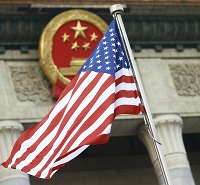 Though the first quarter data released by China recently indicates considerable pain inflicted by COVID-19 on the country's trade but it also highlights an increasingly diversified external market for Chinese products, with the Association of Southeast Asian Nations (ASEAN) becoming China's largest trading partner and trade with markets along the Belt and Road Initiative (BRI) steadily rising.
US emerges biggest winner and loser
The data reveals, the US has become both the biggest winner and loser in trade with China. While exports to China sky rocketed, those still facing hefty tariffs, are feeling the pain. As Gao Lingyun, an expert at the Chinese Academy of Social Sciences told the Global Times, there are two points to take away from this data: one, China has been implementing the phase one trade agreement as planned; two, the pandemic and remaining tariffs have caused major losses in bilateral trade.
While losses caused by the pandemic are out of control, tariffs are a man-made issue that should be addressed. Last month, more than 100 US businesses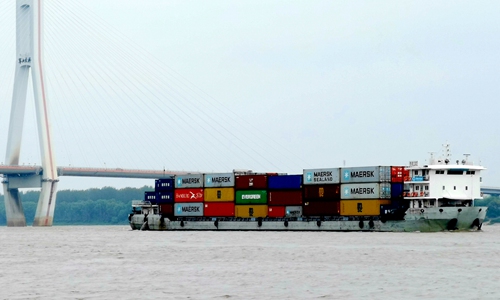 wrote to Trump urging him to suspend tariffs on Chinese-made goods and global steel imports, which according to them, could boost the US economy by $75 billion. Such faltering domestic support for Trump in the trade war, coupled with improving signs for China's trade over the past three months sees Trump at a disadvantage in talks for a phase two agreement.
Diversifying markets add to China’s advantage
Also putting China in a more favorable place is increasingly diversifying export market in the first quarter; the ASEAN region overtook the EU as China's largest trading partner, with bilateral trade volume rising 6.1 per cent to 991.34 billion Yuan. Trade within ASEAN, China, Japan and South Korean, plus India, Australia and New Zealand, is bigger than that of other regions.
Apart from their geographically close proximity, major players in the region have continued to boost integration in recent years, though internal disagreements remain. China has free trade agreements with many of them, including ASEAN, Australia and New Zealand, with more underway, including -- the Regional Comprehensive Economic Partnership, or RCEP. In wake of the coronavirus pandemic, some in the region are eyeing even closer cooperation. Chinese Premier Li Keqiang called for joint efforts to revive economic development and push for regional economic integration, including reducing tariffs and removing trade barriers. Chinese According to him, if the countries join hands, they could not only be able to effectively stop the virus from returning to the region but also lead the global economy to recovery
Machinery, textile exports drop
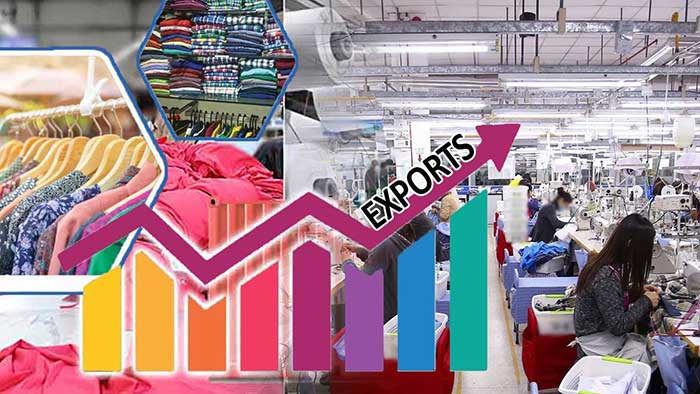
In the first quarter, Chinese trade with countries along the BRI grew by 3.2 percent, 9.6 percentage points higher than the pace of overall growth. Still, the COVID-19 pandemic has proven to be extremely painful for many Chinese sectors, including machinery, electronics and textiles. In the first quarter, export of machinery and electronics, which account for nearly 60 percent of China's total exports, dropped 11.5 percent, while export of textiles, garments and other labor-intensive sectors fell 15.3 percent. The sharp losses were caused by weeks of closures due to the epidemic, but the fast pace of work resumption and a slew of policy support measures have already lifted exports in the last month of the quarter, according to Ming Ming, Chief Macroeconomic and Fixed-income Analyst at CITIC Securities.
Behind this rebound is an emerging reality that the world still needs China's manufacturing sector despite a few Western officials urging companies to relocate their production outside of China
Vogue, CFDA raise $4 billion relief fund for US fashion community
The Council of Fashion Designers of America and Vogue have now successfully raised over $4 million in relief funding through A Common Thread, the initiative put together by the partners to support members of the American fashion community impacted by the Covid-19 pandemic. Over 800 applicants have submitted to receive aid from A Common Thread since applications opened on April 8, according to multiple reports. No individual grant will exceed $100,000.
First announced on March 24, contributors to the fund have included PVH Corp with a donation of $50,000; Ralph Lauren who donated $1 million; and Gucci parent company Kering. In addition, the Elaine Gold Launch Pad program, a program created in partnership with the Accessories Council and the CFDA to support companies between zero and three years of age, made a $250,000 donation to A Common Thread, and pledged an additional match of up to $250,000 in donations,.
According to reports, the committee hopes to have the first payments made by May. Globally, The CFDA and Vogue's effort to support its native fashion community have been shared by similar initiatives like the British Fashion Council’s BFC Foundation Fashion Fund for the Covid Crisis and the Camera della Moda fund in Milan
Vietnam to be the top garment exporter to the US
As per Team Apparel Resource, Vietnam may soon emerge as the largest apparel exporter to the USA once COVID-19 subsides. After analysing the apparel trade trend in the first two months of 2020 and forecasting for rest of the year. In January-February 2020, Vietnam exported apparels worth $2.38 billion to the US, marking 3.50 per cent growth. This accounted for 18.80 per cent of total apparel imports by the US.
Vietnam’s share in the US apparel market was 16.17 per cent in the corresponding period of 2019 and this indicates the share has significantly surged in 2020. On the other hand, China, the largest apparel exporter to the US, shipped apparels worth $2.69 billion with a drastic fall of 40.66 per cent. China accounted for 21.25 per cent of total apparel imported by USA in the first 2 months of 2020.
China’s share has reduced massively as it was 31.92 per cent in the same period a year earlier. COVID-19 outspread has caused a major setback for the Chinese shipment coupled with trade war which is collectively deciding the business remapping now. Adding to this, according to various reports, buyers are moving away from China and finding alternative destinations to place orders.
Not just buyers, a great number of US firms located in China have also decided to leave the country. The survey conducted by QIMA recently, about 80 per cent of the US companies will leave China.
UK clothing & footwear sales to dip by 26.1 per cent: GlobalData
Data analytics firm GlobalData reveals, the UK fashion sector is set to be among the worst hit industries by the coronavirus with clothing and footwear spend predicted to plummet this year, falling 26.1 per cent, or £14 billion. Analyst Chloe Collins said the lockdown will hit physical shops particularly hard. As the government has extended the UK lockdown for at least three more weeks, offline clothing & footwear sales in 2020 are likely to further contract, falling 33.6 per cent on the year, as the demand for fashion is increasingly decimated.
GlobalData also expects footfall to remain low even when stores reopen as consumers will be cautious about visiting crowded areas, and prioritize catching up with family and friends that they have been unable to see during lockdown. Consumers will also prefer to spend time outside enjoying the summer weather rather than browsing retail stores, and will focus spend on experiences over fashion items.
Online sales are predicted to decline by 7.9 per cent in 2020, even though online retail is the only option to access many product categories.
H&M collaborates with British illustrator Emma Jayne
H&M has collaborated with UK-based illustrator and pattern designer Emma Jayne for a kid’s wear collection with designs featuring colourful wildlife prints. The H&M pieces feature vibrant and playful portrayals of lively wildlife for the summer season. The gouache illustrations capture the different characteristics of animals and greenery in a fun and quirky way and are printed onto a range of children’s daywear, swimwear, accessories and shoes.
Included are snappy scenes to allover prints, [with] tropical birds, tigers and marine life, along with palm trees, fantastic blooms and underwater foliage,on a range of T-shirts, tanks, shorts, dresses, jumpsuits and swimwear.
The pieces are made from woven viscose and cotton sourced hrough the Better Cotton Initiative. The colors used include bright green, turquoise and sunset shades such as coral and yellow, soft black, white and a touch of metallics.
HealthGuard AMIC/PLB proves effective against COVID 19
Melbourne, Australia based HealthGuard Corporation, claims its HealthGuard AMIC/PLB textile finish has been independently tested to be 99.9 per cent effective against killing spores of Corona Virus (H1N1), SARS and Influenza Virus when applied correctly to fibres and fabrics.
HealthGuard AMIC/PLB has been independently tested to be durable up to 50 wash cycles whilst retaining efficacy. It can be applied to all bedding, mattresses and pillow fillings, to be used on cruise ships, aeroplanes, trains, public transport seating, all hotel soft furnishings, public institutions and aged care facilities.
HealthGuard PLB is Oeko-Tex Active Chemical Products (ACP) listed. The company’s products are manufactured in Melbourne at its Australian Government approved licenced manufacturing plant. Its state of the arts facility provides for 100 tons of capacity per day, coupled with a masterbatch enterprise manufacturing facility.
HealthGuard Corporation was founded in 1990 specifically as a research and development arm of Global Specialty Chemicals.
Gucci to reopen Italian facility
After being hit by the COVID-19 pandemic, Gucci has announced plans to reopen its Italian facility to start working on prototyping of new merchandise. They have established a deal with Italian health officials to constantly monitor safety measures for all workers that will be working at the facility.
Italian government is yet to announce plans to end the lockdown; however many suspect that the peak period of the pandemic has passed and the spread of the virus will come to a decline in the coming months.
Gucci was one of the first companies to start manufacturing protective equipment for Italian health authorities and continues to manufacture them while working on employing only 10 per cent of workers at the manufacturing units.
Some of the safety measures that Gucci has agreed to abide by are shorter shifts, constant checking of employee temperatures and allotment of a company car to every employee if they don’t have one.
US fashion firm Lord & Taylor to file for bankruptcy
Many US businesses grappling with the economic fallout from the pandemic have tapped government funds as part of a $2.3 trillion stimulus program. But most retailers have not been eligible for aid. Lord &Taylor plans to file for bankruptcy protection after it was forced to temporarily shut all of its 38 U.S. department stores in the wake of the coronavirus outbreak, people familiar with the matter said on Monday.
Fashion rental service start-up Le Tote acquired Lord & Taylor last year from Saks Fifth Avenue owner Hudson's Bay Company for $100 million. Hudson's Bay kept ownership of some of Lord &Taylor's real estate and assumed responsibility for its rent payments, amounting to tens of millions of dollars a year.
Le Tote also owes Hudson's Bay C$33.2 million stemming from a promissory note from the deal. Le Tote acquired Lord & Taylor to expand beyond e-commerce into brick-and-mortar stores. It acquired Lord & Taylor's operations, including its merchandise inventory, online business and most of its employees. Similarly, Neiman Marcus Group plans to file for bankruptcy as soon as this week, while J.C. Penney Company Inc is also considering a similar move.
AEPC urges government to pay wages of apparel sector workers
AEPC has urged the government to pay wages of workers engaged in the apparel exporting industry for the months of April and May to bail out the sector amid the coronavirus crisis. The council also informed Prime Minister Narendra Modi that the industry has cleared all wages for March dutifully. According to the council, the government can pay wages from the funds available in the Atal Bimit Vyakti Kalyan Yojana (ABVKY) Scheme, which has reportedly huge reserves of about Rs 91,000 crore, as contributed by employees and employers.
The council stated that the apparel exporting industry, a major employer, has been very badly impacted due to COVID-19 as principal export markets of the US and Europe are under lockdown since the past several weeks. The sector urgently needs a big stimulus package from the government, he said.
Apparel products exported to the fashion retailers of the world have a shelf life of two-four weeks only and thereafter they sell at deep discounts, as per the industry body.
World Earth Day: Brands should pledge to be more responsible towards the environment
 Sustainability is a multi-step process, which requires technological advances, modification to processes as well as changes in the raw materials. Although, the word is sometimes treated like a fad, sustainability is actually a long-term process, and the journey to being fully sustainable can take years for brands.
With the negative impact on environment creating a global crisis, the fashion industry is taking several steps towards achieving sustainability. Nelson Jaffery, Head of Design, Liva recommends opting for sustainable cellulose based fabrics like viscose and modal, since these fabrics offer greater fluidity and sheen. Jaffery points out, sustainable fashion is often associated with boxy and rough textures and low style quotient, however, these fabrics ensure great drape and rank high on fashion quotient. Of late, many designers have collaborated and used these fabrics in their collections like Gabriella Demetraides, Gavin Miguel to name a few.
A multi-step process
Sustainability is a multi-step process, which requires technological advances, modification to processes as well as changes in the raw materials. Although, the word is sometimes treated like a fad, sustainability is actually a long-term process, and the journey to being fully sustainable can take years for brands.
One important side effects of the fashion industry is water pollution. Therefore, it is important to treat water from the chemicals and dyes used for manufacturing fabrics before releasing it in the environment. Also, with technological changes and modifications in the processes, brands can reduce their water consumption.
Denim industry’s sustainable initiatives
Denim is one of the most water intensive industries and home-grown brands in India like Spykar Lifestyles are taking initiatives to make the supply chain and production processes more sustainable. The brand also strives to lower the consumption of natural resources like fuel for energy and water. The chemicals used are bio-degradable and non-hazardous. Spykar’s denims are produced in a government approved facility. All denim that Spykar rolls out are made using environmentally responsible processes right from recycled cotton, washes that require less water to technologically advance dry processes such as laser techniques. The brand uses solar power and relies heavily on latest technology like laser machines, ozone wash technology and cloud wash that has aided the brand to lower the material to liquid ratio considerably. In fact, Spykar is among the few brands that refrain from using pumice stone while washing, to not disturb the depleting pumice belt. The brand also has a fully functional water treatment plant which ensures no polluted water is released into any natural water source. The water is re-treated/purified and re-used for washing.
This World Earth Day, brands should pledge to be more conscious, more sustainable and more responsible towards the environment.