FW
COVID-19 makes fashion industry more flexible and swift
 Covid-19 is having a tremendous impact on the global textile and apparel industry. As Andreas Kelsch, Sales Director of Turkey-based Be Ma, reveals, be it at trade fairs, which are witnessing fewer visitors or production and delivery delays, the pandemic is impacting all aspects of business.
Impact on the entire value-chain
The retail industry is witnessing a slowdown, impacting the entire value chain–from garment making to sales of chemical auxiliaries. Brands are postponing delivery of their completed garments. Buyers are also telling manufacturers not to cut fabrics and process other raw materials which they have already imported or stored for the current orders placed by them, notes Mostafiz Uddin, Managing Director of Bangladesh-based Denim Expert.
Factories face production delays
Most factories are trying to cope with the situation. However, they are facing production shortfalls and run the risk of having to suspend production lines.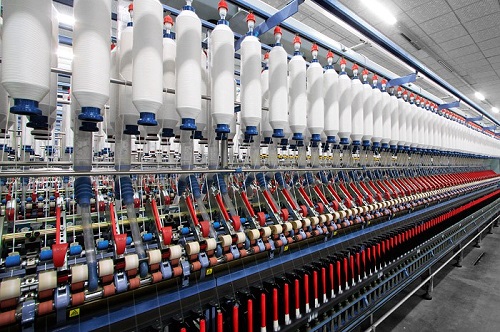 In order to reduce their immediate costs, these manufacturers also plan to either cut down on the number of workers they employ or reduce their shift hours. However, both of these possibilities are likely to result in a loss of income for around four million workers, feels Uddin.
Digital channels gaining popularity
With most stores shut, retailers are moving to new digital channels. However, the outbreak has also had certain upswings. As Alberto De Conti from the brand Hub 1922 of the Rudolf Group that operates in both Italy and Germany observes, there is an adoption of new, regular and exciting B2B digital and communication channels that would beneficial for the environment as well.
Also going digital is US-based The Lycra Company who is fulfilling all orders and shipments without any interruptions. Most of the company’s interactions are being conducted virtually. It further plans to ramp up its digital resources to facilitate such connections besides investing in digital media to drive awareness and promotion of our innovations and technologies, reveals Denise Sakuma, director of the company’s global RTW and denim.
The outbreak is forcing companies to look at their roles differently. Not only are they planning to look at other supply chains but also develop contingency plans. As Alice Tonello Marketing and R&D Head of Italy-based Tonello points out it is likely to lead to reorganisation in production, towards flexibility and swiftness, which in turn could lead to more near shoring.
Welspun to make disinfectant wipes, masks
Amid the Covid-19 outbreak in the country, the Welspun Group is switching capacities at its textiles plant in Anjar, Gujarat to manufacture disinfectant wipes and masks to meet the demand-supply gap for personal protection. The company plans to build a pipeline of a few hundred thousand masks and wipes in the coming weeks that could be made available to all on-ground workers and their families attending to essential services.
The plant that makes home textile products for largely exports along with domestic market also has technical textiles capabilities for products like disposable wipes, wound care, diaper, drapes and gowns apart from technical textile durables for automotives, protectives and home textiles, among others. Now, as a natural extension, the group is looking to manufacture disinfectant wipes and masks to bridge the demand-supply gap in the country.
With this, the company aims to bridge the unhealthy gap between demand and supply for personal protection and wipes in the country even for non-specialised application need. While it is working on using technology and skill set that are not optimized for such finished products, the group feels it can build a pipeline of a "few hundred thousand masks and hand wipes" in the coming weeks.
With its prime focus currently on speedy production of such essential supplies, Welspun is focused on making these masks and disinfectant wipes available for all on-ground workers and their families who are at great risks by attending to essential services amidst the pandemic.
Among the top global makers of bed and bath linen, the company has been manufacturing cotton terry towels, beach towels, bath rugs and mats, bath robes, cotton sheets, pillows and comforters among other things at its Vapi and Anjar facilities.
US, EU buyers to stop buying Vietnamese goods
Many US and European Union (EU) partners have sent notices to Vietnamese garment and textile businesses informing they will temporarily stop receiving goods for three to four weeks. Ph?m Xuan Hong, Chairman of the HCM City Association of Garment Textile Embroidery and Knitting says, nearly two-thirds of the garment-textiles market narrowed with this. Half of all textile exports from HCM City go to the United States, while the EU accounts for 15-18 per cent of annual exports.
According to chairman of Viet Thang Jean Ph?m Van Viet, the Chinese experience shows it will take at least two months in the United States and EU to control the pandemic. The United States accounts for 30-35 per cent and the EU 20 per cent of the company's total export turnover. About 40 per cent of existing fabrics will be abandoned or sold at low prices, he said. Suddenly stopping imports forced enterprises to store many containers of products that were on the way to US and EU ports, he said, which will increase expenses, according to a Vietnamese media report.
The most urgent problem for textile enterprises is not delivery of orders but how to protect workers. Textile enterprises in the country have suggested the government to quickly disburse approved economic stimulus packages and consider partial use of the unemployment insurance fund and social insurance fund to help businesses continue paying their workers.
They also hope the ministry of finance and the banking system will lower interest rates or give interest-free loans, which could be used to pay workers until production activities and trade return to normal.
India’s textile industry seeks $108 billion bailout package
India’s $108-billion textiles industry, which helps the likes of Gap and Macy’s stock their store shelves, is seeking a bailout package on their foreign exchange liabilities after the lockdown prompted cancellation of orders that were to fetch payments in dollars.
Losses in forex contracts could run into crores of rupees for the exporters that had used anticipated dollar receivables to enter into contracts with banks. To cover the hedging liabilities, the industry is seeking benefits similar to the moratorium extended to borrowers, who now have a three-month grace period on repayments.
Textile exporters book forward contracts against overseas receivables to protect their cost or to earn premiums. On shipment, they provide documents to banks booking the contracts. Due to cancellation and delays, they are unable to provide the bill of lading and other documents.
If exporters are not able to ship, they do not receive the money from overseas buyers. In such cases, they have to unwind those forwards deals booked up to six months in advance at a loss of 2-4 rupees/unit of dollar, dealers said.
Abhishek Goenka, CEO of IFA Global points out textile exporters should be given some flexibility to manage their dollar delivery in the form of some extensions so they do not have immediate cash flow problems considering (that the lockdown is) no fault of theirs.
Sri Lanka apparel firms divert production to masks and protective equipment
Sri Lanka’s apparel sector has turned factories to make mask and protective equipment for frontline workers who are fighting against COVID-19, though tight controls are making it difficult to keep factories running. At the moment the industry is making one million pieces of safety suites through JAAF for people who are working frontline of COVID-19 treatment. However, production halted after police asked some factories to close and workers were not allowed to report to work at others.
The fabric for mask production had been donated by Teejay Lanka, a local knitted fabric manufacture, while the HDPE polythene to produce coverall protective suites were donated by PolyPack, a Sri Lankan plastic products maker. In addition, a number of factories are working with the government to supply in a number of protective cover all garments made out of HDPE polythene, again being provided free of charge to the Government for use in state hospitals. The raw material for this project has been donated Polypack.
However, the industry is not looking at exporting at the moment due to workforce shortages meanwhile the government tightens its Island wide curfew.
AAFA welcomes Senate’s $2 trillion war chest
The American Apparel and Footwear Association (AAFA) has welcomed US Senate approval of a S$2 trillion war chest which will ease the hardship felt by businesses across the country since the outbreak of the COVID-19 which is now rampant in the states.
An estimated 3.3 million people filed for unemployment in the USA last week alone as it reels from a surge in virus cases and a huge hit to its economy. Senators have now agreed to the terms of a new bill which will provide direct payments of $1,200 to millions of individuals who earn $75,000 or less, and an additional $500 per child. Whilst $500bn is set aside to help companies via a loan system and $350bn has been designated to support small businesses.
AAFA has urged the US President to swiftly approve the bill – an action Trump has already affirmed that he will – to alleviate the strains felt on business owners and employees across the country.
This legislation will inject liquidity into the system allowing companies to sustain operations, and keep employees on the payroll so they start up quickly once health authorities give us the all clear.
Broken down, the bill – passed following a brief hiccup as Democratic and Republican Senators squabbled over unemployment benefits – will alleviate some of the financial burden left on the doorsteps of individuals paid under US$75,000, which will now be afforded a monthly pay packet of US$1,200 until they’re able to resume work.
Nike to emerge at a stronger competitive position post COVID-19: UBS
UBS analysts say Nike Inc. shoppers who couldn’t get to stores that were shuttered by the pandemic flocked to e-commerce channels during the fiscal third quarter. The brand’s digital earnings accounted for about 20 per cent of the company’s overall business, with digital sales rising 36 per cent on a currency-neutral basis during the fiscal third quarter.
In China, while people were isolated at home, Nike weekly active users on its activity apps increased by 80 per cent by the end of the quarter versus the beginning. Digital business in China grew 30 per cent. Nike has $5.5 billion in liquidity, accounting for just 14per cent of calendar 2019 sales. In comparison, Ralph Lauren’s 6.30 per cent or $2.4 billion, but that accounted for 38 per cent of last year’s sales.
UBS suggests t Nike will be in an even stronger competitive position when the Covid-19 situation ends versus our prior view. The brand is operating from a position of strength s demand remains strong. As Raymond James analyst’s reveals coronavirus is encouraging a majority of its consumers to shift ito digital channels.
Mothercare refocuses on brand management
Mothercare has substantially completed its transition to refocus on brand management and design, development and sourcing of product for its global franchise partners. In the UK, many head office staff are working productively from home but a number of its retail personal are unable to do so. UK government support is being used for around 430 of its Boots Mini-Club retail workers.
The impact of COVID-19 on its franchise partners globally is likely to lead to a “material” impact on Mothercare’s short-term revenues. But it added that the experience it gained as a result of the controlled supply shock that was exerted upon the business at the time of the administration of Mothercare UK and related store closures last November, is proving invaluable. It is currently negotiating with its franchise and manufacturing partners, as it seeks to manage and mitigate the overall impact on both our and their businesses.
The company has made progress in reducing its debt and is in talks with a number of debt providers regarding entering new debt facilities. It plans to focus efforts on helping to preserve the businesses of our franchise and manufacturing partners through even more collaborative ways of working, to ensure both the short term liquidity of our business together with our return to longer-term profitability.
LVMH expects Q1 sales to decline by 20 per cent
Louis Vuitton owner LVMH could “accurately” calculate at this stage the impact of the closures of production sites and stores linked to the coronavirus outbreak around the world. The French luxury goods group will publish its sales figure for the first quarter on April 16, after the close of the Paris market. The brand expects it to decrease in a range between 10 and 20 per cent compared to the same period last year.
In the short term, the measures taken by public authorities to combat the Covid-19 pandemic have resulted in the closure of production sites and stores of the brand in several countries which will have an impact on the group's results. The brand has stated that this impact cannot be accurately calculated at this time without knowing the timing of a return to normal in these countries.
Technology takes lead in communication between brands, customers: GlobalData
According to GlobalData, with the COVID-19 pandemic putting a stop to all non-essential travel, technology is now taking a front seat in communication between clothing brands and their suppliers. Buyers are now rethinking how they work with manufacturers on orders and product design.
UK clothing and homewares retailer Next is looking at a number of different scenarios to make up for the lack of face-to-face contact with its suppliers, including video conferencing. Teams would previously have travelled to factories to work on new product development, but are now asking manufacturers to send samples over. Video conferencing, with one sample at each end, is helping to recreate the process.
Software companies are also stepping in to help, particularly as more employees start working from home to try and stop the spread of the virus. Tukatech, for example, is offering CAD customers the opportunity to switch to a cloud license at no charge, allowing them to work from anywhere. While Centric Software has launched a series of quick-start, online collaboration packages designed to get brands, retailers and manufacturers working remotely.
The dynamic of sourcing and machinery trade shows is also changing, with organisers looking at virtual and other digital alternatives as the pandemic forces the cancellation of myriad events around the world.
Companies are finding new ways of staying in touch that they maybe haven’t considered previously. So having the right technology in place to enable a company to keep communication flowing across its supply chain has now become imperative if they want to remain operational.