FW
Chinese polyester mills lower operating rate
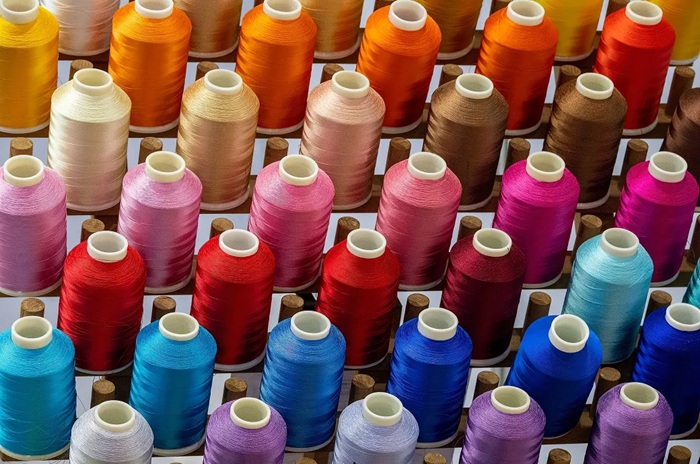
The operating rate of Chinese polyester yarn mills in July to September was much lower than that in the same period last year. Polyester yarn prices moved in line with raw material prices. They have hit the lowest since 2017. Most spinners have started to sell at around cost line, but even so sales are not moving smoothly. Some spinners suffered huge losses as they stocked up on polyester staple fiber or accumulated finished products, and some can run normally only by production cuts and cautious operations. Small and medium-sized spinners have been forced to cut production. In the meantime, end-user fabric plants are running at a low rate.
With so many unfavorable factors, the market will find it difficult to improve. If end-user demand does not recover, this situation may last until next year and the overall operational environment will continue to be burdened. The sustained depression in the polyester staple fiber market has made a dent in the vitality of the market and the wait-and-see attitude adopted by downstream players also hamper the sales of polyester yarn. As raw materials for cotton textile, cotton, viscose staple fiber and polyester staple fiber all face huge pressure in 2019. The sentiment of these three markets have cooled down and finished products are also affected negatively.
Kingpins New York to focus on sustainability
The upcoming edition of Kingpins New York, the trade fair dedicated to denim, will focus on sustainability. The fair will be held between November 19 and 20 in Pier 36. There will be a special space dedicated to discuss eco-innovation, social and environmental issues with professionals in the sector.
Founded in 2004 by American businessman Andrew Olah, Kingpins has established itself as one of the key events for the denim industry. Since then, the contest has been exporting the formula to different parts of the planet.
The fair, also organised in Amsterdam, Hong Kong and China, launched in 2015 its Kingpins Transformer summit, a series of events for the members of the denim industry to make the jeans industry more environmentally viable and socially responsible.
Vietnam Textile & Garment Exhibition to feature over 500 exhibitors
To be held from November 20-23, 2019, the Vietnam Textile and Garment Exhibition will house over 500 exhibitors. Specialised in the clothing industry, the trade fair will take place in the Vietnamese capital, Ho Chi Minh City.
Most participants will be international companies from 17 markets such as Bangladesh, China, France, Germany, Hong Kong, India, Japan, Malaysia or Romania,etc. The exhibition will feature a conference space to discuss topics such as trade war between China and the United States and its impact on the fashion sector.
UK to host two-day textile fair Texfusion on November 20
Texfusion will be held in the UK, November 20 to 21, 2019. The show will present a carefully-selected group of high-quality international companies including the finest fabrics and accessories manufacturers. The event will provide manufacturers and their agents the opportunity to showcase their products to the most influential buyers and designers on the UK fashion scene. This textile fair will feature 180 exhibitors, double that in the March edition, and expects more than 2,000 buyers. The fair specializes in technical textiles, fabrics, women’s wear and men’s wear and denim. Fashion fabrics will cover Lycra, silk, prints, synthetics, wool, jacquard, cotton and blends, denim, eco friendly fabrics, embroidery and lace, fake fur, zips, knitted fabrics and trims. There will be functional and sportswear linen, active wear, technical fabrics, waterproof, fire resistant, medical fabrics. Home textiles will cover fabrics for duvet covers, sheets, blankets, carpets, towels, kitchen wear. There will be more than 60 exhibitors from China and ten companies from Taiwan.
The fair offers a professional and friendly atmosphere where visitors have the opportunity to source from the most important manufacturers in Asia showing a wide selection of products and demonstrating their competence and experience in both design and production capability.
The Lycra Company to showcase EcoMade fibers at Kingspins New York Denim
The Lycra Company will showcase its Lycra® EcoMade fibers type 166E and 162E, currently produced in Brazil, at the Kingspins New York Denim trade show to be held from November 19-20, 2019 in New York. These fibers were recently certified by the GRS (Global Recycled Standard). They are the company’s first branded spandex fibers made from pre-consumer recycled materials. The Global Recycled Standard verifies their recycled material and includes strict social, environmental and chemical requirements.
These fibers offer the same lasting comfort, fit and freedom of movement as the original Lycra® fiber, but are made partly with fiber waste collected at the company’s manufacturing sites and blended with virgin polymer at specific concentrations. This reduces waste and puts it back into production.
Upcoming Techtextil in Mumbai to feature hackathon
A hackathon will be held as part of Techtextil, Mumbai, November 20 to 22, 2019. The aim of the hackathon is to foster an eco-system that supports India’s technical textile start-ups and enables them to develop products and prototypes. Representing the supply chain of fiber to innovation and start-ups to the investor stage, India’s first technical textile hackathon aims at potentially building business models that can be funded, scaled, and taken global.
The hackathon is expected to bring India’s top ten technical textile start-ups under one roof. While the manufacturing side will be represented by companies of specialty fibers, yarns, textiles, fabrics, products along with brands and traders, the entrepreneur side will cover small and medium enterprises, start-up ecosystems and accelerators.
The session will take up topics centered on India’s challenges of sustainability such as ocean littering, plastic recycling and waste disposal and drive concepts for start-ups to collaborate with industry stakeholders to develop focused solutions using technical textiles. The event is expected to enable stakeholders engage in a sustained dialogue and drive innovations in India’s technical textile industry. The hope is that the collaborations can potentially lead to the development of prototypes, pilot projects, new technical textile product development, and go to market strategies.
Bangladesh hosts successful edition of Intex South Asia
Intex South Asia was held in Bangladesh, November 17 to 18, 2019. This is the biggest international apparel textile sourcing show in the South Asian region. The aim was to create a new paradigm in textile sourcing by successfully integrating the textile value chain on a single, global, trading platform. The expo is the strongest platform to expand business to other countries in South Asia and across the world. The fair connected buyers from Bangladesh and other South Asian countries. The aim was to create a network with quality suppliers from over ten countries showcasing yarns, apparel fabrics, denim fabrics, clothing accessories and allied services, dyes and chemicals.
For its first edition in Bangladesh, the show ramped up its offerings not only in terms of new countries like Indonesia and pavilions from India and China but also added categories such as the dyes and chemicals zone which added more depth to the show. Intex South Asia’s Interactive Business Forum Seminar Series delivered high quality market intelligence to support industry efforts to upgrade, move up the value chain and better understand global trends. Fashion for Good from Netherlands presented circular fashion and also introduced its South Asia Innovation Program. These seminars assist industry to better understand current global trends and in turn create a more relevant manufacturing hub.
Bata to open more outlets in Bangladesh
Bata Shoe Company (Bangladesh), which recently opened its first sneaker outlet-B-Sneakers- plans to further open many such outlets in the country future. The multinational shoe company has been serving the local customers since 1962. Currently, Bata Shoe Company (Bangladesh) operates two manufacturing facilities – one in Tongi and the other in Dhamrai. Together these two facilities have an annual production capacity of 160,000 pairs of shoes daily.
Bata is the lone franchisee of internationally renowned brands such as Adidas, Nike, Hush Puppies, and Skechers in Bangladesh. It has its own sneaker brands, namely Power and North Star. The turnover of Bata Shoe Company (Bangladesh) stood at Tk 459 crore in the first half this year and it made a profit of Tk 28 crore. Sneaker use grows five times more than black and brown formal shoes.
Global organic cotton production on the rise, India among the leaders
World organic cotton production grew by 56 per cent last years, reveals Textile Exchange. Organic cotton makes up 0.7 per cent of total cotton production worldwide and involves more than 1,82,000 farmers. The number of facilities certified to voluntary organic standard also rose, with facilities certified to the Global Organic Textile Standard (GOTS) up 15 per cent and those following the Textile Exchange’s Organic Content Standard up 16 per cent. While 19 countries now boast of organic cotton production, 98 per cent is concentrated in seven countries: India, China, Kyrgyzstan, Turkey, Tajikistan, the United States and Tanzania. India, Tanzania, Turkey, Kyrgyzstan and China lead the way in transitioning land to organic. About 44 per cent of the growth in India’s production is attributed to its increase in the proportion of certified land used to grow cotton, which increased to 70 per cent from 45 per cent.
One of the biggest obstacles for organic farmers remains access to cotton seed that hasn’t been genetically modified, especially in India and China. Organic cotton is also seen as a component in addressing global climate change.
Textile Exchange is a global non-profit that creates leaders in the sustainable fiber and materials industry. The organisation collects and publishes critical industry data and insights that enable brands and retailers to measure, manage and track their use of preferred fiber and materials.
Chinese exports to the US down 25 per cent
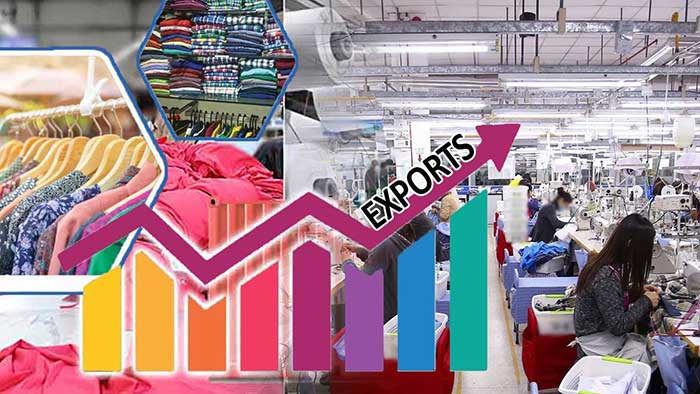
Chinese textile and apparel exports to the US fell 25 per cent in the first half of 2019. The main reason is the tariffs slapped by the US on Chinese imports. Losses for Chinese exporters have increased over time. Chinese exporters may have started to bear part of the costs of the tariffs in the form of lower export prices at around eight per cent below comparable products. Exports of articles of apparel and clothing accessories or leather or composite leather – which faced a ten per cent punitive tariff in September 2018 — declined by 20 per cent January to June 2019 compared to the first half of 2018. Similarly, Chinese shipments of knitted and crotched fabric dropped 32 per cent in the first six months of 2019. By comparison, the largest apparel export of China to the US that was not subject to additional tariffs was jerseys, pullovers, cardigans, waistcoats and similar articles, knitted or crocheted.
The tariffs are hurting not only Chinese exporters but American consumers, who are bearing the brunt of the measures in higher prices. A lose-lose trade war is not only harming the main contenders, it also compromises the stability of the global economy and future growth.