FW
Bangladesh demands fair prices from US and EU brands
Recently Bangladesh Commerce Minister Tipu Munshi and Bangladesh High Commissioner to the United Kingdom Saida Muna Tasneem demanded fair prices for garment exported to the USA and EU as the local apparel exporters spend billions of dollars to strengthen workplace safety leading to an increase in the cost of production.
Of the top 11 LEED-certified factories in the world, 8 are from Bangladesh. These eight are “Platinum” rated, which is the highest category that can be reached under this globally recognized certification. 20 factories are in the LEED Platinum category and 40 are in LEED Gold. Indeed, there are 73 Bangladeshi LEED Green garment factories certified by the USGBC. There are some 320 factories in the pipeline waiting for LEED certification.
Recently Bangladesh government increased its workers’ minimum wage to 51 per cent. All of these have increased the production cost by almost 20 per cent in the last few years.
Bangladesh continues to offer products at reasonable prices. For the last few years, the country has been offering value-added products. However, continuous pressure from buyers is slowing down manufacturers’ growth.
Shoppers opt for sustainable apparel over fast fashion
According to a new survey from the Fashion Retail Academy in London, fast-fashion could be slowly falling out of fashion in favor of more sustainable apparel.
Around 39 percent of shoppers preferred to expensive clothes that lasts longer, and one in eight even said they would choose expensive, longer-lasting clothing over cheaper options that are more fashionable. The survey, reported on by Just Style, polled shoppers between the ages of 18 and 35, encompassing Z and some Millennial shoppers.
Younger shoppers seem to be slightly less interested in fast-fashion with those in the 23 to 26 cohort, being five percent more likely to buy expensive, long-lasting clothing than 31- to 35-year-olds.
As evidence of a trend away from throwaway apparel, Lee Lucas, principal of the Fashion Retail Academy noted that Patagonia, a brand with a lifetime guarantee on its products, has been growing steadily in popularity.
China wants wider access to India
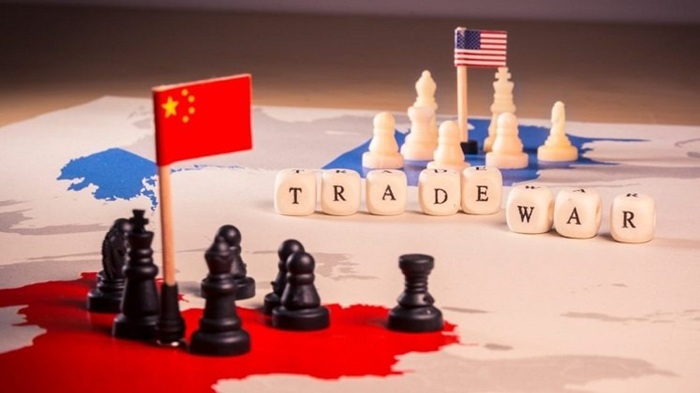
China wants 85 per cent of its products to enter India duty-free.In turn China is willing to give duty-free access to 92 per cent of Indian exports.
India has offered to open up 74 per cent of its market to Chinese goods in phases, but China is not satisfied with the proposal.
India offers lower concessions to China compared to other countries where over 90 per cent of imports can come duty-free. However, even the current arrangement faces the risk of domination by Chinese goods in the Indian markets, which would further impact the trade deficit estimated at 63 billion dollars in the last financial year.
In fact India has little option than opening up the market gradually with a long tariff phase-out period so that Indian players have time to adjust to the competition.
India, China, Japan, South Korea, Australia, New Zealand and the ten Asean nations are part of the world’s largest free-trade agreement under the Regional Comprehensive Economic Partnership (RCEP). Despite India’s concerns about its trade deficits with Asean countries and China, it would be missing out on a key economic opportunity to establish a presence in the fast-growing Asean region if it did not join the RCEP.
Boyish jeans for women
Denim brand Boyish makes men’s style jeans for women. The aim is to make women have their bodies feel amazing in its jeans and make them feel good for supporting social and environmental efforts.
Design is at the forefront of the brand’s ethos. Boyish, based in the US, will never make a product that isn’t sustainable and eco-conscious but also won’t make a product that is sustainable and eco-conscious without it looking and performing well. Its mission is to make great jeans and be as transparent as possible about everything it does so other brands can learn to make their jeans better.
Currently, Boyish Jeans is taking its technology of blending recycled cotton and spinning it with Tencel Lyocell with Refibra technology to create the world’s most sustainable and circular yarn. The brand recycles all its cutting scraps back into its fabrics when remaking them. Sixty per cent of the collection is 100 per cent natural and cellulosic fibers. Boyish looks to make seasonless, well made, long lasting denim that can one day be recycled back into new jeans. Fits are inspired by vintage jeans found at flea markets. The aim is to make authentic jeans since the last 15 years have been about stretch.
Bangladesh revises garment prices
Garment manufacturers in Bangladesh are working on fixing a price for their exports.
This price will be made viable in line with rising production costs caused by higher wages and factory remediation. There has been a rise in minimum wages by 50 per cent for apparel workers. Businesses have faced an increase in production costs of around 20 per cent in recent years. But buyers are unwilling to pay higher prices and this, say exporters, has eroded their profit margins. Exporters say a higher price will also benefit workers.
Bangladesh’s apparel industry is going through massive factory remediation, value addition, innovation and technological upgradation in order to cope with buyers’ demands.
Bangladesh’s apparel industry has already made remarkable progress in factory remediation, building green factories and meeting stringent safety standards. Annual export earnings from the industry have grown from 9.3 billion dollars in 2007 to 30 billion dollars in 2018. At the same time, Bangladesh’s reputation has also improved globally due to remediation of the garment factories by Accord and Alliance.
Bangladesh is still a lucrative destination for sourcing low-cost garments after China. Outside of China, Bangladesh is increasingly given preferences for apparel sourcing due to the competitive price and quality.
Bangladesh, Russia MoU to boost bilateral trade
Bangladesh and Russia have reportedly decided to sign a Memorandum of Understanding (MoU) to remove all trade barriers between the two countries.
There are currently no banking transactions between Bangladesh and Russia, and trade is done through Telegraphic Transfer (TT), which as per many garment makers, is a major hindrance towards facilitating garment business with Russia.
There is huge demand for Bangladeshi apparel items alongside sea foods, potato and medicine in the Russian markets. The MoU will allow banking transactions between the two countries to reduce difficulties related to trade and commerce thereby giving a fillip to trade with Russia.
Bestseller focuses on sustainability
Bestseller has placed sustainability at the core of its business.
The new strategy called Fashion FWD emphasizes the immediate need for inclusive and holistic action on sustainability across the value chain. It is based on becoming as sustainable as possible, as soon as possible, across four focus areas covering Bestseller’s value chain. These areas are using sustainable materials and working with innovative new fibers, improving its environmental footprint to have a positive impact on the environment, embedding human rights in the industry and focusing on a circular business model.
Bestseller has also committed to a new investment platform as a part of Fashion FWD. Dubbed Invest FWD, this new initiative will see Bestseller strategically invest in sustainable innovation and solutions throughout the whole life cycle of fashion.
Each of these focus areas includes specific, measurable goals for the period 2019 to 2025. Bestseller commits to being fashion forward until the company is climate positive, fair for all and circular by design. Climate positive means that it will remove more emissions than it emits. Fair for all means it will promote equality, dignity and safe working conditions for all, and circular by design means that the company will turn waste into a valuable resource throughout its value chain.
Australian sustainable designer launches first commercial collection
Australian sustainable fashion designer, Tess Whitfort launched her first commercial collection, entitled Avoidance. The collection is created using rescued textile waste and innovative zero-waste design techniques to catalyse a circular fashion system.
The six-piece Avoidance collection features an aviation inspired jumpsuit alongside the experimental ‘Preston Dress’ with adjustable belted detailing and a classic retro varsity style jacket, which all feature unique twists on classic designs.
Designed in partnership with award-winning sustainable manufacturer, TAL Apparel, Tess’ zero-waste pattern techniques brought about groundbreaking fabric utilisation during manufacturing, with several of her styles achieving less than one percent fabric wastage, compared with an industry norm of approximately 15 per cent. Her collection is formed of upcycled denim, crepe, wool, and cotton, which were rescued from world-leading luxury brands, mills, and manufacturers, thereby avoiding the need to create virgin materials and minimising fashion’s negative environmental impacts.
AAFA supports USMCA approval
The American Apparel & Footwear Association announced its full support for quick passage of the United States-Mexico-Canada Agreement (USMCA).
AAFA has long supported the USMCA negotiations, calling for the resulting agreement to be trilateral with Mexico and Canada, to not harm to the industry’s supply chains, and to be seamlessly implemented. As part of its support for USMCA, AAFA is an active member of the USMCA coalition.
The American Apparel & Footwear Association (AAFA) is the national trade association representing apparel, footwear and other sewn products companies, and their suppliers, which compete in the global market. Representing more than 1,000 world famous name brands, we are the trusted public policy and political voice of the apparel and footwear industry, its management and shareholders, its nearly four million U.S. workers, and its contribution of more than $400 billion in annual U.S. retail sales.
Lyst releases latest ranking of world’s top fashion brands for Q42018
"Recent data from The NPD Group shows, dollar sales of luxury fashion in the US market have increased by 50 per cent in recent years, with substantial growth registered in sales of expensive apparel and footwear. Global fashion-search platform Lyst also released its latest ranking of the world's top fashion brands for Q4 2018. It analysed the online-shopping behavior of over five million consumers a month, monitoring how these shoppers search, browse, and buy fashion across 12,000 designers and stores online."
 Recent data from The NPD Group shows, dollar sales of luxury fashion in the US market have increased by 50 per cent in recent years, with substantial growth registered in sales of expensive apparel and footwear. Global fashion-search platform Lyst also released its latest ranking of the world's top fashion brands for Q4 2018. It analysed the online-shopping behavior of over five million consumers a month, monitoring how these shoppers search, browse, and buy fashion across 12,000 designers and stores online. The report also takes Google search data and social media mentions and engagement statistics into account. Following brands dominated the rankings:
Burberry : Customers appreciate Burberry’s new look. Despite skepticism around its turnaround efforts, Lyst data shows Burberry's "revamped look" is resonating well with customers. The brand has rolled out limited-edition drops, which are exclusively shoppable on Instagram and Chinese messaging app WeChat. These have been selling out in a matter of hours.
Valentino: Thanks to Gwyneth Paltrow, Valentino had a buzzy start to the fourth quarter. The actress-turned-businesswoman wore a Valentino dress for her wedding in September.
Vetements: Vetements experienced a growth in its social media followers after Tilda Swinton wore a red Vetements dress to the Sitges Film Festival in Spain in October.
Stone Island: Making a reappearance in the top 10 list after a six-month hiatus, Stone Island products registered up 122 per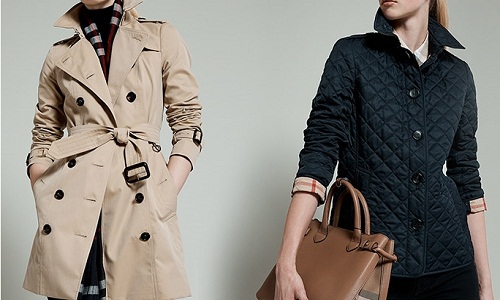 cent growth in the most recent quarter. The brand was mentioned over 327,000 times on social media.
Versace: Versace was bought by Michael Kors, now Capri Holdings, for $2.12 billion last year. The company now plans to grow the brand’s revenue from about $808 million to $2 billion, expand its footprint from 200 to 300 stores, and ramp up its shoes and accessories assortment.
Fendi: Fendi, in October 2018, launched its Fendi Mania capsule collection, which featured a mashup of the Fendi/Fila logo, designed by an Instagram artist. The launch events for this collection, which took place in nine cities, lit up social media, Lyst wrote, creating a big spike in interest around the brand.
Moncler: Occupying fourth place in the list, Moncler’s signature luxury down jackets were included on Lyst's men's and women's hottest products lists too.
Balenciaga: The brand came into the limelight in December, after Michelle Obama wore a $4,000 pair of thigh-high silver Balenciaga boots to an event in New York to promote her new book.
Off-White: Founded in 2012, this high-end streetwear label is the brainchild of Virgil Abloh, who is also artistic director of Louis Vuitton Men's. Its Nike x Off-White The Ten series was the hottest sneaker collection of 2018, according to Lyst.
Gucci: Gucci reigned supreme at the end of 2018 after taking various top spots in the ranking throughout the previous parts of the year. Between October and December, more than six million shoppers searched for the brand’s accessories which have become the most coveted fashion products of the world.