FW

Despite the trade war, China accounts for nearly 36.5 per cent of all the apparel imported into the United States, though these imports have declined from the 41.5 per cent in 2010. For the 12 months ending in October, the United States imported $40.3 billion in apparel, textiles and yarns from China, a 5.25 percent increase over last year.
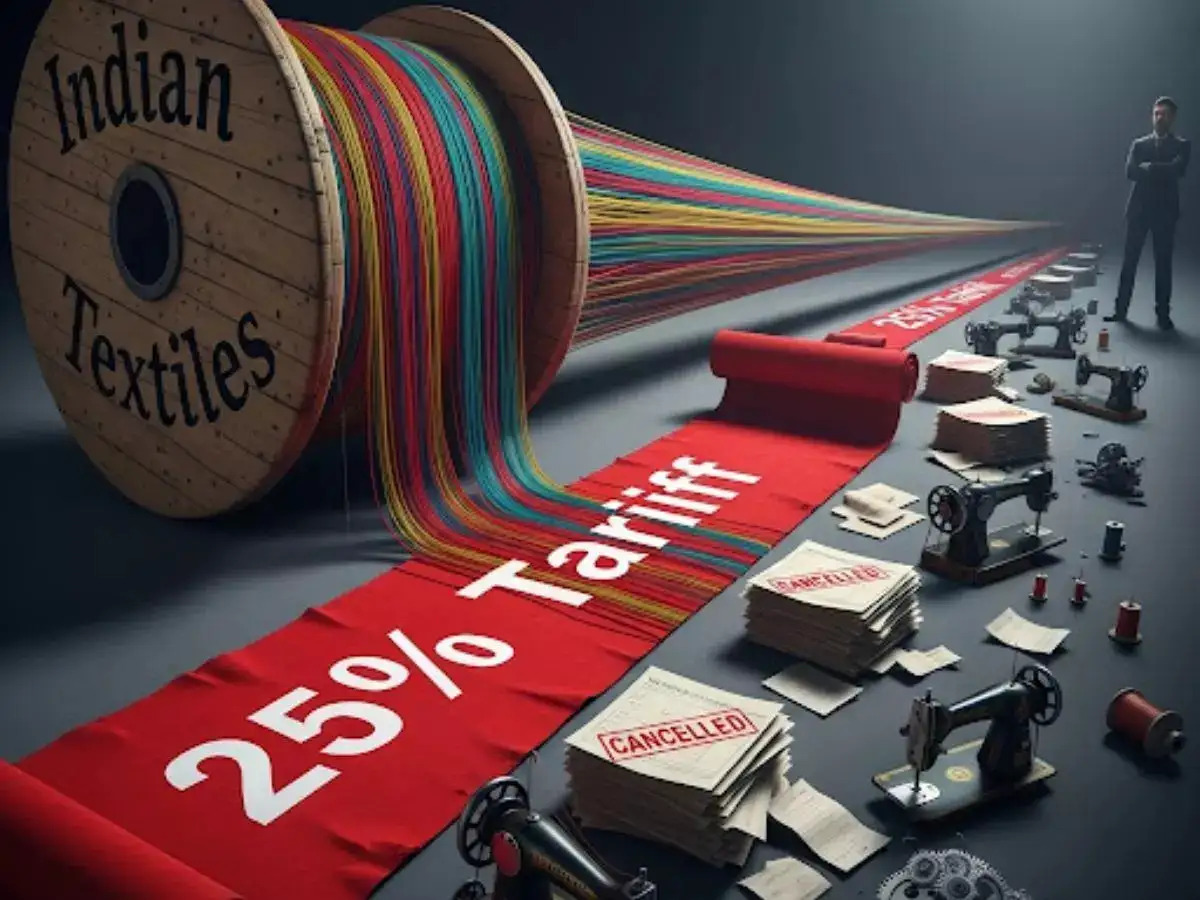
Still, there is a shift out of the country after the Trump administration earlier this year imposed an additional 10 percent in tariffs on $200 billion of imported Chinese goods. Those tariffs covered textiles and handbags but not apparel. The main beneficiary of this shift out of China is Vietnam, which continues to be the second largest apparel provider to the United States. Vietnam now accounts for 11.75 percent of all the textiles and apparel the U.S. imports into the country.
For the 12 months ending in October, US’ apparel and textile imports increased by 8.44 per cent over the previous year, totaling $1.3 billion.
As per latest Wazir Textiles Index (WTI), India’s overall textile and apparel exports in H1 FY19 declined 1 per cent to $18.4 billion from the previous year. Apparel exports declined by 16 per cent this half year, largely due to the decline in apparel exports to the UAE, which dropped inexplicably by 55 per cent during H1 FY19.
India’s overall textile and garment exports to UAE also declined by around 50 per cent during first half of FY19. The EU, US and UAE remained the top export destinations for India’s textiles and garment products.
Textile and clothing imports during the period increased by 4 per cent compared to the previous year. Apparel imports increased by 56 per cent, primarily due to the impact of reduced effective import duties post GST for imports from countries like China and Bangladesh. China continues to be the largest import partner for India, however, the imports declined marginally by 0.4 per cent in H1 FY19 as compared to the previous year.
"In its ‘Global Fashion Index,’ McKinsey ranked the top fashion companies across the world by economic profit during the first nine months of 2018. According to the report, the global fashion market is dominated by 20 companies which account for 97 per cent of global economic profit in the retail sector. These companies own some of the biggest and best-known brands in the business. Of these 20, the top 10 are. Having some of the best-known high end brands, Kering registered a profit of $943 million in the first nine months of 2018. The luxury conglomerate owns brands like Gucci, Alexander McQueen, and Balenciaga, etc. Gucci was ranked the second-hottest brand on a recent survey by Lyst and the 10th most popular apparel brand in a survey of teen spending in April."
 In its ‘Global Fashion Index,’ McKinsey ranked the top fashion companies across the world by economic profit during the first nine months of 2018. According to the report, the global fashion market is dominated by 20 companies which account for 97 per cent of global economic profit in the retail sector. These companies own some of the biggest and best-known brands in the business. Of these 20, the top 10 are:
Kering
Having some of the best-known high end brands, Kering registered a profit of $943 million in the first nine months of 2018. The luxury conglomerate owns brands like Gucci, Alexander McQueen, and Balenciaga, etc. Gucci was ranked the second-hottest brand on a recent survey by Lyst and the 10th most popular apparel brand in a survey of teen spending in April.
Adidas
With a profit of $1.06 billion, German athletics brand Adidas, in recent years, has been doubling its operations in the US market capturing around 30 to 40 per cent market share.
Ross Stores
Hailed as a retail treasure by analyst, off-price retailer Ross Stores, with a profit of $1.06 billion , offers a wide selection of well-known brands at discounted prices and providing customers with a treasure-hunt shopping experience that's hard to replicate online.
Richemont
The parent company of jewelry and watches brands such as Vacheron Constantin, Cartier, and IWC Schaffhausen, Richemont also owns Net-a-Porter, the online fashion store selling a wide mix of designer brands. It has registered a profit of $1.07 billion
H&M Group
Best known for its cheap namesake brand, H&M also runs more expensive stores such as & Other Stories and Cos. The group, with a profit of $1.28 billion, is considered as one of the pioneers of the fast-fashion movement and leading apparel companies in the world.
hHermès
Best known for its silk scarves and hand-stitched $10,000 Birkin handbags, luxury French brand Hermès reported a 14 per cent increase in revenues in China despite concerns of a potential slowdown in customer spending. Its profit stood at $1.35 billion
TJX Companies
The parent company of several off-price chains in the US, including TJ Maxx and Marshalls, TJX Companies, with a profit of $1.97 billion, is leading the American off-price market. The company has reported strong same-store sales numbers for several years.
LVMH
Headquartered in Paris, LVMH is a luxury goods conglomerate that owns a wide range of designer brands including Louis Vuitton, Loewe, Céline, and Givenchy. The company, in the first nine months of 2018, reported a 10 per cent increase in its revenues. It generated a profit of $2.33 billion during the period.
Nike
A dominant name in the US athletic footwear market, Nike is also considered to be one of the most powerful brands in the world. In recent years, the brand has come under pressure in the US and lost sales to German rival Adidas, which has been offering new and differentiated products and reacting quickly to market demand. Its profit for the first nine months of 2018 stood at $3 billion
Inditex
The retail powerhouse behind brands such as Zara, Massimo Dutti, and Pull & Bear, Spanish-headquartered Inditex has grown to become an enormous, 2,000-store chain, with a presence in 96 countries around the world.
The trade war between the US and China may have a bad impact on the Asia Pacific region. Tensions have begun to disrupt existing supply chains and dampen investor confidence, as evidenced by the deceleration in trade growth after the first half of 2018.
At this rate export growth may slow to 2.3 per cent in 2019, compared to a nearly four per cent growth in export volume in 2018. FDI inflows to the region are also expected to continue in their downward trend next year, following a four per cent drop in 2018.
Since many of the main export industries in the region are relatively labor-intensive, a contraction of exports could spell at least temporary hardship for many workers. Asia and the Pacific will see a minimum net loss of 2.7 million jobs due to the trade war, with unskilled workers, often women, shouldering a more severe impact.
If the tariff war escalates in 2019 and investor and consumer confidence drop, global GDP could ultimately be cut by nearly $400 billion, also driving regional GDP down by $117 billion dollars. Almost nine million people could be put out of work in the region, with many more workers also moving to new jobs in different sectors.
China is a big market when it comes to personal luxury goods (PLG). Chinese nationals accounted for about one-third of all PLG purchases in 2017. It has grown to this size from virtually zero in 2000.
Personal luxury goods are items like clothing, footwear, bags and accessories, cosmetics, fragrances, jewelry, watches, and so on. China’s peculiar political history, a fractured cultural legacy and the present political make-up has created a lot of vacuum spots that brands, in particular luxury brands, fill in. PLG is regarded as the core of the core of the luxury marketplace. Personal luxury goods touch the core of the core of the consumer’s identity.
Today social media adds a totally new set of demands on the demonstrations of who a person is. Brands are a large part of that equation. Personal luxury goods are an exact fit for this. Niche luxury brands are particularly sought after, to create a personal signature style.
China’s economic growth has helped pull large swathes of the population out of poverty in the last 20-odd years. The upward social movement has been relentless and fast. So there is also a huge middle class that has emerged and is still emerging.
Pakistan will have an agreement with Uzbekistan for agriculture research and technology transfers. This is aimed at improving cotton production in Pakistan. Uzbekistan has huge cotton stocks which it is willing to export to Pakistan. Uzbekistan also has the capacity to make its own cotton seeds and develop special seeds for Pakistan which are resistant to pest attacks.
Pakistan also aims at importing cotton seeds from Uzbekistan which are resistant to various diseases. Uzbekistan is also ready to extend assistance to Pakistan’s fisheries sector. Samarkand and Bukhara in Uzbekistan are unique agriculture centers where cotton clusters are set up for small farmers. Pakistan hopes to replicate such a model. Cotton picking tools and tractors from Uzbekistan are working in Pakistan on a trial basis. Uzbekistan hopes to import sugar, dairy and meat from Pakistan.
Bilateral trade between Pakistan and Uzbekistan is hampered by certain issues. These include: lack of direct cargo links, safe and direct land routes, marketing strategies, knowledge of Pakistani products, visa facilitation and costly transportation by air.
Jeanologia has joined the Sustainable Apparel Coalition (SAC). The Spanish company will use the group’s sustainability measurement suite of tools, the Higg Index, to drive environmental and social responsibility throughout its supply chain.
Jeanologia is a pioneer in the development of sustainable technologies. The company leads the transformation of the textile industry with disruptive technologies which guarantee zero contamination. With its membership in the SAC, Jeanologia joins more than 220 global brands, retailers, and manufacturers, as well as government, non-profit environmental organizations, and academic institutions, which are collectively committed to improving supply chain sustainability in the textile industry.
The Higg Index is an indicator-based suite of tools that enables suppliers, manufacturers, brands, and retailers to evaluate materials, products, facilities, and processes based on environmental performance, social labor practices, and product design choices.
In its relationship with SAC, Jeanologia will contribute both data and resources to support the Higg Index, which measures sustainability performance and drives supply chain transparency and decision-making to improve efficiency and sustainability impact. SAC aims at the transformation of the textile industry into a more sustainable one by bringing together all industry stakeholders, and setting up the necessary standards to measure sustainability performance of the complex textile manufacturing process.
Indonesia has concluded a free trade agreement with the European Free Trade Association (EFTA). EFTA is an intergovernmental organisation representing Iceland, Liechtenstein, Norway and Switzerland. The agreement covers a wide range of issues, including the trade in goods and services between the two parties, investment protocols, mutual acknowledgement of intellectual property rights and participation in future government procurement initiatives.
In 2017, total merchandise trade between Indonesia and the EFTA bloc amounted to $2.3 billion. Of this, Indonesia’s EFTA-bound exports totaled $1.7 billion while its imports from the four-string trading group was $597 million.
Indonesia is hoping for a series of trade agreements. For Indonesia, trade agreements with partner countries can increase the export value and increase market share. With such agreements in place Indonesia expects its exports of textile and textile products to increase three-fold.
The industry in Indonesia wants downstream products to be protected from the onslaught of imports. One agreement Indonesia has is with Australia. Another is the Regional Comprehensive Economic Partnership, a proposed free trade agreement between Asean and China, India, Japan, South Korea, Australia and New Zealand. Yet another is with the European Free Trade Association. Agreements with Mozambique, Tunisia and Morocco are expected to be completed soon.
Cracks are beginning to form around the world. The world’s two largest economies -- the United States and China -- are starting to cool. The central danger to global outlook is the US trade conflict with China, due to the potential to spillover to the rest of the world. The dispute threatens to derail, halt or shift hundreds of billions of dollars in global trade but the US also is threatening tariffs on auto imports.
Steep US tariffs on steel and aluminum already have hit the bottom line of American manufacturers. Continued escalation of the tariff threats could cut 0.8 percentage points off global growth. The trade conflict threatens to undercut growth, hamper investment and spur US inflation.
The US recovery will soon become the longest in recorded history but the boost provided from last year’s tax cuts is dwindling. Rising interest rates and a shortage of workers are crimping the housing market. Other worries are the surge of borrowing by heavily indebted companies, the huge weight of US student loan debt and the impact of rising interest rates on home buying. Europe faces political and economic upheaval and Japan remains in a long-term funk. Chinese manufacturers say they feel they’re entering a slowdown and that they are being hurt already due to higher export costs and overcapacity.
As per a study published by think-tank Third World Network, India’s three free trade agreements with the ASEAN, Japan and South Korea have resulted in growing deficits in merchandise trade. The government is at present focused on how to make India’s free trade agreements deliver more for all stakeholders and has also employed three think-tanks to analyse the on-going RCEP negotiations.
After the initial spurt in middle of the previous decade, trade imbalances increased sizably after the three Comprehensive Economic Partnership Agreements (CEPA) with the ASEAN, Japan and Korea came into effect. Trade deficit with the three countries, which stood at $4.5 billion in 2004 and $16.4 billion in 2010, shot up to $29.7 billion in 2015 before cooling down a bit to $26.6 billion in 2016.The three CEPAs not only resulted in rising imports but also a progressive slowdown of exports.
Available trends in both exports and imports point to a hollowing out of the manufacturing base, which has prompted the present government to initiate measures for the revival of the manufacturing sector.