FW

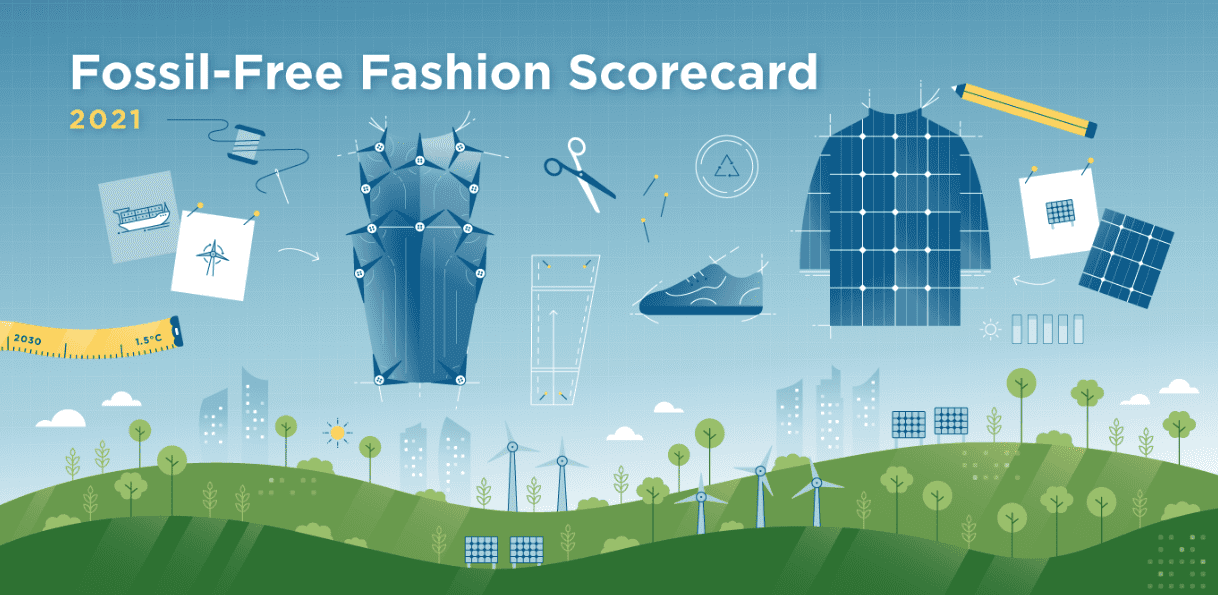
Fashion Switch is an initiative of the British Fashion Council to encourage brands and businesses to increase demand for green energy, helping to accelerate investment and the rate and scale of renewables in the UK.
A number of companies have already signed up, including Kering, Selfridges, Belstaff, E Tautz, Christopher Raeburn and Stella McCartney. The scheme gives brands advice on negotiating contracts with green energy suppliers as well as operating on an information-sharing basis where smaller brands can benefit from the sustainable knowhow of bigger organisations like Marks & Spencer. Knowledge will be shared in a series of easily digestible guides.
The project comes amid renewed focus on climate change both globally and within the fashion industry. The Paris Agreement — the biggest agreement to date — is set to commence in 2020. The US’ withdrawal from the agreement has sparked many conversations about the importance of taking action to reduce carbon emissions: brands including Nike, Adidas, Lululemon and The North Face have all rallied against the decision.
Formed in 1983, British Fashion Council is a not-for-profit organisation that aims to further the interests of the British fashion industry and its designer businesses by harnessing and sharing collective knowledge, experience and resources of the sector.
New York Denim Days will be held September 29 to October 1. The show will connect denim insiders, designers and brands to consumers at an immersive denim-focused, consumer-facing festival. The ranks of denim brands, retailers and artisans that have signed on for the first-ever New York Denim Days festival continues to grow. Hudson Jeans, Edwin, and Brooklyn Denim are a few of the brands to join the festival along with Jean Shop and 3×1 to host a variety of initiatives on the New York Denim Days show floor, including workshops, pop-up shops and interactive displays.
Denim Days is a chance for everyone to come together and celebrate, enjoy, and appreciate jeans and jeans-making in all its glory. With the changing landscape of retail industry worldwide, Denim Days is a great way for brands and services to present a specific experience directly to the consumer. It will include interactive displays, indigo dyeing workshops, new denim designers as well as established brands, and denim mills alongside in-store events, a vintage denim market, parties and DJ’s– all geared to give consumers access to their denim heroes and heritage brands.
Also on the agenda is a one-day street bazaar that will include food, live entertainment, games, art, selfie stations and more. This festival is for denim heads, fashionistas, foodies, families, tourists, teens, tweens, and all denim lovers.
Chinese cotton prices have been increasing. Ending stocks (excluding state reserved cotton stocks) are estimated at about 2.05 million tons in 2016-17, up compared to 1.31 million tons in 2015-16 and 1.58 million tons in 2014-15. For the 2016-17 season, Chinese cotton output is forecast at 4.60 million tons and cotton imports are estimated at 1.09 million tons.
Re-sold reserved cotton sales were slow and commercial stocks climbed up largely in August. Cotton inventory in mills did not reduce due to the extension of state cotton auction. By end August 31, 2017, the reserved cotton left in the state warehouses is estimated at 5.82 million tons, and Chinese ending stocks are projected at 7.87 million tons in total.
Only spinners are permitted to participate in the current state reserves auction from September 4 to 29. The move is designed to satisfy spinners’ production needs and limit stockpiling by traders. After the news was released, trading activities in physical market improved obviously and cotton prices rose. Mills did not slow down the tempo to purchase reserved cotton after traders were not permitted to take part in the auction. Trading sentiment of reserved cotton remained favorable. Higher feedstock costs weighed on spinners.
Chic will be held in China, October 11 to 13, 2017.
It offers a platform for fashion brands to have face-to-face discussions in order to explore the chances of exporting to China.
Besides fashion brands such as H&M, Zara, Puma, the food sector with Coca Cola and some other international companies will be represented. Oeko-Tex, Lenzing and Tesla will also be present.
Around 20 nations will be participating. A special topic will be sustainability standards. Seminars will present the trends for 2018.
The main focus will be on spring/summer collections. Italy and France will have pavilions. Chic autumn expects around 800 exhibitors from China and other Asian nations, as well as from Europe and America.
Chinese designers are getting edgy and experimental. Masculine and feminine elements are merging in oversized silhouettes and relaxed fits. Gender dynamics are the core concept behind the texture aware collection combining furry sweaters with nylon pants and corduroy jackets.
Second and third tier cities are expected to be the source of China’s rapid growth. While first tier cities account for only nine per cent of China´s population, about 300 million people are living in the smaller cities. Consequently they are a new focus of international business and already dispose of an interesting retail landscape.
Cotton Council International (CCI) is holding a seminar in Coimbatore on September 23, 2017. The seminar will offer insights on the present scenario of US cotton and global cotton supply and demand. It would also share the US cotton industry’s sustainability efforts and research findings from recent market and consumer studies.
Supima is a special extra-long staple fiber grown in California, Arizona, New Mexico and Texas. It’s known for its softness, strength, brilliance and lasting colors. In 2016-17, India became the top consumer of Supima. Indian mills have shown a preference for US cotton. They imported more than a million bales of US cotton in 2016-17.
Cotton Council International is a non-profit that promotes US cotton fiber and manufactured cotton products around the globe with its Cotton USA mark. Its reach extends to more than 50 countries through 20 offices around the world. CCI’s mission is to make US cotton the preferred fiber for mills and manufacturers, brands and retailers and consumers, commanding a value-added premium that delivers profitability across the US cotton industry and drives export growth of fiber, yarn and other cotton products.
Cotton USA is dedicated to providing the entire supply chain with networking opportunities, ongoing education, and the latest research and technological innovations.
A team of international scientists from Israel, Germany and Austria has used a biological approach to impart functionality to cotton by incorporating biological molecules. External biological molecules that contain glucose moieties with specific functionalities were incorporated to upland cotton in vitro. The in vitro cultures were incubated with glucose moieties that could penetrate through the cell wall to be incorporated into fibers. Glucose moieties with magnetic complexes could enable cotton to be magnetic.
The incorporation of biological molecules enables fibers to have functionalities that are durable. Washability, durability and wearability are some of the challenges faced by the smart textiles sector. The exploitation of biological methods may give new opportunities for natural fibers to penetrate into the technical textiles sector. This approach can be adapted to other fibers such as flax and bamboo.
It would be useful for the cotton industry if such efforts translate to the farm level to develop functional fibers directly from plants. Cotton is known for its versatility, performance and natural comfort. It’s used to make all kinds of clothes and home wares as well as for industrial purposes like tarpaulins, tents, hotel sheets and army uniforms. Finding value-added applications for cotton, like in wearable smart textiles, will be the next phase of R& D in the cotton sector.
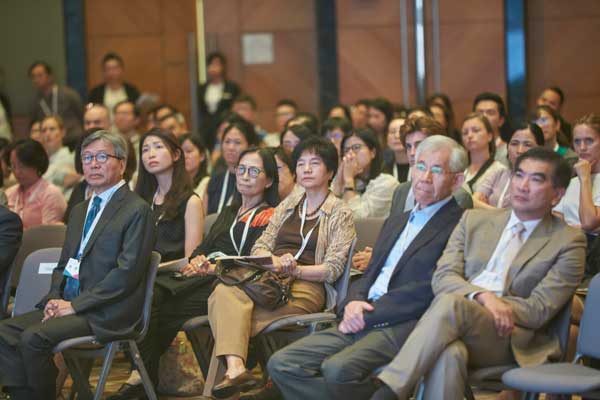
Hong Kong Research Institute of Textiles and Apparel (HKRITA) organized its annual innovation and technology symposium at the Hong Kong Convention and Exhibition Centre on September 7 and 8. The two-day symposium attracted over 600 industry partners, research experts, and association representatives.
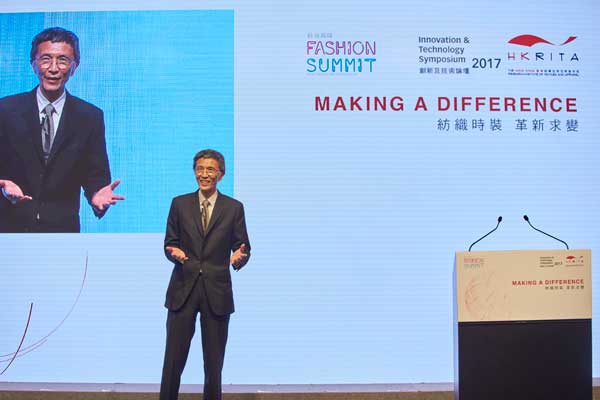
Industry players are now focusing on the sustainability of their products. Representatives of international fashion enterprises, distinguished research institutes and sustainable communities were invited to explore innovations to make a difference to the textile and fashion industry as well as to society. The keynote sessions focused on sustainable strategies by innovations from different perspectives. Kering Asia Pacific shared the company’s experience on the development of a sustainable supply chain for the luxury market.
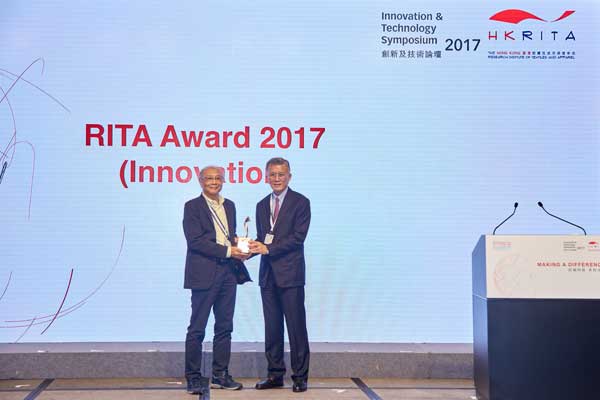
One session on sustainable fashion design strategies discussed where innovation gives new life to post-consumer textiles and creative concepts improve traditional practices. Another addressed the features of a circular economy for textiles which are restorative and regenerative by design, provide benefits for business, society and the environment.
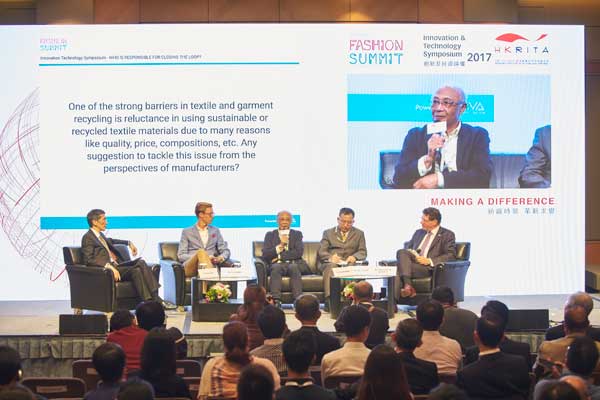
Speakers shared their insights on the formation of closed loop textiles, initiatives fostering environment and business sustainability and a new format for a sustainable era. These exchanges offered the industry and society ideas and solutions for sustainable development.
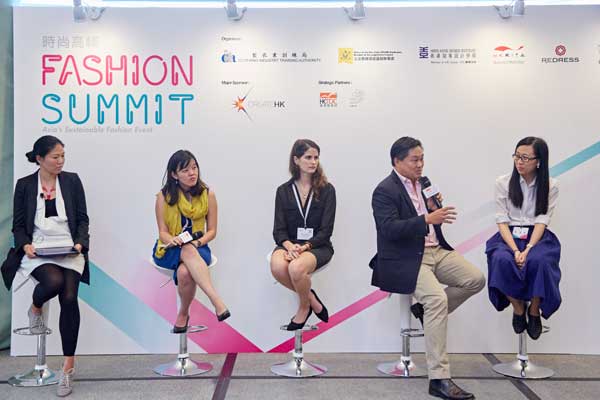
HKRITA’s research projects are conducive to textile waste reduction and facilitating the re-industrialisation of Hong Kong.
Export earnings from the US, the largest market for Bangladeshi goods, registered a healthy high during July with a robust growth of 17.94 per cent, which was 16.65 per cent of the total export earnings for the one-month period. During July, Bangladesh’s exports to Germany were 15.39 per cent of total export earnings for the one month period. Exports to the UK in were 11.60 per cent of total export earnings for the one-month period. Exports to France in July accounted for 5.10 per cent of total export earnings for the period.
Of the South Asian countries, exports to India amounted to $45.80 million during July that included jute and jute-made goods worth $9.58 million and woven garments worth $10.13 million. The Netherlands, another big export destination for Bangladesh, imported goods from Bangladesh worth $108.05 million during July. The amount included knitwear worth $41.42 million, woven garments worth $33.22 million and footwear worth $12.23 million.
Exports to Belgium amounted to $86.26 million that included knitwear worth $33.83 million, woven garments worth $32.57 million and jute and jute made goods worth $1.35 million. Exports to Russia fetched $34.37 million in July while that of Japan totaled $76.39 million, Singapore totaled $9.32 million and China $63.56 million.
Accord has terminated business relations with eight more readymade garment factories in Bangladesh. In all, the European brands’ and buyers’ organization has cut business relations with 97 garment factories in Bangladesh for laxity in implementing workplace safety measures and submitting corrective action plans.
After the Rana Plaza building collapse in 2013, which killed more than 1,100 people, mostly garment workers, EU retailers formed the Accord to improve factory safety in Bangladesh. After completing the initial assessment the initiative provides corrective action plans to the factory owner with a certain timeframe to fix safety faults. However, authorities of most factories remain behind schedule.
If any factory seeks financial assistance for remediation, Accord would facilitate negotiation over the issue between the lead buyers and manufacturers. Alliance is a coalition of North American retailers. Both Accord and Alliance have conducted safety inspections in more than 2,300 garment factories from where they procure products.
These groups are interested in structural, electrical and fire safety initiatives at the factories from where they procure products. Accord’s tenure expires in May 2018. More than 15 brands and retailers including H&M, C&A, Loblaw, Primark, Inditex and PVH and two global rights groups - UNI Global Union and IndustriAll Global Union - on June 29 signed an agreement in Paris to extend Accord's tenure for three more years till 2021.
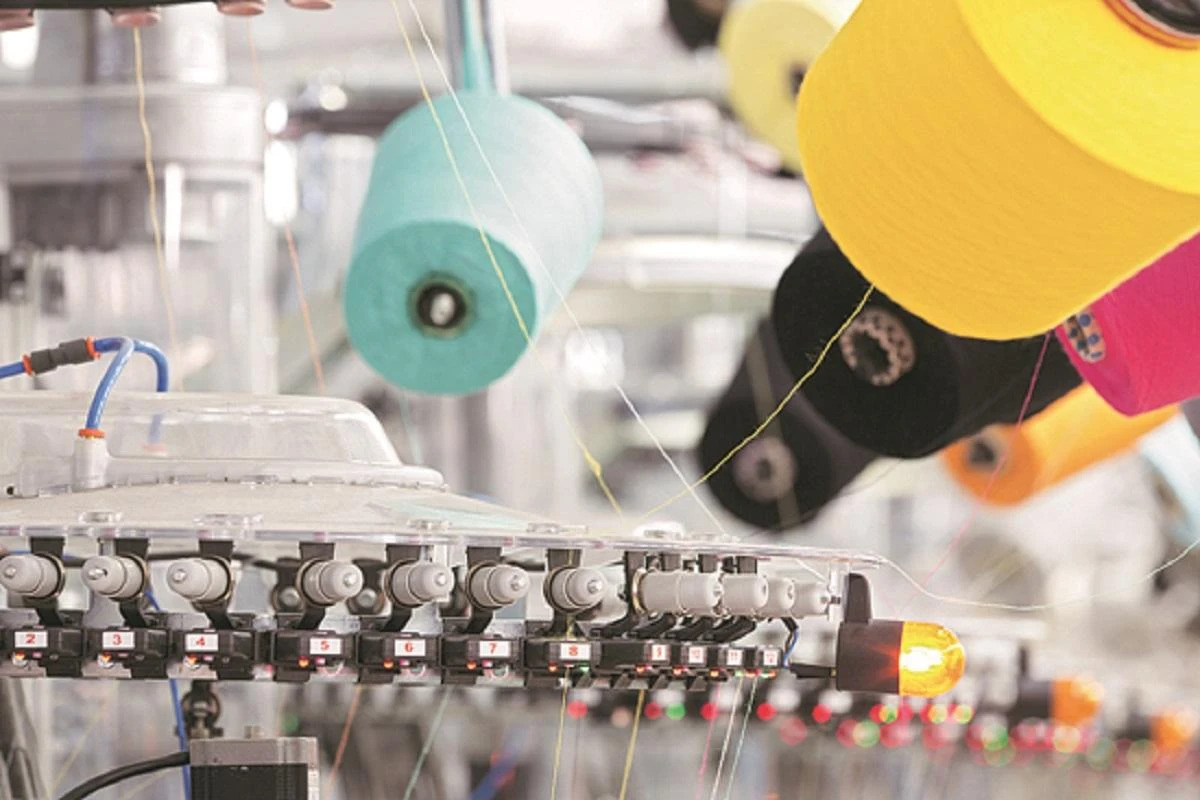
"Knitting industry is on a roll with a number of players announcing new products and planning new collaborations. To start with, to commemorate its 80th anniversary, leading warp knitting machinery manufacturer Karl Mayer organised a series of open house events at its headquarters in Obertshausen, Germany, this July. This month, the company will exhibit on a joint German stand at three trade shows – Irantex, Techtextil India, and Composites Europe to highlight the company’s Cop Max 4 multiaxial warp knitting machine for producing high-performance composites."
Knitting industry is on a roll with a number of players announcing new products and planning new collaborations. To start with, to commemorate its 80th anniversary, leading warp knitting machinery manufacturer Karl Mayer organised a series of open house events at its headquarters in Obertshausen, Germany, this July. This month, the company will exhibit on a joint German stand at three trade shows – Irantex, Techtextil India, and Composites Europe to highlight the company’s Cop Max 4 multiaxial warp knitting machine for producing high-performance composites.

Paris fashion shows organised by Messe Frankfurt France, Apparel Sourcing, Avantex, Shawls & Scarves and Texworld Paris, which will take place from September 18-21, would offer highlights about the current concerns of the textiles industry and fashion trends. It will also provide concrete insights into the future of the sector through the collections and innovations.
Shima Seiki to host private shows
Shima Seiki, a leading computerised flat knitting machinery manufacturer, is slated to host a private exhibition in Hanoi, Vietnam. The SVR123SP computerised flat knitting machine would be on display that will feature loop pressers for producing inlay patterns that yield novel knit-weave hybrid fabrics. The machine features technology such as Shima Seiki’s digital stitch control system (DSCS) and spring-type moveable sinker system. Read more here – Shima to hold private show in Vietnam. Recently the company exhibited its SWG061N2 compact Wholegarment knitting machine at the Textillegprom Federal Trade Fair for Apparel and Textile (Yarmarka Fair) in Moscow, Russia.
Shima Seiki also released a new i-Plating option on select models in its line of computerised knitting machines. i-Plating is offered exclusively as a factory-installed option on SVR093SP and SVR123SP computerised flat knitting machines. Read more here – Shima Seiki releases new i-Plating option.
Training and education
Leading warp knitting machinery manufacturer Karl Mayer is expanding courses in its own Academy at Obertshausen. The practice-oriented courses last for a week and are held in Karl Mayer’s modern Development Centre. These courses are aimed at developers, machine operators and service engineers.
Similarly, ThreadSol also organised an Apparel Tech-Up technology seminar in Chittagong, after receiving huge appreciation and acknowledgement in Sri Lanka, Vietnam, and Dhaka, Bangladesh. Apparel Tech-Up is a technology seminar in which leading garment manufacturers, technocrats and top technology providers explore a range of pivotal subjects that can be set to impact the future of garment manufacturing all over the world.
Sustainable achievements
Meanwhile, many knitting companies have disclosed their sustainable development goals. For instance, HanesBrands has disclosed its carbon emissions and related information for the CDP 2017 Climate Change Report. The company has aggressive 2020 goals to continue reducing its environmental footprint. The DyStar Group has released its seventh 2016 Sustainability Performance Report. The company’s product portfolio is broader than ever but its newer product ranges come with the added advantage of being, on average, less resource-intensive to manufacture.