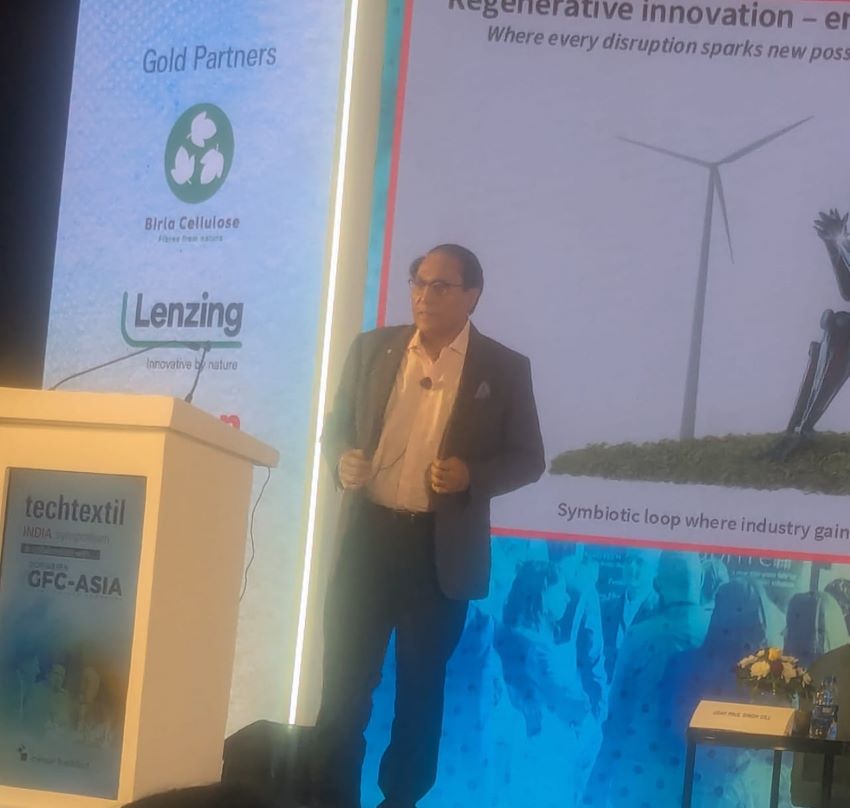
FW

"Techtextil India 2017, the three-day premium international show for technical textiles and nonwovens, opened in Mumbai on September 13, 2017. With growing focus on making India the textile hub, the trade fair has drawn strong support from Ministry of Textiles; the Department of Handlooms and Textiles, Government of Telangana; Indian Technical Textile Association; and the renowned international association - VDMA Textile Care, Fabric and Leather Technologies."
Techtextil India 2017, the three-day premium international show for technical textiles and nonwovens, opened in Mumbai on September 13, 2017. With growing focus on making India the textile hub, the trade fair has drawn strong support from Ministry of Textiles; the Department of Handlooms and Textiles, Government of Telangana; Indian Technical Textile Association; and the renowned international association - VDMA Textile Care, Fabric and Leather Technologies.
The inaugural saw dignitaries like Jürgen Morhard, Consul General of the Federal Republic of Germany in Mumbai; Anoop Rakshit, Executive Director, Indian Technical Textile Association (ITTA); Michael Jänecke, Brand Management Technical Textiles & Textile Processing; Elgar Straub, MD, VDMA Textile Care, Fabric and Leather Technologies and Pramod Khosla, Chairman, ITTA & CMD Khosla Profil.
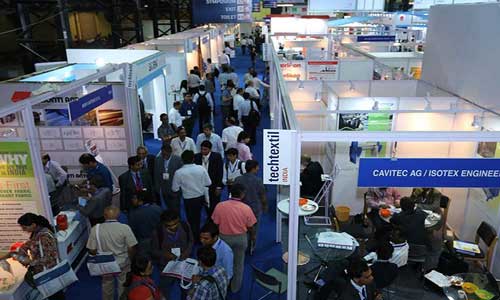
This was also the launch of Texprocess for the first time in India with 29 brands exhibiting garment machinery along with latest innovations and product launches by major players of technical textiles industry like Garware Wall Ropes, Reliance, Luwa India, Low & Boner, Welspun, and Tex & Twist and more. The mega event hosted over 175 companies from Austria, Belarus, China, France, Germany, Italy along with domestic players.
Texprocess pavilion
The launch of Texprocess Pavilion was the biggest highlights at the exhibition. With India being one of the leading markets for textile manufacturing and exports, there is continuous need for enhancements in the technology used in this sector. The pavilion will prove to be the centre point for product manufacturers to get live demonstrations and evaluate the latest technologies available for their line of business. Market leaders such as IIGM, Tukatech, Mehala Machines., Turel Sales Corporation, GA Morgan Dynamics., Bierrebi, Optitex, Lectra are among the key brands providing live demos at this pavilion.
Speaking on the occasion, Raj Manek, MD, Messe Frankfurt Trade Fairs India, said, “Recognised as one of the most successful global platforms, Techtextil India continues to be on the forefront of India’s technical textile and nonwoven industry’s advancements by showcasing the latest in technology, ideas and solutions. India’s textiles sector is also one of the largest contributing sectors of India’s exports contributing 14 per cent to the country’s total exports basket. Today, India's textiles market stands at $150 billion and is expected to touch $250 billion in the next two years (by 2020). The textile industry employs about 51 million people directly and 68 million people indirectly. India has overtaken Italy and Germany to emerge as the world's second largest textile exporter. Modernising machinery is the need of the hour, for boosting Make in India. Country should focus more on skill development, infrastructure and machinery as a whole.”
Fostering R&D
Techtextil India also offered the right platform to the eight Center for Excellence units to foster R&D in the sector. Market creation is a biggest challenge since technical textiles are an important element at every walk of life. There has to be national level awareness on seamless movement between government and the industry, shared UK Gangopadhyay, Executive Director.
This year, the Telangana is the official state partner for the fair promoting textile policies and networking with potential investors. The Department of Handloom and Textiles is currently working to strengthen the textile and apparel industry, and has launched many incentive-based programmes in areas such as capital support, power tariff and land price to attract investors. The Kakatiya Integrated Mega Textile Park is one of the key focus areas presented by the state at the 6th edition.
Brandix has been named Sri Lanka’s top exporter of the year. Besides the Sri Lankan Exporter of the Year award, Brandix received the award for highest employment provider in the export industry; highest net foreign exchange earner in the export industry; the sectoral award for highest foreign exchange earner in the apparel sector and the award for excellence in sustainable development.
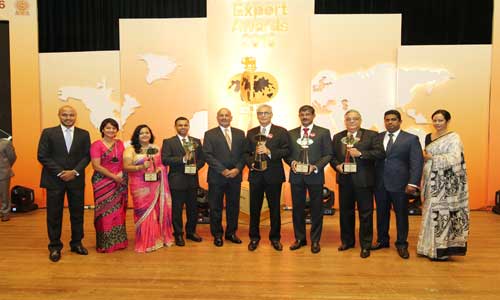
Brandix leads a group of highly respected export brands in apparel, IT, tea, manufacturing, processedfoods, services and printing. The pioneer of the concept of total solutions in Sri Lanka’s apparel sector, and a preferred supplier to top retail brands in the US and Europe, Brandix is also a benchmark and international award winner for eco-friendly manufacture and commitment to environmental best practice.
In India, Brandix has set up a textile park in Andhra Pradesh. The workforce comprises mostly women from rural areas, with a schooling ranging between seventh and tenth grades. They are trained to manufacture products for international brands and labels.
The park produces over two lakh pieces of intimate apparel a day. The unique, integrated apparel supply chain city is spread across 1,000 acres and brings alive an avant garde fiber to store concept. It brings together world class apparel chain partners from the design table to consumer brands in flawless integration. This includes spinning, fabric manufacturing, apparel production, accessories, finishing to warehousing and logistics.
India’s technical textile market is expected to grow at 12 per cent per annum. With sufficient investments in technology, the industry will grow exponentially, say experts. India contributes four per cent of the global technical textile exports. Demand for technical textiles is expected to stay steady from 2017 to 2020 due to broadening application in end-use industries, such as automotive, construction, healthcare, and sports equipment and so on. To foster research and development in the sector, eight Centers for Excellence have been set up.
Technical textiles is the new buzz in Indian textile industry and an emerging and inventive industries in India. Technical textiles offer several advantages in their functional aspects for improving health and safety, cost effectiveness, and durability and strength of textile material. In India, this sector is in its nascent stages while on the global stage it’s a multi-million dollar industry. A large number of technical textile products are consumed by different industries like automotive, healthcare, infrastructure, oil and petroleum, among others.
Indian companies have been introducing several new developments in textile technology. They are developing products using meta aramid, a textile produced in India which is made from a blend of materials which are environment friendly, lightweight and perform better than asbestos.
The overvalued rupee is hurting India’s apparel exports. A strong rupee has significantly diluted the impact of the special Rs 6000 crores package for the apparel industry. A depreciation of the rupee in a calibrated manner will help India's exports become competitive in the global market.
Market disabilities for the apparel industry in India include issues related to logistics cost and time, rigid labor regulations, lack of economies of scale and discrimination in export markets arising out of preferential trade agreements for competing countries in major markets such as the US and EU. Policy disabilities include tax and tariff policy which plays a major role in export performance.
While various ways and means are used to neutralize market based disabilities, the duty drawback facility is usually used to neutralize any tax and tariff disabilities. Exporters suggest that for ensuring taxes are not exported a system of Central and State drawback should be envisaged for the post-GST drawback system.
The principle of zero rating of exports is uniformly followed by all countries across the world. However, exporters say zero rating of exports as prescribed in the GST law will not be complete and will be limited to refunding of input taxes as there are a number of GST taxes which are invisible and embedded in the FOB value of exports, given the design of GST. So refund of the blocked GST taxes should not be seen as an incentive but as an enabler of trade neutrality.
Pakistan wants the US give GSP access for its textile and leather goods. At present, the US gives GSP access to Pakistan allowing duty free and duty concession access to many products, not including textile and leather goods.
Pakistani textile and leather goods enter the US market only after paying between seven to 32 per cent customs duty which makes them uncompetitive against imports of other countries. Pakistan is the fourth largest cotton producer in the world after China, India and the US. Despite having this advantage, Pakistan has been unable to compete with Bangladesh, a country that imports almost 95 per cent of its cotton.
One of the biggest problems for Pakistan is that its annual cotton production has dropped from about 15 million bales to just 10 million bales. As a result, the country imports cotton and this increases the cost of production. The textile industry contributes about 60 per cent to Pakistan’s total exports.
The European Union has granted Pakistan GSP Plus status till 2023. Pakistan and the EU have strong bonds in the areas of trade and investment. Pakistan sees the EU as a very important trading bloc. More than 80 per cent of Pakistan’s exports to the EU consist of textile and clothing.
UK retailer Next’s performance in the last three months has been encouraging on a number of fronts. The firm’s price increase was less than expected (around four per cent so far with two per cent expected next spring and no increases for autumn/winter ’18) this has meant less of a negative impact than some had feared.
Next’s full price sales in the first half were down 1.2 per cent and total sales including markdowns were down 2.3 per cent on last year. Total Next sales fell 2.2 per cent and Next brand’s profitability overall was down 9.3 per cent. Group profit before tax was down a heftier 9.5 per cent and earnings per share fell 6.2 per cent.
The Directory division is buoyant with its total sales rise of 5.7 per cent also including a full-price sales hike of 7.4 per cent. While full-price sales only grew 3.1 per cent in Britain, abroad they surged 30.7 per cent. The retailer is investing heavily in the Directory with personalisation, targeted marketing, an Amazon-style subscription service, major tech enhancements and more.
For the full year, Label sales are expected to rise 14 per cent and the net margin to rise to 17 per cent from 16 per cent a year earlier. Lipsy saw sales up 21 per cent in the latest half as it rebalanced away from wholesale towards selling through Next stores.
Lectra has improved its productivity rate by 18 points in three years and has since maintained it at 89 per cent. Costs have already reduced 25 per cent and the quality and level of service has improved. In terms of positioning, Lectra has confirmed its leadership in the high end segment. Lectra has enriched its offer with end-to-end services and innovative, connected products whose embedded intelligence offers smart services, notably for predictive maintenance.
Lectra’s investment in R&D represents 9.4 per cent of its revenues. This investment has enabled Lectra to undergo a metamorphosis—based on methodological advances and fundamental technologies—increasing recruitment and growing competitiveness in all of its markets and geographical sectors.
With 10 years’ experience in the industrial internet of things for cutting and expertise in software solutions to automate and optimize design and product development, Lectra is in an unrivalled position to support customers as they enter the industry of the future era.
Pressure from certain shareholders to relocate manufacturing to China in 2005 triggered Lectra’s industrial project. Following risk analyses—the cost of transport for the European market, the turnover in qualified labor, uncertainty over patent rights and quality—Lectra decided to keep manufacturing in France. This choice was conditional on disruptive innovation, upgrading, increased value to customers, and a rise in productivity.
Italy has a plan to make the fashion retail business sustainable from end to end. The aim is to highlight the urgent need for sustainability in the fashion retail ecosystem and give in-depth pointers on what materials are exceptionally harmful and what alternatives companies can make use of in their place.
The plan categorises sustainability under eight heads to make things easier to understand: Territorial, Social, Environmental, Anthropological, Technological, Energetic, Administrative and Economic Sustainability.
The idea is to embed sustainability in the fashion culture and give everyone a way to measure where they stand as well. The industry has been involved in this endeavor. A host of big fashion names have been brought in, namely, Ermenegildo Zegna, Giorgio Armani, Gucci, Prada, Salvatore Ferragamo, Versace, etc. The agenda focuses solely on retail, making note of everything from lighting, shelf placement and interior design of the space to even things like how much time a customer spends in stores.
A general manifesto on sustainability in Italian fashion was released around five years ago. Plans are to continue adding to this list with a sustainable approach to production, social responsibility as well a strategy to recycling economy.
Intertextile Shanghai Apparel Fabrics will be held in China from October 11 to 13, 2017. This is one of the world’s largest apparel fabrics and accessories fairs. The event attracts thousands of apparel fabrics and accessories suppliers, garment manufacturers, trading companies, retail chain stores, buying offices, wholesalers etc. from around the globe every year.
The 2017 autumn edition expects to attract over 74,000 visitors from more than 90 countries and regions around the world. Over 4,553 exhibitors from 29 countries and regions are expected to showcase their latest innovations in products and technologies. The three-day fair will be held over 2,60,000 sq. mt. area.
Various sustainable products, solutions and technologies will be displayed at Beyond Denim, Functional Lab, Salon Europe and Accessories Vision zones during the show. Yagi, a Japanese firm that manufactures recycled cotton yarn, knitting and weaving fabrics and denim products, will display Recycolor-branded, GRS-certified recycled cotton developed products. Additionally, Orta Anadolu, Kipas Denim and Soorty Enterprises will introduce their own eco-friendly denim production processes.
Newtech Textile, a Chinese textile company, will showcase its patented Cool Trans transfer printing and dyeing technology at the show. This is presented as an eco-friendly alternative to digital inkjet printing.
H&M’s Global Change Awards are a move to accelerate the shift from linear to circular fashion and to reinvent the entire fashion industry. The five winners get a grant along with a one-year innovation accelerator program providing tailor-made support and invaluable access to the fashion industry.
Some of last year’s winning innovations were leather made of wine making leftovers, digital threads weaved into garments to ease the recycling processes and climate positive nylon made from water, plant waste and solar energy. Finding better ways to make what is used, and wisely using what is available--Global Change Award is an important initiative to drive this forward. The idea is intentionally and thoughtfully reusing, recycling, and repurposing, it’s possible to drive significant and radical improvements to the world.
H&M has made a technological breakthrough in finding a method to recycle blended textiles into new fabrics and yarns. H&M is the world’s second biggest fashion fast fashion brand. It is investing significantly in the supply chain, such as in new logistics solutions with greater levels of automation, but also in optimising its lead times