FW
Global fiber, yarn, and fabric industry to emerge stronger in 2025
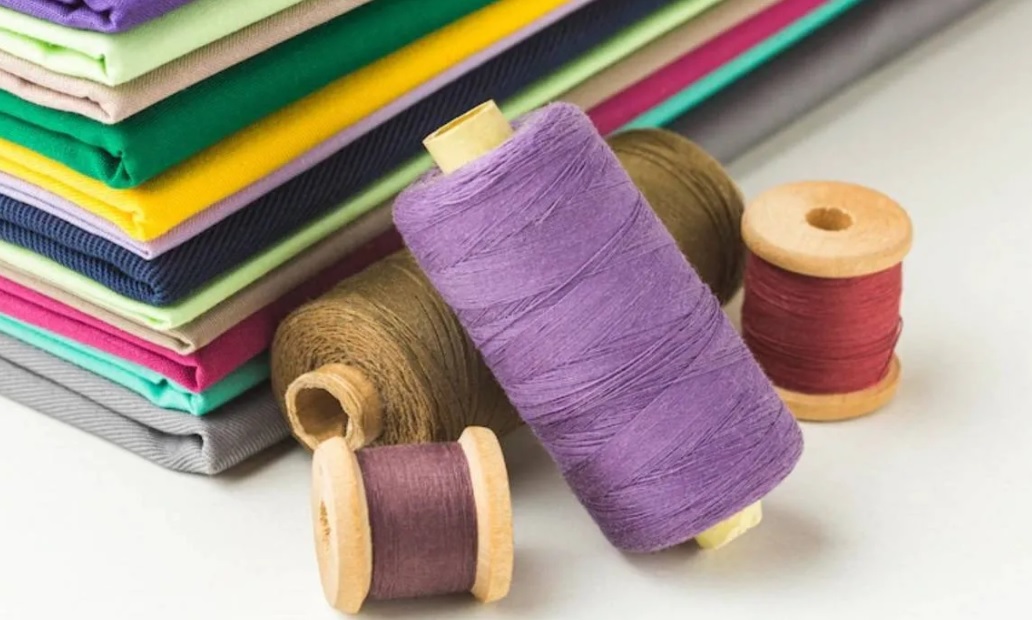
The fiber, yarn, and fabric industry is entering 2025 with a renewed sense of resilience and adaptation. While recent years have presented significant challenges, including supply chain disruptions, rising costs, and increased focus on sustainability, industry leaders are demonstrating a commitment to innovation and collaboration to navigate these obstacles.
Navigating supply chain disruptions
Businesses are increasingly adopting multi sourcing strategies and establishing production facilities closer to their main markets to reduce reliance on long-distance shipping and mitigate the impact of global disruptions. Moreover, companies are investing in real-time tracking systems and data analytics to optimize operations and ensure a resilient supply chain network. Collaborations across the supply chain are becoming more critical, with companies fostering strategic partnerships with local and international suppliers to improve agility and responsiveness.
Addressing rising costs and sustainability
Many companies are exploring renewable energy solutions to stabilize power costs and improve sustainability. And the rise in misleading environmental claims has led businesses to strengthen their traceability efforts through technologies like block chain-based digital passports. Companies are also developing sustainable solutions as they invest in research and development to create innovative materials and processes that meet both aesthetic and environmental standards. Transparency and traceability too are in focus as brands and consumers increasingly demand transparency about the origin and production processes of textiles. Solutions like block chain-based digital passports and DNA tagging are being adopted to ensure traceability and combat fraudulent claims.
Industry trends
Certain clear trends have emerged in the industry viz:
Nearshoring: Establishing production facilities closer to major markets is a growing trend, improving efficiency and responsiveness to customer demands. Companies like UNIFI are leveraging regional production chains to reduce lead times and ensure faster delivery to customers.
Digitalization: Technology adoption, such as real-time tracking and data analytics, enables companies to optimize operations and enhance supply chain visibility.
Sustainability: Investments in sustainable materials, recycling technologies, and circular practices are reshaping the industry's landscape. Companies like ISKO and NILIT are investing in research and development to create innovative, eco-friendly materials and processes. Collaboration with partners and a circular approach to design are becoming the norm.
Collaboration: Partnerships and collaborations across the supply chain are crucial for addressing challenges, sharing knowledge, and fostering innovation.
Improved planning and forecasting: Companies are focusing on better planning, communication, and forecasting to cope with unpredictable demand and disruptions. This includes investing in real-time tracking systems and data analytics.
Outlook for 2025 Industry leaders remain optimistic about the future, despite ongoing challenges. Companies that embrace innovation, invest in technology, and prioritize sustainability are expected to thrive in 2025. The industry is poised to emerge stronger, more resilient, and better equipped to meet the evolving demands of the market. Overall, the industry is moving towards a more sustainable, transparent, and resilient future. By prioritizing innovation, collaboration, and adaptability, fiber, yarn, and fabric businesses are well-positioned to overcome future challenges and meet the evolving demands of the market.
YKK launches revived renewal series for extended zipper life
YKK Corporation (Tokyo, President Hiroaki Otani) has introduced a revived renewal series aimed at extending the life of textile products, focusing on the fashion industry’s growing need for sustainability. With repair-oriented solutions becoming more critical, YKK’s new replacement elements for Vislon zippers allow for quicker, targeted repairs. Using a special tool, damaged elements can now be replaced without removing entire zippers, significantly reducing repair time at brand repair centers.
The initiative aims to combat the environmental impact caused by the large-scale disposal of apparel products. By simplifying zipper repair processes, YKK’s solution encourages longer usage of clothing and reduces waste. This renewed product line is expected to make repairs more efficient, promoting a shift towards a circular fashion economy.
YKK plans to continue expanding the series while addressing broader environmental challenges in the apparel industry's supply chains. The company’s efforts align with its goal of enabling consumers to maintain their favorite clothing items longer, contributing to a sustainable future.
Karl Mayer unveils new experience hub in China, featuring Stoll
As ITMA ASIA + CITME approaches, Karl Mayer Group is set to open a new showroom at its Changzhou facility on October 13. This launch, part of an in-house event running until October 18, will showcase a curated selection of textile innovations and trends from the group’s diverse business units in a 480 square meters space.
A key highlight of the new showroom is Stoll's TexLab, which has been strategically positioned to foster collaboration. Instead of multiple smaller showrooms, the decision was made to establish a single, expansive TexLab at Karl Mayer (China). This setup enables seamless integration with Stoll's research and production departments, providing customers with a unified experience from machine design to the final product. The central TexLab is specifically designed to enhance the industry's ability to quickly adapt to market demands, particularly in China, where speed is essential for developing new materials and designs.
The Stoll TexLab will serve as a dynamic hub where customers can engage in concept development, experiment with yarns, and create patterns with Stoll’s application engineers. It will also facilitate collaboration with local yarn suppliers and support various target groups, including designers and textile institutions.
The showroom features an extensive array of patterns, expert consultations, and Stoll machines, including the newly installed CMS 530 in gauge E20, tailored for high-quality flat knit garments. The space aims to blend technical prowess with an inviting atmosphere, offering visitors a chance to explore new designs, test materials, and engage with experts in a relaxed setting.
Local clients and attendees of ITMA ASIA + CITME in nearby Shanghai are expected to visit, benefiting from the proximity of the new showroom to the trade fair.
RMG exports rise 11.9% in August 2024 amid global challenges: AEPC
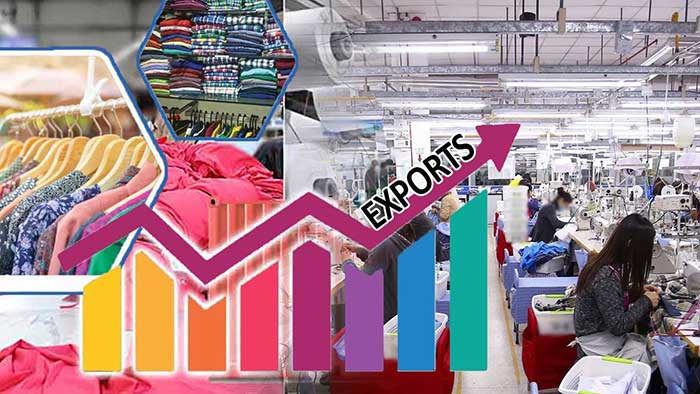
India's ready-made garment (RMG) exports surged by 11.9 per cent in August 2024 compared to the same month in 2023, with cumulative exports for April-August 2024-25 reaching $6.395 billion.
Sudhir Sekhri, Chairman of AEPC, emphasized the resilience of the apparel industry amid global challenges like inflation, logistical costs, and the ongoing Red Sea crisis. Despite these hurdles, RMG exports have grown at an average of 7.12 per cent over the last five months, outperforming other merchandise exports, which saw a downturn in August. Sekhri highlighted the industry’s commitment to product quality and compliance with environmental and social standards, positioning India for further global growth.
He expressed optimism about sustaining this growth, noting that India's garment sector is well-prepared to take advantage of shifting global sourcing trends. Long-term policy support, he added, is crucial to providing stability for garment exporters.
In addition, Sekhri outlined AEPC’s 7-point charter of demands to the government, which includes flexibility in fabric imports, the introduction of PLI 2.0 for capacity growth, and an extension of the interest equalization scheme for five years with an increased rate of 5 per cent. Other demands include a level playing field in key markets like the EU and incentives for ESG compliance.
Mithileshwar Thakur, Secretary General of AEPC, highlighted the trust global brands are placing in Indian products. He noted export growth to Japan, Korea, Australia, Mauritius, and Norway by 7.7 per cent, 16.8 per cent, 12.5 per cent, 6.6 per cent, and 17.3 per cent, respectively, in the first quarter of 2024-25.
Thakur added that the RMG sector is key to generating employment for India's youth and women, stressing the need for government support as global sourcing shifts due to geopolitical changes.
Shein launches €10 million program to nurture young designers across Europe
Shein has launched a €10 million program to identify, nurture, and develop young designers across Europe. Managed by a dedicated team, the initiative plans to onboard 250 European designers over the next five years through the Shein X Designer Incubator program.
Shein X enables designers to focus on their creative work while the brand handles the retail, marketing, and production aspects. This model allows designers to showcase their work to a global audience, earn profits from sales, and retain ownership of their designs.
To date, nearly 100 designers have participated in the Shein X program, with their products available in over 150 international markets.
Through this program, Shein aims to support the next generation of designers while also advancing its sustainability and circularity goals, says Leonard Lin, President, Shein- EMEA region.
SanMar partners with Bluesign to boost sustainability efforts
SanMar Corporation, a leading US supplier of promotional products, has joined Bluesign as a System Partner, enhancing its commitment to sustainable manufacturing and responsible chemical management. This partnership aligns with SanMar’s long-term sustainability goals and strengthens its leadership position in the industry.
By adopting Bluesign standards, SanMar integrates rigorous environmental and safety criteria into its supply chain, ensuring responsible production from materials sourcing to manufacturing. The Bluesign system, known for its focus on reducing the environmental footprint of textile production, positions SanMar alongside a global network of companies dedicated to minimizing their environmental impact.
Daniel Rufenacht, CEO of Bluesign technologies AG, commended the partnership, highlighting SanMar’s position as a leader in sustainability within the promotional products industry. He expressed pride in supporting SanMar's efforts toward a more sustainable future through this collaboration.
Emily Gigot, Senior Manager of Sustainability at SanMar, reinforced the significance of sustainability in the industry, expressing enthusiasm about the addition of Bluesign to SanMar's initiatives. She emphasized that the partnership would enable the company to continue offering products that adhere to the highest environmental standards.
Through this collaboration, SanMar is taking key steps to enhance its sustainability efforts, ensuring that both its products and practices remain environmentally responsible and consumer-safe.
EU’s T&A exports continue to decline in H1, 2024
Following a 3 per cent contraction in 2023, textile and apparel exports (T&A) by the European Union continued to decline in H1, 2024.
EU's apparel exports declined by 3 per centto €17.8 billion in H1 2024. The decline affected most regions, except Asia, where exports grew by 10 per cent to €4.8 billion, according to data from the French Fashion Institute (IFM). Despite an 18 per cent declined, Switzerland remained the top export destinationfollowed by the UK where apparel exports declined by 5 per cent and the USwhich recorded a 1 per cent drop in apparel exports.
EU’s apparel exports to China increased by 21 per cent, while Hong Kong recorded an 11 per cent increase. Other notable markets which registered a growth in apparel exports included Macau, where exports grew by 28 per cent and the UAE which recorded an 18 per cent rise in exports. However, EU’s apparel exports to Singapore fell by 23 per cent, Canada by 16 per cent, and Australia by 16 per cent.
Meanwhile, EU’s textile exportsdropped by 4 per cent in H1 2024. The US remained the leading textiles market with a nominal 1 per cent decline in exports. This was followed by the UK where exports dropped by 11 per cent and China which registered a 14 per cent rise in exports. Textiles exports to India grew significantly by 36 per centwhile exports toVietnam grew by 20 per cent and exports to Russia plummeted by 27 per cent.
On the other hand, apparel imports by the EU fell by 6 per cent to €38.4 billion in H1,FY2024.Imports from the EU’s largest supplier, Asia, decreased by 5 per cent. Imports from Myanmar, Macedonia, Switzerland, and Tunisia each fell by 16 per cent, while Morocco’s imports remained stable. In contrast, imports from Egypt and the USrose by 18 per cent and 8 per cent, respectively.
Textiles imports by the EU also dropped by 8 per centto €15.6 billionin H1 2024. Imports from Asia fell by 8 per cent while imports from Israel declined by 31 per cent, from Taiwan by 22 per cent and from South Korea by 20 per cent. Serbia and Morocco were the only top 20 sourcing countries to report growth in textiles imports during the period.
CITI's 66th AGM highlights challenges and prospects for Indian Textile industry
The Confederation of Indian Textile Industry (CITI) held its 66th Annual General Meeting, bringing together key stakeholders to reflect on the past year’s performance and challenges. Chairman Rakesh Mehra highlighted the sector's resilience amid global disruptions, such as geopolitical tensions, supply chain issues, and inflation.
Mehra acknowledged the decline in Textile & Apparel (T&A) exports to US$ 34.8 billion in 2023-24, following a historic high in 2021-22. Despite this, he expressed optimism for recovery, citing positive trade figures and agreements like the India-Australia ECTA and India-UAE CEPA, which could accelerate export growth.
Government initiatives aimed at supporting the sector, such as removing import duties on select cotton varieties and implementing Minimum Import Prices (MIP) on specific knitted fabrics, were also discussed. Mehra underscored the importance of raw material availability at competitive prices and the need for investment schemes to support MSMEs and boost downstream capacity.
He further emphasized the role of international trade agreements, domestic policy reforms, and CITI's initiatives like the Skill Development training program under the Samarth Scheme and PMKVY 4.0. Partnerships focused on ESG and HRDD frameworks were also highlighted.
Mehra concluded by stressing the sector’s growth potential, projecting a market size of $350 billion by 2030 with continued government support and industry collaboration. The meeting also reviewed CITI’s key activities, including its focus on cotton production, sustainability, and participation in international events.
Ralph Lauren Corp to achieve 100% sustainable sourced materials by 2025-end: Report
In its 2024 Global Citizenship and Sustainability Report, Ralph Lauren Corp announced its aim to achieve 100 percent sustainably sourced key materials by the end of 2025. Ralph Lauren, Executive Chairman and Chief Creative Officer along with Patrice Louvet, CEO emphasiseson the company’s commitment to reduce reliance on limited natural resources and inspire global teams to enrich the environment.
The report highlights significant achievements, such as the Cradle to Cradle Certified Denim Flag Trucker Jacket, the Global Recycled Standard-certified 100 per cent Recycled Cotton Polo, and its first Responsible Wool Standard-certified sweaters. Additionally, Ralph Lauren launched its Artist in Residence program with Navajo artisan Naiomi Glasses, focusing on culturally collaborative products.
The company has made notable strides in reducing emissions, cutting coal use from its supply chain, and achieving a 33 percent reduction in emissions compared to the FY20 baseline. It also opened the Ralph Lauren Center for Cancer Prevention on the West Coast at the University of Southern California's Norris Comprehensive Cancer Center.
In terms of sustainable materials, the company reported sourcing 97 percent of its cotton, 87 percent of its polyester, 92 percent of its wool, and 100 percent of its down sustainably. For the 2024 Olympics, Ralph Lauren created the Team USA collection using recycled polyester and RWS-certified wool. The brand also introduced a 100 per cent Recycled Cotton Clarus Polo Shirt for the Olympic Village wear.
Ralph Lauren continues to advance circularity efforts, with initiatives like the development of recyclable jeans and jackets that adhere to the Ellen MacArthur Foundation’s guidelines. The company has also expanded its Ralph Lauren Vintage program and partnered with Re-Verso for a cashmere recycling initiative.
Additionally, Ralph Lauren has reduced its water usage by 26 percent since FY2020. The brand's philanthropic arm, the Ralph Lauren Corporate Foundation, donated $6.6 million to over 140 nonprofits, supporting scholarships for underprivileged students through programs like the United Negro College Fund and the Institute of American Indian Arts.
Domestic demand and exports fuel India’s textile sector growth in Q1 FY25: Wazir Advisors
The Indian textile and apparel sector has shown robust recovery in the first quarter of the fiscal year 2025 (Q1 FY25), driven by strong domestic demand and increased exports. The latest Wazir Textile Index (WTI) and Wazir Apparel Index (WAI) have both highlighted significant growth, indicating a positive outlook for the industry.
Key highlights
WTI performance: The WTI sales index recorded a 12 per cent increase in Q1 FY25 compared to the previous year. This growth was underpinned by a 29 per cent rise in the WTI EBITDA index, suggesting improved profits for textile companies. The consolidated sales of selected top textile companies also mirrored this trend, rising by 12 per cent during the same period. Moreover, the consolidated EBITDA margin for these companies saw a healthy increase of 2 percentage points.
WAI performance: The WAI sales index indicated a more pronounced growth, increasing by 19 per cent in Q1 FY25. The EBITDA index also grew by 13 per cent, indicating a positive financial performance for apparel companies. Consistent with the WTI, the consolidated sales of selected top apparel companies rose by 19 per cent, while the consolidated EBITDA margin remained unchanged. The apparel companies under review, included: PDS, Pearl Global Industries, Gokaldas Exports, SP Apparels and Kitex Garments. Among them Kitex Garments recorded highest sales growth in Q1 at 31 per cent at the same time SP Apparels was in the red with -2 per cent sales growth. In EBITDA too Kitex Garments led growth.
Overall sector performance: Looking at the performance of a few listed textile and apparel companies under study, consolidated sales increased 6 per cent in Q1 FY25. The consolidated EBITDA for these companies rose by 1 percentage point, indicating a modest improvement in profitability. The companies under study were: Vardhman, Welspun Living, Arvind, Trident, Filatex India, RSWM KPR Mill, Indorama Synthetic, Indo Count and Nahar Spinning. Among these RSWM and Indo Count clocked in maximum growth at 34 per cent and Welspun Living followed closely at 27 per cent. However, Arvind recorded negative growth at -0.1 per cent and Filatex at -1 per cent. However, EBITDA for these two companies were in black.
Ovearall the consolidated sales index increased 6 per cent in Q1 compared to Q1 FY24. Consolidated EBITDA too has gone up by 1 percentage point compared to Q1 FY24.
India’s textile exports and Imports
India’s overall T&A exports have gone up by 5 per cent in Q1 FY25 compared to Q1 FY24. The export of fiber has significantly increased by 17 per cent in Q1 FY25 compared to Q1 FY24. At the same time yarn and fabric exports growth were low at 2 per cent and 0.3 per cent.
India’s T&A imports have reduced by -7 per cent in Q1 FY25 compared to Q1 FY24. Import of home textile has significantly increased by 29 per cent while import of filament has significantly decreased by -32 per cent in Q1 FY25 compared to Q1 FY24.
Factors driving growth
There are several catalysts for the strong performance of textile and apparel sector.
Increased domestic demand: Rising disposable incomes and a growing middle class have led to a boost in domestic demand for textile and apparel products, driving sales growth.
Policy initiatives: Government policies and initiatives, such as the National Textile Policy and the Atmanirbhar Bharat campaign, have provided a favorable environment for the sector's growth.
Export growth: Rising exports to key markets have also contributed to the sector's positive performance.
Technological advancements: The adoption of advanced technologies has improved efficiency and reduced costs for textile and apparel manufacturers.
Future outlook
The positive trends observed in Q1 FY25 suggest optimism for India’s textile and apparel sector. Continued growth is expected with factors such as rising domestic consumption, expanding export markets, and technological advancements. However, challenges such as rising costs of raw material, global economic uncertainties, and competition from other countries could impact the sector's future performance.
However, the bottomline is India’ textile and apparel sector has shown strong recovery in Q1 FY25, with higher sales and profits. The positive trends suggest a promising outlook for the sector, but it is essential to closely monitor evolving market dynamics and address potential challenges to sustain this growth trajectory.