FW
India's garment industry eyes opportunity amid Bangladesh's turmoil
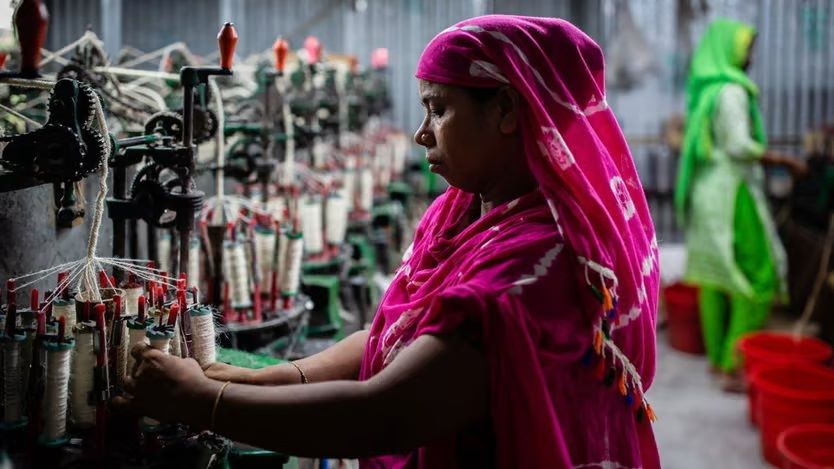
The ongoing political and economic turmoil in Bangladesh has sparked discussions within India's garment industry about the potential for growth and expansion. As Bangladesh grapples with challenges, Indian manufacturers are exploring whether they can leverage the situation to their advantage.
The textile industry in Bangladesh, contributes 80 per cent to the country’s exports and 15 per cent to its GDP. However, the recent political turmoil, culminating in the resignation of Prime Minister Sheikh Hasina, has dealt a significant blow to the sector. Violent protests have disrupted factory operations, resulting in substantial financial losses estimated at $800 million. Compounding these woes is the looming graduation of Bangladesh from least developed country (LDC) status. This transition will lead to the loss of preferential trade privileges, making Bangladeshi apparel products less competitive in key markets like the EU and the US. The increased costs could potentially erode the country's market share and impact its export earnings.
Indian textile zones as potential substitutes
As Bangladesh RMG sector faces a crisis one key area of focus is the potential for Eastern India's coastal regions, along with textile zones in Jharkhand and other states, to emerge as substitute manufacturing hubs. These regions offer advantages such as proximity to ports, a skilled workforce, and existing infrastructure. The industry is debating whether investments in these areas could enable India to capture a larger share of the global garment market.
Also, textile hubs like Tirrupur could gain as global brands shy away from Bangladesh’s due to the ongoing crisis. In fact, Indian units can fill the gaps left by Bangladesh, particularly those with time-sensitive shipments, as logistical bottlenecks have forced many Bangladesh companies to rely on air cargo which is definitely more expensive.
Another focus area is the possibility of some segments of the Bangladeshi garment industry migrating to India. While a full-scale relocation is unlikely, experts suggest that some manufacturers, particularly smaller players, might consider shifting operations to India in search of greater stability and security. This could lead to further growth in India's garment industry, especially in regions like Eastern India.
India currently ranks sixth in global garment exports. The ongoing situation in Bangladesh presents an opportunity for India to move up the ladder. However, experts caution that challenges such as infrastructure limitations, bureaucratic hurdles, and the need for upskilling need to be addressed to fully capitalize on the opportunity. Industry leaders are optimistic about India's potential. As they say, we have the capacity, the skills, and the resources to expand our garment industry significantly. The key is to ensure that India has the right policies and investments in place to support this growth.
Policy support for exporters
To bolster India's apparel industry, the government could implement a range of measures to support exporters. This might include reducing tariffs on raw materials to lower production costs, streamlining export procedures to expedite shipments, and providing tax incentives to encourage firms to expand their operations. Establishing dedicated export processing zones could also offer a more conducive environment for businesses.
Diversify product range and markets
To attract global brands seeking ethically produced goods, India should expand its apparel offerings. This could involve investing in sustainable textiles, organic cotton, and eco-friendly manufacturing processes. Additionally, exploring new markets beyond traditional destinations can help to mitigate risks and capitalize on emerging opportunities.
Collaborating with foreign investors
The political instability in Bangladesh presents an opportunity for India to attract foreign investors seeking alternative locations in South Asia. By encouraging joint ventures and foreign direct investment (FDI), India can leverage this influx of capital to enhance its technological capabilities and secure long-term investments in the apparel industry.
Building a skilled workforce
The increasing adoption of automation poses a challenge to job creation in both Bangladesh and India. To remain competitive, India should prioritize workforce upskilling in modern manufacturing processes. By investing in training and development, India can attract global brands seeking efficient labor solutions and position itself as a preferred destination for apparel manufacturing.
China investigates PVH Corp. over Xinjiang cotton boycott, sends ripples through US-China fashion trade
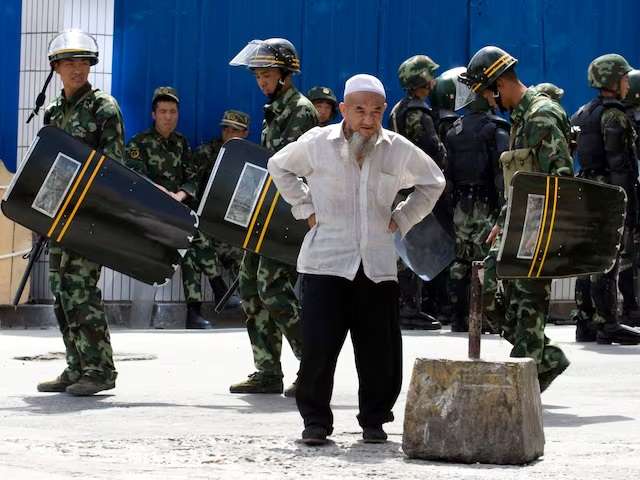
The Chinese Ministry of Commerce announced an investigation into US apparel giant PVH Corp. over alleged discriminatory measures against Xinjiang-related products, particularly the boycotting of cotton sourced from the region. The move signals a potential escalation in trade tensions between the two nations and could have a significant impact on PVH's operations in China.
The Xinjiang region in northwestern China is a major cotton producer, accounting for around 20 per cent of the global supply. However, allegations of forced labor and human rights abuses have led several Western companies, including PVH, to pledge avoiding sourcing cotton from Xinjiang. China has vehemently denied these accusations and has responded with retaliatory measures against companies deemed to be boycotting Xinjiang products.
Impact on PVH’s China business
PVH Corp., the parent company of brands such as Calvin Klein and Tommy Hilfiger, has a significant presence in China. As per the company's 2022 annual report, China accounted for around 7 per cent of its total revenue, making it one of its key markets. In 2022, PVH's revenue in China was estimated to be around $630 million. The company operates numerous stores across China and also sells its products through various online platforms.
If the investigation finds PVH Corp. guilty of discriminatory practices, the company could face severe repercussions in China. This could include fines, restrictions on its operations, or even a complete ban on its products. Such actions could significantly impact PVH Corp.'s revenue and profitability, potentially leading to job losses and store closures.
Implications for US brands sourcing from China
This investigation sends a clear message to other US brands that source from China that any actions perceived as discriminatory against c-related products could result in similar scrutiny and potential penalties. This could force companies to reconsider their sourcing practices and supply chains, potentially leading to a shift away from China.
The investigation also highlights the risks associated with doing business in China for US brands. Companies that rely heavily on the Chinese market could find themselves in a vulnerable position, particularly if they are perceived as taking a stance on sensitive political issues. This could lead to consumer boycotts and damage to their brand reputation.
US-China textile and apparel business
The textile, apparel, and fashion industry is a significant component of US-China trade. In 2023, the US imported approximately $25 billion worth of apparel and textiles from China, while exporting around $5 billion worth of these products to China. The fashion industry, including luxury brands, is also a major contributor to bilateral trade.
The investigation into PVH highlights the complex and often fraught nature of US-China trade relations, particularly in industries that are sensitive to political and social issues. As tensions between the two countries continue to simmer, businesses operating in this space will need to navigate carefully to avoid becoming entangled in geopolitical disputes.
Bangladesh secures duty-free access to China textile & apparel industry braces for impact

In a landmark development, Bangladesh has been granted 100 per cent duty-free access to the Chinese market for all products, from December 1, 2024. The landmark agreement, secured during Prime Minister Sheikh Hasina's visit to Beijing, announced now by the Chinese government as part of its commitment to Least Developed Countries (LDCs), is expected to have a transformative impact on Bangladesh's textile and apparel industry, the country's economic backbone.
As per Ahsan H Mansur, Executive Director, Policy Research Institute of Bangladesh, this is a game-changer for Bangladesh's textile and apparel industry. It has the potential to transform the sector and accelerate the country's economic development. However, it is crucial for the industry to focus on quality, compliance, and value addition to sustain its competitive edge in the Chinese market.
Sectoral significance
The textile and apparel industry accounts for over 80 per cent of Bangladesh's total exports. The duty-free access to China, the world's second-largest economy, opens massive market with immense potential for growth. Moreover China, the world's largest apparel consumer, presents a lucrative opportunity for Bangladesh's textile and apparel sector. Tariffs removal on all Bangladeshi products is expected to significantly boost exports to China.
Table: Bangladesh-China apparel trade
|
Metric |
Value |
|
Bangladesh's RMG Exports |
$46.8 billion (FY23) |
|
RMG Exports to China |
$676 million (FY23) |
|
China's Apparel Imports |
$120 billion (2023) |
|
Bangladesh's GDP |
$416 billion (2022) |
|
Textile & Apparel Share |
11% of GDP |
|
Employment in the Sector |
Over 4 million people |
With this move experts anticipate a significant rise in exports to China, with estimations of 20 to 50 per cent growth in coming years. And tariff removal will make Bangladeshi products more price-competitive in the Chinese market, enabling them to compete effectively with other major exporters like Vietnam and Cambodia. Duty-free access will also encourage Bangladeshi manufacturers to diversify their product range and explore new segments within the Chinese market. Also, increased demand from China is likely to attract further investments in the textile and apparel sector, leading to job creation and economic development. As Faruque Hassan, President, Bangladesh Garment Manufacturers and Exporters Association (BGMEA) says "This is a momentous occasion for Bangladesh. Duty-free access to China will open up immense opportunities for our industry. We are confident that we can meet the challenges and leverage this access to achieve significant growth."
Compliance, quality still an issue
While the duty-free access presents a major opportunity, Bangladesh's textile and apparel industry needs to address certain challenges to fully capitalize on it. One major factor is compliance and quality. Meeting stringent Chinese quality and compliance standards will be critical to maintain access to the market. Upgrading infrastructure and streamlining logistics will be also be essential to ensure timely and efficient delivery of goods to China. Moreover, moving up the value chain by focusing on high-value and specialized products will help increase profit margins and competitiveness.
Meanwhile, the Bangladeshi government has already taken several steps to support the textile and apparel industry in leveraging this opportunity.
It is investing in skill development programs to enhance the workforce's capabilities. Infrastructure investments have also got a push with the ports, roads and transportation networks being upgraded to facilitate trade. Custom procedures and bureaucratic hurdles are also being streamlined.
Indeed Bangladesh's duty-free access to China marks a significant turning point for the nation's textile and apparel industry. While challenges remain, the potential rewards are substantial. With strategic planning and focused execution, Bangladesh can capitalize on this opportunity to expand its market reach, boost exports, and strengthen its position as a global apparel powerhouse.
Maharashtra unveils E-Textile system to streamline processes across govt schemes
Eknath Shinde, Chief Minister, Government of Maharashtra, unveiled the he ‘E-Textile’ system at the Sahyadri Guest House. Designed to enhance the textile sector, the system streamlines and automates processes across various schemes within the textile department, providing easy access to informaton for seamless commercial transactions.
Developed by the ICICI Bank, the system was launched at an event attended by key figures, including Chandrakant Patil, Minister of Textiles; Sujata Saunik, Chief Secretary and Virendra Singh, Secretary of the Textiles Department, along with other relevant authorities.
During the announcement, Chief Minister Shinde introduced the state’s new integrated and sustainable textile industry policy, emphasising the need to support small textile businesses and maximise job creation through this initiative.
The event also featured representatives from ICICI Bank, government officials, and Shrikrishna Pawar, Deputy Secretary, Textiles Department.
Govt to expand HDPS to boost cotton cultivation in Akola
During his recent visit to the Central Institute for Cotton Research (CICR). Union Textile Minister Giriraj Singh announced an ambitious plan to expand the High Density Plantation System (HDPS) to boost cotton cultivation in Akola.
According to Singh, covering 50,000 hectare, the initiative aims to enhance farmers' incomes and boost cotton yields, potentially increasing production to 1,500 kg per acre starting next year.
Currently implemented on 3,500 hectare in Akola, HDPS has shown impressive outcomes. The government aims to expand the successful Akola model across the country’s three cotton-growing zones—North, South, and Central, The plan includes using BG-II cotton variety seeds to plant on the new 50,000 hectares in June 2025.
The HDPS approach was first adopted by Akola farmer Dilip Thakre in 2023 on just 2 hectare. Since then, more than 1,500 farmers have embraced this close-spacing method, which allows for cultivating more plants in less space. Farmers following best practices have been able to produce between 14 to 18 quintals of cotton per acre, shares Thakre. The government has increased its subsidy for HDPS from Rs 16,000 to Rs 21,000 per hectare, with farmers now expanding their sowing efforts under this innovative system, he adds.
The Ministry of Agriculture and the Ministry of Textiles in India are collaborating to ensure cultivation of high-quality cotton crops the country, noting the global cotton market is valued at $350 billion, which includes various fibers like wool, silk, and man-made materials. He revealed, India aims to produce 20 million tons of cotton annually.
While global competitors such as China, Australia, the United States, and Russia achieve yields of 2,000 to 2,200 kg of lint per hectare, India currently averages around 450 kg. However, Singh hopes, HDPS will elevate India’s yield to 1,500 and 1,800 kg of lint per hectare by engaging farmers, officials, scientists, and Krishi Vigyan Kendras in the Vidarbha districts.
With 3,500 hectare already utilising HDPS in Akola and an additional 8,000 hectare across eight states, India aims to set new standards in cotton production practices nationwide.
Establish cotton warehouses in Tamil Nadu: SISPA urges CCI
During its annual meeting in Coimbatore on Sep 25, 2024, the South India Spinners Association (SISPA) urged the Cotton Corporation of India (CCI) to establish cotton warehouses in Tamil Nadu, as textile mills in the state consume 45 per cent of the country’s cotton production.
Emphasising on the need for these warehouses to facilitate easier access to cotton, SISPA proposed that mills that purchase cotton from the CCI after the free period should be charged a reduced interest rate of 6.5 per cent, rather than the current 15 per cent. They also urged the Central Government to implement direct transfers of the Minimum Support Price (MSP) to cotton farmers selling to the CCI, while monitoring whether cotton mills are purchasing beyond their consumption capacity to prevent excess stockpiling.
Additionally, SISPA requested an exemption from the 11 per cent duty on cotton imports from April to October to ensure a steady supply of raw materials for the textile industry, without compromising farmers' livelihoods.
The Association recently also honored three of its former presidents—V. Soundararajan, Ellen Textiles; K. Narayanasamy, Micro Cotspinn India, and AV Ramaraj,AVR Textiles—with the Scroll of Honor Lifetime Achievement Award.
Fashion industry faces green transition: Bangladesh seeks global support
As global fashion faces new green supply-chain regulations, clothing manufacturers in Bangladesh are looking to major international brands for support. The European Union’s Corporate Sustainability Due Diligence Directive (CSDDD), enacted in July, mandates corporations to ensure sustainable practices in their global value chains, particularly in worker rights and emissions.
Abdullah Hil Rakib, managing director at Bangladesh's Team Group, emphasized the need for collaboration with global buyers to achieve green transition goals amidst Bangladesh's political shifts following recent protests over job crises. The CSDDD aligns corporate practices with the Paris Agreement, requiring brands to ensure their suppliers protect labor rights and the environment.
The directive presents an opportunity for suppliers to negotiate better contracts, though challenges remain. Rakib estimates that suppliers will need to invest an additional 20 per cent to 30 per cent to meet sustainability standards. The transition requires legal reforms in manufacturing countries, complicating compliance for brands and suppliers.
Despite their differing capacities to adapt, industry experts highlight the need for a shared responsibility between brands and suppliers to meet the CSDDD’s requirements. The Apparel Impact Institute estimates the fashion industry must invest over $1 trillion to transition to net-zero emissions by 2050. Union leaders stress the importance of establishing clear channels for addressing labor rights violations as these regulations are implemented, urging support for workers facing climate-related challenges in garment-producing countries like Bangladesh.
Karl Mayer to unveil innovations at ITMA ASIA + CITME 2024
Karl Mayer Group will showcase its latest technologies at ITMA ASIA + CITME, from October 14 to 18, 2024, in Shanghai. Concurrently, an in-house event at Karl Mayer (China) in Changzhou will highlight warp knitting and flat knitting machines, beginning October 13. The opening day will feature the inauguration of the company’s new showroom, displaying solutions from all technology segments.
Visitors will witness the performance of seven warp knitting machines, including models from the HKS and TM series, such as the HKS 3-M ON Plus and the new Textronic Lace MT 84/1/40 S. A new mid-range DM 6/2-6 EN double Raschel machine will be launched, focusing on excellent price-performance.
An exclusive textile show will inspire new business opportunities, featuring products like sun protection textiles, casual wear, and shoe fabrics. For flat knitting, the Stoll lineup will be on display, including the versatile CMS 703 ki knit and wear, capable of producing fully-fashioned articles.
Karl Mayer’s digital solutions, such as Digital Production Management and the Quality Monitoring System, will be presented, offering advancements in production and quality management. The Stoll PPS system and Create software solutions aim to enhance efficiency and speed up the design-to-market process.
The new showroom in Changzhou, spanning 480 square meter, will exhibit textile innovations, trend themes, and technological advancements across all Karl Mayer business units.
Style3D and KM.ON integration speeds knitwear design
The integration of Style3D, Assyst with KM.ON’s Create Design software offers apparel companies a streamlined solution for 3D fashion and knitwear design. This new tool allows designers and product developers to create and visualize complex knitwear patterns, including techniques like Cable, Aran, Pointelle, Jacquard, and Intarsia, directly in KM.ON. Digital yarns can be used, and the designs are transferred seamlessly to Style3D Studio using a custom plugin.
In Style3D Studio, these knitwear designs can be simulated in 3D on avatars, incorporating features like styling, animations, and style sharing via QR code or link. The AI rendering module also enables digital photoshoots, making it ideal for eCommerce and showroom promotion.
This integration helps fashion companies reduce time-to-market and cut costs, as they can now visualize and produce knitwear collections more efficiently. The solution is available with Style3D Studio 7.0 and 7.1, as well as all levels of the Create Design software.
Shein’s sustainability claims a concern among global environmentalists
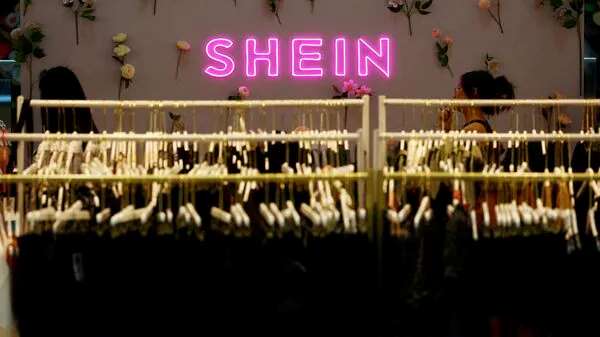
In just over a decade, Shein has transformed the fast fashion landscape, becoming a global phenomenon known for its ultra-cheap clothing, vast online selection, and trend-driven styles. The company's business model hinges on a lightning-fast supply chain that leverages AI technology to predict consumer demand and rapidly produce new designs.
This ‘ultra-fast fashion’ approach has given a boost to Shein’s revenue that reportedly exceeded $30 billion in 2023. The company has an estimated 600,000 items available for purchase at any time, with an average price of $10. Its appeal to Gen Z consumers is undeniable, with 44 per ent of American Gen Zs making at least one Shein purchase per month.
The environmental cost of speed
Indeed, Shein's extraordinary success comes at a steep environmental cost. The sheer volume of clothing it produces, combined with its reliance on fossil fuel-based materials and rapid shipping practices, contributes significantly to greenhouse gas emissions and pollution. Critics argue Shein's business model, while efficient and profitable, is inherently unsustainable.
The release of Shein's third annual sustainability report recently has intensified concerns about the company's environmental impact. The report revealed a near doubling of Shein's carbon dioxide emissions between 2022 and 2023, highlighting the challenges the company faces in balancing its growth with sustainability commitments.
Highlights on some concerns
Carbon footprint: The production and transport of Shein's vast inventory generates a significant carbon footprint. Estimates suggest Shein's annual carbon emissions could range from 6.3 million to 12.6 million metric tons of CO2 equivalent, rivaling the emissions of entire countries. The company's heavy reliance on synthetic fibers, primarily derived from fossil fuels, further contributes to its emissions.
Water usage: The textile industry is a major consumer of water, and Shein's high production volumes inevitably translate to substantial water usage. It is estimated that Shein's operations could consume upwards of 70 billion liters of water annually, enough to fill nearly 28,000 Olympic-sized swimming pools.
Waste generation: The short lifespan of fast fashion garments contributes to a global waste problem. Many Shein items end up in landfills after just a few wears. Shein's waste generation is estimated to be in the hundreds of thousands of tons per year, adding to the mounting problem of textile waste.
AI's role: The use of AI to accelerate production and shipping processes could be exacerbating Shein's environmental impact by encouraging even higher consumption and turnover rates.
Despite facing criticism, Shein has publicly committed to reducing its environmental footprint. The company has set ambitious goals, including a 25 per cent reduction in carbon dioxide emissions by 2030 and achieving net-zero emissions by 2050. Shein highlights several initiatives in its sustainability report.
Shein says it aims to transition its operations to renewable energy sources. The company is working with suppliers to implement energy-efficient practices. And Shein is researching ways to incorporate recycled materials into its products and encourage garment recycling.
Indeed, while Shein's sustainability commitments are laudable, the company faces significant hurdles in achieving these goals. Its business model remains fundamentally reliant on high consumption and rapid turnover, presenting inherent challenges to sustainability. The near doubling of its carbon emissions in a single year underscores the scale of the task ahead. Critics are skeptical about Shein's ability to reconcile its business model with meaningful environmental progress.
In fact, Shein’s ambitious sustainability pledges face touch challenges against its rapid growth and insatiable consumer demand. The fashion industry's future hinges on finding a balance between affordability, style, and environmental responsibility, and Shein's path forward will undoubtedly be closely watched.