India’s long-term growth in textiles and apparel hinges on expanding global export volume, building manufacturing scale, and sharpening cost competitiveness, according to Navdeep Sodhi, Director at global textile consultancy Gherzi.
Speaking exclusively to Salil Chawla, FashionatingWorld on the sidelines of Bharat Tex 2026, Sodhi; whose firm serves as one of the event's strategic knowledge partners, noted that while India's domestic consumption will continue its steady trajectory, true sector transformation requires growing India's share of global textile and apparel trade from its current ~4% baseline up to 10%.
China+1 is an opportunity, not a guarantee
Addressing the widespread industry focus on supply chain diversification, Sodhi cautioned against assuming that geopolitical shifts automatically translate into market gains. "Opportunities alone do not guarantee success. India must earn them by becoming more cost competitive and by building manufacturing scale," Sodhi emphasized.
Pointing to trade dynamics, he underscored that free trade agreements (FTAs), including the proposed India-EU FTA—are enablers rather than standalone solutions. Relying on the example of global market leaders, Sodhi observed that China maintains its position as the world's largest apparel exporter based on operational efficiency and scale rather than extensive trade agreements.
"An FTA is like the cherry on the cake—valuable, but not sufficient on its own," Sodhi noted, adding that while government policy creates market access, the private sector must drive execution, quality, pricing, and supply reliability.
Unlocking Africa's $50 Billion market and institutionalizing Bharat Tex
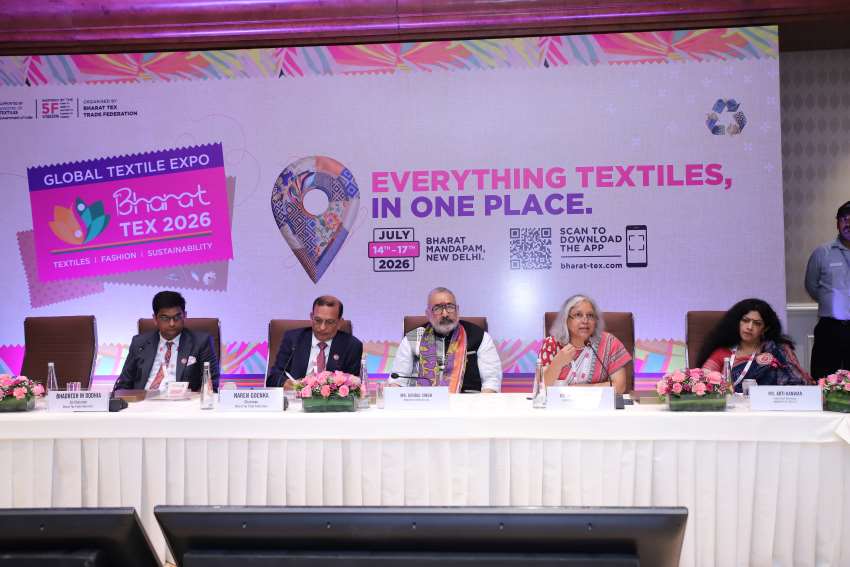
Evaluating the evolution of Bharat Tex, Sodhi commended organizers for continuous enhancements in logistics, execution, and international engagement. To maximize global impact, he urged setting a permanent annual timeline. "Bharat Tex should become an annual fixture with a fixed calendar—ideally in February—enabling overseas buyers and exhibitors to plan participation well in advance."
Beyond standard sourcing hubs, Sodhi urged targeted outreach toward high-potential emerging markets. He specifically pointed to Africa, which imports nearly $50 billion worth of textiles and apparel annually, as an underrepresented region that offers substantial export growth for Indian manufacturers.
Concluding his assessment, Sodhi urged Indian enterprises to look beyond regional demand and invest in building internationally competitive, large-scale manufacturing footprints.