FW
Vinted reaches €1.1 billion revenue milestone as circular retail expands
Lithuania-based resale giant Vinted has reported a substantial 38 per cent increase in annual revenue, reaching €1.1 billion for the FY25. Detailed in the group's April 2026 financial disclosure, this growth highlights a broader structural shift in the apparel sector as the global secondhand market approaches a $53.7 billion valuation this year. Despite a 19 per cent decline in net profit to €62 million - a result of aggressive reinvestment- the platform’s Gross Merchandise Value (GMV) rose by 47 per cent to €10.8 billion. This performance highlights the rising dominance of ‘re-commerce’ as inflation-weary shoppers and sustainability-focused demographics prioritize value over traditional fast-fashion cycles.
Scaling infrastructure via vertical integration
To defend its market leadership against a crowded field of competitors, Vinted is aggressively expanding its logistical and financial infrastructure. The group’s in-house delivery arm, Vinted Go, recently extended its carrier services to Spain and Portugal, leveraging a network of over 500,000 pick-up and drop-off points. Furthermore, the introduction of Vinted Pay, a proprietary wallet solution, is designed to decouple the platform from third-party payment dependencies while lowering transaction costs. These technical ‘rails’ are critical for maintaining the ‘convenience-luxury’ experience that allows a €10 pre-owned garment to reach a buyer with the same reliability as a new purchase.
Strategic premiumization and category diversification
Beyond its core women’s and childrenswear categories, Vinted is moving up-market to capture high-margin luxury resale. The expansion of its Item Verification service, which provides expert authentication for a flat €10 fee, is a direct challenge to luxury specialists like Vestiaire Collective. By diversifying into electronics, collectibles, and home goods - categories that saw a 30 per cent rise in listings - Vinted is increasing its average basket size and user stickiness. As the company prepares for potential public market moves, its ability to maintain double-digit growth while absorbing the costs of European and U.S. expansion remains the focal point for institutional investors like BlackRock, who recently valued the group at €8 billion.
Global peer-to-peer resale leader
Vinted is Europe's largest consumer-to-consumer marketplace for secondhand fashion, operating in 26 countries including the UK, France, and the US. With a valuation of €8 billion, the platform is expanding into luxury verification and proprietary logistics (Vinted Go) to achieve long-term, scalable profitability in the global circular economy.
M&S launches new lingerie collection focusing on technical precision
Marks & Spencer (M&S) has launched ‘Body,’ a 300-piece lingerie collection that positions technical precision as a core competitive advantage. As the global lingerie market scales toward an estimated $95.4 billion valuation in 2026, M&S is leveraging a century of fit data to challenge premium disruptors. The initiative transitions away from traditional seasonal aesthetic updates toward a modular, solution-led architecture. By utilizing 360-degree stretch fabrics and flexible injectable boning, the retailer is addressing a critical consumer pain point: while 99 per cent of women prioritize comfort, 68 per cent historically reported discomfort by the end of the day.
Mitigating variability via material science
The success of the ‘Body’ collection relies heavily on the consistency of its underlying textile components, particularly the high-tenacity, air-textured filaments required for seamless construction. Industry data suggests, the Air Textured Yarn (ATY) market is growing at a CAGR of 8.4 per cent, driven by the retail demand for ‘convenience-luxury’ that mimics the soft hand-feel of natural fibers with the durability of synthetics. To maintain the ‘zero-VPL’ (visible panty line) promise across millions of units, M&S’s supply chain partners must navigate the narrow tolerances of supersonic nozzle performance. Any deviation in nozzle wear directly correlates to fabric striations or ‘barré,’ which can degrade the perceived value of these $16–$40 technical garments.
Strategic market positioning and financial outlook
M&S current market leadership - where one in three women in the UK sources lingerie - is being defended through this heavy investment in fabric innovation. Analysts forecast the group’s earnings to grow by 34 per cent annually over the medium term, supported by a commercial reset that has already seen clothing and home sales jump significantly. By integrating advanced ‘Body Soft’ and ‘Body Sculpt’ sub-brands, the retailer is effectively capturing the mid-market segment that demands the performance of high-end activewear at accessible price points, ensuring that technical consistency remains the bedrock of its retail expansion.
Precision in high-volume apparel
Marks & Spencer is the UK’s leading lingerie retailer, selling a bra every two seconds. Operating across global markets, the brand focuses on ‘Body’ solutions, including shapewear and seamless essentials. With earnings projected to soar 34 per cent annually, M&S is leveraging its 100-year heritage to dominate the $52 billion global innerwear sector through technical fabric innovation.
Fuel crisis, rising costs the geopolitical shockwave hitting Indian textiles
The hum of textile machinery in Panipat has gone dead. Over 400 dyeing units have put their shutters, not because of soft demand or foreign competition, but because fuel, the lifeblood of India’s textile hubs has run dry. The geopolitical tremors from the Iran-Israel-US standoff have hit Indian factories hard, with the Strait of Hormuz blockade since early March cutting off nearly 90 per cent of LPG imports.
Dyeing units in cardiac arrest
Dyeing isn’t a side operation; it’s the industry’s heartbeat. Without high-pressure steam from LPG and PNG-fired boilers, production stalls across the chain. In Panipat, 400 units are fully offline, and another 150 PNG-dependent factories are running at 40 per cent capacity, straining to survive. The immediate effect is an input-cost surge: polyester yarn up 40 per cent, cotton yarn up 20 per cent, overall processing costs jumping roughly 80 per cent. With dyeing halted, garmenting and finishing units sit idle, turning the supply chain into a frozen pipeline.
Table: Industrial impact snapshot
|
Metric |
Impact level (current) |
Regional focus |
|
Dyeing Units Fully Shut |
400+ |
Panipat Cluster |
|
PNG Supply Reduction |
60% Cut |
North India Industrial Belt |
|
Polyester Yarn Price |
+40% |
Surat & Panipat |
|
Cotton Yarn Price |
+20% |
Tirupur & Coimbatore |
|
Overall Input Costs |
80% rise |
Dyeing & Processing |
The table shows a chain reaction: fuel shortages immediately translate into production freezes and cost inflation, an industrial pressure cooker ready to burst.
Geopolitics meets industry
India’s reliance on Middle Eastern LPG was a known risk but the Hormuz blockade turned risk into reality. About 60 per cent of India’s LPG imports are stranded, while shipping insurers hike war-risk premiums 10x. Air cargo is overloaded, capacity down 18 per cent, and rates have grown. The result: fuel shortages aren’t just a supply issue they are now a financial and operational stranglehold on the sector.
Who survives, who suffers
Energy shocks don’t hit evenly. The crisis exposes a divide between prepared clusters and vulnerable ones.
Ludhiana’s biomass buffer
Some Ludhiana units had already shifted to biomass energy, burning rice husk and crop stubble to power boilers. These factories keep running, though yarn price shocks still pinch margins. Structural energy foresight is paying off.
Tirupur’s margin on the edge
Tirupur, India’s knitted-garment hub, is caught between soaring energy costs and fading export orders after US tariffs in 2025. Absorbing cost hikes wipes out profits; passing them to buyers risks losing contracts. One Tirupur export house saw unit costs rise by $1.10 on a 20,000-piece T-shirt order, only to have the client reject the increase highlighting the squeeze exporters now face.
Table 2: Comparative cluster vulnerability
|
Cluster |
Primary energy source |
Impact severity |
Primary challenge |
|
Panipat |
LPG / PNG |
Critical |
Total production halt; 400+ closures. |
|
Tirupur |
Grid / LPG / Wind |
High |
High freight premiums + US Tariff fallout. |
|
Ludhiana |
Biomass / Agro-waste |
Moderate |
Shielded from gas; hit by yarn price hikes. |
|
Surat |
PNG / Coal |
High |
40% hike in synthetic yarn feedstock costs. |
The table underscores a simple fact: energy strategy determines survival. Clusters with diversified power sources are limping; LPG-dependent hubs are bleeding.
The disruption isn’t local. If it continues, textile production costs could rise 10-15 per cent globally. For Indian exporters, still adjusting post-US tariffs, the timing is brutal. Rising costs, frozen supply, and international competition threaten to erode market share—and margin—simultaneously.
Seeking a lifeline
Three factors could ease the crunch. First, selective LPG transit permissions from Iran may bring short-term relief. Second, 800,000 MT of alternative LPG from the US, Russia, and Australia is en route, though longer lead times blunt immediate impact. Third, the industry is forced to confront energy independence: biomass, green hydrogen, or long-term alternative sourcing may no longer be optional, they may be survival requirements.
India’s textile industry is learning the hard way: without energy resilience, it remains at the mercy of global conflict. As one Panipat factory owner grimly put it: “We aren’t fighting a war, but we are certainly losing one.”
Lacoste accelerates performance-led luxury on the F1 fashion circuit
Lacoste has formally extended its ‘track-to-street’ strategy by appointing French Formula 1 driver Pierre Gasly as its newest global ambassador. Announced in April 2026, this partnership marks a pivotal shift for the heritage label as it leverages the ‘motorcore’ trend to bridge the gap between archival sportswear and modern luxury. Currently competing for Alpine, Gasly serves as the face of the iconic L.12.12 polo, a garment Lacoste is repositioning as a technical lifestyle staple for Gen Z. This move aligns with a broader industry trend where F1 paddock appearances have become as commercially significant as traditional runways, with viewers now 40% more likely to engage with brands seen in a motorsport context.
Harnessing the high-octane female and Gen Z market
The collaboration is timed to capitalize on the sport’s shifting demographics; notably, 75 per cent of new Formula 1 fans are women, a segment that drives 80 per cent of global purchasing decisions. By enlisting Gasly - who balances a top-10 championship standing with a high-visibility presence at Paris Fashion Week - Lacoste is successfully courting a younger, style-conscious audience. Internal retail data for early 2026 suggests that athlete-led heritage drops are outperforming classic product lines by 15 per cent in the Asia-Pacific and U.S. markets. "Pierre embodies the tenacity and effortless elegance that have defined our DNA since 1933, stated Eric Vallat, CEO, Lacoste, during the partnership launch.
Operational excellence and future infrastructure
Beyond brand ambassadorship, Lacoste is reinforcing its retail infrastructure to sustain this momentum. The company recently inaugurated its first ‘Lacoste Café’ in Paris and is scaling its ‘Customer Experience Academy’ to train over 5,000 global sellers in ‘tech-heritage’ storytelling. As the group targets a 6.5 per cent revenue growth for the fiscal year, its focus remains on "Neo-Tennis" and motorsport-inspired capsules that utilize waterproof technical wool and bonded nylons. These innovations, showcased in the Fall-Winter 2026 collection, address the growing demand for functional luxury that transitions seamlessly from high-performance environments to urban lifestyle settings.
Lacoste is a premium French lifestyle house specializing in sports-inspired apparel, footwear, and leather goods across 98 countries. Prioritizing "tech-heritage" innovation and direct-to-consumer expansion, the brand aims to surpass €2.8 billion in annual revenue by late 2026. Founded by tennis legend René Lacoste in 1933, it remains the global benchmark for athletic elegance.
Bio-based industrialization: Spandex integration reshapes China’s yarn sector
The Lycra Company and Texhong International Group have entered a strategic partnership to operationalize renewable spandex at an industrial scale, specifically targeting China’s dominant core-spun yarn segment. Under the agreement finalized in April 2026, Texhong will exclusively integrate Lycra fiber featuring 30 per cent plant-based content - partially derived from dent corn - into its global cotton textile value chain. This move addresses a critical market gap as China’s elastic core-spun yarn market is projected to expand at an 8.7 per cent CAGR, reaching a valuation of $2.25 billion by year-end.
This collaboration shifts the focus from experimental sustainable capsules to mass-market industrial application. By utilizing bio-derived raw materials, the new fiber retains the elasticity and durability required for performance denim while providing a lower-impact alternative to fossil-based elastics. This partnership provides a mature foundation for commercial adoption," states Jason Wang, Vice President – Asia, The Lycra Company, emphasizing, the initiative aims to move renewable materials from niche segments into the core of global manufacturing.
For Texhong, which reported a 63 per cent increase in net profit to RMB 913 million for fiscal 2025, the partnership serves as a strategic hedge against petroleum volatility and tightening environmental regulations. As the organized share of the synthetic yarn market faces new transparency mandates like the EU’s digital product passport, the integration of bio-based solutions offers a high-value proposition. This synergy leverages Texhong’s massive footprint to accelerate the market penetration of sustainable performance textiles across the global supply chain.
The Lycra Company is a global leader in sustainable fiber and technology solutions for the apparel industry, specializing in branded elastane and performance additives. Texhong International, a top Chinese cotton textile enterprise founded in 1997, reported 2025 revenues of RMB 22.7 billion and remains the world’s largest core-spun yarn supplier, currently expanding into high-margin functional apparel.
Sustainable auxiliaries to drive textile chemicals market to $48 billion by 2035
The global textile chemicals market is undergoing a structural realignment, with projections indicating a rise to $48.03 billion by 2035. This growth is increasingly detached from simple volume expansion, moving instead toward high-margin specialty auxiliaries that enable functional fabric performance. As of early 2026, the demand for ‘smart’ finishes - including antimicrobial coatings, UV-protective agents, and moisture-management formulations - is outstripping traditional commodity dyes. Industry data suggests, the functional apparel segment alone is expanding at a CAGR of 7.2 per cent, necessitating a new generation of sophisticated chemical treatments that do not compromise fiber integrity.
Regulatory mandates accelerate the shift to bio-based solutions
Manufacturers are facing intensified pressure from the European Union’s Ecodesign for Sustainable Products Regulation (ESPR), which mandates a ‘digital product passport’ for every garment by late 2026. This legislative environment is forcing a transition from synthetic petroleum-derived agents to biodegradable, plant-based alternatives. The industry is moving from voluntary compliance to mandatory transparency, noted a senior chemical analyst during the 2026 Sustainable Textiles Summit.
Emerging technologies, such as CO2-based waterless dyeing, are already demonstrating resource savings of up to 76 per cent in water and 67 per cent in energy for polyester-cotton blends, offering a critical competitive edge in water-stressed production hubs like India and Vietnam.
Regional dominance and the digital printing frontier
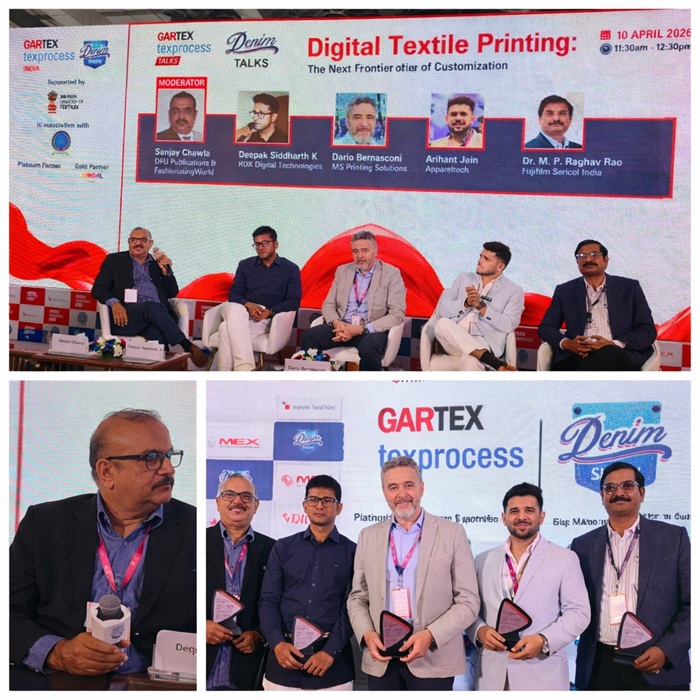
Asia-Pacific continues to anchor the global supply chain, commanding a 68 per cent market share as of fiscal 2025. However, the localized growth within the region is being redefined by digital textile printing, which requires specialized low-VOC inks and pre-treatment chemicals.
This shift allows for reduced inventory waste and faster turnaround times for fast-fashion cycles. While the higher cost of sustainable chemistries remains a barrier for mass-market adoption, the long-term risk of microplastic litigation and carbon taxes is progressively making green chemistry the more economically viable path for global apparel conglomerates.
Leading firms like Archroma and Huntsman specialize in performance-enhancing colorants and finishing agents for global apparel and automotive markets. With a strategic focus on ‘green chemistry,’ these players are expanding R&D in Asia to meet 2030 net-zero targets. Founded during the industrial dye revolution, they now target 6 per cent annual revenue growth through sustainable innovation.
Trident Group’s inclusion strategy earns national recognition amid shifting workforce demographics
The landscape of Indian industrial manufacturing is undergoing a structural transition as major conglomerates move beyond traditional corporate social responsibility toward integrated gender-parity frameworks. This shift was highlighted on April 8, 2026, when the Ludhiana-headquartered Trident Group was named the ‘Best Organization for Women 2026’ by ET Edge. The recognition arrives at a critical juncture for the textile and chemical sectors, which are increasingly competing for specialized talent and facing heightened global scrutiny regarding social and governance standards within their supply chains.
Institutionalizing social governance through specialized policy frameworks
Trident’s positioning as a leader in workplace equity is the result of a deliberate strategy to institutionalize support systems that address the specific life-stage transitions of its female workforce. By moving away from generic human resource policies, the Group has implemented targeted programs like Asmita Leaves and Shreejana, which combine flexible work arrangements with wellness initiatives. These frameworks are designed to mitigate the ‘leaky pipeline’ phenomenon often seen in the manufacturing sector, where professional progression for women frequently stalls during mid-career milestones.
Vertical integration and the economic impact of inclusivity
As one of India’s largest vertically integrated manufacturers - spanning textiles, wheat straw-based paper, and chemicals - Trident’s internal culture directly influences its operational resilience. Pooja B Luthra, Chief Human Resources Officer, notes, empowering women is viewed as a catalyst for organizational strength rather than a philanthropic endeavor. By fostering leadership development through platforms like Hastakala, the company is aligning its human capital strategy with its broader market goals, ensuring that its manufacturing facilities in Punjab and Madhya Pradesh remain competitive in an increasingly ESG-conscious global marketplace.
Industrial-scale circularity: RE&UP and Madewell launch post-consumer denim blueprint
The apparel industry is under increasing pressure to move beyond ‘take-back’ schemes and toward genuine circularity, where old clothing is mechanically or chemically reborn as new high-performance gear. Marking a significant technical milestone in this transition, RE&UP Recycling Technologies announced a strategic partnership with American denim leader Madewell and textile giant ISKO on April 8, 2026. The collaboration has successfully converted 20,000 pairs of post-consumer jeans into a new ‘textile-to-textile’ capsule, signaling that the infrastructure for closed-loop denim production has reached commercial maturity.
Solving the technical complexity of post-consumer waste
While denim recycling has historically relied on downcycling materials into insulation or padding, this partnership focuses on a higher-value evolution. RE&UP utilized its proprietary, feedstock-agnostic technology to deconstruct worn garments - often complex due to varied polycotton blends - into ‘Next-Gen’ cotton and polyester fibers. This industrial precision allows the recycled material to match the performance of virgin fibers, addressing a long-standing barrier in the premium denim market where durability and aesthetic consistency are non-negotiable for consumers.
Scaling the blueprint for closed-loop supply chains
The significance of the launch lies in its scalability, leveraging Madewell’s decade-long denim trade-in infrastructure to feed RE&UP’s industrial cycles. These recycled fibers were engineered by ISKO into GRS-certified fabrics that retain the stretch and comfort profile of modern premium apparel. By turning a brand’s own waste stream into high-quality raw materials, the partnership provides a repeatable model for the global fashion industry. As the collection debuts on Madewell’s digital platforms, it serves as a live demonstration of how technological integration can transform the traditional textile paradigm into a seamless, circular ecosystem.
Beyond Yoga reports 23% growth in Q1, FY26 revenues
Levi Strauss & Co (LS&Co.) is successfully transitioning from a pure-play jeanswear manufacturer into a diversified denim lifestyle powerhouse, with its activewear division, Beyond Yoga, emerging as a primary growth engine. In the Q1, FY26, Beyond Yoga reported a robust 23 per cent increase in net revenue, reaching $43.3 million. This increase, predominantly fueled by a 41 per cent jump in direct-to-consumer (DTC) sales, validates Michelle Gass, CEO’s strategy to leverage the ‘casualization’ trend, where performance apparel and premium denim increasingly share the same consumer basket.
Direct-to-Consumer momentum and margin optimization
The group’s evolution into a DTC-first organization is yielding significant financial dividends. DTC channels now contribute 52 per cent of total net revenues, providing LS&Co with superior data visibility and inventory control. While global gross margins tightened slightly to 61.9 per cen due to recent tariff pressures, the company successfully offset these headwinds through strategic price increases and a reduction in promotional depth. The company’s evolution into a DTC-first lifestyle brand allows it to capture a much larger addressable market, noted Gass during the Q1 earnings call, highlighting that women’s apparel now accounts for 55 per cent of the company’s overall growth.
Infrastructure scalability and 2026 outlook
To sustain this trajectory, LS&Co. is aggressively scaling its physical footprint and digital infrastructure. Beyond Yoga is expanding its brick-and-mortar presence to complement its digital ecosystem, while the broader group focuses on international markets, which contributed 75 per cent of total growth this quarter. Based on this strong performance, the company has raised its full-year 2026 revenue growth guidance to a range of 5.5 per cent to 6.5 per cent. The primary challenge remains navigating volatile foreign exchange rates and logistics costs, though the current ‘Behind Every Original’ campaign is expected to maintain high brand resonance through the fiscal year.
A global leader in apparel, LS&Co. designs and markets products under the Levi’s, Signature, and Beyond Yoga brands. Operating across 110 countries, the company is prioritizing women’s wear and DTC expansion to drive a projected $1.42–$1.48 EPS in 2026. Founded in 1853, it remains a denim innovator.
Apparel Group’s strategic product revival signals luxury-led growth in GCC markets
The contemporary luxury sector is increasingly prioritizing ‘heritage staples’ over fleeting trends to combat market volatility and consumer fatigue. Leading Dubai-based retail conglomerate, Apparel Group, has moved to capitalize on this shift by launching a global campaign for Dune London’s ‘Deliberate’ bag. As the accessory reaches its latest anniversary milestone, the strategy underscores a broader retail trend: the revitalization of established icons to capture a demographic that is increasingly investing in artisanal craftsmanship and proven market longevity.
Merging artisanal craftsmanship with celebrity-driven market validation
The enduring relevance of the silhouette is rooted in its technical execution, specifically its signature hand-woven construction which distinguishes it in a crowded mid-premium market. By utilizing premium materials and high-tactile textures, the brand has positioned the product as a bridge between accessible fashion and high-end luxury. This market positioning has been validated by high-profile adoption, with public appearances by figures such as Katie Holmes and Bella Hadid serving as a catalyst for sustained global demand.
This intersection of celebrity endorsement and visible craftsmanship has allowed the product to maintain a 5-star rating while expanding its footprint across international retail channels.
Omni-channel expansion and regional retail dominance
Operating a vast network of over 2,500 stores, Apparel Group is utilizing the ‘Deliberate’ bag’s reimagined seasonal palette to drive traffic across its extensive GCC and Southeast Asian operations. This launch is not merely a product update but a tactical move to strengthen Dune London’s 30-year legacy within the Group’s multi-billion dollar portfolio. By integrating these collections into a seamless omni-channel experience - spanning physical boutiques from Saudi Arabia to India and dedicated digital platforms - the Group is reinforcing its ability to scale localized fashion icons into global commercial staples.