FW
China resumes buying Australian cotton
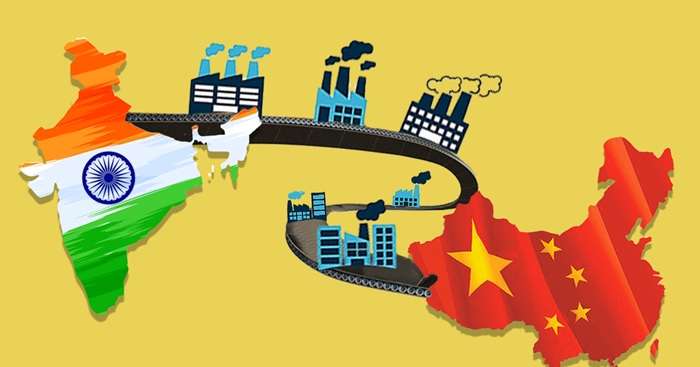
Australian cotton is being bought up by Chinese buyers in anticipation of an unofficial ban on exports being lifted after trade was resumed between the nations on some other commodities.
China imported 20,000 tons of Australian cotton in 2022 compared to 4,00,000 in 2019. If the ban is lifted Chinese buyers will be able to sell the product in lucrative domestic markets.Companies can use the product for re-export if the ban is not lifted.
Australian cotton is being shipped to a bonded warehouse in Qingdao and possibly one other location, by the Australian subsidiary of China National Cotton Group Corporation, one of the biggest state-owned Chinese cotton buyers.
Australian cotton had been moving into China for months and small shipments had already cleared customs.Once the biggest market for Australian cotton, the trade ground to a halt in late 2020 after China imposed a series of official and unofficial restrictions – called a shadow trade war – that also hit commodities like coal and timber, lobsters, wine and barley.But the diplomatic thaw following a meet between the two countries last November has already seen trade restrictions on coal partly lifted.
Chinese merchants are said to be entering May forward contracts for cotton. In the event that trade remained blocked, they would move supplies elsewhere. Australia has still got contacts with spinning mills in China which is eager to have access to high quality cotton again.
Sympatex appoints marketing head
Kim Scholze is the new chief sales and marketing officer (CSMO) of Sympatex.
Scholze will be responsible for global Sympatex sales and marketing strategy. She has been part of the sport and outdoor industry for over 30 years. The creation and feeding of communication platforms is her expertise. She believes that to drive change effectively, a different perspective and the openness for collaboration are needed. In this sense, she sees the biggest challenge is to find common ground for ideas.
With Scholzeon the board, the company’s orientation will not be about making the biggest possible profits but about attitude, collaboration, and a shared industry drive towards sustainability.
Sympatex produces functional textiles from recycled and recyclable monomaterials. Sympatex is a pioneer in the development of a circular and regenerative business model and along the way the company has already achieved a lot and helped push boundaries. The intelligent Sympatex membrane has been used in clothing, shoes, accessories and technical applications since 1986 and guarantees being 100 per cent waterproof, windproof and breathable.
Sympatex will no longer use new materials from the oil industry in the future. Instead, used textiles are transformed into new, high-quality membranes, laminates and functional textiles. Sympatex is working with selected brand partners worldwide to close the textile cycle together.
Premiere Vision attracts designers and sourcing teams
Premiere Vision was held in France, February 7 to 9, 2023. The show’s size was not as big as it used to be and was more manageable.
With a host of new features plus talks on the regulatory outlook, the trade show drew big-name designers, sourcing teams and professionals from 118 countries to an offer of 1,246 exhibitors.
The first edition since the pandemic to welcome back every country, the event was dynamic. Highlights at Maisons d’Exceptions, the craftmanship showcase which marked its return this season, included Anne Gelbard, whose handmade secret application techniques create volume and relief on top of a diversity of base fabrics.
The showcase presented new developments in terms of fabrication, textures and craftsmanship. Smart Creation zone, for innovators addressing environmental impact, was among one of the buzziest.The Smart Tech area paired the boom in traceability start-ups alongside digital design innovators.
The talk zone addressed what lies ahead for sourcing strategies and featured industry innovations like mycelium materials, and included a key update from a textile industry lobbying group on upcoming European Union regulations. The group also addressed audience concerns about the potential impact on workers in key production countries if sustainability drives up fast fashion prices.
US footwear to have an easier road
The US footwear industry is expected to stabilise over the next three years. So says NPD.
The industry is expected to see a steady growth in sales revenue through 2025, with unit sales beginning to improve in 2024 as the pressure from average price increases eases. Consumers will look to maximise versatility with their upcoming footwear purchases, as shoes good for casual everyday use will top the reasons for purchase in the first half of 2023. So the year will be a reset year for the footwear industry.
After three years of ups and downs, sales and price trends are expected to level out as consumers settle into their now-familiar lifestyles and make strategic choices about their must-haves versus their nice-to-haves, as they continue to grapple with macroeconomic pressures.
As consumer priorities shift, the blurring of fashion and athletic footwear, says NPD, will continue to be a major factor in the industry. Casual footwear, sneakers, and athletic footwear are considered necessities, compared to dress footwear, outdoor shoes, and slippers, which are viewed as non-essential.The sport leisure category generated the highest sales in 2022, but fashion footwear was the biggest driver of growth as the return to workplaces, events, and other activities brought attention back to more formal footwear categories.
E-commerce fuels global men’s wear growth
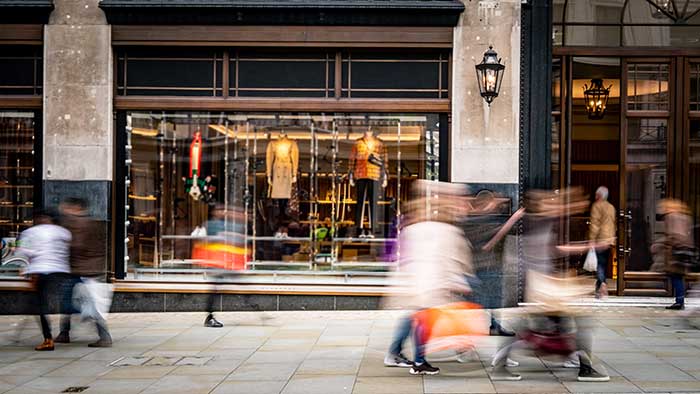
The global men’swear market is growing by six per cent a year. Men’s wear refers to clothing that is specifically designed for male consumers.
The escalating product demand on account of the growing fashion consciousness and awareness of the importance of personal appearance among men is primarily driving the men’swear market. Besides this, the expanding e-commerce industry and the rising popularity of purchasing clothes through online shopping platforms, as they save time, offer convenience, and provide several diverse options, are further augmenting the market growth. Apart from this, the introduction of ecological clothing made from organic materials in place of synthetic fabrics that can cause skin allergies is also catalyzing the global market.
Moreover, the launch of specialized men’swear sections by premium brands is acting as another significant growth-inducing factor.
Silk has undimmed appeal, grows at 8% CAGR
The global silk market is growing by 8.2 per cent a year.
An increase in profitability for farmers engaging in sericulture, i.e., silkworm rearing, is predicted to boost the silk market. Additionally, the initial investment required for silkworm rearing is quite low, which is expected to drive the market forward. Along with this, increasing the profit margin of farmers engaging in silk production is expected to propel the market forward.
A wide use of silk in the manufacturing of different apparel and clothing is predicted to offer numerous growth opportunities for the market. Mulberry silk has a dominant share of the silk market. Mulberry silk, a high quality silk, is widely used in the manufacturing of different apparels. The increasing use of silk by various textile companies to manufacture various garments and clothing products is projected to augment the growth rate of the silk market.
The silk market in the Asia-Pacific region is estimated to be the most profitable. The presence of prominent silk-producing countries like India, China, Thailand etc. is estimated to help the market grow substantially. Following the pandemic outbreak strict lockdowns and travel restrictions were put in place across the world. This negatively impacted several industries and businesses causing disruptions in supply chains and manufacturing processes.
The silk market faced a similar situation where there was a massive shortage of raw materials i.e. raw silk due to the shortage of labor. Additionally, import-export restrictions led to a decline in the sales of manufactured silk garments, which affected the growth of the market.
Tunisian company reuses textile waste
A company in Tunisia has found a way to handle textile waste. Fiber Conversion converts textile waste back into fiber before using it to produce products such as rug pads, mopping pads, and mattress pads.
These products are sold in the local market and overseas, creating economic value that is significantly higher than that of exporting raw textile waste.
This innovative approach to waste management has had a significant impact in Tunisia, reducing waste in landfills and preserving the environment. By finding ways to turn waste into useful products, Fiber Conversion is also creating economic opportunities for the local population.
This innovative approach to waste management is a beacon of hope in the fight against environmental degradation. It sets an example for other countries facing similar challenges, showing it is possible to turn waste into useful products while creating economic opportunities for local communities.
Textile waste has been a long-standing problem in Tunisia, with most waste being exported or incinerated, contributing to environmental degradation.However, the existing tax regulations imposed on workers who collect and sell textile waste to the company are a major challenge. These taxes reduce the profit margins for workers and make it harder for them to make a living.
Mango adopts clean processes
Mango’s strategy involves integrating sustainability into its business system and business model.
The Spanish brand’s initiatives have included the elimination of the committed label in favour of an informative QR code, the publication of a complete list of its fabric and accessory suppliers and the launch of its first collection of recycled and recyclable denim.
By 2025 the target is that all of the cotton used in the brand’s garments will be sustainable, all of its polyester will be recycled and 100 percent of its cellulosic fibers will be responsibly sourced. Production processes will be used that help reduce the environmental impact of Mango’s products, such as using less chemicals and water in the manufacturing process of the circular denim collection.
Garments will be made with a single type of fiber or fewer accessories in order to increase the recyclability of the products. Another way would be to design more durable garments by using carefully selected materials with certified physical properties, with reinforced construction and a timeless design. Yet another way would be to take maximum advantage of the materials used and recycling textile waste. Accessories such as trimmings or jacron labels would be eliminated. The production technology will use minimal amount of chemicals and water.
Mumbai hosts Technotex
Technotex, organized by FICCI is being held in Mumbai, February 22 to 24, 2023. This is an exhibition on technical textiles.
The event will provide a common platform for interaction among stakeholders from across the global technical textile value chain.The three-day exhibition cum conference cum buyer-seller meet seeks to envision Indian technical textiles at 2047. It exemplifies the immense potential for trade and investment between India and foreign countries in the technical textile sector.
It pools in participants, visitors, and other key decision makers from a diverse cross section of the technical textile industry, aiming to provide more innovative solutions, identify new business opportunities and create an environment congenial for growth.
As the global technical textile industry continues to grow, India is poised to benefit from the expansion. Domestic consumption and export are both expected to grow rapidly in the next few years, making this an important time for the industry. The end use of technical textiles caters to a wide variety of industries, thereby making it a high value sector. A variety of industries benefits from its products, including those in the automotive, agricultural, home care, construction, aerospace, protective gear, and healthcare sectors, as these products have improved functional qualities like greater tenacity and strength as well as better thermal and chemical resistance.
India aims at being a leading technical textile production center.
Hohenstein develops microfiber test
Hohenstein has developed a new standardized test method for detecting and classifying the environmental effects of textiles during washing.
The test method shows how many fibers are released during textile laundering, how well these fibers degrade in wastewater and how harmful the fiber residues are to the environment.Biodegradability alone does not mean that pure natural fibers, for example, are completely harmless to the environment. They, too, remain in ecosystems until they completely degrade and can also have a negative impact.
In addition, additives, auxiliaries or finishes used in textile production can further slow the degradation process and leach into the environment. The new standard enables textile producers and suppliers to test, evaluate and compare products for fiber release during washing and environmental impact. Washing textiles releases microfibers into the wash water, which cannot be sufficiently retained by wastewater treatment plants.
Synthetic fibers pose the greatest risk to the environment because of their longevity and inability to biodegrade.
With more than 40 offices and laboratories, Hohenstein is an international partner for independent testing, certification and applied research around the human-textileenvironment interaction. Through standard or customized testing, and interpretation of the results, Hohenstein solves problems, verifies claims and helps partners bring better, safer products to market – more sustainably.