FW
Global denim wear market grows at six per cent
The global denim market is growing at six per cent. The rise in disposable income levels is aiding the growth of the denim market. Other factors are the rise in urbanization and the trend of denim shirts. Further, the growing popularity of stretchable denim jeans by blending cotton with synthetic material is further anticipated to propel the growth of the denim market.
Moreover, initiatives to improve product manufacturing are estimated to cushion the growth of the denim market. In addition, the easy accessibility of raw material will further provide potential opportunities for the growth of the denim market.
On the basis of product, the denim market is segmented into jeans, jacketsand shirts, trousers, dresses, shorts and track pants, jumpsuits, dungarees and others.On the basis of consumer type, the denim market is segmented into men, women and children.On the basis of distribution channel, the denim market is segmented into specialty stores, department stores, online, hypermarket and supermarket and exclusive stores.On the basis of type, the denim market is divided into light denim, medium denim and heavy denim.
North America dominates the denim market. Asia-Pacific is projected to observe a significant amount of growth in the denim market due to the occurrence of major key players.
Fall in Indian yarn exports
India’s yarn exports declined in volume but increased in value during the first half of the current year.
During the period Bangladesh remained the top buyer of all Indian yarn exports with a 32 per cent share, while Turkey stood second with an import share of 11 per cent. Egypt, Portugal and the US were the other three nations among the top five destinations for Indian yarn exports, with a share of five per cent, three per cent and two per cent respectively. Other importers of Indian yarn among the top ten were Vietnam, Peru, China, Italy and South Korea.
The price rise in cotton improved foreign exchange earnings but discouraged export volume.The arrival of the new cotton crop in India beginning in October led to a jump in yarn exports during the second half of the last year.
Indian exporters have asked for raw material security, owing to the spiraling prices of raw cotton and cotton yarn. Another pressing issue is related to RoSCTL. Exporters want the deletion of the condition in the notification issued by DoR for holding the transferee liable for the non- realization / excess availed by the exporter, which will curtail its misuse. Additionally, the new Technology Upgradation Fund Scheme (TUFS) is awaited as the ATUF scheme expired on March 31, 2022.
Coats launches digital solution for fabric cost saving
Coats Digital has launched a newly amalgamated buying and cutting solution called FastReactFabric.
This is a unique, new market offering that will enable fashion manufacturers to significantly reduce fabric costs by up to 2.5 per cent, shrink fabric buying and planning times by 95 per cent and provide 100 per cent fabric tracking in order to further advance sustainability credentials and reduce overall fabric remnants that often end up in landfill. With FastReactFabric, the apparel industry can reduce the fabric required which will have a positive impact on the environment while boosting profits – putting people, planet and performance into the very core of the fashion supply chain. FastReactFabric combines Coats Digital’s previous industry-leading IntelloCut and IntelloBuy solutions into one single platform, providing a closed-loop, continuous 360-degree feedback ecosystem between buying and cutting operations, so that fashion manufacturers can accurately procure and utilise fabric effectively – reducing waste, boosting efficiency and significantly increasing their bottom line.
This is Coats Digital’s way of launching a comprehensive fabric solution that will prove instrumental in redressing some of the financial damage suffered during the pandemic while helping the apparel industry get future-proof against incoming global legislation around waste and sustainability compliance.
Coats Digital is the software business of Coats, the world’s leading industrial thread company.
Bangladesh exports up 36 per cent
In August 2022 Bangladesh’s exports increased by 36 percent compared to the same period of the previous year.
Main reasons for this growth are the increased prices of raw materials, increase in cost of freight transportation and some orders from China shifting to Bangladesh. Key players in this growth were the readymade garments, home textiles and leather and leather goods sectors. Earnings of the readymade garment sector increased 26 per cent over that of last fiscal.
Knitwear earnings grew 20 per cent and woven garment export earnings were up by 34 per cent.Home textile also has a significant contribution to Bangladesh’s exports after readymade garments. Home textile exports from July to August 2022 were 53 percent higher than in the same period of the previous financial year.
Entrepreneurs are not yet seeing any negative impact on orders in this sector. Rather, they have plenty of orders in hand. Several orders are coming to Bangladesh, especially from Pakistan. They are expecting more orders because of the flood.
After the Covid crisis, demand increased in Bangladesh’s main export destination countries, so people started placing large orders. But the US and EU are facing record high inflation as the Ukraine-Russia war rages. Consumers have cut back on purchases again. As a result, orders are falling and the reflection will be seen in the next two to three months.
Chinese T&A exports up 17 per cent
China’s exports of textiles, apparel and clothing accessories increased by 17 per cent in the first seven months of 2022.
Garments and clothing accessories exports in the first seven months were 18 per cent higher than in the same period of last year. The country’s garment exports grew 19 per cent in the same period.China’s textile exports grew 16 per cent year-on-year in January to July 2022. Of this, the export of textile yarn increased by 19 per cent, fabrics by 20.2 per cent and textile products by 11 per cent.
Viewed from the proportion of major products exported, knitted garments made of chemical fiber took the largest part, and cotton knitted garments came second, followed by woven fabrics made of chemical fibers and other fabrics. From January to July, the share of fabric exports was rather large, accounting for about 23 per cent of total textile and apparel exports.
China’s exports of textile and apparel made of chemical fibers performed better than cotton goods. One of the reasons lies in the ban on Xinjiang cotton and another reason is that the unit price of cotton products increases faster than the unit price of products made of chemical fibers.
YesAnd and Kornit launch digital printing
YesAndandKornit Digital have launched customizable on-demand printing. Sharing the core values of fashion and innovation and non-toxic, zero-waste production, and the fusion of technology to accelerate impact, this launch represents a cutting-edge and sustainable solution that’s accessible, traceable, customizable, and scalable.
YesAnd and Kornit Digital are co-creating digital, on-demand printed certified organic blank merchandise, with graphic designs by artists, celebrities, influencers, musicians, fashion VIPs, NGO’s and more.Debuting the first of their brand collaborations with farm-to-print organic merchandise, the brands will be debuting their select blank styles of digitally-printed designs from the initial capsule collection
By joining forces, this collaboration is aimed at educating, engaging, and activating both consumers and industry alike. This collaboration is aimed at minimizing waste, water, chemical use, and energy, while celebrating climate action, manufacturing efficiencies, and sustainable innovation.
This strategic collaboration showcases the power of on-demand, digital production—and how it can unleash new levels of creativity for designers to fulfill their ultimate visions. It’s also a reflection of the seamless way designers are being more efficiently connected direct to the consumer.
Kornit Digital is a worldwide market leader in sustainable, on-demand, digital fashion and textile production technologies.YesAnd offers people a way to buy what they love and seek with modern design, color, high quality, accessibility, and inclusivity.
Singapore to host fashion summit
Global Fashion Summit will be held in Singapore, November 3, 2022. The event will focus on the perspectives of manufacturers and supply chain partners to understand how the industry can collaborate to reduce social and environmental impact in the entire value chain. The summit will call on the industry to accelerate change, encouraging more alliances between manufacturers, suppliers, investors, brands, NGOs, policymakers and more. It will also examine cross-industry alliances in a bid to accelerate the transition to a net positive reality.
This event usually takes place in Copenhagen. By bringing the forum to Asia, the new edition will include even more manufacturer and supply chain partner voices in the program to discuss sustainability challenges, differences, and opportunities to collaborate with brand executives on equal terms.
Plenary sessions will consider topics such as renewable energy transformation, better wage systems and performance measurement. Half the program will be dedicated to educational and action-oriented business case studies with options for direct interaction and live reactions. These will include tangible learnings and concrete recommendations to mobilise guests to take immediate action following the event.
The event will foster further collaboration across stakeholder groups through productive roundtable sessions that create an exchange of views among key decision makers in both the public and private sectors.
Disaster looms over factories in Pakistan
Pakistan’s garment and textile workers work under unsafe conditions.
Deadly safety violations persist in factories supplying H&M, C&A, Bestseller, and Zara. There are still no binding agreements in place between apparel brands and labor unions to keep workers safe.
Factories have no fire-rated stairwells or exits. Explosions happen and workers are exposed to electrical discharge and harmful substances. Gas leaks happen. In the past 18 months alone there have been over 30 serious safety incidents in garment and textile factories in Pakistan. Over a dozen people have died and more have been injured. And yet the true extent of the safety violations in factories remains unknown.Ten years ago more than 250 people died in a factory fire in Pakistan – the deadliest factory fire ever in the global garment industry. Ironically the factory was audited as safe only a few weeks before the devastating fire.
The brands which have been named above are accused of delaying the implementation of the International Accord for Health and Safety in the Textile and Garment Industry. Bringing factories under the program can ensure credible, independent inspections, remediation, safety training, and a complaint mechanism to keep workers safe.
So Pakistan’s garment and textile workers remain in the exact same unsafe conditions that led to the horrific disaster a decade ago.
India and Bangladesh hope for trade pact
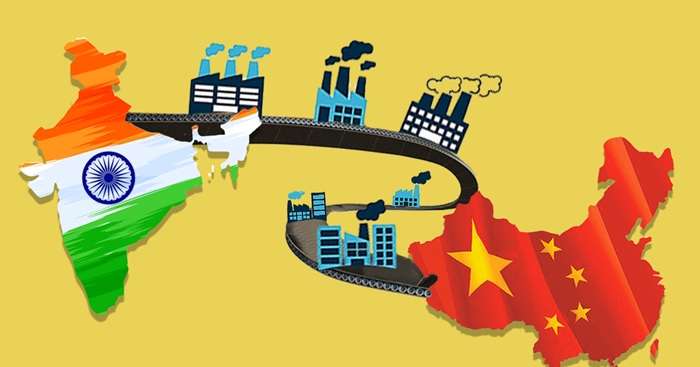
India can double its merchandise exports to Bangladesh if the latter reduces its peak tariff of 25 per cent on 415 goods under the proposed Comprehensive Economic Partnership Agreement (CEPA).
India has export competitiveness in these 415 goods. However, India meets hardly 22 per cent of the total import demand of Bangladesh in these 415 goods as the 25 per cent peak import tariff levied by Bangladesh acts as an impediment for Indian exports.These 415 products include denim, woven fabrics, iron and steel articles, paper and paperboard, fresh grapes, electric conductors, gems and jewelry, plastic products, cardamom, footwear, tricycles, washing and cleaning chemicals, ceramic sinks, stranded wires and cables etc.
The deal may also increase India’s share in the total import of Bangladesh, which currently stands around 19 per cent behind China’s share of 33 per cent.
A trade agreement between India and Bangladesh, two large economies in South Asia, can boost intra-regional trade in South Asia, which is the least connected region in terms of trade when compared to other regions such as North America, Europe and Asean.
Intra-regional exports in South Asia account for hardly nine per cent of the total exports of this regioncompared to 13 per cent in Sub-Saharan Africa, 22 per cent in Asean, 30 per cent in North America and 60 per cent in the European Union.
Bemberg to unveil new fiber at Filo
Bembergby Asahi Kasei will unveil a new yarn range at Filo.
The staple fiber expands the company’s realm of applications for the fashion and luxury industry, including also knitwear, jersey and casualwear. The fiber comes with a circular economy footprint obtained from cotton linters through a closed-loop process. Bemberg also ensures certified sustainability credentials through its transparent and traceable approach.
Bemberg by Asahi Kasei is a one-of-a-kind, matchless, and original new generation material made from the smart-tech transformation of cotton linter pre-consumer material, converted through a traceable and transparent closed loop process.
Bemberg has the RCS, Oeko-Tex Standard 100 e ISO 14001 certifications. Bemberg is the brand name of the regenerated cellulose fiber cupro, produced only by Asahi Kasei.Bemberg is cool and sensual with a unique, supple drape. It is antistatic and breathable while its soft versatility makes it perfect for the modern wardrobe for fashion, athleisure, and everyday casual wear.
Bemberg by Asahi Kasei expands its journey and evolution in contemporary style with a brandnew staple fiber that unlocks creative paths towards new aesthetics, touch and sustainability.
Filo, to be held in Italy, September 14 to 15, 2022, is an international trade show and business platform dedicated to premium collections of yarns and fibers with a sustainable and ethical imprint.