FW
Collection, sorting, cost replace technology as the bottleneck in circular fashion
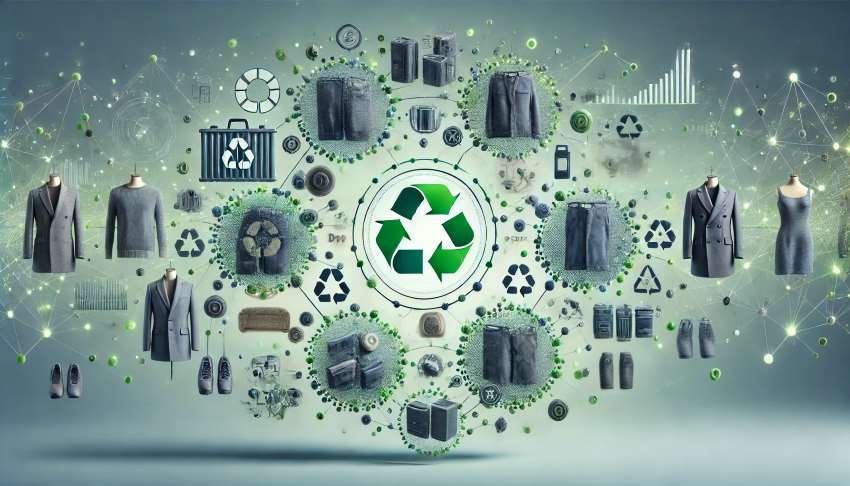
For years, the global fashion industry treated fibre-to-fibre recycling as a scientific challenge. Chemical recycling technologies, enzyme-based processes and advanced polymer separation attracted billions in investment as brands positioned circularity as the industry's next growth frontier. That narrative has changed. A new report by Apparel Insider suggests the industry's biggest obstacle is no longer technological innovation but the absence of commercial infrastructure capable of supporting industrial-scale recycling. The chemistry has largely been proven. What remains unresolved is the far more difficult task of building an efficient network for collecting, sorting, processing and financing post-consumer textile waste at a commercially viable cost.
The fall of Swedish recycling pioneer Renewcell in 2024 became the defining moment of this change. Despite attracting widespread attention and sustainability commitments from global apparel brands, the company failed because those commitments did not translate into long-term purchasing agreements capable of supporting an expensive industrial operation. Operating today as Circulose under new ownership, the business has rebuilt around stronger commercial contracts with companies including H&M, Mango, Bestseller, John Lewis, C&A and Reformation. Across the industry, recyclers are increasingly demanding multi-year volume commitments instead of pilot projects, while brands are beginning to recognise that circular raw materials require supply-chain partnerships rather than spot-market purchases.
Collection and sorting crisis
The industry's biggest weakness lies far upstream from recycling plants. Across Europe, consumers separately collect only 4.4 kg of textiles per person annually, while nearly three times that amount still enters mixed household waste streams destined for landfills or incinerators. Similar trends exist elsewhere. In the UK, households discard around 35 clothing items per person each year, while California alone sends nearly 1.2 million tonnes of textiles to landfill annually.
Even when garments are collected, sorting infrastructure is under severe financial pressure. Traditional sorting businesses relied on selling reusable clothing into second-hand markets, using those profits to subsidise the processing of damaged or low-value garments. That business model is rapidly deteriorating. Ultra-fast fashion has flooded collection systems with inexpensive, lower-quality garments that have little resale value. European recycling organisations have warned that declining resale prices no longer cover basic sorting costs, triggering financial distress across the sector. Major operators including Soex, Texaid's German subsidiaries and France's Le Relais have all faced significant financial challenges over the past two years.
Compounding the problem is garment complexity. Modern apparel contains mixed fibres, elastane, metallic accessories, plastic trims and multiple material layers that complicate recycling. Studies indicate that nearly four out of five discarded garments contain external components that require removal before recycling can begin, substantially increasing labour and processing costs.
Economics don't work always
The commercial challenge becomes even clearer when production costs are compared.
|
Feedstock material type |
Estimated production cost (per metric tonne) |
Price premium multiple |
|
Virgin Polyester (Produced in Asian Petrochemical Hubs) |
€950 |
Base Line |
|
Bottle-Derived Recycled Polyester (rPET via established streams) |
€1,140 |
1.2x Cost of Virgin |
|
Textile-to-Textile Recycled Polyester (From European post-consumer waste) |
€2,480 |
2.6x Cost of Virgin / 2.1x Cost of Bottle rPET |
The economics highlights why scaling remains difficult. Unlike bottle recycling, which benefits from decades of municipal collection infrastructure and relatively uniform feedstock, textile recycling must finance every stage of an entirely new supply chain from garment collection and transportation to sorting, fibre identification, de-trimming, shredding and material recovery. The result is that textile-derived recycled polyester costs more than twice as much as virgin polyester and significantly exceeds the price of bottle-derived recycled polyester. Until regulations create stronger demand or production costs fall substantially, brands will continue gravitating towards cheaper recycled alternatives to meet sustainability targets.
Regulation takes centre stage
Recognising that voluntary sustainability commitments have failed to build sufficient demand, governments are now introducing mandatory regulatory frameworks. The European Union has emerged as the most aggressive policymaker, mandating separate textile collection, introducing Extended Producer Responsibility (EPR) systems and prohibiting the destruction of unsold clothing under the Ecodesign for Sustainable Products Regulation. Future proposals also aim to mandate minimum recycled-fibre content across textile products.
France has strengthened its mature EPR framework with emergency financial support for struggling sorting operators, while the Netherlands has introduced mandatory recycled-content requirements for textiles sold domestically. North America is also moving ahead. California has enacted the Responsible Textile Recovery Act, creating the country's first statewide producer-funded textile stewardship programme, while Canada has introduced reporting requirements for synthetic textile volumes as part of its Federal Plastics Registry.
Collectively, these policies signal a decisive shift from voluntary corporate sustainability initiatives towards legally enforceable circular economy obligations.
Asia builds industrial scale
While Europe and North America concentrate on regulation, manufacturing economies are investing in operational infrastructure. India has emerged as one of the world's strongest examples of industrial circularity. The country generates over seven million tonnes of textile waste annually, yet already recovers nearly all pre-consumer spinning waste and over 95 per cent of industrial garment scrap through established manufacturing clusters. Panipat alone processes over one million tonnes of domestic and imported textile waste each year into recycled yarns, blankets and home furnishings.
Bangladesh is similarly formalising its traditionally informal recycling ecosystem by developing a national circular economy strategy for the ready-made garment sector, supported by digital waste tracking and incentives for domestic recycling capacity. Meanwhile, China is tackling one of recycling's biggest bottlenecks sorting through AI. Automated facilities capable of processing up to two tonnes of mixed garments per hour are reducing manual labour while improving feedstock quality for downstream recycling plants.
Scaling beyond pilot projects
Industrial recyclers are now focusing less on laboratory breakthroughs and more on manufacturing capacity. Mechanical recyclers such as RE&UP and Recover are increasing large-scale operations across Turkey, Spain, Bangladesh, Pakistan, Vietnam and El Salvador to process cotton-rich and polyester-rich textile waste closer to apparel manufacturing hubs.
Chemical recyclers are pursuing equally ambitious plans. Syre aims to produce three million tonnes of circular polyester annually by 2032 through partnerships spanning Japan and Vietnam, while Reju is building an integrated European recycling network centred on France, Germany and the Netherlands.
These investments indicate that the industry's future depends not on discovering new chemistry, but on creating reliable industrial ecosystems capable of supplying consistent volumes of recyclable feedstock. The next phase of textile circularity will therefore be determined less by scientific innovation than by logistics, infrastructure and long-term commercial collaboration. The industry's greatest challenge is no longer proving that textile recycling works. It is proving that it can work profitably at global scale.
Jharkhand leverages GI-tagged heritage to propel textile exports at Bharat Tex 2026
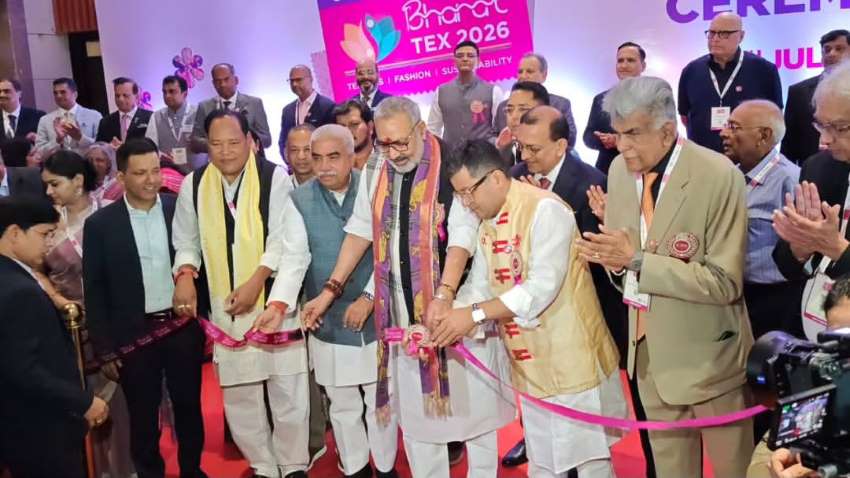
Jharkhand has unveiled a strategic initiative to integrate its artisanal textile traditions into the global marketplace, showcasing six Geographical Indication (GI)-tagged handloom products at the Bharat Tex 2026 summit in New Delhi. By highlighting the unique cultural and structural attributes of Tassar Silk, Kuchai Silk, Bhagaiya Saree and Fabric, Tumka Chadar, Bhoya Saree and Fabric, and Pancho Saree and Fabric, the state aims to transcend local boundaries and establish a significant presence in international apparel supply chains. This pavilion serves as a deliberate effort to pivot from traditional, fragmented local trade toward a structured, high-value export model that leverages the authenticity and provenance associated with GI certification.
Strategic economic empowerment for artisans
The initiative is designed to address systemic challenges within the rural artisan economy, including migration and market dilution. Sanjay Prasad Yadav, State Industries Minister notes, formalizing the recognition of these textiles is vital to creating sustainable livelihoods and preventing the erosion of centuries-old weaving knowledge. By aligning with national export goals, which target a $350 billion textile industry valuation, Jharkhand is focusing on scaling production capabilities to meet the quality and volume requirements of global retailers. This approach not only safeguards indigenous intellectual property but also positions rural clusters as specialized hubs capable of delivering heritage-led, sustainable fashion to the discerning modern consumer.
Jharkhand’s artisanal textile sector
Jharkhand is a significant hub for indigenous handloom and handicrafts, characterized by its rich tribal forest belt traditions. The state produces natural fibers, including wild Tussar and organic silk. Driven by Jharcraft, it is currently scaling its export infrastructure to support tribal artisans and integrate products into global markets.
Recover and Ünteks Group align to advance recycled cotton in circular knitwear
In a strategic effort to integrate circular economy principles into mass-market apparel, materials science company Recover has announced a formal partnership with Turkish textile manufacturer Ünteks Group. This collaboration focuses on embedding high-quality, low-impact recycled cotton fiber into an extensive range of circular knit fabrics and finished garments. By combining Recover’s proprietary recycled material with Ünteks’ vertically integrated manufacturing capabilities - spanning knitting, dyeing, printing, and final garment assembly - the partners aim to provide global retailers with scalable, sustainable solutions for high-volume, everyday products.
Optimizing industrial integration
The partnership addresses the technical challenges of maintaining consistency when incorporating recycled fibers into large-scale production. All fabrics in the new collection feature a minimum of 20 per cent Recover recycled cotton, a threshold selected to balance environmental performance with the rigorous quality standards required by international fashion brands. Hakan Kılıç, CEO, Ünteks Group, noted, significant effort was dedicated to refining production processes to ensure the recycled material performs reliably across diverse knit constructions, including jersey, fleece, and interlock. This operational agility, supported by Ünteks’ proximity to European markets and a monthly output capacity of 1.5 million garments, positions the initiative to shorten supply chains and accelerate the adoption of circular materials in the competitive retail landscape.
Driving large-scale sustainable textile output
Ünteks Group is a prominent, vertically integrated textile manufacturer headquartered in Turkey, established in 1992. The company specializes in cotton yarn, knitted fabrics, and apparel, operating across four major facilities. With a robust production capacity and a focus on OEKO-TEX certified quality, Ünteks serves a diverse global client base, leveraging advanced manufacturing infrastructure to drive large-scale, sustainable textile output.
Amazon India and Texprocil team up to supercharge global e-commerce exports
In a significant move to boost India’s textile footprint, Amazon India and The Cotton Textiles Export Promotion Council (TEXPROCIL) signed an MoU during Bharat Tex 2026 in New Delhi. This partnership aims to accelerate e-commerce exports by enabling thousands of cotton textile manufacturers and exporters to tap into Amazon’s vast international marketplaces, including the United States, United Kingdom, and Canada. As the sector demonstrates resilience - with total textile exports rising to Rs 3.16 trillion in FY 2025–26- this collaboration serves as a vital bridge for businesses seeking to transition from traditional trade channels to direct-to-consumer global models.
Empowering manufacturers through knowledge and access
The initiative addresses critical barriers to entry for micro, small, and medium enterprises (MSMEs) by providing a structured roadmap for exporter readiness. Under this framework, Amazon and Texprocil will deliver comprehensive training on cross-border logistics, product compliance, and digital marketing. Dr. Siddhartha Rajagopal, Executive Director, Texprocil, emphasizes, e-commerce is emerging as a premier growth engine, allowing manufacturers to build global brands while diversifying their customer base. By leveraging Amazon Global Selling, Indian firms can now showcase premium home textiles - such as bed, bath, and kitchen linen - directly to international shoppers without the need for physical infrastructure abroad, effectively shortening supply chains and enhancing market responsiveness.
Strengthening India’s textile competitiveness
Established in 1954, TEXPROCIL is the apex government-designated body under the Ministry of Textiles responsible for promoting Indian cotton textile exports. Representing approximately 2,000 member companies, it provides market intelligence, policy advocacy, and trade facilitation for yarns, fabrics, and home textiles, playing a pivotal role in strengthening India’s global textile competitiveness.
D Badami integrates design logic with sustainable fiber blends at Bharat Tex 2026
Mumbai-based textile specialist D Badami Fashion Connection LLP utilized the platform of Bharat Tex 2026 to bridge the gap between between traditional textile heritage and the modern demand for rapid, trend-responsive sourcing.
The brand is integrating proprietary design logic with sustainable fiber blends, including Tencel and modal to shift its strategic focus toward high-frequency design cycles and enhanced supply chain agility. With a monthly output of approximately 1.5 million meters, the firm is leveraging its in-house design studio -which generates around 1,000 new concepts monthly - to cater to the increasingly complex requirements of both domestic and international apparel retailers.
Scaling operational efficiency for global brands
The company’s participation at the New Delhi event highlighted its commitment to ‘Never Out of Stock’ (NOS) logistics, a model designed to reduce lead times for high-volume apparel brands to 15 days. This operational efficiency is central to the firm’s ambition of simplifying the fabric procurement process for emerging fashion labels and established houses alike. "Bharat Tex provided an excellent platform to connect with industry professionals, allowing us to align our product roadmap with evolving global market preferences," noted Vaibhav Jain, Director at Dhingar Silk Mills and shareholder at D. Badami. By maintaining a diverse portfolio that spans formal, resort, and casual wear, the organization continues to expand its reach across key markets including the UK and South America, underscoring the growing capability of Indian manufacturers to meet stringent global sustainability and compliance benchmarks.
Focusing on OEKO-TEX certified fabrics
D. Badami Fashion Connection is a Mumbai-based, design-led manufacturer of woven men’s and kidswear shirting fabrics. A division of the Dhingar Group (established 1961), the brand supplies 2,500+ global clients. It focuses on sustainable, OEKO-TEX certified fabrics, scaling production through innovative, tech-driven sourcing and a rapid-dispatch NOS model.
BGMEA defies regional volatility with a $60 billion in apparel exports target
In lieu of the government‘s broader vision to boost the nation’s exports to $100 billion, Bangladesh Garment Manufacturers and Exporters Association (BGMEA) is positioning the nation’s apparel sector to secure $60 billion in annual exports. Despite ongoing geopolitical tensions in the West Asia region and the resultant inflationary pressures on freight and logistics, the industry is recalibrating its focus toward high-value, non-traditional markets. By shifting production emphasis from commodity-grade staples to technically advanced sportswear and sustainable synthetic apparel, manufacturers are actively diversifying their portfolios to mitigate risks associated with over-reliance on a single export destination. This strategic transition is critical as global buyers increasingly demand shortened lead times and enhanced transparency, compelling local factories to invest in automated infrastructure and standardized energy-efficient manufacturing processes.
Optimizing supply chain agility and value retention
A core component of this roadmap involves deep-tier investment in circularity and localized fabric production to reduce dependence on imported raw materials. BGMEA leadership notes, sustained growth is predicated on navigating liquidity constraints while maintaining competitive unit economics. For example, several major hubs in Dhaka and Gazipur are deploying integrated solar-grid solutions to stabilize energy costs, thereby protecting operating margins against fluctuating international shipping surcharges. As the industry advances, the success of this $60 billion ambition remains tethered to the seamless implementation of digital product tracking and adherence to evolving European and American sustainability benchmarks, which are quickly becoming the mandatory baseline for securing long-term volume commitments from global retail conglomerates.
Reinforcing Bangladesh as the top global sourcing destination
The Bangladesh Garment Manufacturers and Exporters Association (BGMEA) is the apex trade body representing the country's apparel sector. It facilitates policy advocacy, trade promotion, and infrastructure development. With a vision of reaching $100 billion, it focuses on high-value exports, sustainable manufacturing, and maintaining Bangladesh’s status as a top global sourcing destination.
Teddy Group eyes strategic consolidation following revenue milestone
Rimini-based Teddy Group has officially surpassed the €800 million turnover mark, reporting consolidated revenues of €802.3 million for FY25. Achieved amidst a climate of tightening consumer expenditure and geopolitical instability, this performance underscores the group’s resilience in the affordable fashion sector. While many global retailers have faced contraction, Teddy’s self-financed, organic growth model - characterized by its distinct ‘franchising on consignment’ framework - has allowed the company to scale its footprint to approximately 900 stores across 80 countries. By absorbing the inventory risk that typically burdens retail partners, the group has fostered stable, long-term operational partnerships that remain insulated from the volatility affecting broader fashion trade cycles.
Operational roadmap and strategic focus for 2026
Building on this financial trajectory, the company is transitioning toward a ‘consolidation phase’ in 2026. The strategic mandate for the current year emphasizes the strengthening of brand identity across its portfolio, including Terranova, Calliope, Rinascimento, and QB24. Management is prioritizing investments in digital integration and workforce development, with plans to inaugurate 120 new points of sale and generate over 260 new roles. The Group’s strength lies in its corporate culture, and it intends to preserve this through organic expansion rather than acquisitions, noted Alessandro Bracci, CEO, Teddy Group. By optimizing the synergy between its immersive physical retail experiences and robust e-commerce platforms, the group aims to enhance its competitive positioning in high-growth regions, particularly throughout Central Europe and the Middle East, ensuring consistent value creation despite the prevailing macroeconomic headwinds.
Focusing on trend-driven apparel
Teddy Group is an international fashion retail company founded in 1961 by Vittorio Tadei. Headquartered in Italy, it manages the brands Terranova, Calliope, Rinascimento, and QB24. The group focuses on accessible, trend-driven apparel, expanding through a self-financed network of physical and digital retail platforms across 80 global markets.
Beyond Blue Jeans: How brand identity is reshaping a $103 bn market

The global denim industry is entering a new phase of competition, one in which branding psychology is becoming as valuable as manufacturing expertise. Valued at $103.16 billion in 2026, the global denim jeans market is projected to reach $164.22 billion by 2034, increasing at a compound annual growth rate (CAGR) of 5.98 per cent, according to Fortune Business Insights. Yet behind this impressive growth lies a transformation. The industry's defining battle is no longer centred on fabric quality, durability or fit. Instead, it is increasingly being fought over consumer identity.
For decades, denim brands built their reputations by answering a simple question: Will these jeans last? Today, premium players are succeeding by addressing a different question altogether: What do these jeans say about me? That shift is redefining pricing power, customer loyalty and profitability across the global apparel business.
Beyond product
Denim's commercial success has rested on tangible product attributes. Strong stitching, durable cotton fabric, reinforced rivets and reliable fits enabled heritage brands to dominate wardrobes across generations. Denim became the world's most frequently purchased apparel category, supported by mass production and global retail distribution.
However, manufacturing advances have steadily eroded product differentiation. With Asia-Pacific now accounting for more than half of global denim production, innovations such as premium washes, stretch fabrics and finishing technologies have become widely accessible. As factories across China, India, Bangladesh and Vietnam adopted similar production capabilities, superior craftsmanship ceased to be a decisive competitive advantage.
This has changed the basis of competition. Rather than competing on physical product improvements alone, successful brands increasingly compete by defining what their products represent culturally. The most valuable denim labels no longer merely sell jeans; they sell identity, aspiration and belonging.
Premium pays dividends
This repositioning has significantly altered the economics of the denim business. Industry estimates show the global premium denim segment reached $12.53 billion in 2025 and is expected to approach $19.78 billion by 2032, growing faster than the overall market. Unlike mass-market brands that remain vulnerable to cotton prices, labour costs and discounting pressures, premium labels enjoy stronger pricing flexibility because consumers perceive their purchases as emotional investments rather than functional necessities.
Once consumers associate a brand with their personal identity, purchasing decisions become less price-sensitive. Premium denim companies therefore spend proportionately more on storytelling, celebrity partnerships, fashion collaborations and community building than on communicating technical product specifications. This emotional connection also reduces dependence on promotional pricing. Customers attached to a brand's image are less likely to wait for seasonal discounts, allowing companies to protect margins while maintaining premium positioning.
Levi's reinvention
Even heritage players are adapting to this new commercial reality. Levi Strauss & Co., long regarded as the inventor of modern blue jeans, has been steadily repositioning itself from a traditional denim manufacturer into a broader lifestyle apparel company. Under CEO Michelle Gass, the company completed its transition to a direct-to-consumer business model in early 2026 while expanding categories including women's apparel and tops.
The strategy is producing measurable results. Over the past twelve months, Levi Strauss reported revenue growth of nearly 7 per cent, with its latest quarterly revenue rising more than 14 per cent, supported by double-digit expansion across Asia and continued investment in international markets. The company's evolution shows how even the strongest heritage brands recognise that future growth depends on controlling customer relationships directly rather than relying primarily on wholesale retail networks.
Digital drives demand
Direct-to-consumer retail has become one of the industry's most significant growth engines. Digital sales channels are forecast to grow at an annual rate exceeding 14 per cent through 2035, enabling brands to communicate consistent narratives while collecting valuable customer data. Unlike department stores or multi-brand retailers, owned digital platforms allow companies to control every aspect of the consumer experience from product launches and personalised recommendations to sustainability messaging and brand storytelling.
Consumers have responded enthusiastically, particularly within the premium price bracket between $200 and $400. Buyers increasingly justify higher prices through durability, cost-per-wear calculations and environmental considerations rather than simple affordability.
Meanwhile, fashion cycles continue to accelerate. Demand for vintage-inspired silhouettes, gender-neutral styling and customised products has compressed product development timelines from roughly 18 months to as little as six months. Brands capable of rapidly translating social media trends into retail collections are capturing disproportionate market attention. Luxury players are also capitalising on this momentum. Italian fashion group OTB has strengthened the global positioning of Diesel by transforming the brand from a traditional denim label into a contemporary fashion statement through runway presentations, creative collaborations and high-concept marketing.
Balancing sustainability
Despite strong consumer demand, denim manufacturers face growing operational challenges. Environmental regulations targeting water-intensive dyeing processes are increasing compliance costs, while tariffs of roughly 20 per cent to 30 per cent across several Western markets continue to pressure global supply chains. Rising logistics expenses and volatile raw material prices further complicate inventory planning. To preserve profits, manufacturers are using predictive analytics to optimise production while reducing stock-keeping units by as much as 25 per cent. Smaller, more focused product assortments enable companies to improve inventory productivity and minimise markdowns.
Sustainability has consequently shifted from a corporate responsibility initiative to a core business requirement. More than half of global denim manufacturers now offer collections incorporating recycled cotton, organic fibres or low-water production technologies. This aligns with evolving consumer preferences, with nearly half of apparel buyers actively considering environmental certifications before purchasing denim. For premium brands, sustainability also reinforces their broader identity narratives, allowing ethical manufacturing to become another element of emotional differentiation.
The identity advantage
The commercial divide between heritage and identity-led brands is becoming increasingly pronounced. Traditional denim companies continue to derive value from authenticity, craftsmanship and functional reliability. Their pricing remains closely tied to production economics, making profitability sensitive to fluctuations in cotton costs and manufacturing expenses.
Identity-driven brands operate differently. By positioning denim as an expression of individuality, rebellion or cultural relevance, they create value largely independent of production inputs. Comparable fabrics sourced from similar manufacturing hubs can command prices several times higher simply because consumers are buying into a lifestyle rather than a garment.
That distinction explains why premium denim continues to outperform despite economic uncertainty. While consumers can easily substitute one durable pair of jeans for another, replacing the emotional value attached to a brand is considerably more difficult.
As the global denim market continues its expansion towards $164 billion, competitive advantage will increasingly belong to companies capable of balancing manufacturing excellence with compelling cultural narratives. In an industry once defined by durability and craftsmanship, the most valuable asset is no longer the fabric itself. It is the identity consumers believe they are wearing.
Beyond Tariffs: How a unified US apparel industry wants to rebuild regional manufacturing
In a rare show of consensus, some of the US' most influential apparel, footwear and textile organisations have come together to advocate a redesign of the country's trade incentives. Traditionally divided over tariff policies, the National Council of Textile Organizations (NCTO), American Apparel & Footwear Association (AAFA), United States Fashion Industry Association (USFIA) and the U.S. Industrial and Narrow Fabrics Institute (USINFI) have jointly submitted a proposal to the Office of the United States Trade Representative (USTR) that seeks to reshape sourcing decisions through market-based incentives rather than additional import restrictions.
The proposal, submitted as a part of the ongoing Section 301 proceedings, introduces a tariff offset mechanism designed to encourage sourcing from USMCA and CAFTA-DR countries while rewarding the use of American-made yarns and fabrics. More importantly, it signals a shift in how the industry views supply-chain resilience moving beyond punitive tariffs towards incentives that make regional manufacturing commercially viable.
Why are competitors speaking in one voice?
The alliance reflects the economic pressures facing the American textile sector. Over the past two-and-a-half years, over 40 domestic textile mills have shut permanently, resulting in widespread job losses and declining industrial output. While policymakers have promoted nearshoring and regional production, Asia continues to dominate apparel sourcing.
Today, Asian manufacturing hubs account for almost 79 per cent of all apparel imported into the US, while the Western Hemisphere's share has fallen to just 12 per cent. This imbalance has also weakened demand for American textile exports, nearly 70 per cent of which traditionally flow to manufacturing partners across the Western Hemisphere. Against this backdrop, organisations that have always disagreed over tariff policy now argue that rebuilding regional supply chains requires positive commercial incentives instead of trade barriers alone.
The coalition believes the proposal can simultaneously strengthen domestic manufacturing, reduce dependence on Asia, and create commercially attractive alternatives for apparel brands seeking diversified sourcing strategies.
Rewarding regional manufacturing
What led to this proposal is a tariff credit programme linked to verified, forced-labour-free production. Instead of merely imposing higher duties on imports from countries facing Section 301 actions, companies would earn credits by purchasing qualifying garments manufactured in USMCA or CAFTA-DR partner countries. The proposed framework operates in three tiers. Brands importing qualifying apparel from these regional partners would receive a baseline credit equivalent to 20 per cent of the garments' declared customs value. The incentive increases if those garments incorporate American-made textile inputs.
If US-manufactured yarn is used, companies would receive an additional credit worth 30 per cent of the yarn's export value. Garments using American-made fabric would qualify for an even larger incentive equivalent to 40 per cent of the fabric's export value. These accumulated credits could then offset Section 301 duties on imports from countries identified by USTR under its enforcement framework. The proposed structure is intended to make regional sourcing financially competitive without compelling companies to completely abandon Asian production networks.
Table: Proposed tariff offset credit structure
|
Qualifying sourcing activity |
Proposed icentive |
|
Importing qualified apparel from USMCA or CAFTA-DR |
Credit equal to 20% of declared customs value |
|
Use of US-manufactured yarn |
Additional credit worth 30% of yarn export value |
|
Use of US-manufactured fabric |
Additional credit worth 40% of fabric export value |
Economic impact could extend beyond manufacturing
Industry projections suggest the policy could substantially alter regional trade flows. The coalition estimates that annual US textile exports to the Western Hemisphere could double from $14.5 billion to $29 billion if the programme succeeds in shifting sourcing decisions. That increase would directly benefit domestic spinning, weaving and textile manufacturing while creating stronger demand for American cotton, which supplies nearly all fibre processed by US mills.
Supporters also estimate the framework could generate more than 56,000 direct and indirect jobs while attracting fresh investment into textile innovation, including circular manufacturing and advanced production technologies. Equally significant is the anticipated shift in sourcing geography. The Western Hemisphere's share of US apparel imports could potentially rise from 12 per cent to 25 per cent, reducing Asia's dominance from 79 per cent to around 66 per cent over time.
Table: Projected industry realignment
|
Market indicator |
Current baseline |
Projected impact |
|
US textile industry output |
$61 bn |
Under evaluation |
|
US apparel retail market |
$440 bn |
Under evaluation |
|
Western Hemisphere share of US apparel imports |
12% |
25% |
|
Asian share of US apparel imports |
79% |
66% |
|
Annual textile exports to regional partners |
$14.5 bn |
$29 bn |
|
Employment impact |
Baseline |
More than 56,000 new jobs |
Making compliance commercially attractive
A defining feature of the proposal is its effort to align trade policy with labour compliance objectives. Experts argue that existing tariff-rate quotas and conventional trade remedies lack the certainty necessary for companies to commit long-term investments in regional manufacturing. In contrast, a predictable credit mechanism tied to verified forced-labour-free production could transform compliance into a competitive business advantage rather than merely a regulatory obligation.
The proposal also aligns with broader geopolitical efforts to diversify supply chains, strengthen trusted trade partnerships and reduce exposure to concentrated manufacturing hubs. For brands facing growing pressure to demonstrate ethical sourcing, the framework offers an opportunity to improve compliance while protecting operating margins.
Practical illustration of the incentive
The coalition has shown the proposal through a sourcing scenario involving a mid-sized American casualwear retailer. Currently dependent on East Asian suppliers for 80 per cent of its denim and activewear, the company pays substantial Section 301 tariffs. Under the proposed framework, shifting 30 per cent of production to factories in El Salvador and Guatemala using American yarns and North Carolina-made denim fabrics would generate tariff credits that could fully offset duties on the retailer's remaining specialised Asian imports.
The example shows the proposal's broader objective: encouraging companies to rebalance not necessarily replace their sourcing strategies while maintaining commercial competitiveness. Rather than forcing abrupt decoupling from Asia, the framework seeks to gradually strengthen Western Hemisphere production through financial incentives that reward regional value addition.
As USTR evaluates potential Section 301 enforcement measures, the industry's unified proposal represents more than another tariff recommendation. It reflects an evolving consensus that future competitiveness will depend not only on restricting imports but also on creating commercially sustainable supply chains that integrate North American and regional manufacturing with stronger domestic textile production.
India-UK CETA: Tariff-free UK access puts India's textile sector on growth track
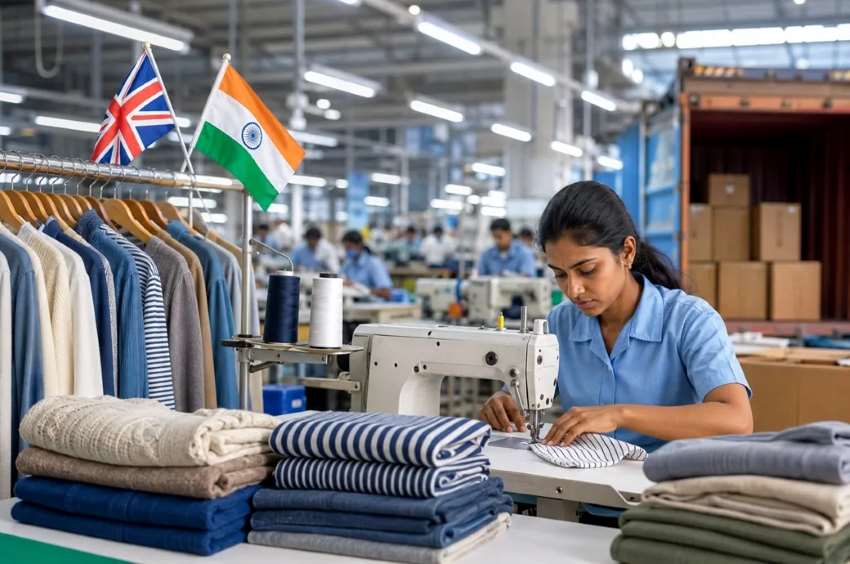
India's textile and apparel industry is ready for one of its biggest export opportunities in decades as the India-UK Comprehensive Economic and Trade Agreement (CETA) comes into force from today, July 15, 2026. By eliminating tariffs on 99 per cent of Indian tariff lines entering the UK, the agreement removes a long-standing cost disadvantage for Indian exporters and also improves their competitiveness in one of the world's largest fashion markets.
For years, Indian apparel and home textile exports attracted duties ranging from 8 to 12 per cent, while competitors such as Bangladesh benefited from preferential access. The new agreement effectively levels the playing field, allowing Indian suppliers to compete on quality, scale, innovation and supply-chain capabilities rather than sacrificing margins to offset tariff costs.
The impact extends well beyond export numbers. As per industry estimates India's textile and apparel exports to the UK is currently valued at $1.4 billion, and this could double to $2.8 billion by 2030. The agreement also strengthens India's broader ambition of achieving $100 billion in textile exports globally by the end of the decade.
India's textile and apparel sector, valued at nearly $179 billion, contributes around 2 per cent to GDP, 11 per cent to manufacturing gross value added and nearly 9 per cent of the country's total exports, making the agreement strategically significant for both industry and the economy.
A competitive reset
The UK's apparel market has been steadily diversifying sourcing away from China amid geopolitical uncertainty and supply-chain risk. The India-UK pact arrives at a time when British retailers are actively looking to broaden their supplier base. Leading retailers such as Primark, ASOS and Marks & Spencer already maintain sourcing relationships with Indian manufacturers, and the tariff elimination is expected to encourage larger procurement volumes across apparel, home textiles and fashion accessories.
As per Confederation of Indian Textile Industry (CITI), the agreement gives India the advantage needed to increase its market share. Rating agency ICRA expects textile exports to witness annual growth of 11-13 per cent as Indian suppliers capture a larger share of the UK's £14.28 billion apparel and home textile import market. Even before the agreement took effect, India's apparel shipments to the UK had grown by 13.4 per cent, while China's share of UK apparel imports declined by over 6 per cent, indicating that sourcing diversification was already underway.
Table: Top textile & apparel import sources & future outlook
|
Country |
Estimated 2024 import value (apparel & home textiles) |
Per cent share |
Strengths |
Post-CETA outlook |
|
China |
£3.65 bn |
25 |
Large-scale manufacturing and competitive pricing |
Market share gradually declining as buyers diversify |
|
Bangladesh |
£3.21 bn |
22 |
Large garment manufacturing base and cost competitiveness |
Remains a major supplier but faces stronger competition |
|
India |
£1.25 bn |
8.5 |
Integrated value chain, raw material diversity, ethical production |
Expected to raise share to nearly 12% by 2030 |
|
Turkey |
£1.17 bn |
8 |
Design capability and proximity to Europe |
Premium positioning with shorter lead times |
|
Pakistan |
£1.00 bn |
6.8 |
Competitive basics manufacturing |
Faces pricing and margin volatility |
Focus beyond cotton
The agreement also aligns with an important change within India's textile manufacturing. While India has traditionally been known for cotton-based production, global fashion demand has shifted towards performance wear, sportswear, technical textiles and blended fabrics. Reflecting this change, man-made fibres (MMF) and blended yarns now account for 52.2 per cent of domestic textile consumption, overtaking cotton for the first time.
Government initiatives such as the Production Linked Incentive (PLI) scheme have given a boost to investments in synthetic fibre manufacturing, technical textiles and value-added fabric processing. The UK agreement now offers these newly created capacities with duty-free access to premium international buyers. Besides garments, exporters expect strong demand for home textiles, upholstery fabrics, bed linen, towels and industrial textiles as lower landed costs improve India's competitiveness in Britain's premium home furnishing market.
Need to build scale
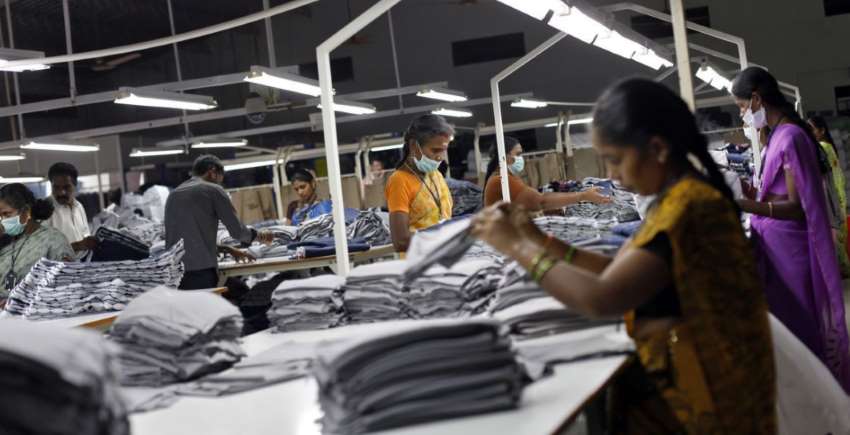
While tariffs have disappeared, execution will determine how much of the opportunity India can capture. One of India's longstanding challenges has been its fragmented manufacturing base. Unlike competing countries that operate mega integrated factories, many Indian apparel manufacturers continue to operate through smaller production units that often struggle with scale, consistency and lead times.
The government's PM MITRA programme aims to address this gap through seven integrated textile parks that combine spinning, weaving, dyeing, processing and garment manufacturing within single industrial ecosystems. Projects such as the Virudhunagar PM MITRA park in Tamil Nadu are expected to reduce logistics costs, improve production efficiency and shorten delivery timelines—factors increasingly valued by global retailers following pandemic-era supply disruptions. Experts believe stronger integration will also improve capacity utilisation across MSMEs while encouraging automation, digital manufacturing and higher productivity.
Sustainability as a market requirement
Tariff-free access alone is no longer sufficient to win export orders. British retailers require suppliers to demonstrate environmental compliance, ethical sourcing and complete supply-chain transparency. Sustainability has become a procurement prerequisite rather than a value addition. Major export clusters such as Tiruppur have invested extensively in zero-liquid-discharge treatment systems, renewable energy, recycled textiles and water-efficient processing.
Meanwhile, the Cotton Textiles Export Promotion Council (TEXPROCIL) has introduced blockchain-based cotton traceability, enabling buyers to digitally verify fibre origin from farm to finished garment. Such traceability is expected to become increasingly important as UK and European retailers strengthen due diligence requirements and environmental reporting.
Companies prepare for growth
Large exporters are already positioning themselves for increased UK demand.
Raymond Lifestyle for example has diversified its export portfolio by reducing dependence on the US market while expanding its presence in the UK and Europe. The company is scaling production at its Andhra Pradesh manufacturing facility from three to 11 production lines and expects export volumes to grow 20-25 per cent during the current financial year as CETA-driven orders begin flowing.
Similarly, India's largest apparel exporter, Shahi Exports, is well positioned. With over 50 vertically integrated factories, the company supplies several leading global fashion brands and has invested significantly in renewable energy and sustainable manufacturing. Its integrated model is expected to help it capitalise on larger sourcing commitments from UK retailers seeking reliable, compliant and scalable partners.
As global sourcing strategies continue to diversify beyond China, the India-UK trade agreement offers Indian manufacturers a rare combination of tariff competitiveness, policy support and increase production capacity. The next phase will depend on how effectively the industry scales operations, strengthens compliance and delivers the speed and consistency demanded by international fashion buyers. If executed well, CETA could become the catalyst that reshapes India's position in global textile trade over the coming decade.