FW
Prada unveils high-tech cooling garment for Artemis moon missions
Italian luxury powerhouse Prada has taken a definitive step into the aerospace sector, unveiling the Liquid Cooling and Ventilation Garment (LCVG) designed for NASA’s upcoming Artemis lunar missions. Developed in partnership with Houston-based Axiom Space, the garment serves as the critical inner layer of the Axiom Extravehicular Mobility Unit (AxEMU) spacesuit. Rather than a purely aesthetic endeavor, the collaboration leverages Prada’s deep-seated expertise in advanced textile engineering, material science, and precision patternmaking - capabilities honed through decades of high-performance design in competitive sailing and sportswear.
Engineering life support through advanced textiles
The LCVG acts as the primary thermal regulation system, essential for protecting astronauts during physically demanding lunar spacewalks lasting up to eight hours. The garment features an intricate network of specialized tubes that circulate chilled water across major muscle groups, efficiently extracting metabolic heat. A key technical innovation is the inclusion of a fully redundant cooling circuit, a backup system that ensures thermal stability even if the primary loop fails. Beyond temperature control, the garment manages ventilation by circulating fresh oxygen and scrubbing exhaled carbon dioxide, maintaining a stable life-support environment within the harsh, unpredictable conditions of the lunar South Pole.
Redefining cross-industry space collaboration
The integration of a luxury fashion house into mission-critical aerospace hardware signals a departure from traditional, government-centric procurement. Axiom Space officials emphasize that the partnership is a practical engineering alliance, focusing on ergonomic comfort and material durability in extreme thermal environments. By utilizing 3D modeling and advanced knitting techniques, the team has created a garment that fits seamlessly beneath the outer spacesuit, enhancing astronaut mobility. This collaboration underscores a broader trend where space exploration increasingly integrates specialized knowledge from non-traditional sectors to accelerate innovation, ensuring that human-grade protection can meet the rigors of long-duration missions to the Moon and beyond.
Global leader in luxury fashion
Prada Group is a global leader in luxury fashion, renowned for its design, manufacturing, and material innovation. The company manages iconic brands including Prada, Miu Miu, and Church’s. It focuses on integrating high-performance technical fabrics into luxury retail, aiming for sustainable growth and pioneering unconventional, cross-industry design partnerships.
Ralph Lauren elevates French market footprint with luxury retail expansion
Ralph Lauren is aggressively expanding its presence in France, targeting premier locations from the Champs-Élysées in Paris to the coastal luxury hub of Saint-Tropez. This retail acceleration serves as a cornerstone of the company’s ‘Next Great Chapter: Accelerate’ strategy, which prioritizes the expansion of high-end direct-to-consumer (DTC) channels and flagships. By securing high-visibility real estate in these critical luxury centers, Ralph Lauren aims to cultivate deeper brand equity and cater to a growing demographic of affluent international travelers and local clientele, moving firmly away from its legacy reliance on volume-driven wholesale distribution.
Curating a heritage luxury experience
The French retail push reflects a broader shift toward a more curated, luxury-centric distribution model. With DTC revenue now comprising approximately 65 per cent of its total global sales, Ralph Lauren is investing in experiential flagships that blend physical engagement with digital precision. In Paris, the brand’s focus is on showcasing its most premium offerings—including the Purple Label and the Ralph Lauren Collection - to solidify its identity as a top-tier heritage house. This emphasis on store productivity has already yielded tangible results globally, with renovated flagships witnessing over 10 per cent gains in store productivity, a metric the company aims to replicate in its newest European ventures.
Driving margin growth through operational discipline
The brand’s expansion is supported by sophisticated operational tailwinds, including AI-driven demand forecasting and RFID-enabled supply chain transparency. These technologies have improved inventory turnover by approximately 15 per cent, successfully mitigating the risk of end-of-season markdowns and protecting full-price sell-through margins. Coming off a strong FY26, during which total revenue surpassed $8 billion for the first time, Ralph Lauren is well-positioned to balance expansion costs with its long-term target of achieving mid-teens operating margins by fiscal 2027. This disciplined approach to growth ensures the brand remains resilient in the face of macroeconomic fluctuations while capturing a larger share of the global luxury market.
A global leader in luxury lifestyle apparel
Ralph Lauren Corporation is a global leader in luxury lifestyle apparel, accessories, home furnishings, and hospitality. Through its ‘Next Great Chapter: Accelerate’ plan, the company focuses on premiumization, digital-physical retail integration, and expansion in high-value global luxury cities, supported by a long-standing history of classic American design and innovation.
G-III Apparel Group strengthens portfolio amid strategic transition
G-III Apparel Group has reported robust financial performance for FY27, ending April 30, 2026, with net income increasing to $66.5 million from $7.8 million in the same period last year. This significant uplift, which surpassed market expectations, was largely boosted by a $102.7 million pre-tax benefit stemming from the expected recovery of previously incurred tariffs. Excluding this non-recurring gain, the company demonstrated operational resilience, maintaining healthy full-price selling momentum across its core brand portfolio. While net sales of $536 million reflected an 8 per cent Y-o-Y decline - largely due to the planned exit from the Calvin Klein and Tommy Hilfiger licensed businesses - the company’s strategic shift toward its owned and high-growth brands continues to yield margin expansion.
Accelerating the transformation into a brand-led powerhouse
The organization is actively refining its long-term growth trajectory through the acquisition of the iconic Marc Jacobs brand, a move designed to diversify its footprint and reduce reliance on third-party licensing. Morris Goldfarb, Chairman and CEO, indicates, this acquisition represents a fundamental evolution for the company, stating, Marc Jacobs is one of the most influential brands in fashion, and we see tremendous opportunity to build on its strong foundation and drive long-term growth across categories, channels, and geographies. By prioritizing its owned assets, including DKNY, Donna Karan, and Karl Lagerfeld, G-III is successfully replacing lost licensed-brand volume with higher-margin, proprietary retail opportunities.
Raising fiscal outlook to reflect operational resilience
Reflecting increased confidence in its current strategy, G-III has upwardly revised its earnings guidance for fiscal year 2027. The company now anticipates net income in the range of $171 million to $175 million, a substantial improvement from its previous forecast. The management is also targeting $25 million in run-rate cost savings by FY28 to further streamline operational efficiency. Despite facing a dynamic global macroeconomic environment and ongoing tariff uncertainties, G-III maintains a strong balance sheet with $394.2 million in cash and cash equivalents, providing the necessary liquidity to continue investing in marketing, brand-building, and potential future acquisitions.
A global fashion powerhouse
G-III Apparel Group is a global fashion powerhouse that designs, sources, and markets an extensive portfolio of owned and licensed apparel, footwear, and accessories. Key brands include DKNY, Donna Karan, and Karl Lagerfeld. The company is currently executing a strategic transformation to become a brand-led global retail leader.
Grasim Industries anchors sustainable fashion future with strategic lyocell expansion
Grasim Industries has greenlit a Rs 3,094 crore capital expenditure to expand its Lyocell fibre production capacity at Harihar, Karnataka, signaling a decisive move to align with the global apparel industry’s migration toward high-performance, circular materials. Involving addition of 110,000 tons per annum (TPA) of capacity, the project will be executed in two equal phases, with commissioning scheduled for 2028 and 2030. This initiative follows an ongoing 55,000 TPA construction project, ultimately positioning the Harihar site as one of the world's largest hubs for Lyocell - a third-generation cellulosic fibre renowned for its breathability, durability, and low-impact, closed-loop manufacturing process.
Securing feedstock for global apparel retail
The expansion is a direct response to the mounting pressure on fashion retailers to eliminate high-emission synthetics from their supply chains. With global Lyocell demand projected to sustain a steady growth trajectory - supported by the fibre’s versatility across luxury apparel, medical textiles, and activewear - Grasim aims to capture significant market share. "This investment reflects our intent to invest ahead of the curve in sectors that define India's future competitiveness, notes Kumar Mangalam Birla, Chairman, Aditya Birla Group . By scaling these specialized inputs, the company intends to increase the specialty segment’s share to 35 per cent of its total portfolio by 2030, directly serving global brands seeking verified, sustainable feedstock for their collections.
Balancing operational efficiency and market volatility
While the expansion underlines a long-term growth thesis, Grasim continues to manage the immediate realities of the textile sector. The company reported a 97 per cent capacity utilization rate in FY26, showcasing strong operational throughput despite ongoing margin pressures from global commodity pricing. The Harihar site is currently undergoing technology upgrades, including a new bleach plant and modernized evaporation systems, to further reduce freshwater consumption and chemical waste. Funded through a strategic mix of internal accruals and debt, this multi-phase development ensures that the company remains insulated from short-term market fluctuations while building the industrial infrastructure necessary to exceed 1 million TPA in total cellulosic fiber capacity by the end of the decade.
A global leader in MMCF and textiles
Grasim Industries, an Aditya Birla Group flagship, is a global leader in Man-Made Cellulosic Fibres (MMCF), chemicals, and textiles. It provides essential raw materials to the global fashion and apparel markets. The company focuses on scaling sustainable, high-value specialty fibres to support its 2030 premium product targets.
Red Sea crisis reshapes textile trade routes, challenges India’s export margins, CRISIL study
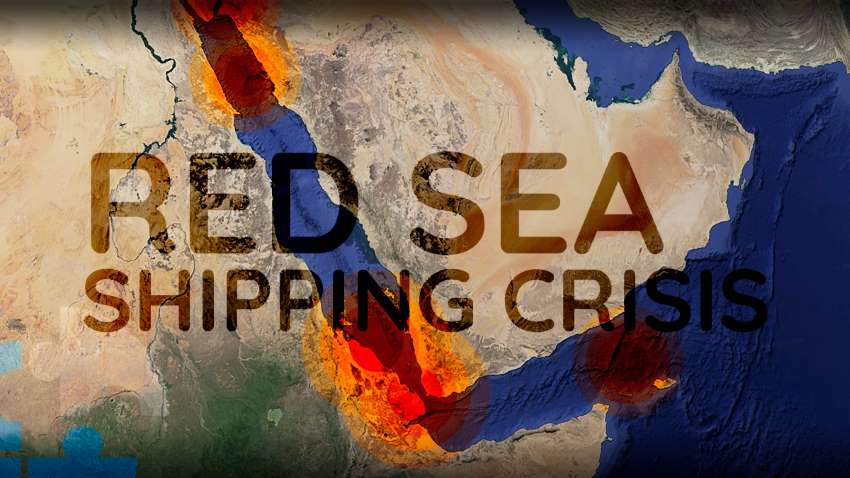
Global apparel trade is now in a new operational phase where geopolitical stability and logistics reliability are as important as manufacturing economics. For India’s textile and garment exporters, the prolonged disruption across critical maritime corridors has evolved from a temporary shipping inconvenience into a business challenge with direct implications for profit, working capital, and long-term sourcing competitiveness.
India’s textile sector, with exports worth $44 billion annually, is now operating in an environment where supply chain resilience is being scrutinized more aggressively by global fashion brands and retailers. A recent stress assessment by CRISIL revealed, escalating tensions across West Asia and continued rerouting away from the Red Sea are sharply increasing freight costs, transit timelines, and insurance premiums across major export routes.
For global retailers facing volatile consumer demand and shorter inventory cycles, the traditional procurement strategy centered on lowest factory-gate pricing is giving way to a broader evaluation of corridor reliability and delivery certainty.
Freight inflation, longer transit reshaping exports
The biggest operational disruption stems from the diversion of shipping traffic away from the Red Sea and the Suez Canal. The rerouted voyages, largely redirected around the Cape of Good Hope, have extended delivery timelines to Europe by nearly 40-60 per cent, disrupting the predictability required by modern fast-fashion retail models.
CRISIL’s nine-month disruption scenario assumes global crude oil prices averaging nearly $110 per barrel, a development that has major implications for textile manufacturing, particularly for synthetic fibers and polyester-based products that remain closely linked to crude-derived feedstocks.
The result is mounting pressure across the textile value chain. Apparel manufacturers and fabric mills are facing higher inventory carrying costs, growing freight bills, and delayed cash conversion cycles. Yet immediate price revisions remain difficult because many exporters continue to operate under seasonal contracts with Western buyers that limit rapid cost pass-through. Industry estimates suggest operating profit across polyester textiles and readymade garments could decline by 100 to 200 basis points during the current fiscal year.
Table: Comparative cost and operational metrics across global export hubs
|
Corridor |
India to Western Europe |
Turkey to Western Europe |
Bangladesh to Western Europe |
|
Transit Time (Sea/Overland) |
35–45 Days (via Cape of Good Hope) |
5–8 Days (Overland Trucking) |
40–50 Days (via Cape of Good Hope) |
|
Average Freight Cost (per FEU) |
$4,200 – $5,500 |
$1,800 – $2,400 |
$4,500 – $5,800 |
|
Working Capital Cycle (Days) |
90 – 105 Days |
45 – 60 Days |
100 – 120 Days |
|
Projected Margin Impact (YoY) |
Decline of 150–200 bps |
Stable (+20–50 bps due to premium pricing) |
Decline of 180–230 bps |
|
Primary Risk Vulnerability |
Maritime Chokepoints & Insurance Hikes |
Border Customs & Fuel Surcharges |
Trans-shipment Port Congestion |
Nearshore gains importance
The ongoing disruption is strengthening the competitive position of regional manufacturing hubs located closer to consumption markets. In Europe, this shift is particularly benefiting Turkey, which is emerging as a strong sourcing alternative for brands seeking speed and supply reliability.
Turkey’s geographic proximity to major European fashion centers enables exporters to bypass high-risk maritime chokepoints such as the Suez Canal and Strait of Hormuz altogether. Overland trucking routes allow delivery timelines of under a week, creating a decisive operational advantage for retailers managing tighter inventory rotations and shorter fashion cycles. While Turkish manufacturing costs remain structurally above India’s due to higher labor and energy expenses, buyers are willing to absorb the premium in exchange for reduced transit risk and improved inventory predictability.
This marks a transition in sourcing logic. Procurement decisions are no longer based solely on unit production economics. Instead, retailers are calculating the total commercial cost of delayed inventory, missed selling windows, and capital locked in extended shipping routes.
Currency movements cushion margin pressures
Despite the difficult operating environment, Indian textile exporters retain several buffers that may help preserve financial stability. One of the most significant supports is the depreciation of the Indian rupee, which recently crossed the 96-per-dollar level. Since textile exports are largely dollar-denominated, a weaker domestic currency improves export realizations and partially offsets higher logistics and input costs.
CRISIL also notes that Indian corporates are entering this period with stronger balance sheets than in previous commodity or logistics crises. The median corporate gearing ratio has declined to approximately 0.5 times, while interest coverage ratios have strengthened to more than five times compared to the previous decade.
Moreover, liquidity support measures such as the government-backed Emergency Credit Line Guarantee Scheme (ECLGS 5.0) are providing temporary financing support for mid-sized garment exporters facing elevated working capital stress. Together, these factors are expected to preserve the solvency profile of large Indian textile companies even as short-term operating margins remain under pressure.
Fashion retailers rebalance procurement strategies
The changing economics of global sourcing are already influencing buyer behavior. A mid-sized European fast-fashion retailer recently adjusted its supplier mix after extended Red Sea disruptions created major inventory gaps across seasonal apparel categories. So far, the company sourced high-volume basics from India while relying on Mediterranean suppliers for quick-turn fashion products. However, when transit timelines from India stretched and added three additional weeks, the retailer shifted roughly 20 per cent of its cotton and synthetic sourcing volume to Turkish suppliers.
Although manufacturing costs in Turkey were approximately 12 per cent higher, the shorter six-day overland transit window significantly reduced inventory lock-up and prevented lost retail sales. The faster replenishment cycle ultimately compensated for the higher unit production cost.
The case highlights an increasingly important reality within global fashion procurement: sourcing reliability and delivery speed are becoming more commercially valuable than marginal savings on production costs.
CRISIL’s, latest stress assessment underscores a broader reality for the textile sector: geopolitical instability is no longer a peripheral trade risk. It is rapidly becoming a central determinant of sourcing strategy, capital allocation, and long-term competitiveness in the global apparel industry.
EU’s textile waste rules enter enforcement phase, raising alarms across fashion retail

Europe’s apparel and textile industry is approaching one of its most significant regulatory transitions in decades. As the European Union moves toward finalizing revisions to its Waste Framework Directive, Extended Producer Responsibility (EPR) is shifting from policy ambition to operational reality. For fashion brands, retailers, and manufacturers, the debate is no longer about whether textile EPR will arrive, but how its implementation will reshape the economics of doing business across Europe.
Industry leaders warn that the success of the EU’s circular economy agenda could ultimately depend on whether member states can avoid creating a patchwork of national compliance systems that undermine the very concept of a unified European market.
Growing threat of regulatory fragmentation
At the centre of industry concerns lies the risk of regulatory divergence. While the EU’s objective is to create a harmonized framework that improves textile collection, reuse, and recycling rates, individual member states retain considerable flexibility in designing their own implementation models.
For retailers operating across multiple countries, this creates the prospect of navigating dozens of registration systems, reporting formats, fee structures, and compliance procedures simultaneously. The European Apparel and Textile Confederation (EURATEX) argues such fragmentation could generate substantial administrative costs and disrupt the efficient movement of goods within the bloc. The concern extends beyond paperwork. Different national systems could weaken the development of secondary raw material markets by creating inconsistent standards and reporting requirements, making it harder for businesses to scale circular business models across borders.
To address this challenge, stakeholders are advocating for a centralized EU-wide digital compliance platform. Such a system would enable companies to submit standardized data through a single interface while allowing member states to maintain country-specific fee mechanisms reflecting local waste-management infrastructure.
For retailers already managing complex sourcing, logistics, and sustainability obligations, a harmonized reporting framework is increasingly viewed as essential rather than optional.
E-commerce under regulatory spotlight
Another flashpoint in the EPR debate concerns the rapid growth of cross-border e-commerce. European apparel companies argue that domestic brands face mounting compliance costs while many non-EU sellers continue to access the European consumer market through digital platforms with comparatively limited regulatory accountability. As online marketplaces become a larger channel for fashion consumption, industry groups fear the emergence of an uneven competitive landscape.
The sector is therefore pushing for stricter enforcement mechanisms that require foreign sellers to appoint legally accountable representatives within the EU. These Authorized Representatives would be responsible for ensuring compliance with EPR obligations and other sustainability requirements.
Retailers contend that relaxing such requirements before effective enforcement systems are fully established could create a significant market distortion. Domestic companies would shoulder the costs of circularity while overseas sellers potentially benefit from lower compliance burdens. For European brands already facing intense price competition from ultra-fast-fashion platforms, the issue is increasingly being framed not only as an environmental concern but also as a matter of competitive fairness.
The economics behind eco-modulation
One of the most transformative aspects of the incoming framework is the introduction of eco-modulation fees. Under the proposed system, producers will pay varying contributions based on the environmental performance of their products. Garments that are more durable, repairable, and recyclable would attract lower fees, while products with weaker sustainability characteristics would face higher financial obligations.
The principle appears straightforward, but retailers warn that execution will be far more complex. Fashion companies are urging policymakers to align eco-modulation criteria closely with the Ecodesign for Sustainable Products Regulation (ESPR) to prevent overlapping reporting requirements. Without alignment, businesses could find themselves maintaining multiple compliance systems that evaluate similar sustainability attributes through different methodologies.
The industry is also cautioning against fee structures that penalize materials for which commercially viable recycling solutions do not yet exist. Experts argue that if policy frameworks move faster than recycling technology, eco-modulation risks becoming a cost burden rather than an incentive for innovation.
The challenge for regulators will be balancing environmental ambition with commercial practicality, ensuring that sustainability targets remain achievable within current technological and economic constraints.
The emerging data burden
Beyond fees and reporting obligations, a more technical challenge is beginning to attract attention: data management. The EU’s sustainability agenda increasingly relies on information-driven compliance systems. However, businesses are warning that separate reporting requirements are emerging across different regulatory initiatives.
Textile EPR frameworks primarily require aggregate information, such as total volumes of products placed on the market. In contrast, the forthcoming Digital Product Passport (DPP) system is designed to provide detailed, item-level information for individual products.
While both initiatives support circularity objectives, the coexistence of macro-level and micro-level reporting requirements could create significant duplication. Industry estimates show managing separate compliance streams could materially increase administrative expenses, particularly for mid-sized retailers operating on already thin margins. As a result, trade associations are advocating a ‘report once, use multiple times’ approach, whereby data submitted through Digital Product Passports can simultaneously satisfy eco-modulation and EPR requirements. Such integration could become critical as regulatory reporting evolves into a core operational function rather than a peripheral sustainability exercise.
Why SMEs lose the most
The implications of EPR enforcement are particularly significant for small and medium-sized enterprises. SMEs account for the overwhelming majority of Europe’s textile and apparel businesses, yet they typically possess the least capacity to absorb regulatory complexity. Unlike MNCs with dedicated compliance departments, smaller firms often operate with limited financial and administrative resources.
Experts argue ambiguities in regulatory definitions remain a major concern. Questions surrounding product scope, material classifications, and categories described as textiles “similar in nature and composition” could expose smaller businesses to inconsistent interpretations across different jurisdictions.
For many SMEs, regulatory certainty may prove as important as the regulations themselves. As Europe accelerates its transition toward a circular textile economy, business leaders broadly support the sustainability objectives underpinning EPR. However, they stress that implementation must remain commercially realistic, technologically achievable, and legally clear.
The coming months will likely determine whether textile EPR becomes a catalyst for a more circular European fashion industry, or a source of fragmentation that increases costs and complexity across the sector. For retailers, the challenge is no longer preparing for sustainability regulation. It is preparing for sustainability regulation at scale.
Coco Rocha enters livestream retail with Xcel Brands partnership
Supermodel and fashion entrepreneur Coco Rocha is set to debut her new fashion and accessories line, Off/Duty by Coco Rocha, on QVC this fall. This launch marks a significant expansion for the television retailer as it continues to capitalize on the growing trend of influencer-led commerce. By collaborating with Xcel Brands, a company specialized in social commerce infrastructure, Rocha aims to translate her two decades of runway experience into an accessible, high-utility collection designed for daily wear. The brand is positioned to address the demand for versatile wardrobe staples, such as elevated knitwear, premium denim, and structured outerwear, that bridge the gap between high-fashion aesthetics and the practical requirements of the modern consumer.
Redefining influencer-driven retail engagement
The partnership underscores a strategic shift in how heritage media platforms interact with fashion icons. Rather than traditional licensing, Xcel Brands is utilizing a collaborative model that integrates Rocha’s creative vision directly into the QVC broadcast ecosystem. According to Robert D'Loren, Chairman and CEO, Xcel Brands, the initiative is designed to offer QVC’s extensive viewership an authentic point of view on modern style. Industry analysts observe that this approach moves beyond passive product placement, instead focusing on high-engagement storytelling during live broadcasts. By leveraging Rocha’s global reach - which spans millions of social media followers - the brand aims to drive immediate conversion by demonstrating the versatility of each piece through real-time styling segments.
Sustaining momentum in social commerce
The move comes at a time when the retail sector is increasingly prioritizing ‘livestream-first’ strategies to sustain growth amidst volatile consumer spending patterns. For Xcel Brands, adding an icon of Rocha's stature to its portfolio is a calculated move to reinforce its market position against emerging digital-native competitors. The broader objective remains the scaling of influencer-led brands that can maintain retail velocity across both television and digital platforms. As the company prepares for the third-quarter debut, the focus will remain on maintaining operational efficiency while scaling the collection to meet international distribution standards, effectively demonstrating how established broadcast networks are successfully digitizing their influence-led retail model.
Targeting style-conscious consumers through livestream shopping
Off/Duty by Coco Rocha is a newly formed fashion and accessories label created by supermodel Coco Rocha in partnership with Xcel Brands. The collection offers elevated lifestyle apparel, including denim, knitwear, and outerwear. It aims to capture the premium-casual segment, targeting style-conscious consumers through QVC's global livestream shopping infrastructure.
Asian textile leadership shifts toward collaborative supply chain resilience
Held recently in Bangkok, the inaugural NexGen CEOs Roundtable 2026 has signaled a fundamental transformation in the Asian textile and apparel industry. As emerging executives from South, Southeast, and East Asia convene, the discourse is moving away from traditional volume-centric manufacturing toward a model defined by cross-regional integration and technological agility. This meeting reflects a broader market shift: decision-makers are prioritizing the construction of flexible, resilient supply chain networks capable of navigating the geopolitical volatility currently impacting global trade routes and energy security.
Redefining production paradigms
The new generation of industry leadership is actively distancing itself from the high-volume, low-margin OEM model that has historically dominated the sector. Instead, the focus is shifting toward investment in digital infrastructure and environmental sustainability. Participants at the roundtable emphasized that the industry's future lies in ‘resilient sourcing’ - a strategy that balances the manufacturing scale of hubs like Bangladesh and Vietnam with the high-end material expertise of Chinese firms. By integrating real-time digital tracking and automated production systems, these leaders aim to reduce wastage and satisfy the increasing demand for traceable, ethical fashion, directly addressing the complexities of carbon border adjustment mechanisms and stringent rules of origin in Western markets.
Managing global trade turbulence
While the sector faces headwinds from fluctuating logistics costs and geopolitical instability, the roundtable provided a platform for navigating these risks through strategic collaboration. Industry experts noted that the selection of Bangkok as a venue for this gathering reflects a power shift in the region's industrial geography. As firms reorganize their supply networks to mitigate tariff impacts, the emphasis has moved toward fostering deeper linkages between technology providers and local producers. By prioritizing industrial parks equipped with green energy and data-driven management, Asian textile leaders are ensuring their long-term competitiveness remains robust even as they contend with the broader challenges of an unpredictable global economic landscape.
Eyeing the future of global textile sourcing and production
The NexGen CEOs Roundtable is a high-level initiative launched by the International Apparel Federation and CEMS-Global USA. It provides a strategic forum for emerging industry leaders to discuss innovation, ESG compliance, and supply chain trade dynamics across Asia, specifically targeting the future of global textile sourcing and manufacturing.
Birla Cellulose expands US presence with new design studio
Pulp and fiber division of the Aditya Birla Group, Birla Cellulose has launched a premier design studio in New York, marking a strategic expansion to integrate its sustainable material innovations directly into the North American fashion value chain. By establishing a physical footprint in the heart of the US fashion district, the company intends to shorten lead times and facilitate seamless co-creation with international brands. Showcasing an extensive library of over 300 fabric varieties, the facility featuring advanced developments in viscose, modal, and dope-dyed spunshades, aimed at meeting the intensifying demand for high-performance, sustainable textile solutions in Western markets.
Accelerating co-creation and supply chain velocity
The New York studio functions as a technical interface, providing global apparel manufacturers with immediate access to fabric swatches, prototype yardages, and supply chain technical support. This initiative addresses a critical industry requirement: the need for rapid material testing in an increasingly volatile fashion cycle. By offering end-to-end traceability through its blockchain-powered GreenTrack platform, Birla Cellulose is positioning itself as an essential partner for brands aiming to meet stringent ESG mandates. Industry observers note that such localized engagement models are vital for companies seeking to transition from traditional procurement to collaborative development, ensuring that material innovations align precisely with seasonal design requirements.
Scaling sustainable material solutions
This expansion follows the recent launch of Livaeco Lyocell, a next-generation fiber manufactured using a closed-loop solvent process with 99.7 per cent solvent recovery. With the global cellulose fiber market projected to reach significant growth through 2034, Birla Cellulose is doubling down on its capacity for biodegradable and comfort-focused materials. The company is currently developing new lyocell production phases, with an investment of approximately Rs 1,350 crore, slated for commissioning in 2027. This move reinforces its leadership in the man-made cellulosic fiber segment, balancing aggressive capacity scaling with a steadfast commitment to Net Zero by 2040 and continued leadership in Canopy’s Hot Button sustainability rankings.
A strong commitment to circularity
Birla Cellulose is a global leader in sustainable man-made cellulosic fibers, including viscose, modal, and lyocell. Operating 12 sites worldwide, the company serves apparel, home textiles, and hygiene sectors. With a strong commitment to circularity and FSC-certified wood sourcing, it is currently scaling production to support a Net Zero roadmap by 2040.
Bangladesh denim sector transitions to innovation-led growth
The global textile and apparel market is observing a strategic transformation as the 20th Bangladesh Denim Expo convenes in Dhaka. With the industry’s central theme, ‘Frontline to Future,’ the event highlights a critical shift from volume-driven production to high-value, innovation-led manufacturing. As Bangladesh approaches its graduation from Least Developed Country (LDC) status, the nation’s denim sector is aggressively diversifying beyond basic cotton commodities into technical textiles and synthetic fibers. This transition is essential for maintaining market share in the European Union and United States, which together absorb the vast majority of the country's apparel exports.
Addressing structural transitions
Industry leaders are currently prioritizing green investment and circular economy models to mitigate the risks associated with post-LDC trade agreements. Mostafiz Uddin, Founder and CEO, emphasized, the sector is actively building its future rather than passively reacting to global demand. For four decades, the apparel industry has absorbed immense pressure to deliver value. Now, it is shifting to responsible manufacturing and product diversification to ensure long-term competitiveness, notes Uddin. Manufacturers are increasingly integrating 3D virtual prototyping and automated laser-cutting to reduce wastage and lead times, addressing the urgent global demand for sustainable, ethical, and traceable supply chains.
Navigating global market dynamics
Despite macroeconomic headwinds such as fluctuating energy costs and logistical challenges, the sector continues to demonstrate resilience. The shift toward vertical integration - where factories control processes from yarn spinning to the final garment - is serving as a core mechanism to mitigate supply chain volatility. By fostering stronger linkages between technology providers and local producers, the exhibition aims to resolve the ‘blind spot’ of visibility, proving that Bangladesh is capable of spearheading design and material innovation. Policymakers and industry stakeholders are utilizing these forums to negotiate future trade frameworks, ensuring that the transition to a higher-value economy remains both just for the workforce and profitable for global retail partners.
Bangladesh serves as the world's second-largest apparel exporter, with the textile and garment sector accounting for over 84 per cent of national export earnings. The industry specializes in denim, knitwear, and technical apparel. With an annual export value exceeding $45 billion, the country is currently scaling production through high-tech manufacturing, LEED-certified facilities, and strategic product diversification. Historically rooted in small-scale sewing workshops, the sector has evolved into a global powerhouse, now focusing on sustainable, circular-economy practices and synthetic fiber integration to maintain its competitive advantage in the global market.