FW
China's fashion industry undergoes quality revolution with focus on innovations, sustainability
China's fashion industry is experiencing a "quality revolution" as consumers shift their focus from cost to quality and sustainability. This trend is reflected in the growing popularity of customized designs and environmentally friendly materials.
The "quality revolution" in China's fashion industry is in line with the country's national strategy to improve the overall quality of its economic growth. Multiple measures have been adopted to drive the industry toward mid to high-end development and improve the competitiveness of China's manufacturing industry.
The Chinese fashion market is the world's largest, with an annual average spending on apparel and shoes exceeding 300 USD in 2021. The hyper growth of omnichannel retailing and e-commerce has made clothing from around the world more accessible, increasing demand for quality, brand, and diversity.
Mature Chinese brands, such as Goldlion, Anta, and Bosideng, are leading the charge toward high-quality development. Goldlion has acquired 60 patents and certification for high quality, and has led or participated in drafting seven national and industrial criteria.
As the Chinese fashion industry continues to upgrade and innovate, its high-quality fruits are bound to grow on more and more international consumers.
EU Proposes Net-Zero Industry Act to boost clean tech manufacturing
The European Commission has unveiled a new proposal, the Net-Zero Industry Act, aimed at ramping up the production of clean technologies across the European Union (EU) to support the bloc's transition to clean energy.
The initiative was announced as part of the Green Deal Industrial Plan, and will create better conditions for setting up net-zero projects in Europe while attracting investments.
According to an official release, the act will strengthen the resilience and competitiveness of net-zero technologies manufacturing in the EU, and make its energy system more secure and sustainable. The goal is to ensure that the EU's strategic net-zero technologies manufacturing capacity reaches at least 40% of the grouping's deployment needs by 2030. This is expected to accelerate the progress towards the EU's 2030 climate and energy targets and transition to climate neutrality, while creating quality jobs and boosting the competitiveness of EU industry.
The proposed legislation covers a range of technologies that will make a significant contribution to decarbonisation, including solar photovoltaic and thermal, onshore and offshore wind, batteries and storage, heat pumps, geothermal energy, electrolysers and fuel cells, biogas/biomethane, carbon capture, and sustainable alternative fuels technologies, among others.
The Net-Zero Industry Act is now set to be discussed and agreed by the European Parliament and the EU Council before its adoption and entry into force.
B’desh’s garment exports to non-traditional markets surge by 35% in first eight months of FY'23
Bangladesh’s garment exports to non-traditional markets, excluding the European Union, United States, and Canada, surged by 35per cent in the first eight months of the current fiscal year, according to the Bangladesh Garment Manufacturers and Exporters Association (BGMEA).During the July-February period of FY'23, the country earned $5.69 billion, up from $4.21 billion in the same period of the previous fiscal year.
During the same period, Bangladesh’s exports to India grew by over 61 per cent to $753 million, while exports to Japan increased by 47.65 per cent to $1.08 billion. The country's share of the non-traditional markets increased from 15.32 per cent to 18.13 per cent during the same period.
The BGMEA President added that Bangladesh’s exports to the European Union, the United Kingdom, and Canada grew by 14.29 per cent, 14.52 per cent, and 20.05 per cent, respectively. However, exports to the US declined by 2.87 per cent to $5.60 billion.
Despite the overall global market share declining due to the geo-political situation triggered by the Russia-Ukraine war and high inflationary pressure across the world, Bangladesh is striving to increase export earnings to non-traditional markets.
The garment sector's contribution to the overall export earnings is increasing, and now accounts for about 85% of the total. If the earnings of home textiles and other textile goods are taken into account, the share would be around 89 to 90 per cent.
Blockchain technology fights back against counterfeit products in the apparel industry
In recent years, blockchain technology has been gaining momentum across various industries, and the apparel or fashion industry is no exception. With the increasing threat of counterfeit products, vendors are turning towards blockchain technology to safeguard their supply chain and provide authentic products to customers.
According to market research, the emergence of blockchain technology in the apparel industry is identified as a major trend, with vendors integrating the technology into their supply chain to combat the growing threat of counterfeit products. The technology is being used to create a tamper-proof system that tracks the movement of goods from the manufacturer to the end customer.
One of the leading sportswear manufacturers, Nike, has already taken the leap and developed blockchain-compatible shoes named Cryptokicks. The shoes use blockchain technology to cryptographically save various information, including the owner, transaction history, and proof of authenticity. This innovative solution enables customers to verify the authenticity of their product and track its entire journey, from the factory to their feet.
Other major players in the apparel industry have also started implementing blockchain technology in their supply chain. Retail giant Walmart is using blockchain to track the journey of pork products in China, ensuring the quality and safety of the product. Another example is Levi's, which has partnered with a blockchain startup to provide its customers with a way to track the journey of their jeans, from the cotton fields to the store shelves.
Experts predict that the use of blockchain technology in the apparel industry will continue to grow as more vendors recognize the benefits it provides. With a tamper-proof system, vendors can ensure the authenticity of their products, reduce the risk of counterfeiting, and increase customer trust.
India to establishes seven textile parks to boost industry, create jobs
The Indian government has announced the establishment of seven Mega Integrated Textile Regions and Apparel (PM MITRA) Parks across the country. These parks will be located in Tamil Nadu, Telangana, Gujarat, Karnataka, Madhya Pradesh, Uttar Pradesh, and Maharashtra.
The government's decision to set up these parks is based on its 5F vision, which aims to develop a complete value chain in the textile industry, starting from farm to fibre to factory to fashion to foreign. The establishment of these parks is a significant step towards making India a global hub for textile manufacturing and exports, as they are expected to improve the competitiveness of the industry by promoting economies of scale and attracting foreign players to invest in India.
Out of 18 proposals from 13 states, these seven sites were selected based on objective criteria such as connectivity, existing ecosystem, textile and industry policy, infrastructure, and utility services.
These parks will create world-class industrial infrastructure, attract large-scale investment, including foreign direct investment, and encourage innovation and job creation within the sector. The Ministry of Textiles will oversee the execution of these projects, and an SPV owned by the Centre and State Governments will be established for each park to ensure proper implementation.
The parks will provide excellent infrastructure, plug-and-play facilities, and training and research facilities for the industry. This unique model, where the Centre and State Governments work together, is expected to generate an investment of nearly Rs. 70,000 crores and create 20 lakh employment opportunities through these parks.
Global lingerie segment to jump from $78.7 billion to $ 119.4 billion in six years
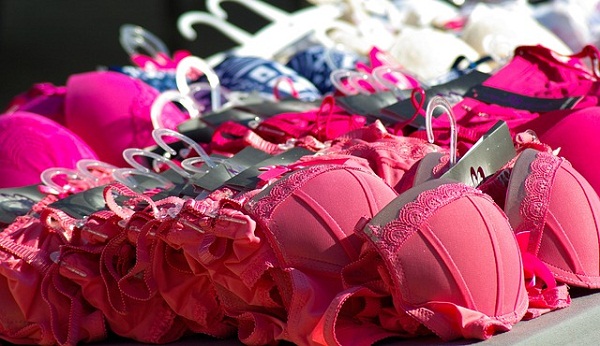
Lingerie has come a long way since the time it was considered a female tool of seduction and titillation.The global lingerie marketwas worth $78.7 billion in 2022, reinforcing demand worldwide. A study by the IMARC Group expects the market to reach $119.4 billion by 2028, growing at a compounded annual growth rate (CAGR) of 7 per centfrom 2023 to 2028.A similar study by Transparency Market Research, projects growth up to 2031 at $171.3 billion.
Societal change driving growth
The increasing inclination of consumers toward trendy intimate wear and sportswear is one of the key factors driving growth. In line with this, the widespread adoption of aggressive marketing and promotional activities on social media platforms for sensitizing and broadening the consumer base is considerably contributing to growth.
Rising product variations and escalating demand for wide-ranging seamless, brassieres briefs, and premium-quality branded lingerie amongst consumers, are propelling the market. Furthermore, increasing preference for lingerie products amongst male demographics, is positively stimulating the market. Apart from this, the collaboration of lingerie manufacturers with supermarket chains and multiple distributors for improving product portfolio is also a catalyst.
The advent of sustainable product variants is acting as a major growth-inducing factor. For instance, brands and leading companies are deploying environmentally-friendly production processes and using biodegradable materials to manufacture ecological lingerie sets that are gaining immense popularity, primarily due to the increasing environmental consciousness among the masses. Other factors, such as easy product availability through proliferating online platforms, attractive discounts and affordable price points offered by leading brands, and rising urbanization and purchasing power of consumers, especially in developing regions, are creating a positive outlook for the market further.Whilst the sudden outbreak of COVID-19 led to a shift in consumer preferences from conventional brick-and-mortar distribution channels towards online retail platforms for lingerie purchase, now, things are changing back to normal as customers are going back to physical stores.
Some major players in the global lingerie market include Fashion Nova LLC, Hanesbrands Inc., H & M Hennes & Mauritz AB, Hunkemöller International B.V., Jockey International Inc., MAS Holdings, PVH Corp., The Gap Inc., The Groupe Chantelle, Triumph International Ltd., Victoria’s Secret & Co., and Yandy Enterprises LLC.
Cotton-based, products have biggest market share
It is 2023 and as perreports on the weightage of distribution channel, the global lingerie market can be bifurcated into mass merchandizers, specialized stores, online stores, and others. Among these, mass merchandizers account for the majority market share. Based on prices, the global lingerie market has been segmented into economy and premium. Currently, economy price range makes up the largest market share. In terms of products, the global lingerie market has been divided into brassiere, knickers or panties, shape-wear, and others. Currently, brassiere has clear market dominance. When preferring material, the global lingerie market can be categorized into cotton, silk, satin, nylon, and others. Among these, cotton holds the majority of the global market share.
Report on environmental cost of online’s free returns policy in UK released

According to a report by the British Fashion Council's Institute of Positive Fashion, “Solving fashion’s product returns: How to keep value in a closed-loop system”, outlines a framework of recommendations to address the issue. The report highlights the need for the fashion industry to take immediate action to address the environmental impact of returns.
The fashion industry's push for free returns has contributed significantly to the UK's online return rate. Clothing, shoes, bags, and accessories were among the top three categories for online returns. However, the environmental costs of handling these returns are of greater concern in the long run.
Environmental damage due to emissions, energy
The report estimates that the UK fashion industry's returns generated about 750,000 tonnes of CO2 emissions in 2022, with transportation being the biggest contributor to emissions, accounting for almost 50% of total CO2 emissions.
The report also highlights the negative impact of the race for faster delivery times, which increases emissions due to smaller parcel sizes and more frequent delivery journeys. The energy required washing and iron returned items in the warehouse and excessive returns packaging, such as single-use plastic packaging and cardboard, are also contributing to the industry's environmental damage.
Although most fashion items can be resold after processing, approximately 3% of returns remain unsold. Of those unsold returns, more than 50% are sent to landfill and another 25% are incinerated, with only the remaining 25% being recycled.
The circular fashion ecosystem project of the British Fashion Council (BFC) estimates that dealing with returns cost the UK fashion industry at least £7 billion in 2022. This cost, coupled with the environmental impact, suggests that the industry is producing an unnecessarily high volume of clothing items. This production level, coupled with the average CO2 footprint of 19.5 tonnes per tonne of clothing for its whole lifetime, further exacerbates the environmental damage caused by the industry.
Closed-loop system can minimize waste
The industry needs to work towards a closed-loop system that minimizes waste and maximizes the value of returned products. Retailers and brands must consider alternative solutions to free returns, such as offering incentives for consumers to keep the products, thus reducing returns, and implementing sustainable packaging solutions.
It is crucial that the fashion industry take immediate steps to address the environmental impact of returns to mitigate the significant damage it is causing to the environment.
Chinese e-com majors SHEIN and Temu in US legal battle over trademark infringement
Two Chinese ultra-fast fashion companies, SHEIN and Temu, are battling in court in the US, with SHEIN's owner accusing Temu of "willfully and flagrantly" infringing its trademarks and copyright.
Roadget Business, which owns SHEIN's trademarks in the US, says Temu is boosting its own growth in the American market by "impersonating the SHEIN brand on social media, trading off the well-known SHEIN trademarks, and using copyrighted images owned by Roadget as part of its product listings."
The amended complaint, filed with the US District Court for the Northern District of Illinois, claims Temu launched its US online shopping site on 1 September 2022 and has engaged in unfair competition, including by using SHEIN trademarks in Twitter handles, using SHEIN copyrighted images on its own website, and providing influencers with false and misleading statements about SHEIN products in social media guidelines.
Bangladesh Sustainable Apparel Forum, advocates for circular model adoption
Bangladesh Apparel Exchange (BAE) organized the fourth edition of Sustainable Apparel Forum (SAF), which highlighted the importance of adopting a circular model to accelerate sustainability in the Bangladesh apparel industry.
The event had 60 renowned speakers and 20 exhibitors from across the world. The speakers discussed issues related to circularity, CO2 reductions, climate action, shifting to renewable energy, and human rights due diligence. The SAF also saw the launch of the project 'Closing the Loop on Textile Waste', funded by Partnering for Green Growth & the Global Goals 2030 (P4G), which aims to build a circular and inclusive textile value chain in Bangladesh and Kenya.
A roundtable discussion titled 'The Journey Towards Circular Fashion in Bangladesh' was also organized, where participants, including apparel and textile manufacturers, buyers, embassies, recyclers, and global organizations promoting sustainability, discussed how circularity can contribute to achieving the USD 100 billion export target of the Bangladesh apparel industry by 2030. The high-profile speakers at the event included ministers, ambassadors, managing directors of companies, and chairmen of parliamentary committees.
Only 11% of Malaysian manufacturers utilize FTAs: FMM
A recent survey conducted by the Federation of Malaysian Manufacturers (FMM) has revealed that only 11% of Malaysian manufacturers are utilizing both the Regional Comprehensive Economic Partnership (RCEP) and the Comprehensive and Progressive Agreement for Trans-Pacific Partnership (CPTPP) agreements.
The survey also found that 77% of the respondents had not started utilizing these free trade agreements yet, with 41% citing a lack of information or policy direction on these FTAs. FMM has called on the government and trade associations to promote these agreements aggressively so that manufacturers can take advantage of the export opportunities they offer.
The survey also revealed that 55% of respondents faced an increase in their cost of production following the Bank Negara Malaysia's overnight policy rate hike in November 2022, affecting cash flow and business operations of 44% of manufacturers. Meanwhile, 24% of respondents were concerned about a possible change in consumer spending habits that could affect their sales and cash flow, and 20% had to reduce their capital expenditure.
In terms of the new unity government administration, 59% of respondents said it was too early to gauge the impact of any policy changes, while 33% responded favorably. However, most respondents (68%) hoped that the new government would gradually reduce corporate tax rates to improve Malaysia's tax competitiveness.