FW
Asos, Adidas Originals expand partnership into menswear
London-based pure-play online retailer Asos has extended its exclusive design collaboration with Adidas Originals into menswear, following three sell-out womenswear collections. Launching globally on July 30, 2026 - with early access for Asos.World loyalty members on July 29 - the debut line reinterprets classic sportswear silhouettes, including the Firebird tracksuit, using tailored check fabrications, overshirts, and preppy knits.
Fronted by Noni Madueke, Arsenal and England footballer, the collection targets fashion-conscious male consumers seeking sport-lifestyle apparel. To enhance customer engagement and boost conversion rates, Asos is integrating AI-powered virtual try-on features across selected digital store looks.
Monetizing co-branded customer acquisition
The expansion into menswear leverages strong customer acquisition metrics from prior collaborative drops. Previous collection iterations drove a 57 per cent increase in new and reactivated shoppers compared to the initial launch, while delivering a 32 per cent sales lift across the broader Adidas brand portfolio on the platform. Vanessa Spence, Executive Vice President - Brand & Creative, Asos, states, the success of the previous collections gave us the confidence to push the partnership further, reinterpreting iconic Adidas Originals silhouettes through our British fashion lens. Capturing elevated menswear demand enables Asos to strengthen full-price retail performance and drive higher basket values.
Focusing on inventory reduction and sales conversion
Founded in London in 2000, Asos plc operates a global online fashion platform serving young adult consumers across key international markets. Offering own-brand apparel alongside curated third-party labels, the group is executing an operational efficiency strategy focused on inventory reduction, full-price sales conversion, and multi-brand partnership monetization.
Luxury conglomerates expand direct retail control to drive H1 revenue growth
Global luxury fashion groups are restructuring wholesale channels in favor of tightly controlled direct-to-consumer (DTC) footprints to protect brand equity and capture higher margins.
Demonstrating the commercial viability of this model, Ermenegildo Zegna Group reported a 9.3 per cent rise in organic revenue to €987.3 million ($1.12 billion) in H1, FY26, with Q2 top-line expansion increasing by 11 per cent to €517.1 million. DTC revenue increased by 17.3 per cent organically during Q2 to reach €410.9 million, accounting for 86 per cent of total branded sales. Regional demand accelerated across key overseas hubs, led by a 21.8 per cent organic growth in the Americas and a stabilized 8.6 per cent organic recovery in Greater China.
Pruning wholesale operations to deepen experiential engagement
The intentional contraction of wholesale order books - down 9.5 per cent organically across the group's branded product lines in Q2 - reflects a strategic transition toward boutique activations and client-centric flagship models. Mainstay label Zegna achieved a 16.5 per cent organic sales gain to €324.3 million in Q2, while Thom Browne and Tom Ford Fashion delivered positive DTC growth that offset deliberate wholesale rationalization. This performance reflects the strength of our customer-centric model, with direct-to-consumer revenue growing organically by 17% in the quarter and all brands delivering double-digit growth, states Ermenegildo ‘Gildo’ Zegna, Executive Chairman, Ermenegildo Zegna Group.
Focusing on vertical integration and market expansion
Ermenegildo Zegna Group is an Italian luxury fashion house specializing in menswear, high-end tailoring, and technical fabrics. Operating 346 directly managed boutiques across the Zegna and Thom Browne portfolios, the group focuses on global market expansion and vertical integration. Founded in 1910 in Trivero, Italy, the NYSE-listed conglomerate maintains strong financial stability with sustained mid-single-digit sales momentum.
Prada anchors Milan Fashion Week schedule as luxury market calibrates growth
Prada will formally open the physical runway presentations for Milan Fashion Week Spring/Summer 2027 on September 22, 2026. As the headline opener for the six-day event featuring 60 runway shows, the house’s 2:00 PM presentation at Via Lorenzini serves as an early economic bellwether for the global apparel sector. Amid broader luxury spending moderation across North America and Greater China, Miuccia Prada and Raf Simons, Creative Directors, face heightened pressure to deliver commercially resilient designs that drive full-price retail conversion. Sourcing directors note, opening-day positioning allows major retail buyers to evaluate core tailoring and leather goods trends before allocating seasonal inventory budgets.
Capitalizing on multi-brand momentum
The opening placement coincides with strong operational momentum for Prada Group, which reported double-digit net revenue gains in recent fiscal quarters driven by Miu Miu’s exceptional outperformance and sustained retail demand for Prada footwear. Andrea Guerra, CEO, Prada Group, notes, securing the opening runway slot reinforces our commitment to driving Italian craftsmanship while executing disciplined retail distribution across key international luxury markets. By anchoring the Camera Nazionale della Moda Italiana calendar, Prada sets the operational baseline for high-end retail buyer strategies entering 2027.
Targeting high operating profitability
Founded in Milan in 1913, Prada Group produces and distributes luxury apparel, leather goods, and footwear across 70 countries. Driven by its flagship Prada and Miu Miu brands, the company expands retail boutique footprints and digital sales channels, targeting stable earnings growth and high operating profitability across Europe and Asia.
NCTO challenges USTR proposed duty offsets under Section 301
The National Council of Textile Organizations (NCTO) has expressed serious concern regarding a proposed ‘textile mechanism’ outlined in the Office of the US Trade Representative’s (USTR) recent Section 301 forced-labor findings. While the USTR implemented 10 per cent to 12.5 per cent ad valorem tariffs across 60 economies to penalize forced-labor compliance gaps, the agency proposed allowing overseas apparel manufacturers to enter imports at reduced Section 301 rates if they purchase US-made yarns or fabrics. Domestic textile producers argue that allowing conditional tariff relief creates enforcement loopholes that could enable third-country circumvention for goods incorporating illicit inputs.
Enforcement vulnerabilities in global apparel supply chains
According to federal findings, over 92 per cent of China's cotton originates from Xinjiang, where forced labor risks remain prevalent. American textile manufacturers argue, duty reduction schemes undermine existing protections, including the Uyghur Forced Labor Prevention Act (UFLPA). Kim Glas, President and CEO, NCTO, states, a duty-mitigation mechanism risks opening backdoor avenues for non-compliant foreign apparel while diluting the structural impact of Section 301 tariffs on unfair trade practices. The sector urges strict enforcement without preferential offsets to protect domestic spinning and weaving assets.
Advocating supply-chain transparency across manufacturing hubs
The National Council of Textile Organizations represents the full spectrum of the US textile sector, from raw fibers to technical fabrics. Operating in a market with over $65 billion in annual output, the association advocates for trade policy enforcement and supply-chain transparency across domestic and Western Hemisphere manufacturing nodes.
Retailers drive demand for occasionwear ahead of August Atlanta Trade Market
Independent fashion stockists are realigning purchasing cycles to capture sustained consumer spending on event-driven apparel, spurring footprint expansions across major trade hubs. Scheduled for August 3 to 7, 2026, at AmericasMart Atlanta, the co-located Atlanta Apparel and Formal Markets report accelerated leasing activity across bridal, quinceañera, and travel-ready resortwear. To streamline buyer navigation across 200-plus childrenswear lines and expanding formalwear showcases, market operator AndMore consolidated temporary floor space into a unified fifth-floor destination designated as First Finds.
Scaling showroom footprints for formal and contemporary brands
This physical restructuring responds to commercial trends where high-margin occasionwear outperforms everyday apparel categories. Showroom expansions include new permanent footprints for MNM Couture, Pure Silk Fabrics, and Scala by Ashleylauren on Floor 14. Brand scaling strategies, exemplified by Asheylauren adding new lines during its 15th anniversary market, highlight how niche manufacturers are consolidating buyer market share. This market reflects the continued momentum we are building across every apparel category, from an expanded focus on Quinceañera to milestone brand celebrations, states Caron Stover, Senior Vice President - Apparel Leasing, AndMore.
Projecting steady transaction volume growth
AmericasMart Atlanta, managed by commercial venue operator AndMore, hosts five annual wholesale apparel markets for international retail buyers. Housing permanent showrooms across contemporary fashion, accessories, and social occasionwear, the venue continues expanding its regional retail reach, projecting steady wholesale transaction volume growth through late 2026.
Kontoor Brands refocuses capital strategy with dividend declaration
The recently declared quarterly dividend by apparel group Kontoor Brands underlines strong operational cash flows despite ongoing structural portfolio shifts. The payout reflects a broader capital allocation strategy that combines direct shareholder distributions with a newly authorized $750 million share repurchase framework. The cash return initiative follows Kontoor’s strategic agreement to divest its legacy Lee denim business to Authentic Brands Group, allowing executive leadership to streamline manufacturing investments and direct capital toward core growth drivers.
Operational focus shifts to high-margin assets
By reallocating operational resources toward Wrangler and recently acquired technical outdoor brand Helly Hansen, Kontoor expects full-year net revenues to reach between $3.41 billion and $3.46 billion. While softening wholesale demand across North American mass retailers presents persistent channel headwinds, expanding direct-to-consumer digital touchpoints and international wholesale distribution continue to boost gross profit margins above 45 per cent.
Strategic alignment for long-term value
Aligning our brand portfolio to higher-growth assets sharpens our operational execution and strengthens long-term balance sheet stability, states Scott Baxter, CEO, Kontoor Brands. Disposing of non-core operations unlocks essential liquidity to fund targeted inventory optimization and shareholder returns.
Denim and outdoor performance platform
Spun off from VF Corporation in 2019, Greensboro-based Kontoor Brands designs and markets lifestyle, workwear, and outdoor apparel anchored by Wrangler and Helly Hansen. Supplying retail networks across North America, Europe, and Asia, the company targets annual revenues exceeding $3.4 billion through direct-to-consumer expansion and disciplined capital management.
Rieter Group to launch Recycling Powerhouse franchise in Qatar
Swiss textile technology conglomerate Rieter Group, in partnership with Säntis Textiles and Valvan, has selected Qatar to launch its global ‘Recycling Powerhouse’ franchise initiative. Scheduled to begin operations in early 2027 alongside local industrial giant Suhail Industrial Holding Group, the facility will serve as the world's primary reference plant for converting post-consumer and pre-consumer textile waste into certified recycled yarn.
Currently, less than 1 per cent of global textile waste is recycled back into new garments due to technological bottlenecks and unverified supply chains. The Qatar site integrates AI-driven automated optical sorting systems with advanced mechanical tearing equipment designed to preserve fiber length and yarn tensile strength.
Commercializing franchise models across Gulf manufacturing
The Middle Eastern facility addresses stringent upcoming European Union and global eco-design mandates by establishing end-to-end material traceability. By embedding standardized processing protocols, the franchise layout allows regional industrial groups to monetize discarded fabrics while supplying high-tier apparel exporters with verified recycled inputs. Sheikh Khalid Ahmed Mubarak Al Thani, Chairman, Suhail Industrial Holding Group, states, Recycling Powerhouse brings together deep textile expertise and cutting-edge engineering to realize our vision of a sustainable, competitive future where no textile waste is discarded. The deployment establishes a commercial framework for circular manufacturing across non-traditional textile producing markets.
Turnkey processing technologies
Established in Switzerland in July 2026, Recycling Powerhouse. operates a standardized franchise platform for textile-to-textile recycling. Backed by Rieter, Säntis Textiles, and Valvan, the venture provides turnkey processing technologies, digital auditing, and certified yarn branding. It targets rapid international expansion across major waste-generating and manufacturing regions.
Organic cotton's scale problem raises new risks for fashion supply chains
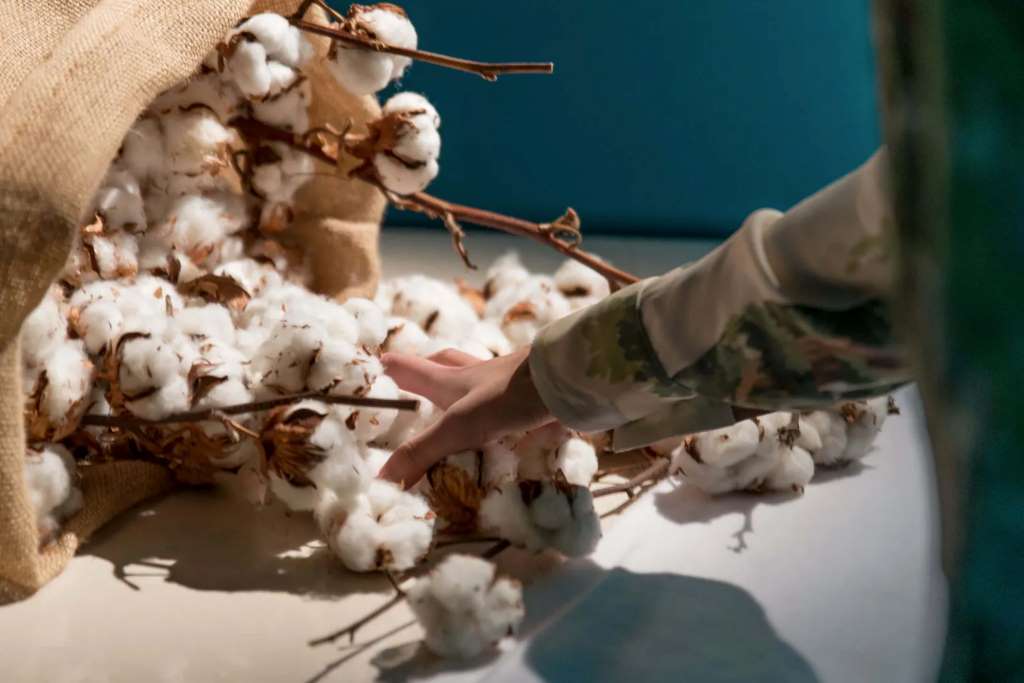
The global fashion industry's pursuit of sustainable raw materials is facing an uncomfortable reality. Organic cotton, long promoted as the cornerstone of environmentally responsible apparel manufacturing, is struggling to deliver the scale, consistency and commercial certainty required by modern textile supply chains. The June 2026 edition of ICAC Recorder, published by the International Cotton Advisory Committee (ICAC) highlights, the rapid increase of organic cotton has exposed numerous weaknesses that extend well beyond production volumes. The 40-page report, Global Research Review on Organic Cotton, co-authored by ICAC chief scientist Keshav Kranthi and Sandhya Kranthi argues that persistent yield gaps, certification limitations and fragmented production systems are undermining the long-term viability of organic cotton as a dependable sourcing option. The findings arrive as global fashion brands intensify sustainability commitments while simultaneously seeking resilient and cost-efficient fiber procurement strategies.
Growth without scale
Organic agriculture has increased over the past two decades. Global certified organic farmland increased from 14 million hectares in 2000 to 98.9 million hectares by 2023, making up approximately 2.1 per cent of the world's agricultural land and supporting more than 4.3 million certified organic producers. Organic cotton has also steadily increased its presence within the global cotton market. Its share of worldwide cotton production climbed from 1.08 per cent in 2009 to around 2.8 per cent in 2024, while production rose nearly six-fold over the past decade.
|
Year |
Global organic farmland (mn ha) |
Organic cotton market share |
Global organic cotton production (tonnes) |
|
2000 |
14 |
- |
- |
|
2009 |
- |
1.08% |
- |
|
2015 |
50.3 |
- |
112,483 |
|
2023 |
98.9 |
- |
- |
|
2024 |
- |
2.80% |
659,567 |
Despite this impressive increase, the report concludes that supply remains insufficient for industrial-scale textile manufacturing. Demand from apparel brands continues to outpace the availability of certified organic fiber, leaving sourcing managers exposed to recurring shortages and volatile prices.
The ICAC attributes much of this imbalance to what it describes as an "input paradox." While organic farming originated as a holistic approach focused on soil health and ecological balance, certification systems have evolved into compliance frameworks centred largely on permitted and prohibited inputs. This emphasis often overlooks local agronomic conditions, including pest pressure, weed management challenges and limited access to organic-specific technologies, all of which reduce farm productivity during the transition from conventional cultivation.
Conventional markets add pressure
The organic sector's vulnerabilities have also increased due to disruptions across conventional cotton-producing regions. China, the world's largest cotton producer, has consolidated production into high-productivity growing zones while retiring less efficient farmland. This shift has enabled yields of about 2,421 kg per hectare despite shrinking acreage.
Elsewhere, supply conditions remain considerably weaker. The US is experiencing severe drought across major cotton-growing regions, reducing production to an estimated 2.8 million tonnes. Australia continues to grapple with water shortages and irrigation constraints, while Pakistan has recorded an 18 per cent decline in output due to poor seed quality, pest attacks and erratic weather.
These disruptions have increased reliance on India, which continues to cultivate the world's largest cotton acreage at approximately 11.8 million hectares. However, much of India's incremental production is being absorbed by rising domestic consumption and growing yarn exports, particularly to China, limiting the availability of additional fiber for global buyers. For brands sourcing certified organic cotton, this creates a narrow and fragile supply base where production setbacks in a handful of regions cannot easily be offset by alternative suppliers.
Economics of sustainability
The report also challenges widely accepted assumptions regarding organic cotton's environmental advantages. Although organic cultivation reduces dependence on synthetic agrochemicals, the savings are frequently offset by higher labour requirements for manual weeding, increased certification expenses and greater production uncertainty. Yield variability further complicates procurement planning by making raw material pricing less predictable.
ICAC argues that many lifecycle assessments have evaluated environmental performance on a per-hectare basis rather than per kg of fiber produced. Because organic systems generally produce lower yields, substantially larger land areas may be required to generate the same quantity of cotton, reducing the apparent sustainability advantage when measured against actual fiber output. The commercial implications are significant.
The report cites a South Asian spinning mill that contracted 5,000 tonnes of certified organic long-staple cotton from a smallholder cooperative. Severe bollworm infestations combined with inadequate biological pest-control technologies reduced yields by 35 per cent, forcing the mill to purchase replacement fiber on the spot market at a 40 per cent premium to meet delivery commitments for European apparel customers. This illustrates how biological risks at the farm level can rapidly translate into higher procurement costs and supply disruptions throughout the textile value chain.
Shift toward measurable outcomes
Growing concerns over yield stability and certification integrity are encouraging the industry to look beyond conventional organic standards. The report identifies regenerative agriculture as an emerging alternative that prioritises measurable environmental outcomes including improvements in soil organic carbon, biodiversity and climate resilience while providing farmers with greater flexibility in crop management.
Pilot initiatives are already show this transition. Uzbekistan, for example, is combining biochar application with monitoring, reporting and verification (MRV) systems to generate certified carbon credits worth up to $200 per hectare, creating additional revenue streams alongside cotton production.
For apparel companies facing stringent sustainability regulations and anti-greenwashing requirements, outcome-based verification offers a more transparent model than reliance on certification labels alone. According to Keshav Kranthi, future competitiveness of sustainable cotton will depend less on binary organic classifications and more on measurable farm resilience, credible digital traceability and stable raw material supplies. As global brands strengthen environmental commitments while demanding dependable sourcing, those measurable outcomes are likely to become the defining benchmarks for the next generation of sustainable textile procurement.
Indian textile mills shift towards synthetic blends amid raw material volatility
India’s textile and apparel supply chain is confronting acute financial strain as delayed seasonal monsoons restrict kharif acreage, leaving domestic fiber cultivation trailing last year by fifteen per cent. International raw material rates have advanced concurrently, driving December cotton futures on the Intercontinental Exchange toward eighty cents per pound. Spinning mills remain squeezed between aggressive state procurement floors and stagnant retail demand, limiting their capacity to transfer escalating yarn production expenses to buyers.
Strategic adaptation among exporters
Raw material outlays account for up to 70 per cent of basic yarn manufacturing costs, magnifying minor lint appreciation into severe earnings contractions. When fiber input expenses climb while garment retail off-take remains subdued, processors bear the financial penalty, explains Rajesh Mehta, Director at a leading western India textile export house. Although authorities have extended duty-free import provisions through October to alleviate domestic deficits, global pricing parity delivers minimal advantage. Consequently, mid-tier apparel exporters concentrating on cotton knitwear are aggressively evaluating alternative synthetic blends to safeguard operational profitability throughout forthcoming quarters.
Institutional mandate and market footprint
Established to stabilize agricultural economics, the Cotton Corporation of India manages strategic fiber reserves and executes price support operations across primary farming states. The enterprise distributes medium and long-staple cotton to domestic spinning enterprises and overseas markets. Focused on long-term supply chain resilience, the agency targets robust farmer remuneration, balanced inventory liquidation, and sustainable manufacturing support.
US fashion buyers curtail reliance on Bangladesh sourcing
The integration rate of Bangladeshi RMG within United States fashion portfolios declined to 78.9 per cent from 88.2 per cent during the preceding year. According to the latest findings from the annual industry benchmarking study published by the US Fashion Industry Association, international retail buyers are systematically recalibrating their vendor ecosystems. Rather than depending heavily on consolidated production hubs, major apparel corporations are intentionally distributing procurement orders across multiple geographical regions to safeguard inventory agility and buffer against unexpected supply chain disruptions.
Operational bottlenecks limit flexibility
While the South Asian nation retains its competitive edge in cost-efficient, large-scale production of basic apparel lines, persistent structural hurdles continue to restrict its capture of high-margin seasonal orders. The latest trade data indicates, speed-to-market constraints and extended lead times remain significant operational deterrents for western buyers demanding rapid inventory replenishment. Global brands require versatile manufacturing partners who can seamlessly accommodate smaller, specialized production runs alongside massive volume commitments, notes Thomas Carter, Senior International Trade Analyst observing South Asian textile corridors. Despite these utilization adjustments, the region remains a primary expansion target for future procurement, provided local infrastructure bottlenecks and compliance metrics see accelerated improvement.
Cornerstone of national export economy
The Bangladesh RMG sector serves as the cornerstone of the national export economy, supplying mass-market apparel to major international retail brands across the United States and European Union. The manufacturing network primarily specializes in high-volume knitwear and woven categories, driving substantial employment and long-term industrial growth.