FW
A/W 2025-26 edition of Dubai Fashion Week scheduled from February 1-6, 2025
The Autumn/Winter (A/W) 2025-26 edition of Dubai Fashion Week will be held at the Dubai Design District from February 1-6, 2025.
To be organised by the Arab Fashion Council, the Dubai Fashion Week will attract over 25 designers, labels and brands from across the world incuding France, India, Indonesia, Italy, Kuwait, Lebanon, Libya, Malaysia, Palestine, Russia, the United Arab Emirates and the United Kingdom.
This year, the fashion week will launch a new initiative titled, the Buyer’s Program to highlight the achievements of designers and offer them an international platform by bridging the gap between innovative talent and global buyers.
The program will give participants a direct access to a curated selection of talent, collections and exclusive sourcing opportunities. It will enable them to build connections in the industry and expose oneself to the new markets.
Second edition of CIFF x CFDA Showroom to highlight ten Nordic and two American designers
To be held from Feb 10-13, 2025 at the Powered by Plus Plus Showroom in Manhattan, the second edition of the CIFF x CFDA Showroom at the New York Fashion Week will highlight ten Nordic and two American designers. This collaboration bridges Danish and American fashion markets, with a shared commitment to sustainable innovation.
This event showcases the pioneering steps taken by both the regions to shape a more sustainable fashion industry,” says Steven Kolb, CEO, Council of Fashion Designers of America. The partnership is further driven by CIFF’s mission to amplify Scandinavian fashion, adds Sofie Dolva, CEO. Copenhagen International Fashion Fair (CIFF), emphasising its role in fostering creative exchange and business growth.
One of the highlights of the event is the ‘Stepping Stone of the Year’ award, developed with Elle Danmark, which helps Danish brands enter the American market. The 2024 winner, Skall Studio, along with nominees Remain, Forza Collective, and MKDT Studio, will showcase their collections at the showroom, providing crucial exposure to buyers and industry leaders.
The CIFF balances its focus on sustainability with pragmatic support for brands, states Dolva. It enables change rather than enforcing it, spotlighting brands driving sustainable innovation while supporting broader industry growth. CIFF has also transitioned from biannual events to a year-round platform, partnering with key organisations like Pitti Uomo, Milan Fashion Week, and Neudeutsch in Germany to help brands adapt to evolving economic conditions.
To succeed, emerging brands need to emphasise authenticity and bold innovation, views Dolva. For the first time, CIFF is partnering with ISPO Munich to explore the intersection of sports and fashion. This collaboration will highlight Scandinavian innovation in performance and lifestyle brands while strengthening ties to the German market.
Held on Aug 9, 2024, the 63rd edition of CIFF strengthened its reputation as a key European trade hub. Featuring over 1,000 brands, the event witnessed over 66 per cent rise in international visitors with a notable rise from the DACH region. The fair helped build valuable business relations and also boosted commerce across global markets, notes Dolva.
Tariffs and Implications: Is a trade war looming with the US targeting key trade partners?

The textile and apparel industry in the US is deeply embedded in the global supply chain, heavily reliant on imports from nations like China, Mexico, and Canada. Recent developments, including proposed tariffs by former President Donald Trump targeting these key trading partners, have sparked concerns about an impending trade war.
Current import scenario
The US textile and apparel market depends heavily on imports, with China, Mexico, and Canada among its largest suppliers. China dominates the global textile market due to its vast manufacturing infrastructure and competitive pricing. However, its share in US imports has been declining as buyers diversify. The 10 per cent tariff on Chinese imports is seen as retaliation for alleged Chinese complicity in fentanyl smuggling and trade imbalances.
Mexico and Canada as USMCA members benefit from tariff-free or reduced-tariff trade. Their proximity enables faster delivery times, critical for just-in-time inventory strategies. The tariff that includes 25 per cent on imports from Mexico and Canada is being justified by incumbent US President Trump as a response to drug trafficking and illegal immigration. Meanwhile Vietnam, Bangladesh, and India are steadily capturing more of the US market, leveraging their expertise in cost-efficient manufacturing and niche products like knitwear and home textiles.
While the tariffs aim to address political concerns, their economic repercussions could be far-reaching.
Potential and economic impact
• Cost increases for US consumers: Tariff imposition would raise the landed cost of goods, translating to higher retail prices for textiles and apparel. Given that clothing is a staple, this could disproportionately affect low-income consumers, who spend a larger share of their income on necessities.
• Supply chain disruptions: Tariffs could compel businesses to rapidly reconfigure supply chains, potentially sourcing from Southeast Asian nations like Vietnam and Bangladesh. However, such shifts are neither instant nor cost-free, leading to potential delays and increased operational complexities.
• Retaliatory tariffs: Key trading partners, including Canada and Mexico, have hinted at retaliatory tariffs on US goods. Canada’s Deputy Prime Minister Chrystia Freeland noted that critical US exports—oil, minerals, and agricultural products—could face tariffs, escalating trade tensions and harming American industries.
• Domestic industry prospects: While proponents argue that tariffs could revitalize US textile manufacturing, the industry’s dependency on imported raw materials and machinery complicates this narrative. High production costs and limited capacity make it unlikely that domestic manufacturing could fill the gap.
Geopolitical reactions
The proposed tariffs have drawn sharp responses from all three countries. Canadan Prime Minister Justin Trudeau emphasized that retaliatory measures could jeopardize cross-border economic ties. Provinces like Ontario and Alberta have also raised alarms about the potential harm to their economies. Mexico’s President Claudia Sheinbaum criticized the move, underscoring that tariffs would strain bilateral relations and undermine efforts to address migration and drug issues collaboratively. China officials have warned of the dangers of a trade war, arguing that economic cooperation is mutually beneficial and that punitive measures would harm both economies.
Global implications
Countries like Vietnam, Bangladesh, and India could benefit from tariffs as US companies move away from China, Mexico, and Canada. However, their capacity to scale production to meet demand remains uncertain. Moreover, a shift in trade dynamics could further polarize global trade blocs, intensifying competition among emerging economies.
The tariffs, coupled with retaliatory measures, could also lead to significant volatility in global markets. Currency fluctuations, such as the recent depreciation of the Canadian dollar and Mexican peso, underscore the financial instability such policies can provoke.
The proposed tariffs on textile and apparel imports from China, Mexico, and Canada reflect a complex intersection of economic and political objectives. While they aim to address pressing concerns such as immigration, drug trafficking, and trade imbalances, the potential costs—including higher prices, supply chain disruptions, and strained international relations—are substantial.
As history suggests, trade wars rarely produce clear winners. The US textile and apparel industry, already grappling with global competition and evolving consumer demands, now faces additional uncertainty. Policymakers must weigh the short-term gains of protective tariffs against the long-term risks to economic stability and international goodwill. The key question remains: Can the US afford to unravel decades of trade integration in pursuit of contentious policy goals?
Bangladesh RMG workers struggling despite an increase in minimum wages: Swedwatch Report
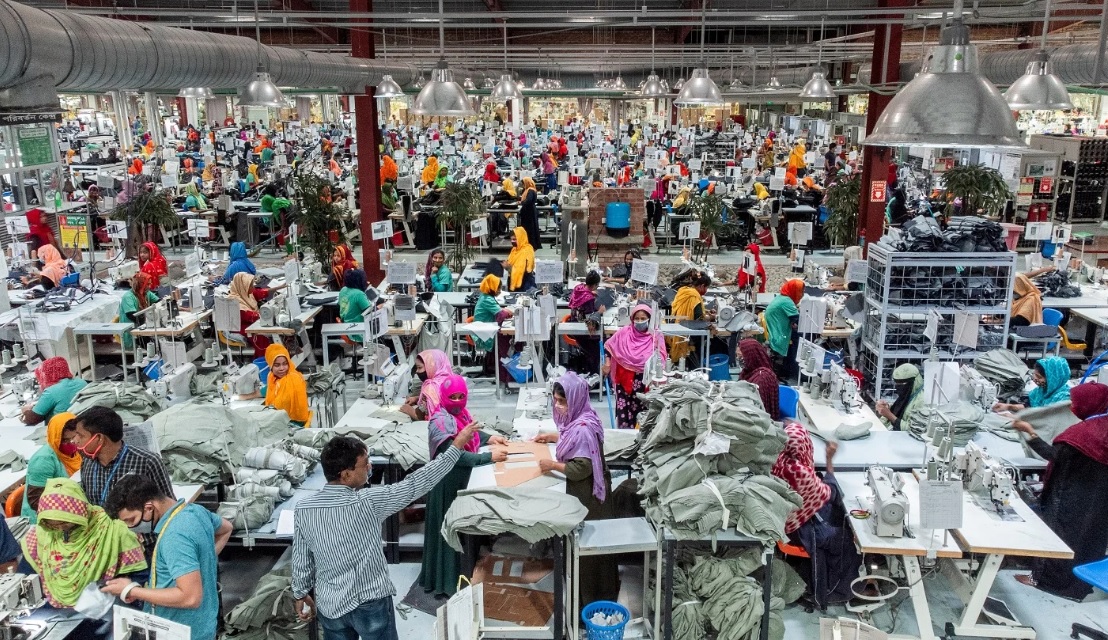
A new report by Swedwatch paints a grim picture of workers in Bangladesh garment industry. It says despite a recent increase in minimum wage, workers are still struggling to make ends meet and are trapped in a cycle of debt and dependence on overtime.
The report, titled ‘Securing Living Wages for Bangladesh's Garment Workers’, highlights the plight of RMG workers who produce clothing for the EU market. It finds the current minimum wage of Tk 12,500 (€94) per month, while an improvement from the previous Tk 8,000, still falls far short of a living wage, estimated to be Tk 23,000 (€173) per month. This means, workers earn only 38 per cent of what they need to cover basic living expenses. "Decades of activism and corporate pledges have failed to secure a living wage for garment workers in Bangladesh," the report states. "Instead, they are trapped in an exploitative system where low wages, excessive overtime, and precarious employment are the norm." As Kalpona Akter, Executive Director, Bangladesh Center for Worker Solidarity opines, "The recent increase in minimum wage is a step in the right direction, but it is not enough. Workers need a living wage that allows them to meet their basic needs and provide for their families."
Low wages and excessive overtime
The report states, the current minimum wage is insufficient to cover basic needs, forcing workers to rely on overtime and loans. However, workers are often pressured to work excessive overtime hours to compensate for low wages, leading to health problems and exhaustion. And they have little bargaining power due to weak trade unions and fear of reprisals. This results in many workers being trapped in a cycle of debt due to low wages and unexpected expenses. "The garment industry in Bangladesh is built on the backs of low-paid workers who are denied a decent standard of living," says Anna Bryher, Advocacy Advisor at Swedwatch. "It is time for brands and retailers to take responsibility and ensure that the workers who make their clothes are paid a living wage."
Table: Current monthly wages and requirement
|
Metric |
Current situation |
Living wage requirement |
|
Monthly Minimum Wage |
Tk 12,500 (€94) |
Tk 23,000 (€173) |
|
Percentage of Living Wage |
38% |
100% |
The report highlights the case of Shapna a garment worker who has been struggling to make ends meet since overtime hours were reduced in her factory. "As we have not had any overtime work for the last six months, most of us are living life on a loan," Shapna told Swedwatch researchers. "I have taken loans from several NGOs. I am also in debt to the factory owner and my neighbors."
Shapna's situation is not unique. The report found many workers are forced to take loans from various sources, including NGOs, family members, and even their employers, to cover basic expenses. This often leads to a cycle of debt that is difficult to break.
Need for corrective measures
The Swedwatch report calls on brands and retailers sourcing from Bangladesh to take concrete steps to ensure that workers in their supply chains are paid a living wage. This includes:
• Committing to paying living wages: Brands should publicly commit to paying living wages to all workers in their supply chains.’
• Improving purchasing practices: Brands should ensure that their purchasing practices do not contribute to low wages and excessive overtime.
• Supporting collective bargaining: Brands should support the development of strong and independent trade unions in the garment sector.
The report also urges the Bangladesh government to take action to improve the situation of garment workers, including strengthening labor laws and enforcement, and promoting social dialogue.
Birla Cellulose unveils 'Birla Connect' to enhance customer experience
Birla Cellulose, a global leader in sustainable fibres, has launched Birla Connect, an innovative customer access portal designed to simplify business interactions and enhance customer engagement. Rooted in its ‘Mission Happiness’ initiative, the platform reinforces the company’s focus on customer-first strategies.
Chief Marketing Officer ManMohan Singh highlighted that Birla Connect embodies the company’s dedication to enhancing customer experiences by focusing on smarter, more efficient, and personalized solutions to meet evolving needs.
Birla Connect serves as a comprehensive, 24/7 solution, offering real-time access to account balances, order bookings, transaction tracking, and live GPS updates. Customers can manage billing, invoices, credit, and debit notes seamlessly. The platform’s multilingual support makes it accessible to a diverse global audience, enhancing convenience and connectivity.
The portal, featuring advanced capabilities, enables users to attach photos and videos with their feedback, facilitating prompt issue resolution. Suraj Bahirwani, Global Sales Head, emphasized that the platform represents a significant step in customer-centric innovation, aimed at delivering seamless and engaging business experiences.
Birla Cellulose has planned training sessions to help partners fully leverage Birla Connect’s capabilities. The portal underscores the company’s commitment to digital transformation, fostering stronger partnerships and operational excellence.
Zimbabwe cotton industry stakeholders propose minimum producer price for 2025 selling season
Stakeholders in Zimbabwe’s cotton industry have proposed a minimum producer price of 34 cents per kg for the 2025 selling season, up from 32 cents in the previous season. Backed by farmers and merchants, the recommendation has been submitted to the Ministry of Lands, Agriculture, Fisheries, Water, and Rural Development for approval.
The proposed price aims to balance fair rewards for farmers with the financial sustainability of merchants. Farmers would initially receive payment for Grade D seed cotton upon delivery, with additional top-up payments for higher grades.
Last season, Zimbabwe’s cotton production dropped to a record low of 13,000 tons due to an El Niño-induced drought. Payment delays and inflation also frustrated farmers, with some receiving compensation in groceries instead of cash. Industry players warn that unsustainable pricing could exacerbate these issues by delaying payments further.
Such challenges have driven many farmers away from cotton production, undermining the industry’s growth.
The upcoming season brings optimism, with the anticipated La Niña weather pattern expected to improve rainfall. The Government’s 2024/25 Summer Plan aims to revitalise the sector with a total production cost target of $48.1 million.
Private sector funding will cover 33 per cent of the planned 90,000 hectare, while the Pfumvudza cotton initiative targets 180,000 hectare, requiring growers to plant two 0.25-hectare plots to access inputs.
A critical agricultural export, cotton supports Zimbabwe’s textile, stock feed, and edible oil sectors. At its peak in the 2010/11 season, the country produced 351,000 tons. Revitalising the sector requires fair pricing mechanisms and addressing payment inefficiencies.
Cottco, which sponsors 85 per cent of production and supports over 250,000 households through the Presidential Free Inputs Scheme, is spearheading reforms in the industry. Its transformation strategy focuses on enhancing operational efficiency, boosting quality and value addition, upgrading ginneries, and improving brand management.
With improved rainfall and strategic reforms, the cotton industry in Zimbabwe aims to recover its position as a vital economic driver while ensuring fair benefits for all stakeholders.
Vardhman Textiles to expand processed fabric capacity at Budhni unit
Vardhman Textiles plans to expand the processed fabric capacity at its Vardhman Fabrics unit in Budhni, Madhya Pradesh. The expansion will add 31 million meters per annum to the existing capacity of 175 million meters, representing a significant increase.
To be developed with an investment of Rs 350 crore, the expansion project will be funded through internal accruals or debts. Once completed, the enhanced capacity is expected to meet growing demand for processed fabric in both domestic and export markets. Currently, the facility operates at a 90 per cent capacity utilisation level.
A leading textile conglomerate in India, the Vardhman Group has diverse operations spanning yarn, fabric, sewing threads, fibers, special alloys, and garments. In Q2. FY25, the group reported a robust 46.57 per cent increase in consolidated net profit, reaching Rs 196.85 crore. Net sales grew by 4.38 per cent Y-o-Y to Rs 2,502.42 crore, reflecting strong demand and operational efficiency.
The capacity expansion is expected to reinforce Vardhman’s position in the textile sector while capitalising on increasing market opportunities.
CEAP; both a challenge and an opportunity for the Vietnam’s textiles industry
A cornerstone of the European Green Deal, the EU's Circular Economy Action Plan (CEAP) poses both challenges and opportunities for Vietnam’s textile exports, emphasised experts at a seminar organised by Vietnam's Ministry of Industry and Trade on Nov 27.
CEAP introduces stringent standards that may impact Vietnam’s ability to sustain this momentum. The plan focuses on extending product lifecycles, reducing waste, and promoting resource reuse. A critical regulation, the ‘Ecological Design and Sustainable Products’ directive, will be implemented in July 2024. It requires Vietnamese exporters to adapt their practices across design, production, and waste management to comply with the EU's sustainable production and consumption model.
The regulation impacts key industries such as textiles, plastics, footwear, and electronics. Products that fail to meet requirements, such as incorporating a ‘digital product passport,’ risk being rejected by EU customs.
Despite the challenges, CEAP also presents opportunities for Vietnamese businesses to improve their competitiveness. Dr Mai Thanh Dung, Deputy Director, Institute of Strategy and Policy for Resources and Environment, notes, compliance with CEAP standards could reduce energy and material consumption, extend product lifecycles, and enhance production efficiency.
Nguyen Xuan Duong, Chairman, Hung Yen Garment Corporation, points out, meeting CEAP requirements not only allows businesses to benefit from EVFTA tariff preferences but also attracts new customer segments prioritising sustainability.
Companies investing in green technologies, circular economy principles, and waste management can unlock long-term benefits, including material savings and production optimisation, opines Do Huu Hung, European-American Market Department.
Products compliant with CEAP standards will not only gain access to the lucrative EU market but also build credibility in other global markets where demand for sustainable goods is rising.
In the first eight months of 2024, Vietnam’s exports to the EU increased by 17.3 per cent to $34.14 billion, as per figures from the Ministry of Industry and Trade. The EU remains a key market for Vietnamese exports and a significant investor, with 2,500 projects and nearly $28 billion in registered capital.
To maximise the benefits of EVFTA, Vietnamese businesses need to focus on investments in green technology, upgrading production and innovating waste management techniques. Making these changes will help Vietnamese businesses achieve long-term success in a more sustainable global economy, say experts
EVFTA and LDC may lead to 20% decline in Bangladesh’s RMG exports to the EU: Study
A joint study by the Research and Policy Intergration for Development (RAPID) and Friedrich-Ebert-Stiftung (FES) warns, the EU-Vietnam Free Trade Agreement (EVFTA) and Bangladesh’s graduation from Least Developing Country (LDC) status to a developing nation may cause the country’s RMG exports to the EU to decline by 20 per cent.
Presented at an event in Dhaka titled The EU-Vietnam Free Trade Agreement: Implications for Bangladesh’s Export Competitiveness, the study predicted, loss of duty-free access after 2029 may cause a 21 decline in overall exports from Bangladesh
To maintain its competitiveness, Bangladesh needs to invest in backward linkages, especially in MMFs, it needs to upgrade its infrastructure to adapt to global trade dynamics, negotiate with the EU for an extended transition period post-LDC Graduation and advocate for relaxed rules of origin under the Generalised Scheme of Preferences Plus (GSP+), recommends the report.
It also urges Bangladesh to pursue a free trade agreement (FTA) with the EU to maintain market access and leverage its strategic trade position.
To achieve the $100 RMG export target, Bangladesh also needs to sign FTAs with Japan, Singapore and other partners to diversify its exports, says M Masrur Rear, Chairman, Policy Exchange Bangladesh. The country also needs to emphasise on the use of recyclable single-fiber garments besides addressing labor union issues and workplace safety to meet EU standards, notes Felix Gerdes, Representative, FES Bangladesh.
Labor shortages in China and Vietnam provide Bangladesh with an opportunity to attact shifted orders, opine Fazleen Shamim Ehsan, Executive President, BKMEA. However, persistent challenges such as inconsistent energy supplies and inadequate banking facilities hinder growth, he adds. With strategic planning and robust reforms, Bangladesh can sustain export growth and strengthen its position in global trade.
Vietnam targets textile and apparel exports worth $47-$48 billion in 2025
A rise in year-end demand along with favorable global economic trends have brightened the outlook for Vietnam’s textile and apparel sector which aims to achieve exports worth $47–48 billion in 2025.
In 2024, driven by a shift in orders from competitors like China and Bangladesh, and declining inventory levels in key markets such as the US, EU, and Japan, Vietnam’s textile and apparel exports increased by 11.2 per cent to $44 billion. However, despite this positive outlook, the sector continues to face challenges like the need for stricter sustainability standards in the EU and US and rising competition in Comprehensive and Progressive Agreement for Trans-Pacific Partnership (CPTPP) markets. To navigate these hurdles and capitalise on the emerging opportunites, the industry needs to accelerate investments in new technologies, opines Vu Duc Giang, Chairman, Vietnam Textile and Apparel Association (VITAS).
Textile and apparel companies in Vietnam also need to penetrate new markets like the Middle East and South America, adds Nguyen Xuan Duong, Chairman, Hung Yen Garment Corporation (Hugaco). They need to invest in automation besides accelerating digital transformation, adopting greener practices and reducing costs to improve product quality and competitiveness, he states.
Many firms in Vietnam have bagged confirmed orders through Q1 2025, with negotiations extending into the latter half of the year. This renewed consumer demand is being driven by recovering export markets, particularly in the US, notes Le Tien Truong, Chairman, Vietnam National Textile and Garment Group (Vinatex). Political instability in competing nations such as Bangladesh and Myanmar is also helping Vietnam capture shifting orders.
To sustain growth, Vietnam needs to manage input costs, optimise labor resources and respond to fluctuating exchange rates, adds Truong. Firms need to also embrace sustainability, digitalisation, and automation to meet evolving buyer expectations, he affirms.