


FW
X-Rite, Pantone to showcase new color formulation software at ITMA 2019
X-Rite Incorporated and Pantone LLC will showcase their latest Color iMatch formulation software for the textile industry at ITMA 2019. The software offers better initial matches and fewer corrections for faster dyeing times, cost savings and reduced waste.
The Color iMatch improves color matching by addressing this interdependence. It intelligently processes color data to provide optimal initial color matches and reduce wasteful formulation attempts. With a high return on investment, Color iMatch streamlines complicated textile workflows, improves formulation efficiency, and reduces material waste.
It offers textile and apparel manufacturers the following benefits
• Increases match rate up to 50 per cent and cuts correction steps by more accurately identifying likely dye combinations and accounting for current process conditions.
• It has the ability to dynamically update dye characterisations to maintain dye behavior, which may shift over time due to variations in ambient conditions, procedures, equipment or materials.
• Its fully-integrated Colorant Editor offers improved database performance by providing specific guidance that guarantees match prediction confidence.
• Digital specification of Pantone standards, including Pantone Fashion, Home + Interiors System for cotton and nylon, through PantoneLIVE™, which provides the official spectral values for Pantone standards.
• Easy transition between jobs by applying dynamic Formulation Rules that include process, material and customer specifications. • A gamut viewer to visually evaluate achievability by offering a unique target overlay to help lab professionals make educated formulation decisions.
AEPC launches SLCP operations in Haryana
"Apparel Export Promotion Council (AEPC), in association with the Social and Labour Convergence Program (SLCP), organised a workshop to announce the launch of SLCP operations in Gurugram, Haryana on June 7, 2019. "
 Apparel Export Promotion Council (AEPC), in association with the Social and Labour Convergence Program (SLCP), organised a workshop to announce the launch of SLCP operations in Gurugram, Haryana on June 7, 2019.
SLCP uses a multi-stakeholder and inclusive organization and approach. Signatories include manufacturers,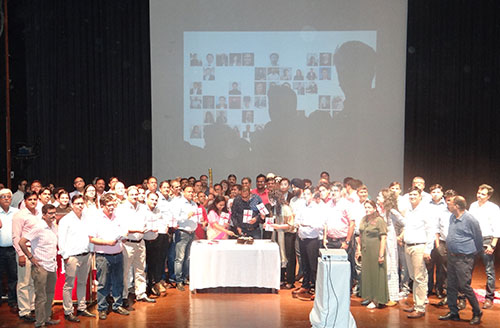 The converged assessment framework of SCLP provides a data set with no value judgment or scoring. It is compatible with existing audit systems and codes of conduct, and can be used by a wide-range of stakeholders & interpreted according to their interests and criteria. This eliminates the need for repetitive audits to be carried out on the same facility.
The 190+ SLCP signatories are now preparing for wide-scale adoption across apparel and footwear supply chains. Towards the India launch, SLCP held one-day seminars in Bangalore, Tirupur, Mumbai & NCR to introduce facilities and their business partners to the SLCP process.
HKL Magu, Chairman, AEPC believes this programme will encourage sustainable and innovative management systems which ensure holistic growth of all the stake holders.
Sharon Hesp, Sr. Manager, SLCP, Dr. S Sunanda, SG CITI, Reema Agrawal, Sr. Program Manager, GAP Inc and Balaso Malagave, Sr. Manager, Intertek also attended the workshop.
Zappos partners with Cotton Inc
Zappos for Good has partnered with Blue Jeans Go Green on denim recycling. Zappos for Good is the charitable wing of the footwear and apparel retailer. Blue Jeans Go Green is a Cotton Incorporated initiative. Blue Jeans Go Green works on recycling and waste, an issue currently plaguing the fashion industry. The arrangement will allow consumers to mail in old denim to Blue Jeans Go Green via a Zappos prepaid shipping label that will be available to customers with a Zappos account. Zappos is working to close the loop on cotton sustainability and give back to communities across the US.
Beyond simply ensuring more denim gets reused instead of dumped into a landfill, the program is also a step in the right direction for the entire denim recycling movement. Providing consumers with pre-paid mailing labels makes participating in the denim recycling movement more accessible. With Zappos for Good’s new partnership with Cotton Inc., the door has been opened wide for anyone that wants to participate in denim recycling.
Denim with a high cotton percentage is a perfect candidate for textile recycling and it turns the cotton it receives into natural cotton fiber insulation, as opposed to harmful and chemically intensive fiberglass insulation. Cotton Inc. even uses some of this insulation to help build houses in communities across the United States.
Tariff war lowers cotton prices
Cotton is bearing the brunt of the escalating tariff war between the US and China. Prices have collapsed to multi-year lows in the US, the world’s largest exporter of the natural fiber. China — the world’s largest consumer and importer — has almost stopped buying American-origin cotton, and has imposed a retaliatory tariff on US-origin material. Also, the Asian major has slightly tweaked its inventory policy, by moving to stock rotation rather than de-stocking. In the absence of large-scale Chinese purchases, cotton prices have collapsed to a three-year low.
Pessimism now pervades the world cotton market. Production is projected to outpace consumption in 2019-20, and will add to already high stocks. This expectation too is seen as exerting a downward pressure on prices. Short-term oriented market participants are more pessimistic about cotton prices and are exiting their positions in droves. This has had a consequential impact on the price of the fiber in other countries, including India. Because the Indian market is integrated with the global market through the trade route, global cues impact Indian prices.
A very substantial part of US’ cotton production is intended for the overseas market, especially China. The US is most likely to harvest a bigger cotton crop — possibly 20 per cent higher — in 2019 compared to the previous year, and will end up with multi-year high stocks.
World economy slows down
The global economy has slowed over three years, says the World Bank. Of particular concern is a slowdown in global trade growth to the lowest level since the financial crisis 10 years ago. International trade and investment have been weaker than expected at the start of the year. Economic activity in major advanced economies, particularly the Euro area, and some large emerging market and developing economies has been softer than previously anticipated. Because equitable growth is essential to alleviating poverty and increasing shared prosperity, emerging market and developing economies need to reinforce the protections they have against sudden economic downdrafts. Current economic momentum remains weak, while heightened debt levels and subdued investment growth in developing economies are holding countries back from achieving their potential.
Though growth in the emerging and developing world is expected to pick up next year, a number of risks could disrupt that delicate momentum: a further escalation of trade disputes between the world’s largest economies, renewed financial turmoil in emerging and developing economies, or a more abrupt deceleration of economic growth among major economies than is currently envisioned. Countries need to make significant structural reforms that improve the business climate and attract investment. They also need to make debt management and transparency a high priority so that new debt adds to growth and investment.
US to host home show Home Textiles Sourcing Expo
Home Textiles Sourcing Expo will be held in the US from July 22 to 24, 2019 alongside Texworld USA and Apparel Sourcing USA. The show will showcase home products in over nine categories, including bed, bath, table linen, floor coverings, window, fabrics, kitchen linen, walls, as well as design and technology. Textile industry experts will share facts about the soft home textiles business in America. The expo will feature a wide variety of exhibitors and countries, including China, Korea, Turkey, Hong Kong, and India. This year’s show also welcomes Poland and Turkmenistan for the first time.
The Expo will address some hard questions of how to remain sustainable in the textile supply chain and how to prepare companies to adapt. Panelists will share insights on consumer hot-button issues, how consumers are integrating sustainable products into healthy lifestyles, how leading suppliers are addressing the changes, and much more. Leaders from Global Organic Textile Standard (GOTS) will share their perspective on validation of organic claims while meeting corporate social responsibility goals. Attendees can learn about US regulations for organic textile labelng and how to use GOTS to substantiate organic claims and retain customers’ trust.
New Delhi to host technical textile conference in July
A technical textile conference and exhibition will be held in New Delhi, July 12, 2019. The one-day conference and exhibition on “Opportunities In High Growth Segments of Technical Textiles” is being jointly organized by ITTA with North India Section of The Textile Institute (NISTI). The objective of the conference and exhibition is to create awareness among delegates on the latest product innovations, foster knowledge and ideas for new investments, enhance the knowledge base and initiate the process of product development, creating a B2B and B2G platform for the technical textile industry, create opportunities for the industry to showcase its products and capabilities and showcase new technical textile products by Indian manufacturers and generate business. The event intends to highlight knowledge about the latest global innovations in new technology and product development in high potential segments of technical textiles through nonwovens, weaving, knitting and processing technologies, and to benefit all the stakeholders.
Conference topics will include latest product innovations in different technical textile segments with a major focus on the Meditech, Protech, Mobiltech and structural composites. Besides, there will be an emphasis on innovations in technology, machinery, functional finishing chemicals, novel technologies developed for commercialization by R&D institutions, avenues for investment in technical textiles and panel discussion.
Technical textile products are being put to use by an ever-increasing number of end users in diversified industries such as agriculture, construction, roads, railways, health care, transportation, packaging, sports, environmental protection, protective wear and more. These have an immense scope and potential in India.
STOLL to showcase latest innovations at ITMA Barcelona 2019
H. Stoll AG & Co. KG will present its latest innovations and developments within the fields of fashion, technology, technical textiles and knit wear at ITMA Barcelona 2019. The company will showcase its new knitelligence® machine generation at the event. Furthermore it will showcase a production process -knitelligence® and STOLL-knitrobotic®.
The new knitelligence® machine generation is tailored to the specific needs of the digital world. It facilitates work through process automation, more transparency, shorter response times, shorter production cycles, and higher productivity. Based on knitelligence® and the latest innovation, STOLL-knitrobotic® is a fully automated production process which allows visitors to take home a finished knitwear piece with an individualised motif as a souvenir.
The new STOLL Trend Collection exemplifies and impressively demonstrates the variety of materials that the STOLL technology supports. In addition to the commercially available yarns, STOLL also works with unusual yarns for the knitting industry that represent a solution to a major challenge of flat knitting technology. These yarns include used plastic bags, silver foil, and jute bags that have been utilized to knit luxury products – the inspiration here being the concept of up-cycling.
In the sector of Technical Textiles, STOLL will showcase demanding technical applications on the CMS 530 ki W in the gauge E7.2. Other technical applications to be presented by STOLL at the exhibition will include TT home, TT med, TT mobility, TT e-tex and TT sport.
In field of knit and wear STOLL will present the ADF 830-24 ki W knit and wear and CMS 830 ki knit and wear. The ADF 830-24 ki W knit and wear offers greater flexibility in coloring and patterning – providing greater productivity. This ADF offers the entire spectrum of technology and functionality in the knit and wear range.
The second machine in the knitwear sector is the CMS 830 ki knitwear machine. This is a high-performance, basic machine with an excellent price-performance ratio. In addition to standard techniques, it offers demanding patterns such as the French shoulder. One of its features include the enhancement of the intarsia capability. The CMS 830 ki knit and wear offers the gauge E9.2. This machine is the economical entry-level machine for flexible use, both for conventional production and knit and wear divisions.
India sees rising imports from Bangladesh
There has been a rise in garment exports from Bangladesh to India. Before GST, Indian importers had to pay a countervailing duty of about five percent to seven percent, which drove up the costs of these garments. With GST having subsumed this duty, apparel from Bangladesh has become cheaper for Indian importers by five per cent to seven per cent. Also, Bangladesh has the advantage of having lower minimum wages than those in India. This has the effect of reducing the cost of production and making clothing cheaper. Another factor which makes Bangladesh competitive is the fact that it enjoys duty free imports of fabrics and garments from China. The availability of cheaper fabric, too, brings down manufacturing costs. Lastly, India has a lot of small production units and factories. So if retailers want to procure 1,00,000 pieces, they’ll have to source them from several Indian garment producers, whereas they can procure the same easily in Bangladesh by placing the order to one or two firms.
The US and the EU together comprise 65 per cent of the market for Indian apparel exporters. There’s also a lot of potential that can be tapped in Japan, Australia, South America and the Middle East.
Hyosung develops new spandex
Hyosung has developed Creora ActiFit spandex. Multi-sport apparel made with Creora ActiFit spandex gives athletes the confidence they need to focus on their sport and not be bothered by what they are wearing. The spandex provides long-lasting durability, UV and chlorine resistance, and superior recovery required of cycling, swimming, triathlon and adventure racing apparel where athletes can encounter numerous environmental surroundings – whether it be salt water, intense sun or a rocky crag.
Previously, there were clear lines between ready-to-wear, sportswear and outdoor wear, but now there are no boundaries among them. People want both fashion and function. This trend has led outdoor brands to make fashionable outerwear designed for commuters and fashion brands to add function to daily wear – and even luxury-fashion apparel. It also led Hyosung to create its new Creora ActiFit spandex.
Hyosung is a Korean fiber and yarn company. Hyosung is the largest elastane producer in the world and first developed its own process for manufacturing spandex in 1992. Creora is a brand belonging to Hyosung. Hyosung offers a broad range of high quality, competitively-priced fiber technologies throughout the global apparel value chain. The spandex range includes Creora dyeable spandex, Creora black spandex and Creora fresh spandex.











