FW
Pakistan to join ILO’s Better Work Program
Pakistan plans to join Cambodia, Vietnam and Bangladesh as a member of Better Work Programme six years after it was turned away due to lack of capacity. Launched by the International Labour Organization and International Finance Corporation in 2006, the initiative works to improve labor standards and boost competitiveness in the global apparel supply chain by providing practical assistance to factories, demonstrating the business benefits of decent work and rallying the influence of leading brands and retailers.
Pakistan’s garment industry suffered a blow in 2013 after a catastrophic factory fire, which killed 262 garment workers the previous year, prompted the Walt Disney Corporation to suspend its sourcing from the country, along with other ‘high-risk’ locales such as Belarus, Ecuador, Venezuela and a post-Rana Plaza Bangladesh.
When Disney pulled out, it gave Pakistan two options: either to improve its WGI standing or join the Better Work program. The country chose the latter as it had more candidate countries than it could accommodate. A recent study conducted by the Consortium for Development Policy Research on behalf of the Pakistan Business Council concluded that Pakistan’s garment sector is ‘grossly underperforming relative to its potential’ because of a slate of impediments, including higher production costs, an overvalued currency and export tariffs that restrict market access.
The country’s share of the global export pie is far smaller than those of its competitors: 1.1 percent compared with China’s 32 percent, Bangladesh’s 7.7 percent, Vietnam’s 5.9 percent and India’s 3.8 percent.
U.S. cotton exports to China decline
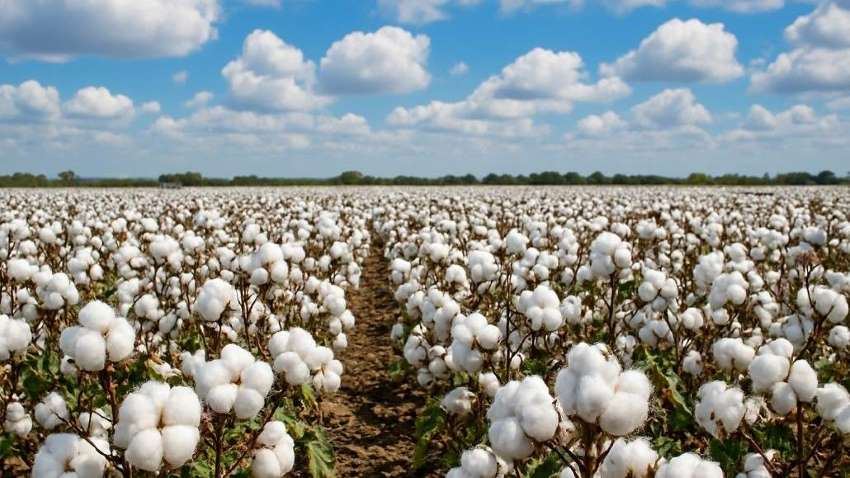
US cotton exports to China have declined substantially due to the US-initiated trade war. The quantity tumbled from some 5 million bales in 2012-13 to somewhere between 1.7-1.8 million bales in the 2018 marketing year. China consumes the largest volume of cotton in the world -- about 40 million bales annually, or roughly one third of the global production. However, the market share of US cotton in China tumbled to a range of 11 percent to 13 percent in the past year, from 44 percent to 45 percent during the two years leading up to the trade tensions.
Given the unparalleled magnitude of China's cotton demand, potential gains in other markets by no means would offset a decline in total exports of US cotton, if a trade deal between the world's two largest economies remains far down the road.
Zimbabwe yet to tap its full strength in textiles and apparels segment
Zimbabwe is losing out on the gains associated with growing and using cotton for domestic purposes. The country uses 30 per cent of the cotton it grows and exports 70 per cent to textile industries dotted around the world. Since it does not process all its cotton and export the fabric and extract more value from its produce, it fails to exploit the competitive advantage in using the raw material domestically. Instead the fabric market is now dominated by imports particularly from China and Pakistan. Most retail shops are also largely packed with imported clothes. That means clothing companies are importing garments on a huge scale and rendering the textile industry redundant. Early this year uniform prices skyrocketed beyond the means of the majority of ordinary citizens owing to a deficiency created by an incapacitated textile industry.
Zimbabwe has the potential to restore its status as a major producer and supplier of textile products in Africa. There has been an improvement in cotton production lately but value chains are non-functional considering that the bulk of cotton processing companies are either under judicial management or court-directed reconstruction. The textile industry is now trying to harness the full benefits of the sector’s value chain.
Laura Joukovski appointed President of Global Fashion Brands
TechStyle Fashion Group, the global fashion retailer has appointed Laura Joukovski as the new President of Global Fashion Brands. She earlier served as the Chief Media Officer of TechStyle Fashion Group. Joukovski will lead three brands: JustFab, ShoeDazzle and FabKids. In addition, she will continue overseeing all global media and customer acquisition strategies across TechStyle’s portfolio.
In her six years of career with TechStyle Fashion Group, Joukovski has held several management roles including those of Chief Operating Officer of FabKids, General Manager of Fabletics, and Senior Vice President of Global Media and Analytics. During her recent tenure as the Chief Media Officer, she oversaw a global customer acquisition budget of $125M across TechStyle’s portfolio of brands.
Joukovski has played a key role in the development of TechStyle’s Expert Services group, having built the company’s data-driven media buying and global analytics architecture. She joined TechStyle following the company’s acquisition of FabKids, where she was on the founding team and served as Chief Operating Officer and Chief Financial Officer.
Joukovski began her career as a consultant at Booz Allen Hamilton, before joining Levi Strauss & Co as Director of Supply Chain Financial Planning & Analysis. She also served as Chief Operating Officer for Tea Collection, a children’s apparel company.
Taiwan leads in functional fabric globally
Taiwan plays a key role for supplying functional fabric made up of synthetic fibers like polyester and nylon. Taiwan in progressing from cotton yarn to synthetic yarn has developed knitting, dyeing and processing techniques, though the country is not very strong in spinning.
Functional fabric is used by sportswear and outdoor wear brands. Every major brand in the world depends on Taiwan for leadership in textile development, innovation and quality. As one of the leaders in chemical fiber, Taiwan has developed various functional and eco-friendly textiles for the global market, thereby being recognized as an international sourcing hub. After more than 60 years of development Taiwan's textile industry has evolved from a mass production textile supplier to a textile innovator equipped with a comprehensive yet integrated value chain.
Around 70 per cent of Taiwan’s revenue comes from China, Vietnam, India, Indonesia, Thailand, Bangladesh, Pakistan and Turkey. The Taiwanese textile industry has developed environmentally-friendly concepts and done recycled polymer and polymer blends. From yarns for apparel to industrial and sport accessories, recycled yarns are growing in importance and are a core part of Taiwan’s textile industry. Mixtures of new technologies and fashion allow new design elements that were hard to imagine in the past.
Sustainability in fashion becomes popular in India
A vast majority of Indians think sustainable manufacturing processes are important when buying fashion products, says YouGov. Seven in 10 people in India have heard about sustainable fashion. From these, two in five don’t know much about it, around a fifth know but have never tried buying it and only one in eight have bought it in the past.
More than four in five people consider sustainability when buying fashion items but it is far behind other factors. Material quality, fitting, design and price are all notably more important when deciding what to buy. A better design range of sustainable fashion products is the key driver in what would motivate someone to buy sustainable items, followed by competitive prices and sustainability certification on labels. While the top motivators for men are competitive prices and better designs, in both cases women are more likely than men to be encouraged by these factors to make a purchase.
Many people are likely to purchase more sustainable products if brands highlight the benefits and impact of buying sustainable fashion products in their communication and if they give reward points for buying sustainable fashion products. More than a fifth would do so if sustainable fashion becomes a new trend after being endorsed by celebrities or influencers.
Primark snaps ties with errant factories in Bangladesh
British retail giant Primark has suspended business ties with some garment factories in Bangladesh, which terminated some workers for their alleged involvement in agitations demanding a wage hike. Of the 427 workers whose jobs were terminated, 382 were facing legal charges filed by factory owners.
Primark wants withdrawal of cases filed against the workers and clearing all their legal dues. This includes remunerating any affected workers the compensation they are legally entitled to and confirmation of the withdrawal of legal proceedings against workers.
Though Primark has many vendors in Bangladesh, Primark does not own any factories. About 98 per cent of the factories making products for Primark also manufacture for other brands. To make it on to Primark’s approved factory list, each factory is vetted to internationally-recognised standards. Primark says there is no forced or compulsory labor in any form, including bonded, trafficked, or prison labor. Workers are not required to lodge deposits or their identity papers with their employer and are free to leave their employer after reasonable notice. It goes on to say that workers have the right to join or form trade unions of their own choosing and to bargain collectively and that workers’ representatives are not discriminated against and have access to carry out their representative functions in the workplace.
Sutlej Textiles reports quarterly rise income
Sutlej Textiles and Industries’ total income was Rs 666.89 crores during the period ended June 30, 2019, as compared to Rs 627.86 crores during the period ended March 31, 2019. Net profit was Rs 7.43 crores for the period ended June 30, 2019, as against Rs 10.42 crores for the period ended March 31, 2019. EPS was Rs 0.45 for the period ended June 30, 2019, as compared to Rs 0.64 for the period ended March 31, 2019.
Total income was Rs 666.89 crores during the period ended June 30, 2019, as compared to Rs 635.91 crores during the period ended June 30, 2018. Net profit was Rs 7.43 crores for the period ended June 30, 2019, as against Rs 7.91 crores for the period ended June 30, 2018. EPS was Rs 0.45 for the period ended June 30, 2019, as compared to Rs 0.48 for the period ended June 30, 2018.
Sutlej Textiles and Industries is one of India’s largest integrated textile manufacturing companies. It specialises in synthetic, natural and blended yarns, all types of spun yarns and home textile furnishing. The company also processes fabrics. It is one of the largest manufacturers of value-added mélange yarn in India.
Niche e-commerce companies preferred over brands
Niche e-commerce companies are gaining a lot of engagement due to high levels of customization and bespoke offerings that suit the Indian clientele. There is considerable traction in the space with both the number of consumers and the amount of transaction value increasing at a rapid rate.
The grey area in e-commerce is pricing and ethical trade. Niche e-commerce sites have a feature that allows access to ethical and fair trading. As most of these niche sites have a direct connection with the manufacturer, or are maintained by the manufacturer themselves, the service and pricing are excellent. The items are sourced directly from the artisans, or the bespoke items are tailored individually for the customer as per the size and fit requirements.
Working conditions of most significant brands are dismal and have been under the lens of global agencies for some years. But the working conditions of artisans are of global standards. And the modern customer likes to source their apparel from brands that follow responsible sourcing. The artisan gets their dues while the end consumer gets a piece of clothing that is utterly suitable. More local craft gets included in the mainstream, and local artisans get their due recognition.
Malaysia’s trade damped by trade war
The US-China trade war is having a negative impact on Malaysia. Not only is Malaysia a small and open economy with a relatively high dependence on trade, much of that trade is also deeply integrated with global supply chains. Over 82 per cent of large firms in Malaysia and nearly half of all small to medium sized enterprises participate in global value chains. Besides, Malaysia has a high degree of exposure to the Chinese economy, with China being both its largest trading partner and a top source of tourists. This means that disruptions to the Chinese supply chain will have significant knock-on effects on Malaysian exports.
The global economy as a whole is also affected. Directly, it dampens global economic activity through lower global trade flows as well as increasing prices for households and manufacturers. Indirectly increased uncertainty curtails business investment, increases financing costs for businesses and depresses global productivity as global supply chains are disrupted.
It has been almost a year since the first round of US tariffs was imposed on Chinese imports. Since then, the United States has imposed two additional rounds of tariffs on China, which has retaliated by levying its own tariffs on US goods. Fresh US tariffs on Chinese goods are due to take effect in September.