FW
Burberry reveals new collection made from recycled nylon
Luxury fashion house Burberry has revealed designs for a new capsule collection made using recycled nylon, woven from plastic fibres recovered from discarded fishing nets. The brand’s new collection is made using Econyl – a recycled nylon developed by manufacturer Aquafil. Econyl is predominantly made using discarded fishing nets, with other waste streams such as industrial plastic and textile scraps, including carpet, accounting for the remainder of its content.
Crucially, the material is classed as fully recyclable at the end-of-life stage. Aquafil has used life cycle assessment tools for more than three years to determine the environmental impacts of its products. Burberry is using one of its most iconic and popular designs – its classic car coat – to spearhead the recycled collection.
The move from Burberry comes shortly after outdoor clothing brand Napapijri and designer Prada both unveiled their own Econyl products. The former is using the recycled nylon to make a new waterproof jacket, launching in October 2019, while the latter has opted to make an Econyl handbag as part of its pledge to only use recycled nylon by 2021.
US holds Functional Fabric Fair show
Functional Fabric Fair was held in the US, July 22 to 24, 2019. The apparel sourcing trade show presented apparel industry professionals with latest innovations in high-performance functional fabrics, finishes, trims and accessories from fabric mills and branded technology companies in a sustainable/minimal waste exhibition. Functional Fabric Fair doubled its exhibitors and increased attendance by 75 per cent compared to its inaugural event.
The show’s 135 exhibitors had to meet certain criteria to participate in the event, including being certified by Bluesign, a system that ensures products were manufactured with responsible use of resources, and the lowest possible impact on people and the environment. Attendees had a chance to review sustainable solutions such as e.dye’s waterless color systems and Polartec’s clothing featuring stain-resistant technology that reduces the need for regular washing. Functional Fabric Fair supplied the booth package for all exhibitors. Booth walls were made of reusable Veloce fabric, which is made from recycled poly and plastic. Exhibitors were not permitted to bring booths made of unsustainable materials such as foam to the show. This rule not only helped reduce waste, but also meant exhibitors shipped less material, therefore reducing the environmental impact of transporting heavy booths to the show.
UAE apparel sales up four per cent
In 2018 the value of apparel sales in the UAE grew 4.8 per cent. The UAE has positioned itself as a world-class retail hub, which continues to attract retailers and consumers from around the world.
Men’s wear is the top-performing category with the segment accounting for 53 per cent of the market value last year , followed by women’s wear with 34 per cent and children’s apparel with seven per cent.
The outlook for UAE apparel sales is expected to improve over the next five years as economic conditions become more favorable and consumer confidence strengthens. Despite the dominance of store-based retail sales, online retail sales are witnessing strong growth as many well-established brands explore omni-channel retail, either through third parties, their own digital storefronts, or both. This trend is expected to put pressure on prices as the industry becomes more competitive with traditional retailers expected to offer more deals to capitalise on consumer demand. Menswear is expected to register a compound annual growth rate (CAGR) of about 3.8 per cent between 2019 and 2023. Women’s wear is expected to see a CAGR of 4.9 per cent in sales over the same period. The children’s apparel segment is expected to register a CAGR of 3.7 per cent.
Telangana acts against child labor in cotton farms
Telangana will map its cotton farms and spinning mills as part of an effort to weed out child labor and slavery from fields and factories. Children are hired for seed production as their small hands are useful in cross pollination to produce hybrid seeds. Two children do the work of three adults but are paid less. Six of the ten cotton growing districts of Telangana will initially be mapped for labor violations under the project. It will also look at gender discrimination in salaries for agriculture workers and whether they have collective bargaining rights.
This is for the first time in India that an integrated approach to identify both child and bonded labor is being undertaken. India, the world’s second largest cotton producer after China, has child and forced labor in both cotton seed production as well as cotton growing. A 2014 study found that 2,00,000 children under 14 were working on cotton seed farms, double the number since 2010. However, the cotton supply chain is the hardest to track as the journey from field to retailers involves many stages - such as seed production, cotton growing, gins to separate seeds and fiber, spinning mills and garment factories.
SupplyCompass partners supply chains
SupplyCompass provides an efficient and sustainable solution for global supply chains. This design-to-delivery sourcing platform, based in the UK, combines its strong supply chain partnerships with its cloud-based platform technology and team of production experts to make sustainable sourcing and ongoing manufacturing management easy, fast and efficient.
Since current sourcing methods are offline, inefficient and fragmented, SupplyCompass sees the key to success lying in rethinking existing sourcing methods, with better collaboration, innovation and technology at the core. It believes technology is needed for global supply chains to progress and become faster, more efficient and more sustainable. Its vision is to become the leading sourcing software for the pioneering fashion and interiors businesses of the future. The company has received funding and is on a mission to transform global supply chains into faster, more efficient and more sustainable outfits. The funds will enable SupplyCompass to develop its technology and expand its curated marketplace of best-in-class international manufacturers. Particular emphasis will be placed on the earlier stages of the sourcing process where greater opportunities lie for establishing sustainable practices, including manufacturer matching, design development and sampling.
SupplyCompass operates on a three-stage approach: Intuitive product development, trusted manufacturer selection and streamlined production management.
Strong growth seen for global textile industry
The global textile industry is expected to grow in terms of revenue in the coming years. The increase in manufacturing of protective equipment for workers is encouraging use of fiber products like nylon. In addition, innovative technologies for the development of upholstery products obtained from coated fabrics are estimated to increase the market size. Floor furnishings, healthcare and medicinal products and home furnishing products are the trending segments in the market. On the basis of product, the textile market is divided into polyester, natural fibers, nylon and more. Based on raw materials, the market is divided into chemical, silk, wool, cotton and more. Considering application, the market is divided into technical, household, clothing and fashion and much more. North America is the region projected to experience the maximum growth in the coming years.
Factors that substantially affect the textile chemical industry involve the apparel industry. Manufacturing clothing and apparel involves the use of textile chemicals. Growth of the textile market will mean the rapid growth of the textile chemical market because of the increase in demand for fabric coatings, pre-treatment of textiles and dyeing.
Sourcing from Africa poses challenges
Sub Saharan Africa is widely regarded as a growing apparel-sourcing destination but the region faces serious challenges. Apparel has become one of the top exports for many sub Saharan African countries under the African Growth and Opportunity Act (AGOA). This is a trade preference program devised by the US in 2000 to help developing African countries grow their economy through expanded exports to the United States. It allows these countries duty-free apparel exports to the US. However most sub Saharan African countries still have no capacity in producing capital and technology-intensive textile products.
Theoretically, as a country’s economy advances, it should gradually be producing and exporting more capital and technology-intensive textiles versus labor-intensive apparel products. Ideally, as an economy becomes more sophisticated, textiles and apparel should account for a declining share in a country’s total merchandise exports. However, in some sub Saharan African countries textiles and apparel account for over 80 per cent of their total merchandise exports. In fact these countries import more apparel than they export, a phenomenon rarely seen among developing countries in a similar stage of economic development.
Lesotho, Kenya, and Mauritius are the top three largest apparel exporters in sub Saharan Africa. Over 96 per cent of their exports go to the United States and the EU.
Sri Lanka to host Responsible Fashion Summit
Responsible Fashion Summit will take place in Sri Lanka, August 8, 2019. This is a platform aimed at driving sustainable practices and accountability in the fashion industry and showcasing Sri Lanka as an apparel sourcing destination which has made considerable progress in creating a supply chain that is responsible and accountable. Responsible Fashion Summit is a knowledge sharing platform which brings together thought leaders, creatives, and thinkers from Sri Lanka and around the world to discuss ideas which can be implemented to create real solutions for a sustainable fashion and apparel industry. This edition of RFS will focus on oceans and plastics.
Apparel exports from Sri Lanka grew 6.38 per cent in May 2019. From January to May apparel exports grew 8.7 per cent against the same period last year. This has been the highest growth rate recorded in the past five years. Sri Lanka’s apparel exports have made a significant impact on American, European and other major export markets around the globe. The country’s target is to reach $ 8 billion in exports by 2025. About 57 per cent of Sri Lanka’s total exports go to the US and the EU. Apparels are Sri Lanka’s biggest exports to the EU.
Coimbatore to host Texfair in August
Texfair will be held in Coimbatore, August 9 to 12, 2019. This is a textile machinery, accessories and spares exhibition. As many as 250 exhibitors from across India and also from Europe, Japan and China will attend the event, which will have 320 stalls. About 70 per cent of the exhibitors will be from Coimbatore. The fair will also feature a farm to finish expo, where cotton, manmade fiber and blends will be exhibited along with garments made from them.
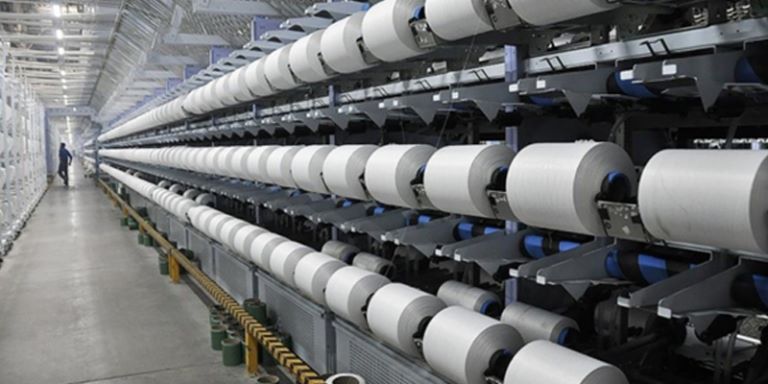
There is a global slump in the textile sector. About 20 per cent of the facility in mills across India are remaining idle. Due to the US import sanctions on Chinese garments, there is a slump in exports from China. This in turn has led to a fall in yarn exports to China from India. In the last quarter, there has been an almost 50 per cent fall in exports to China. The Indian domestic market has also been suffering because of this as domestic prices have come down.
In such a situation, a textile machinery fair is expected to benefit all stakeholders. As it is not feasible for mills to invest in new machinery in this situation, and as mills are looking to improve quality and productivity, there would be a bigger demand for spares for maintenance and auxiliary equipment to improve quality.
India’s apparel market may grow by ten per cent
India’s apparel market is projected to grow by ten per cent to 12 per cent this year, says Ratings agency CARE. Operating margins of spinners will continue to remain under pressure in the short to medium term as the increase in cotton and blended yarn prices will be lower than the increase in cotton and manmade fiber prices amid weak demand in the country. Also, on the back of slower movement in yarn demand, the utilisation rates of the domestic spinners is expected to be lower, which will put further pressure on margins.
Going forward, with crude oil prices expected to moderate this year on the back of ever increasing US oil production and the overall weak world economy on back of the ongoing trade wars, substitute manmade fiber prices are likely to be competitive in the domestic as well as international markets. Hence, demand for cotton yarn is expected to improve only marginally during the upcoming season.
Cotton prices in the domestic market are expected to marginally pick up from the current levels and remain firm in the wake of strong exports along with tight supply in the domestic market and increased minimum support price. Going forward, cotton prices are likely to register a growth of about six per cent to eight per cent.