FW
US apparel sector to see 3-5 per cent profits this year
US apparel and footwear industry operating profits are expected to be three to five per cent this year. Conditions are expected to remain challenging in the first six months and will begin to improve in the second half. Growth is expected to accelerate in the latter half of 2018, assuming the dollar remains near current levels and inventory levels are kept in check.
Most US clothing and footwear companies are still feeling the pressure from a strong dollar and choppy retail traffic, which has escalated promotional battles, while the cost of goods sold has been higher owing to the continued strength of the dollar.
They also continue to face higher costs for labor and inputs like cotton. Since most companies have raised prices to help partially offset higher dollar-related costs, the ability to implement additional near-term increases will remain a challenge, particularly for moderately- or value-priced apparel and footwear.
Companies are expected to continue pursuing merger and acquisition opportunities as they look for new sources of growth. In fact, Hanes brands was very active in this respect last year, for example, as was G-III Apparel, which expanded its portfolio of brands by acquiring Donna Karan.
Polyester may edge out cotton globally
Polyester is now one of the most commonly used fibers in the global textile and apparel industry. The annual rate of growth in global polyester production has been over eight per cent during the last five years, well above the total fiber average of 4.9 per cent annually. Although the growth rate for global polyester market reduced to 4.8 per cent, with China slowing down to 6.5 per cent, the overall growth is still stable and strong.
By 2020, use of polyester will be significantly more than the use of cotton, cellulosic, wool and acrylic combined. Today, polyester is already the most widely used fiber in all major segments of the global textile and apparel market, with garment manufacturing, home furnishings, carpets and rugs, fibre fill, and non-woven fabrics being some of the top polyester consuming sectors.
Currently, China dominates the global market for polyester production and consumption, representing over 65 per cent of global polyester consumption. India is another big market for polyester. In India, cotton now has a 50 per cent share in the fiber market, followed by polyester, with 40 per cent. However the share of polyester is catching up quickly. The market share of polyester is expected to increase to 53 per cent by 2030, while cotton will go down to 32 per cent.
Gokaldas invests Rs 200 cr to build units in Andhra Pradesh
Gokaldas Exports will set up four apparel manufacturing units in Andhra Pradesh. The units may be ready in four years. This investment of Rs 200 crores is likely to generate approximately 5000 new jobs.
Gokaldas has a diversified product portfolio across various categories of garments for men, women as well as children. It operates from 20 units spread across Karnataka, Tamil Nadu and Andhra Pradesh and has an installed capacity to produce more than 2.5 million garments a month.
The company blends its manufacturing expertise with state-of-the-art design capabilities to provide multiproduct offerings. Reliability and consistent quality from design to delivery at the right cost helps meet customer demands. Its expertise lies in manufacturing tops and outerwear which very few manufacturers in India can match.
Gokaldas has realigned its customer portfolio and taken several measures to rationalize capacity utilization, improve operating margins, and enhance productivity and operational excellence. The company has also executed an organisation restructuring and leveraged its strong design expertise to provide better customer service.
This is a one-stop shop for the world’s most acclaimed brands. It is the largest manufacturer and exporter of apparels in India with an annual turnover of 200 million dollars. A total of 25,000 people work across 23 manufacturing units.
Batliboi brings in Turkish company Andojet to India
Turkish brand Andojet has entered India in partnership with Batliboi. Andojet produces mechanics and digital machines for screen printing and sublimation printing. It provides customers all of the machines for screen print and sublimation workshops. Andojet is a brand of the Oz Anadolu Group.
Batliboi, founded in 1892, is into machine tools, air engineering, textile machinery, environmental engineering, wind energy, motors, international marketing and logistics. Batliboi has manufacturing facilities in Surat, Bangalore and Mumbai and in Canada.
Andojet has a presence across many global markets, including Bangladesh, Egypt and Russia. Andojet’s machines offer European quality and output at 40 per cent less price. It has more than 50 machines working across the world. The company sells machines in the US and Europe, which have very stringent environment and pollution norms. The machines and the chemicals it offers strictly adhere to global norms.
In India Andojet has already sold machines to two Tirupur customers. Andojet was earlier known as Ader. In 2013, the company changed its brand name to Andojet by adding new product printers that can print patterns to transfer paper by the technique sublimation printing. Since then Andojet has marched ahead by producing high quality print machines.
World Fashion Design Competition to honour best in class designers
"Co-located with 12th Prime Source Forum, the annual meeting place for the global fashion industry, World Fashion Design Competition (WFDA) is slated for March 13-14, 2017 at The Langham Hong Kong. This is a B2B platform offering producers opportunities to demonstrate their capabilities of manufacturing designed fashion items from around the world under one roof. Unlike other fashion design competitions, WFDA focuses on collaboration amongst producers, designers and buying offices of multinational brands or e-tailers."

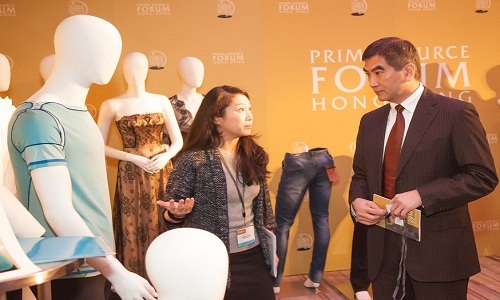
Co-located with 12th Prime Source Forum, the annual meeting place for the global fashion industry, World Fashion Design Competition (WFDA) is slated for March 13-14, 2017 at The Langham Hong Kong. This is a B2B platform offering producers opportunities to demonstrate their capabilities of manufacturing designed fashion items from around the world under one roof. Unlike other fashion design competitions, WFDA focuses on collaboration amongst producers, designers and buying offices of multinational brands or e-tailers.
“Sourcing managers at my level or in senior positions no longer visit local and overseas trade fairs to source new products. We consider new suppliers by existing connections, selected referrals or find them at high-level conferences. Ideally, new suppliers are coming to us to showcase their innovations so that we can make decisions here immediately,” opines a sourcing executive of one of the top three apparel retailers in Europe.
The pattern of the fashion sourcing world is changing. Nowadays, suppliers take more initiative to present their ready-designed or ready-for-adjustment products to clients for critique or selection. A stronger, reliable and allied partnership between buying offices and suppliers is needed. “With the aim of strengthening the undivided buyer-supplier relationship, for its first debut, we launched the World Fashion Design Competition and Award (WFDA) at the signature event of the fashion industry, Prime Source Forum Hong Kong in March 2016,” explained Martin Keil, MD, Yeh Shen.
The Objective
With increasing number of design programs launched around the world, one can see more and more qualified designers who have graduated from top fashion institutes looking for opportunities to show off their talent. How to win orders amid the gloomy global economy and sluggish fashion sales is the key to success. Strengthening design capabilities to outpace the rivalry seems a win-win approach. Thus, WFDA emerges to fill this gap – to synergise the collaboration between fashion designers and producers in order to provide international brands and e-tailers with a broader selection. WFDA is an international event. Members of industry associations, designers from fashion schools, governmental agencies or even individuals from around the world are welcomed to participate in WFDA to work towards enhancing the global fashion industry together. Renowned designers, chief editors of fashion magazines, senior executives of sourcing and product development departments of fashion brands and retailers form the part of distinguished judges.
The Participants
Fashion producers from the global supply chain have participated in this international Award and Competition. As buying offices will contact producers to place orders of any appropriate fashion items found during the two-day event, competition registration will be in the name of the producers’ organisations for easy operation. Nonetheless, young designers from fashion institutions and universities are encouraged to work with producers to apply for the competition, or to contact their institutes or universities for pairing with producers. Participating companies are categorised into two main groups according to their designers’ working experience: group A: Designers are under/post-graduates with maximum three years’ working experience; and group B: Designers have more than three years’ working experience in fashion design.
Competition Categories
Participating items will be classified into: fashionCHIC – Contemporary fashion; fashionCLUE – Solutions for fashion production or supply chain; fashionDECO – Fashion accessories, including footwear or carrying items; fashionKIDS – Fashion for our future; and fashionTECH – Fashion in wearable technology. The selection criteria is based on these parameters: 20 per cent aesthetic; 20 per cent functionality; 20 per cent innovation; 20 per cent sustainability and 20 per cent commercialisation. Amongst all participating items, five special awards will be given to winners who receive the highest scores on the above criteria. In addition to these awards, overall winner of the competition will be presented to the company that wins the most awards overall. A special award, ‘Country of the Year’, will also be given to the country representative in recognition of the best efforts and keenest participation of the country represented.
The first WFDA is aimed at getting fashion producers’ efforts-of-the-years acknowledged and recognised by the industry and showcase their abilities to design to senior executives of buying houses attending PSF. WFDA will act as a springboard for future business collaborations. Other advantages include promoting the latest collection of the designed products; generating possible leads through interaction with judges and other participants; interacting with decision makers over the two-day Forum and acquiring industry updates and the wisdom of speakers through discussions at PSF. Be a part of this trade event which promises a lot more than just networking. It’s simply multiplying your business boundaries and aspirations to another level.
India’s January exports up four per cent
India’s apparel exports to the US rose 4.3 per cent y-o-y in January 2017. Export volumes increased 8.6 per cent but export realisation fell four per cent. India replaced Mexico as the fifth largest apparel exporter to the US during the month, with a market share of 4.7 per cent.
In January 2017, China’s apparel exports to the US rose 4.6 per cent. India’s cumulative apparel exports to the US during April 2016 to January 2017 decreased by 1.9 per cent. This was on account of a 3.6 per cent fall in export realization. Export quantity grew 1.7 per cent. Despite a fall in exports, India’s market share expanded by ten basis points to 4.2 per cent.
China’s cumulative apparel exports to the US during April 2016 to January 2017 decreased eight per cent. Market share contracted 110 basis points to 35.6 per cent. Exports from Bangladesh decreased 3.8 per cent and Indonesia by 4.9 per cent. The market share of both these countries remained unchanged at 6.3 per cent and 5.7 per cent. Vietnam witnessed a three per cent rise in exports. The country’s market share expanded 100 basis points to 13.6 per cent.
Textile mills want VAT cut
Textile mills in Tamil Nadu want the hiked VAT on petrol and diesel to be withdrawn. VAT has been increased on diesel from 21.43 per cent to 25 per cent, which has pushed up its price by Rs 1.76 a liter; and on petrol from 27 per cent to 34 per cent, which has pushed up its price by Rs 3.77 a liter.
Mills say the hike is unwarranted since GST is likely any time soon. They feel this would impact the textile industry. The present hike in VAT would have a considerable impact on the transport cost of all items as textile clusters of different value segments are located in different places and with the mill sector using diesel generators to tide over load shedding and tripping it could increase the power cost as well.
The textile industry in Tamil Nadu feels while other states enjoy huge incentives it is already in a disadvantageous position as the spinning sector spends around Rs 6 per kg to procure the raw material from upcountry markets and another Rs 4 per kg to sell the yarn in those markets. Tamil Nadu has some 2,000 textile mills, which are predominantly spinning-oriented.
India’s cotton yarn exports may rise this year
India’s cotton yarn output may decline five to seven per cent for the financial year 2016-17. Sluggish demand is partly due to the substitution taking place from manmade fibers. However, yarn demand from overseas buyers has revived in the last few weeks. It was sluggish so far since importers withheld orders in anticipation of a price dip. But now they realize cotton prices are not going to come down. So they are booking cotton and cotton yarn.
And with Chinese cotton auction starting at a 25 per cent premium over the prevailing fiber rate in India, Indian exporters are hoping to see a revival in cotton yarn exports. Cotton yarn exports are expected to turn positive this year after a steep decline last year.
Meanwhile cotton yarn demand from domestic mills has also revived. Spinning mills want a two per cent tax benefit on yarns under the Merchandise Exports from India Scheme. For April to December 2016, India’s cotton yarn exports fell by 12 per cent compared to the corresponding period last year. Cotton yarn exports from India rose by a marginal 4.29 per cent in financial year 2015-16 compared to the previous year.
China gets a taste of Victoria’s Secret with a new store
Victoria’s Secret has opened a store in China. Fronted by an iconic pink glass facade, the four-storey Victoria’s Secret store occupies 2,500 sq. mt. This is Victoria’s Secret first store in China. Prior to this, the US brand had only operated concept stores in China, selling branded accessories. By the end of 2017, Victoria’s Secret will open one more store in China and will host a lingerie and underwear show. Almost two decades of breakneck economic growth and increasing prosperity have got Chinese women accustomed to western tastes and fashion sensibilities.
The opening of this store is expected to satisfy Chinese women’s desire to keep up with the pace at the forefront of international fashion. Luxury lingerie and high quality functional products are becoming increasingly popular among Chinese women. International brands see China as a priority to help bolster overall sales given a fairly bleak global outlook. Top Italian luxury lingerie maker La Perla, which has eight stores in China, is planning additional outlets. Germany’s Triumph too is adding stores.
China’s market for women’s underwear is expected to have a retail value of 25 billion dollars by 2017 - double that of the United States - and is expected to grow to 33 billion dollars by 2020.
Chinese garment province Zhejiang, facing tough times
The garment-making sector in east China’s Zhejiang province is undergoing a difficult time as profits continue to shrink. Some factories have closed due to rising labor costs. Most clothing factories are original equipment manufacturers. In the last two years, with high product inventories and rising competition, many garment producers floundered.
Some have cut their cloth manufacturing business to focus on cloth materials. Some others that used to export women’s clothing to the US and Europe are seeing a dip in profits. A garment factory which primarily makes suits, shirts and business clothes no longer has a cost advantage over competitors in countries such as Cambodia and Vietnam. It exports 40 per cent fewer products than a few years ago and has had to cut the number of workers.
The number of clothing companies in the province has shrunk to 200 or 300 from a peak of about 650. There are more than 1,00,000 garment manufacturers in China employing over ten million people. The country is the largest manufacturer, exporter and consumer of garment products in the world.
There are over 50 garment clusters characterized by product categories all over China. The garment industry is making progress in many aspects such as industrial structure, technology application, brand development, quality control, profitability and exploration in domestic and international markets.