FW
SM Mannan Kochi slated to become the 20th President of BGMEA
SM Mannan Kochi, Secretary General-Dhaka North City, Awami League, is poised to be appointed as the new President of the Bangladesh Garment Manufacturers and Exporters Association (BGMEA).
Currently serving as the Senior Vice President within the BGMEA's existing board, Mannan is slated to become the 20th president of this pivotal body representing apparel exporters.
Under Mannan's leadership, the Sammilito Parishad, a coalition he spearheads, achieved a sweeping victory in the BGMEA election for the 2024-2026 term. The coalition secured all 35 director positions, receiving votes from 90 per cent of BGMEA members, totaling 2,226 out of 2,496.
Held on March 09, 2024, the election witnessed the defeat of the Forum panel led by Faisal Samad, failing to secure any director positions. The polling stations in Dhaka and Chattogram saw high voter turnout, with 70 candidates vying for the 35 available director positions.
Notable contestants included three former presidents of the Dhaka Chamber, among whom Shams Mahamud emerged victorious while Asif Ibrahim and Osama Taseer faced defeat. Mannan Kochi contested for the presidency under the Sammilito Parishad, endorsed by outgoing president Faruque Hassan, while Faisal Samad led the Forum panel, supported by former president Rubana Huq.
Overseen by a three-member election board headed by Jahangir Alamin and an appellate board led by Kamran T Rahman, the BGMEA's election process commenced on December 4, 2023. The tenure of the current board, extended twice by the government, was originally set to conclude on April 12, 2023.
The Ministry of Commerce first extended the tenure by six months, followed by an additional extension of another six months, granting the present committee a total extension of one year.
Moscow Fashion Week concludes with a fusion of global chic and local innovation
Moscow Fashion Week concluded with a dazzling display of creativity, showcasing over 16 collections from Russian and international designers. The event presented a vibrant mix of styles, from bold grunge to romantic elegance, with a special focus on the fusion of Western and Eastern aesthetics.
The ramp at the fashion week was dominated by local designers, each offering a unique perspective. Gods Passion channeled a rebellious spirit with leather and denim, while Kolchuga embraced mystery with dramatic appliques and lace. Urban Romance offered a softer touch with flowing fabrics and lace blouses. General VI challenged the status quo with innovative takes on traditional designs, while Topaza Pella from St. Petersburg explored classic elegance with black and white trouser suits.
Adding a touch of global fair were international designers with Indian presence being particularly strong. NBC showcased a modern, wearable range while Geisha Design presented dazzling evening wear inspired by traditional saris. Serbian designer Darya Kipriyanova pushed boundaries with transformable clothing that allowed for quick outfit changes, a concept gaining traction for its sustainable aspect.
Besides established names, emerging talents like Measure from Makhachkala presented a modern take on history with his collection of Dagestani clothing. TimShee from Kazan presented a minimalist men's line with a Japanese influence. The week culminated with Ianis Chamalidy's versatile’The Art of Living’ collection blending classic and avant-garde elements.
Consolidating its position as a platform for diverse voices in fashion, the Moscow Fashion Week proved to be a testament to the seamless fusion of global trends with local traditions, showcasing innovative design that pushes the boundaries of what's possible.
Can EFTA countries become a gateway for Europe for Indian textile and apparel industry?
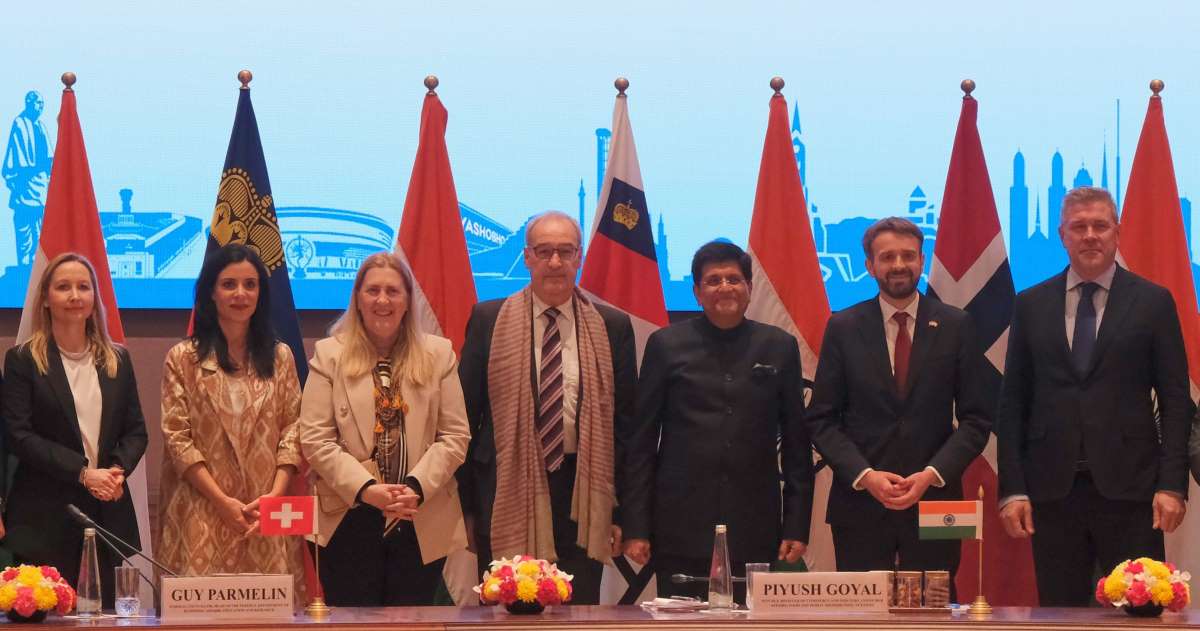
The European Free Trade Association (EFTA) nations have the potential to act as a bridge for the Indian textile and apparel industry to access the European market. The EFTA comprises Iceland, Liechtenstein, Norway, and Switzerland, all of which boasts of strong economic ties with the European Union (EU) through the European Economic Area (EEA) agreement. This agreement eliminates tariffs on most industrial goods, including textiles and apparel, traded between EFTA and EU nations.
Trade agreements between EFTA and Europe
The EEA agreement serves as the cornerstone of trade relations between EFTA and the EU in textiles and apparel. It ensures:
Duty-free movement of goods: Most textiles and apparel products can be exported and imported between EFTA and EU countries without any customs duties. Additionally, some EFTA countries have bilateral free trade agreements (FTAs) with the EU that further liberalize trade in specific sectors.
Harmonized standards: Both sides adhere to common technical regulations and safety standards, simplifying product compliance procedures.
Free movement of labor: Textile and apparel companies in EFTA can leverage the skilled workforce across Europe for enhanced production capabilities.
Textile and apparel trade between EFTA, EU
The EU is a major importer of textiles and apparel; imports reached €161 billion in 2022. This signifies a significant market opportunity for Indian exporters. And EFTA countries hold a significant share. Switzerland, for instance, is known for its high-quality textiles and clothing exports to the EU. India on the other hand is a leading textile and apparel producer, offering a wide range of products at competitive prices. By partnering with EFTA nations, Indian manufacturers can gain easier access to the lucrative EU market. While EFTA countries themselves might be smaller markets compared to the entire EU, they can serve as a stepping stone for Indian textile and apparel exporters. By establishing a presence in EFTA nations, Indian companies can benefit from duty-free access to the wider European market, gain valuable insights into European consumer preferences, and potentially build stronger relationships with European buyers.
Points to ponder
While EFTA presents a promising gateway, there are challenges to consider.
‘Rules of Origin’ is one of them. Companies must comply with specific rules of origin to qualify for duty-free access within the EEA. These rules ensure products originate from EFTA or EU countries. Competition is another factor. The European market is highly competitive, with established players from various regions. Indian manufacturers need to focus on quality, innovation, and cost-effectiveness to stand out. Also, efficient logistics are crucial for timely delivery across Europe. Partnering with EFTA companies with experience in navigating the European market can be beneficial.
Indeed, EFTA countries hold immense potential as a gateway for the Indian textile and apparel industry to access the European market. Leveraging the existing free trade agreements and strategic partnerships can pave the way for increased trade flows and mutual benefit. However, Indian exporters must be prepared to address challenges related to rules of origin, competition, and logistics for a successful foray into the European market through EFTA.
Russians designers redefine the runway at Moscow Fashion Week

The recent Moscow Fashion Week pulsed with a renewed energy, showcasing the rising prominence of Russian designers on the global fashion stage. This year's event wasn't just about showcasing stunning clothes; it was a testament to the resilience and creativity of the Russian fashion scene in the face of change.
A flourishing of homegrown talent
Gone are the days when Moscow Fashion Week was dominated by established names. This year, a wave of fresh talent took center stage, bringing a unique perspective to the runway, highlights this shift, mentioning designers from cities across Russia like Yekaterinburg, Kaliningrad, and Ulyanovsk presenting their collections alongside international brands .
Bold statements and cultural tapestry
The collections themselves were a kaleidoscope of bold colors, innovative silhouettes, and a touch of nostalgia for traditional Russian design elements. While the focus wasn't solely on traditional dress, many designers incorporated subtle nods to their heritage through rich fabrics, embroidery techniques, and reimagined historical silhouettes.
Standout trends
• Power dressing with a twist: Sharp tailoring and classic silhouettes were given a modern update with pops of color, unexpected textures, and asymmetrical hemlines.
• Sustainable chic: Eco-conscious design was a major theme, with designers using organic materials and upcycled elements to create unique pieces.
• The return of knitwear: Cozy knits were given a luxurious makeover with intricate detailing and unexpected layering.
Designers to watch
• Liza Okhor: This rising star's collection featured bold prints and playful textures, with a focus on empowering femininity
• Jan by Janina: Offering a contemporary take on traditional Russian craftsmanship, Jan's collection used hand-woven textiles and intricate embroidery to create truly unique pieces
• Gat? : Pushing the boundaries of gender-fluid fashion, Gat's collection offered a fresh take on suiting and outerwear
A bright future for Russian fashion
Veteran designer Slava Zaitsev spoke at the event about the challenges faced by the industry due to sanctions, but remained optimistic about the future: "We will find a way. We are a creative nation" . The outpouring of talent and innovation at Moscow Fashion Week is a testament to that creativity. Russian fashion is no longer on the rise – it has arrived, offering a unique voice and a fresh perspective to the global fashion conversation.
New payments rule causes 40% drop in orders for Indore garment units
Garment manufacturers in Indore are seeing a 40 per cent drop in orders due to a new rule requiring payments to suppliers within 45 days.
The garment industry typically operates on a much longer payment cycle. However, as a result of the new rule, manufacturers are being forced to cut back on production just ahead of the peak demand season, which starts around Eid.
Ashish Nigam, President, Readymade Textile Dealers Association says, the new rule makes clearing dues within 3 months a difficult task. The payment terms are forcing retailers to cut down on orders.
Readymade garments manufactured in Indore are supplied across the country with Tamil Nadu, Kerala and Andhra Pradesh as major markets sharing over 60 per cent of market share.
Due to the new rule, orders from Madhya Pradesh, Gujarat, Maharashtra and Southern India have declined. This is forcing most garment units to reduce manufacturing during the peak demand season amid confusion and doubts over the 45 day payment limit.
A hub for ready-made garment manufacturers, Indore has over 1,500 small and medium sized garment producers and festivals are the peak business season for the sector.
Donear announces Rs 400 crore investments in Jammu carpets unit
Marking its foray into home textiles, fabric maker, Donear has announced an investment of Rs 400 crore in a carpets and rugs production unit in Jammu, reveals Rajendra Agarwal,Managing Director.
The plant is expected to be operational within the next 24 months. Approximately 90 per cent of the products manufactured in this facility will be exported, according to Agarwal.
Donear debuted in the domestic market three years ago with the 'Neo Stretch' brand of fabric. Now, it plans to establish exclusive retail outlets dedicated to Neo Stretch products. Currently, Neo Stretch contributes to 10 per cent of Donear's domestic business. Additionally, Donear intends to inaugurate 50 to 100 multi-brand outlets showcasing its four national brands and eight sub-brands. The ambitious plan is to expand to 400 stores within three years.
With both the domestic and export textile markets expected to revive by July this year, Donear recently elevated its total spinleage to over 1 lakh. The company acquired two new spinning units. These units will help the company boost its revenues by Rs 400 crore, says Agarwal.
Shein to face stricter regulations for online content in the EU
Fast-fashion company founded in China, Shein, is poised to confront stricter regulations in the EU regarding online content, mirroring similar scrutiny faced by tech giant Meta Platforms.
Under the new rules known as the Digital Services Act (DSA), companies with over 45 million users are categorised as very large online platforms (VLOPs) and are required to intensify efforts against illegal and harmful content, as well as counterfeit products, on their platforms.
Shein, which has been eyeing a US initial public offering, expanded its marketplace into the EU in August 2023. The company disclosed that from August 1, 2023, to January 31, 2024, it averaged 108 million monthly active users across EU member states, a figure that caught the attention of the European Commission.
The DSA, which became effective for all online platforms on Feb 17, encompasses sixteen tech firms, including Amazon.com, and three pornography sites. These companies are currently under the scrutiny of the bloc, which is seeking information regarding the measures taken to combat illegal content and goods sold online. Moreover, the EU is conducting investigations into social media company X and ByteDance's TikTok, with potential fines of up to 6 per cent of a company's global turnover for violations.
The tightening regulations may pose another challenge for Shein's IPO plans, particularly as the company seeks approval from Beijing for a public listing that is likely to face rigorous scrutiny from US regulators.
UK-based cosmetics company The Body Shop declares bankruptcy
A renowned UK-based cosmetics company founded in 1976 by human rights activist and environmentalist Anita Roddick, The Body Shop is facing significant challenges. Recently, the company ceased operations in the United States and announced the impending closure of numerous stores across Canada due to bankruptcy proceedings.
In an official statement released earlier this month, The Body Shop declared the closure of its US subsidiary, effective March 1. Additionally, it disclosed plans to initiate liquidation sales at 33 out of its 105 Canadian stores immediately. Online sales through Canada's e-commerce platform will cease, although all Canadian locations will remain operational for the time being.
Celebrated for its commitment to natural, sustainable, ethical, and cruelty-free products, The Body Shop faced mounting challenges amid a shifting retail landscape and economic pressures. The rise in inflation in recent years particularly impacted the brick-and-mortar retailer, which primarily operated within malls and targeted middle-class consumers.
The Body Shop's ownership also changed multiple times over the years. The company was first acquired by cosmetics giant L'Oreal in 2006 for over $1billion. It was later sold to Brazilian company Natura in 2017 for a similar amount.
Natura's 2023 report highlighted The Body Shop's declining fortunes, with a significant 13.5 per cent Y-o-Y decrease in 2022. The challenges of that year, compounded by the normalisation of consumer behavior post-pandemic, contributed to a drop in sales, especially through direct-to-consumer channels.
In a bid to address its financial woes, The Body Shop was sold to asset management group Aurelius in a deal worth approximately $266 million late last year.
Mango to open 500 new stores by 2026
Founded four decades ago in Barcelona, Spanish fashion retailer Mango plans to open over 500 new stores by 2026, mainly in the United States, the UK, and France — its second-largest market after Spain.
Following a slowdown prompted by the COVID-19 pandemic, the family-owned company unveiled several large-scale stores worldwide including a 400-sq-m (1,300-sq-ft) store in Los Angeles, a similar-sized establishment in Manchester, England, and a flagship store in Bengaluru, India.
In the past year alone, Mango launched 115 stores, primarily in the United States, where its sales outlets have tripled, according to Cesar de Vincente, Global Director-Retail.
With stores spanning across 115 countries, Mango significantly expanded its presence, although it falls short of the nearly 6,000 stores worldwide owned by Inditex, the parent company of Zara, another Spanish clothing retail company.
This expansion drive propelled Mango's turnover, with expectations of it exceeding €3 billion ($3.3 billion) in 2023.
With roots tracing back to 1984, Mango opened its first shop on Barcelona's famed shopping street, Paseo de Gracia. Currently employing around 14,000 individuals, Mango aims to distinguish itself by elevating its position in the market. To enhance sales, Mango has enlisted high-profile ambassadors such as British model Kate Moss, Spanish actress Penelope Cruz, and French footballer Antoine Griezmann for its marketing campaigns.
Primark targets 100% sustainable cotton sourcing by 2027
One of Europe's leading fast fashion chains, Primark aims to source 100 per cent of its cotton from its sustainable cotton program, organic sources, or recycled materials by 2027.
Additionally, the company has set a target to manufacture all its products from recycled fibers or sustainably sourced materials by 2030. Currently, nearly 40 per cent of Primark's clothing comprises recycled fibers or more sustainable materials.
Earlier, Primark had announced its commitment to train an additional 125,000 smallholder cotton farmers in India, Pakistan, and Bangladesh in sustainable farming methods by 2023-end.
The company's sustainable cotton program educates farmers to use fewer chemical pesticides and fertilisers while conserving water resources. This initiative not only preserves biodiversity but also helps mitigate climate change impacts. Moreover, it reduces input costs for farmers, enhances yields, and boosts profits, according to Primark.