FW
Regulatory compliance: The new engine of textile circularity
The global textile industry is currently undergoing a fundamental transformation as 2026 marks the first full year of rigorous enforcement under the European Union’s Ecodesign for Sustainable Products Regulation (ESPR). For major apparel brands, the era of viewing textile waste as an externalized operational cost has ended. With the ban on the destruction of unsold consumer goods taking effect on July 19, 2026, firms are being compelled to reorganize their inventory management, shifting focus toward resale, donation, and remanufacturing. This regulatory environment is forcing a transition where data transparency - facilitated by initiatives like the Digital Product Passport (DPP) - has become as critical as design aesthetics in maintaining market access.
Advancing technological viability in recycling
As Extended Producer Responsibility (EPR) schemes move toward full operational status across Member States, the economic incentive for high-precision manufacturing has never been higher. Brands are increasingly investing in chemical depolymerization and microwave-assisted glycolysis to process blended fibers that were previously deemed unrecyclable. These technological breakthroughs are transitioning recycling from experimental pilots to industrial-scale reality. Leading manufacturers are now employing PLC-controlled, high-precision cutting technology to minimize ‘edge-trim’ waste, thereby reducing their ‘eco-modulated’ fees. This shift ensures that sustainability is no longer a marketing claim but a measurable component of the production ledger, directly impacting a brand’s fiscal bottom line.
Strategic alignment with global standards
The convergence of these policies is creating a high-stakes environment for textile suppliers. Brands are actively seeking partners who can demonstrate robust material traceability and lower environmental footprints to satisfy upcoming reporting requirements. This professionalization of the supply chain is creating new market opportunities for recycling firms and technology providers capable of bridging the gap between discarded fabric and virgin-quality fiber output.
As the industry approaches the next wave of labeling mandates, including France’s mandatory Environmental Cost labels, companies that prioritize circularity in the design phase will be best positioned to mitigate compliance risk and gain long-term competitive advantage.
Transforming waste into new fibers
The textile recycling sector focuses on processing pre-consumer and post-consumer waste into new fibers, reducing reliance on virgin materials. Key stakeholders include fashion brands, recycling technology providers, and waste management organizations. Growth is currently driven by EU-led legislative frameworks, such as EPR and ESPR, aiming for a fully circular economy by 2030.
Vietnam textile sector navigates export growth amid narrowing margins
Vietnam’s textile and garment sector recorded a total export value of approximately $18.8 billion for the first five months of 2026, marking a 5.6 per cent Y-o-Y increase. Despite the aggregate growth, the industry faces a complex operating environment characterized by weakening global demand and heightened geopolitical instability. While the export figures reflect a degree of manufacturing reliability, recent data indicates, the pace of growth remains uneven. Leading industry bodies, including the Vietnam National Textile and Garment Group (Vinatex), have noted, while order volumes for some manufacturers extend through the third quarter, the broader outlook for the final months of the year remains clouded by pricing pressures and intensifying delivery requirements from international brands.
Structural shifts and profitability pressures
The sector is currently grappling with a paradox where export volume growth masks eroding profitability. As firms transition from low-margin cut-make-trim (CMT) services toward higher-value original design manufacturing (ODM), they are confronting significantly higher operational expenses. TNG Investment and Trading JSC, for instance, reported that while revenue trends remained positive early in the year, gross profit margins faced contraction due to elevated freight costs and input price volatility. To mitigate these risks, industry leaders are aggressively pursuing digital transformation and advanced automation to enhance productivity. This strategic shift is designed to improve competitiveness against regional peers like Bangladesh and India, where labor costs remain lower, by emphasizing quality, supply chain transparency, and adherence to global sustainability standards.
Green transformation as a competitive mandate
Looking beyond short-term order fluctuations, the Vietnamese textile industry is accelerating its transition to circular production models. Major manufacturers are integrating rooftop solar power, water-recycling systems, and comprehensive carbon-footprint measurement tools to satisfy the stringent requirements of EU and North American markets. This green transformation is no longer peripheral but central to the sector’s 2026 growth strategy. As the national government shifts its foreign investment policy from volume-based attraction to high-quality, tech-integrated development, textile enterprises are aligning their capital expenditure with these ESG mandates. The long-term objective is to move beyond labor-intensive manufacturing and establish Vietnam as a sophisticated, sustainable hub for high-end global fashion and technical textiles.
A primary pillar of national economy
The Vietnamese textile and garment industry is a primary pillar of the national economy, comprising over 8,000 enterprises. It focuses on apparel, yarn, and technical textiles for global markets, primarily the US, EU, and Japan. The sector is currently transitioning toward digitalization, high-value manufacturing, and green, sustainable production.
Gap Inc reconciles large-scale retail with net-zero emission goals
Gap Inc has officially announced the attainment of its long-standing sustainability target, confirming, 100 per cent cotton utilized across its global portfolio - spanning Gap, Old Navy, Banana Republic, and Athleta - is now sourced from more sustainable programs. This achievement represents a critical operational shift for the US apparel retailer, which has spent years integrating verified, lower-impact agricultural practices into its supply chain. Beyond natural fibers, the company has further boosted its environmental credentials by integrating recycled content into 65 per cent of its polyester-based apparel, effectively reducing its reliance on virgin, fossil-fuel-derived materials and advancing its circular manufacturing capabilities.
Strategic resilience amid market headwinds
This sustainability milestone arrives as the company navigates a demanding retail environment characterized by cautious consumer spending. In its most recent fiscal reporting, Gap Inc posted net sales of $3.5 billion, a marginal 1 per cent Y-o-Y increase that fell short of broader analyst expectations. Despite these top-line pressures, the company continues to prioritize long-term infrastructure investments, including the deployment of advanced demand-forecasting models and digital backbone initiatives. By scaling high-performance, sustainable fibers alongside these operational efficiencies, management aims to improve margins and solidify the brand’s competitiveness among younger, environmentally conscious demographics.
Decarbonization and supply chain governance
The company’s sustainability agenda extends well beyond material sourcing, with significant progress recorded in operational emissions reduction. Gap Inc. successfully lowered its combined Scope 1 and Scope 2 greenhouse gas emissions by 70 per cent against its 2017 baseline, a result of aggressive investments in renewable energy and improved facility management. According to company disclosures, these environmental gains are part of a broader commitment to reach net-zero emissions by 2050. By coupling these climate-focused advancements with robust worker development programs, Gap Inc. is attempting to reconcile its large-scale retail operations with the increasing global demand for supply chain transparency and ethical manufacturing.
Targeting long-term margin growth
Gap Inc is a leading global apparel retailer offering clothing, accessories, and personal care products for men, women, and children. The company manages a diverse portfolio including Gap, Old Navy, Banana Republic, and Athleta. Focused on omnichannel expansion, the firm targets long-term margin growth through digital transformation and sustainable, purpose-led innovation.
Tommy Hilfiger elevates sports-inspired style with new global partnerships
Tommy Hilfiger is significantly broadening its presence within global sports culture in 2026, transitioning from traditional apparel marketing to deeply integrated cultural partnerships. Moving beyond the pitch, the brand is positioning itself as a core component of ‘fanwear’ culture, treating match-day apparel as a central element of modern lifestyle dressing. By bridging the gap between professional sports and elevated, preppy aesthetics, the brand is successfully tapping into the aesthetic shifts of a younger, athlete-influenced consumer base.
Strategic alliances and brand integration
The brand's 2026 strategy centers on high-profile collaborations that blend heritage with performance. A landmark partnership with Liverpool FC, the brand’s first-ever club football collaboration, exemplifies this direction. The partnership integrates Tommy Hilfiger’s modern American classics into the club’s seasonal campaigns and match-day visuals. Similarly, the brand has returned to the U.S. SailGP Team for a Spring 2026 collection, which pairs technical performance gear with its signature ‘Classic American Cool’ DNA. These efforts are supported by a broader ‘F.A.M.E.S.’ framework - Fashion, Art, Music, Entertainment, and Sport - which serves as the blueprint for connecting the brand to the pulse of global pop culture.
Market performance and forward momentum
Supported by PVH Corp, the brand remains a dominant force in the premium lifestyle segment, with global retail sales reaching approximately $9 billion in 2024. As of mid-2026, the company continues to focus on ‘Prep Made Modern,’ refreshing iconic silhouettes like rugby shirts and cable-knit polos with technical fabrics and contemporary cuts. This commitment to maintaining relevance while honoring its 40-year heritage has allowed the label to maintain a strong market position, ensuring its collections remain as central to off-duty athlete aesthetics as they are to high-fashion retail environments.
Tommy Hilfiger is a global premium lifestyle brand specializing in apparel, denim, accessories, and fragrance. It targets a broad consumer base across men’s, women’s, and children’s segments. Its growth strategy emphasizes global omnichannel distribution and sports-led cultural partnerships. Founded in 1985 in New York City, the brand is a cornerstone of American fashion.
Mango accelerates retail footprint in Türkiye via ‘New Med’ expansion strategy
Mango continues to boost its presence in the Turkish market with the inauguration of a new 520-sq-m boutique at the Novada Edremit Shopping Centre. This opening aligns with the company’s broader 2024–2026 4E Strategic Plan, which prioritizes a high-growth trajectory across both physical and digital retail channels. Following a year of robust performance in 2025, during which the Turkish market delivered a near 20 per cent growth in turnover, the brand is targeting the addition of approximately ten new points of sale within the country throughout 2026. This aggressive expansion strategy is specifically focused on strengthening the company's footprint in key urban centers such as Istanbul and Ankara.
Modernizing the in-store consumer experience
Beyond new store openings, Mango is systematically upgrading its existing network through the implementation of its ‘New Med’ retail concept. This design philosophy reinterprets the traditional retail space as a Mediterranean home, utilizing warm tones, sustainable materials, and handcrafted elements to foster a more intimate shopping environment. By 2026-end, the company expects to complete five major refurbishments, ensuring that its brick-and-mortar assets mirror the brand’s premium Mediterranean heritage. Our investment in these new stores is a clear reflection of our long-term commitment to the Turkish market and our confidence in the local consumer, notes Huseyin Golcuk, International Retail Director - MENAI, Turkey, and Asia.
Financial performance and strategic outlook
The expansion efforts are supported by a record fiscal performance. In 2025, the Mango Fashion Group reported a 13 per cent increase in turnover, reaching a record €3.8 billion globally, with an 11 per cent rise in net profit to €242 million. The company is currently reinvesting these gains into technological infrastructure, logistics, and store network optimizations. By balancing an omnichannel model - where digital sales account for one-third of total turnover - with strategic physical expansion, Mango is effectively consolidating its status as a top-tier performer in the international fashion landscape.
Emphasizing sustainable innovation
Mango is a global fashion retailer specializing in women's, men's, kids', and home collections. Operating in over 120 markets, it emphasizes Mediterranean-inspired design and sustainable innovation. The company maintains a strong omnichannel growth strategy and recently achieved record annual sales of €3.8 billion. Founded in 1984 in Barcelona, Spain.
Fashion-forward maternity wear: Redefining the pregnancy wardrobe for 2026
The maternity apparel landscape is undergoing a structural shift, evolving from a functional necessity into a high-growth fashion category. As workforce participation among pregnant women rises globally, the demand for sophisticated, office-appropriate maternity wear has surged. Expectant mothers are increasingly moving away from traditional, loose-fitting garments in favor of tailored, style-driven pieces that mirror their pre-pregnancy aesthetics. This professionalization of maternity fashion is compelling major retailers to expand their size-inclusive offerings, ensuring that corporate attire remains both comfortable and representative of personal style through all trimesters.
Sustainability as a value driver
Consumer preferences are leaning heavily toward multifunctional and sustainable design. With many modern shoppers concerned about the short lifecycle of pregnancy-specific clothing, there is a marked preference for versatile garments that transition seamlessly into the postpartum period. Data indicates, maternity lines incorporating organic cotton, bamboo, and Tencel are capturing significant market premiums, often commanding price points 20 per cent to 35 per cent higher than conventional synthetic options. This shift underscores a broader retail trend where ‘cost-per-wear’ logic is driving purchasing decisions, encouraging brands to prioritize durable, multi-use designs that offer extended utility well beyond the pregnancy stage.
Digital integration and retail dynamics
E-commerce platforms are rapidly becoming the primary distribution channel, currently accounting for approximately 60 per cent of maternity apparel sales in key markets. Digital-first brands are mitigating the inherent ‘fit uncertainty’ of online shopping through virtual try-on tools and generous return policies, which are critical for first-time buyers. While physical stores remain vital for tactile fabric assessment, the digital ecosystem is successfully leveraging influencer marketing to elevate maternity fashion from a niche utility to a visible, celebrated component of personal branding. As this segment continues to mature, brands that successfully integrate adaptive fit technology with circular fashion initiatives are best positioned to capture a growing share of the projected US$ 12.7 billion market.
Market overview: Maternity apparel
Maternity apparel encompasses specialized clothing designed to provide comfort, support, and style throughout pregnancy and postpartum stages. Key segments include casual wear, professional workwear, activewear, and intimate apparel. Growth is driven by the expansion of direct-to-consumer online channels, high-performance sustainable fabric innovation, and the rising demand for versatile, multi-stage garments.
HGH India 2026: Scaling the evolution of the Indian home lifestyle market
Scheduled for June 30 to July 3, 2026 at the Bombay Exhibition Centre, the 19th edition of HGH India marks a definitive shift in the domestic home lifestyle sector. As the market expands beyond metropolitan boundaries to encompass over 750 cities and towns, the event has curated a three-hall floor plan to address the nuanced demands of a geographically dispersed but increasingly discerning consumer base. According to Arun Roongta, Managing Director, the primary objective of the event is to align industry capacity with the rising intent for high-quality home upgrades currently seen in both major urban centers and emerging tier-II markets.
Strategic integration of heritage and modernity
The exhibition distinguishes itself by balancing industrial scale with specialized craft appreciation. Supported by the Ministry of Textiles, the Indian Heritage Pavilion serves as a vital bridge for artisans to reach formal distribution channels, while the Sustainability Pavilion underscores the transition toward responsible material sourcing, featuring participants like Birla Cellulose. Concurrently, the Smart Kitchen Pavilion addresses the acceleration of lifestyle convenience, reflecting a broader consumer trend where energy-efficient, multifunctional kitchenware has evolved from a luxury novelty to an essential household expectation.
Global standards and innovation intelligence
International representation has reached a new peak, with major brands from Italy, Brazil, South Korea, and Turkey providing Indian buyers with a global benchmark for quality in houseware and décor. This year’s knowledge platform, HGH India Interactive, alongside the fifth edition of the H-Circle Product Innovation Awards, provides the analytical depth required for retailers and designers to navigate 2026’s economic landscape. Through the PreSense 2026–27 trend forecast, the event serves as a central intelligence hub, equipping stakeholders with the visual and material cues necessary to capture the next wave of home-focused consumer spending.
Market significance and operational scope
HGH India is the premier trade platform for the home textiles, décor, and housewares industry, facilitating connections between 700+ global brands and diverse trade professionals. The event functions as an essential sourcing and trend-forecasting hub, driving growth through market intelligence, design innovation, and sustainable development initiatives for retailers and architects.
EURATEX renews leadership as European textiles face decisive regulatory shifts
The European Apparel and Textile Confederation (EURATEX) has re-elected Mario Jorge Machado as President, reaffirming a leadership continuity strategy as the sector navigates a complex period of regulatory transformation and global competitive pressure. With the European textile ecosystem currently managing a transition toward circularity, Machado’s mandate emphasizes, the industry must decarbonize without triggering widespread deindustrialization, a concern that has intensified amid rising energy costs and shifting trade dynamics.
Prioritizing operational competitiveness
Machado asserts, the foundational requirement for any industrial policy in 2026 is robust competitiveness. Without a stable business environment, the capital required for deep-tech investments - such as AI-driven automation, specialized chemical recycling, and digital traceability - becomes increasingly difficult to secure. EURATEX continues to lobby for targeted fiscal support for small and medium-sized enterprises (SMEs) to modernize their production lines. By fostering an environment where innovation is financially viable, the confederation aims to maintain Europe’s role as a global hub for high-value-added textile manufacturing rather than purely a consumer market.
Enforcing air market standards
A central pillar of the new mandate involves the harmonization of market rules. EURATEX is intensifying its advocacy for stringent border enforcement and digital surveillance to curb the influx of imports that bypass environmental and social standards. Machado argues, the same rules must apply to all products sold in Europe, noting, European companies currently face a dual burden of strict internal compliance and unequal competition from low-cost imports. This effort is directly linked to the impending 2027 rollout of mandatory Digital Product Passports, which will require comprehensive traceability data for every garment sold in the EU.
Scaling sustainable value chains
As industry leaders grapple with new Extended Producer Responsibility (EPR) schemes and complex labeling requirements, EURATEX is pushing for a regulatory framework that rewards high-performance manufacturers. By leveraging public procurement and transparent eco-labeling, the confederation intends to stimulate demand for premium, European-made sustainable textiles, ensuring that ecological compliance acts as a competitive advantage rather than an operational tax. chain
Sector profile and strategic scope
EURATEX acts as the primary representative for the European textile and clothing industry, advocating for approximately 200,000 companies that employ 1.2 million workers. Historically a pillar of the European economy, the organization now steers the sector through the digital and green transition, balancing traditional craftsmanship with advanced manufacturing technologies.
Digital Dominance Redefined: Zara moves past H&M in $100 bn fast fashion battle
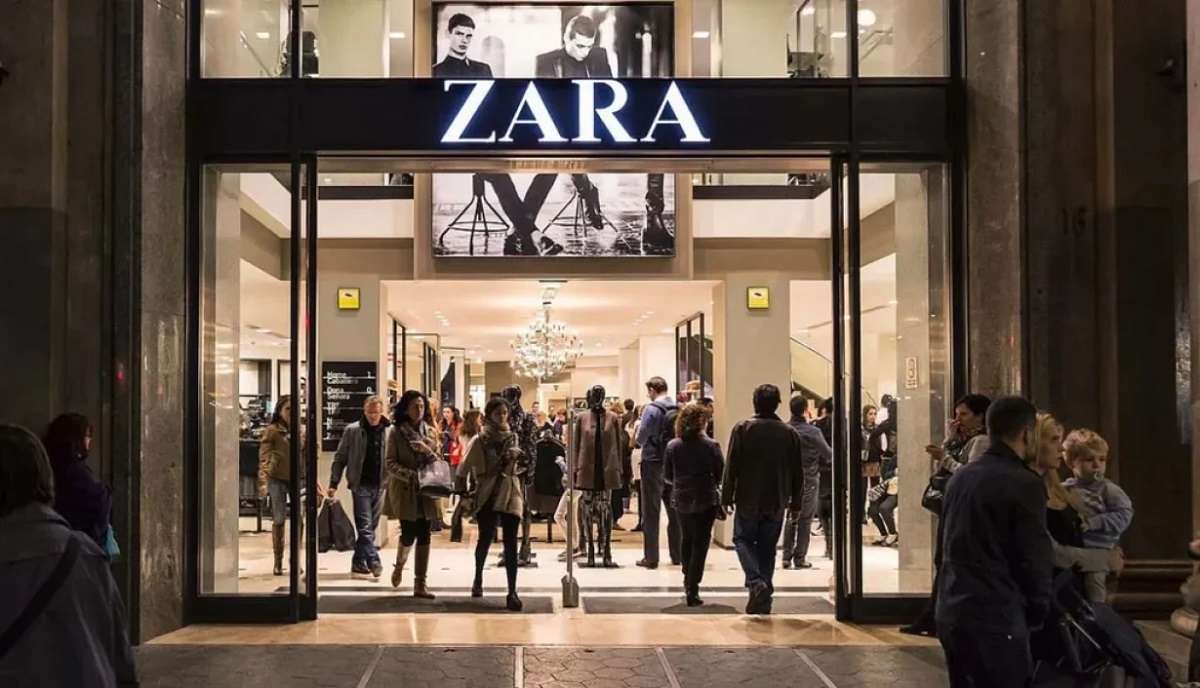
The global fast-fashion sector has reached a inflection point in 2026 where the battleground is no longer only store shelves but screens. Digital traffic is shaping market leadership, and recent analytics from February 2026 reveal a widening chasm between industry titans Zara and H&M. Zara commands 112 million monthly global visits, well ahead of H&M’s 83.3 million, underscoring the influence of strong digital engagement on revenue potential. Yet, the race is far from static. The sector’s Big Five viz, Zara, H&M, Shein, Uniqlo, and Mango operate in an environment of rising logistics costs and the relentless rise of algorithm-driven fast-fashion insurgents.
US resilience meets European strongholds
While Zara dominates global traffic, the US remains a fiercely contested space. H&M currently leads in the US digital space with 16.8 million monthly visits versus Zara’s 15.9 million. Analysts attribute this to H&M’s ‘Member Days’ loyalty initiatives and tiered pricing structure that appeals to the inflation-conscious American consumer.
Spain, however, gives a different picture. Zara’s 12 million visits dwarf H&M’s 2.5 million, highlighting the brand’s premium-mass positioning and strong local brand affinity. Similarly, in Poland, Zara edges H&M with 6.4 million versus 5.4 million visits, while the UK remains a narrow H&M lead. Turkey reflects Zara’s decisive regional dominance, achieving 5.5 million visits compared to H&M’s 1.7 million.
Table: Market traffic overview (monthly visits)
|
Market |
Zara (monthly visits) |
H&M (monthly visits) |
Leading brand |
|
US |
15.9M |
16.8M |
H&M |
|
Spain |
12.0M |
2.5M |
Zara |
|
UK |
5.7M |
6.2M |
H&M |
|
Poland |
6.4M |
5.4M |
Zara |
|
Germany |
5.0M |
5.0M |
Tie |
|
Turkey |
5.5M |
1.7M |
Zara |
|
India |
2.2M |
4.4M |
H&M |
The table reveals a clear difference in strategy: Zara relies on regional strength in Southern Europe and Eastern Europe, while H&M maximizes penetration in the US and emerging markets like India.
The India opportunity vs. the luxury shift
Emerging markets are shaping the next phase of global competition. In India, H&M outperforms Zara with 4.4 million visits, demonstrating the impact of localized sourcing and entry-level pricing. Zara’s lower traffic of 2.2 million reflects its aspirational positioning, focusing on high-street flagships and a scarcity-driven online strategy.
Meanwhile, digital brands like Shein and Uniqlo are rewriting the rules. Shein thrives on algorithmic speed and volume, while Uniqlo consolidates its LifeWear niche by prioritizing quality over fleeting trends. In response, Zara has invested $1.9 billion in logistics automation and ‘Store Mode’ digital features to synchronize physical and online experiences, whereas H&M emphasizes circularity through integrated resale platforms in the UK and Germany, addressing environmental criticisms and expanding sustainability credentials.
Meanwhile Zara’s strength in Poland and Turkey is not coincidental. Through a near-shoring model, approximately 50 per cent of Inditex production occurs close to its Spanish headquarters. This allows Zara to respond to digital traffic spikes in Eastern Europe within three weeks, compared to six-week cycles faced by competitors dependent on Asian shipping. This agility translates to higher full-price sell-through rates, a critical metric as H&M and Mango frequently rely on markdown-heavy strategies.
Inventory management and the AI frontier
The broader fast-fashion sector is grappling with a returns crisis, with US and UK return rates approaching 30 per cent. To protect margins, the Top five retailers are introducing AI-driven sizing tools and, in some cases, return fees. Helena Helmersson, a veteran retail strategist, notes, “Profitability in 2026 is determined by data precision, predicting what the customer wants before they even click 'add to cart.’”
Inditex Group, the fast-fashion vanguard
Inditex, the parent company of Zara, Massimo Dutti, and Bershka, operates across 200+ markets. Leaning on a vertically integrated supply chain, the group remains the benchmark for just-in-time retail, focusing on premium-mass positioning and US expansion. Following record 2025 earnings, Inditex demonstrates how digital sophistication and logistics excellence can define global fast-fashion dominance.
Mango intensifies retail footprint in Türkiye
Mango Fashion Group continues to accelerate its international retail development with the inauguration of a new establishment in Edremit, Türkiye. This latest opening is part of a broader commitment to reinforce the company’s presence in one of its most vital global markets. By targeting high-traffic regions beyond major metropolitan hubs like Istanbul and Ankara, the firm aims to deepen its engagement with local consumers. This initiative aligns with the company’s overarching Strategic Plan 4E, which prioritizes the expansion of its physical store network alongside a robust digital infrastructure to ensure a seamless omnichannel experience.
Operational focus on local integration
The expansion strategy in Türkiye focuses on integrating the brand's sophisticated design identity with local market preferences. Each new location serves as a testament to the company's ‘New Med’ design concept, which emphasizes freshness and a Mediterranean aesthetic. Huseyin Golcuk, International Director – Retail, highlighted the importance of this growth, stating, the company has nurtured a strong bond with Turkish customers since its entry three decades ago. By maintaining a mix of company-owned stores and strategic retail partnerships, the firm is successfully capturing significant market share, consistently outpacing competitors through refined inventory management and a localized approach to apparel and accessory curation.
Mango is a global fashion brand specializing in high-quality apparel for women, men, and children, along with home accessories. The company operates in over 120 markets, leveraging an omnichannel retail model. Following record 2025 revenues of €3.8 billion, the firm continues to invest heavily in its global store network. Established in 1984 near Barcelona, Mango remains a leader in mid-premium fashion retail.