FW
Modernize Sri Lankan garment & textiles industry, urges new report
A new report, 'COVID-19 & Beyond - The impact on the Labor Market of Sri Lanka’, urges the Sri Lankan government to modernize its garment and textile industry besides establishing a comprehensive social security system. Prepared by the country's Commissioner General of Labor, Ananda Wimalaweera, the report reveals results of an e-survey of 2,764 private sector businesses, carried out by the Sri Lankan Department of Labor, to assess the scale of the problems faced by employers.
The biggest single sector among those surveyed was manufacturing, with three-quarters of these respondents coming from the key garment and textile industry. The survey found that 53 per cent of businesses had been forced to temporarily shut down their businesses during the pandemic and that only three per cent had been able to remain fully open. The survey found that a staggering 64 per cent of the nearly 600,000 workers employed by the businesses had not been in work during the pandemic. Most were without any form of social security, making them highly vulnerable.
Only two per cent of the business surveyed had been successful in securing working capital loans from financial institutions to help them through the crisis, with another 48 per cent still awaiting the outcome of their applications. The report made a series of short-term recommendations designed to protect workers and reduce the financial pressures on employers, such as the granting of low interest loans.
And, in the medium term, it advised measures including the establishment of a comprehensive social security scheme and adopting strategies to modernize key industries such as apparel and textiles.
Kraig develops new program to protect silk production
Kraig Labs, a developer of spider silk based fibers, has developed a new program to prevent viral pathogens from harming silk production. The company has developed its first immune-enhancing genetic insert to create disease-resistant silkworms. It is now ready for its first round of transgenic creation and resistance testing. This effort was done in a parallel, and complementary, effort to the company’s ground-breaking program developing high-performance spider silk inspired silk fibers and yarns, the company said in a media statement.
The company anticipates its development of a disease resistant silkworm could be licensed across the global silk industry. The success of this program will also provide significant opportunities for growth far beyond the reach of Kraig’s in-house production capacity, with licensing applications globally.
Frasers Group increases stake in Hugo Boss
Mike Ashley’s Frasers Group has increased its stake in German fashion label Hugo Boss for the third time in a week. Earlier this month, Frasers Group had bought 5.1 per cent stake in Hugo Boss through stocks and derivatives. It has further increased its stake in the German label to 10.1 per cent through stocks and derivatives.
The Group now holds 552,500 shares of common stocks which is 0.8 per cent of German fashion house’s total share capital. This investment by the group reflects its faith in Hugo Boss’ future and also the Group’s intent to strengthen the relationship further with the German fashion label.
Hugo Boss is one of the largest German apparel brands with worldwide sales of €2.9 billion. Frasers Group, which was previously called Sports Direct International Plc, is UK’s largest retailer of sports items and has around 670 stores across the globes. It generates revenue of €3.701.9 million.
New Delhi and Mumbai editions of Denim Show rescheduled
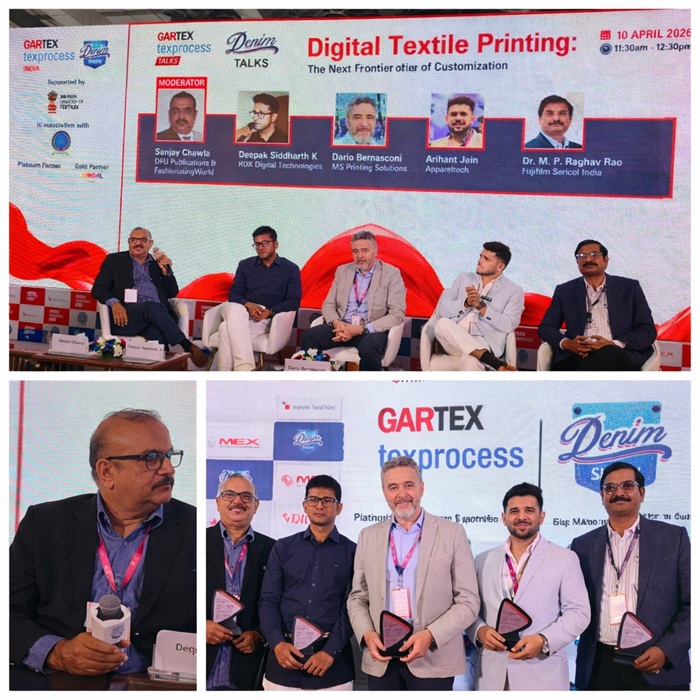
In order to provide an impetus to denim industry stakeholders in the aftermath of the pandemic, organizers Messe Frankfurt Trade Fairs India and MEX Exhibitions have jointly rescheduled the New Delhi and Mumbai editions of the Denim Show. The New Delhi and Mumbai editions will now be held from December 17-19, 2020 and March, 19-21, 2021 respectively. The shows were postponed in view of the rapid escalation in the number of Covid-19 cases, restricting inter-state and international travel.
The New Delhi edition will be held at India Expo Mart in Greater Noida, Delhi-NCR while the Mumbai edition will be held at the Bombay Exhibition Center in Mumbai.Denim Show serves as a unique platform where the entire denim fraternity converges to showcase latest products, technologies, and set future trends. Held in association with Denim Manufacturers’ Association (DMA), the show helps in furthering the potential of the Indian denim industry by creating a stage through which suppliers and buyers under the denim manufacturing supply chain could avail the benefits of targeted business opportunities. India’s position in manufacturing denim is very strong and the Denim Show will act as a catalyst taking it a notch-above to make it more competitive.
Better Cotton accounts for 22 per cent global cotton production: BCI
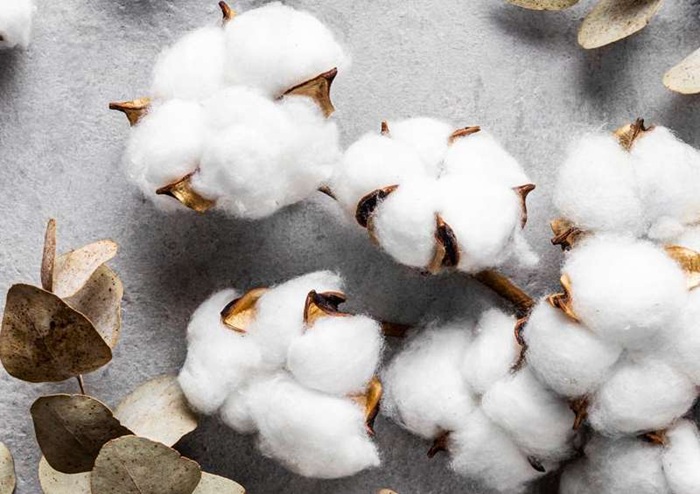
In its 2019 annual report, Better Cotton Initiative (BCI) states that cotton produced by licensed BCI farmers in line with the initiative’s Better Cotton principles and criteria, now accounts for 22 per cent of global production. In the 2018-19 cotton season, with support of more than 1,800 of members, BCI provided training on more sustainable agricultural practices to 2.3 million cotton farmers. Of this, 2.1 million gained a license to sell Better Cotton. This drove the volume of more sustainably produced cotton available on the global market to a new level.
BCI’s retailer and brand members also sourced more than 1.5 million metric tons of Better Cotton in 2019, which sends a clear signal to the market that Better Cotton is becoming a sustainable mainstream commodity. According to the 2019 report, Better Cotton was grown in 23 countries in the 2018-19 cotton season. Licensed BCI Farmers produced 5.6 million metric tons of Better Cotton. That is enough cotton to make approximately 8 billion pairs of jeans, a pair each for every person in the world.
Exporters despair as customs refuses to clear Chinese imports
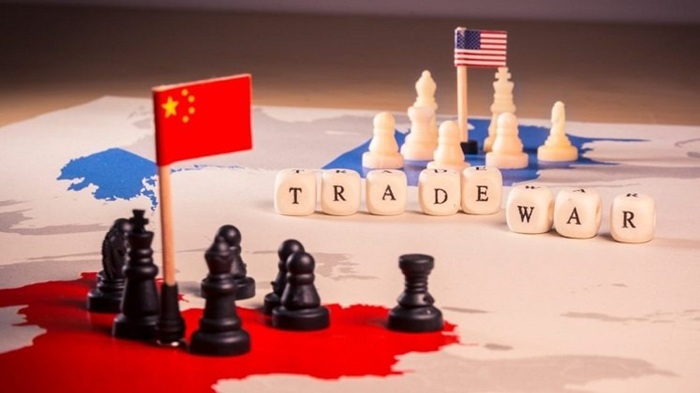
With India intensifying an economic blockade “unofficially”, aimed at hurting Chinese businesses, consignments containing millions of zippers, buttons and embroidery accessories are not being cleared by the customs. Raja M Shanmugham, President, Tirupur Exporters Association (TEA), reveals payments for these goods have already been made and they are lying in Bengaluru and Chenani airport customs, besides at Chennai Port. His firm, Warsaw International is waiting for Bengaluru Airport customs to clear buttons and badges for him to complete his pending orders. TEA has shot off letters to union ministers of commerce and industry and also union finance minister seeking their immediate intervention.
Similarly, the consignment of Kanta Innovations is not being cleared in Chennai.. His 25 clients are waiting for these buttons to finish their orders. It is impacting not just knitwear but also the manufacture of PPE kits.
CIFF to launch new digital sales platform
The organizers of CIFF have decided to launch a digital sales platform, CIFF Digital, for this summer. The platform was developed in partnership with online fashion sales platform Trade.
For its S/S ’21 edition, CIFF exhibitors will have its own digital showroom to further expand their reach to buyers, while enhancing buyer experience when researching brands online. CIFF Digital provides an additional level of experience, regardless of the physical representation of brands or buyers at the show. CIFF’s partnership with Trade is focused on providing our community with the right toolset so that everyone can focus on what's important. Moreover, the platform will be available during CIFF and outside of its physical dates, securing an even bigger international reach to buyers and brands”, it says from an official statement. Additional information and support materials describing onboarding and all the functions will be available shortly.
CIFF is one of the few trade fairs/events alongwith Revolver and Copenhagen Fashion Week that has only been postponed by a few days and have not yet been canceled.
California’s new act guarantees minimum wages to garment workers
The Garment Worker Protection Act (#SB1399) passed by the California Senate on June 25 seeks to guarantee a minimum wage for garment workers in California while dismantling the piece-rate system that currently prevails in the industry.
The Garment Worker Protection Act was authored by Californian Senator Maria Elena Durazo and sponsored by Garment Worker Center, Bet Tzedek Legal Services, the California Labor Federation, and Western Center on Law and Poverty.
According to Remake, a non-profit organization that advocates on behalf of factory workers, SB1399 will prevent wage theft by ensuring fashion brands cannot use lawyers or subcontracting to avoid accountability under [the] law.
It will also end wage theft via the piece rate model of payment, a form of payment based on the number of garment pieces sewn in a day versus than by hours worked. The piece-rate makes minimum wage out of reach and pays factory workers well below a livable wage. The bill is seen as a closer step to equality. Further details about the bill can be found on its website.
New fund to help Amazon meet the Climate Pledge
Amazon has launched a new fund to support the development of sustainable technologies and services which will enable the retailer to meet The Climate Pledge by 2040. The fund will back visionary companies whose products and services will facilitate the transition to a zero carbon economy.
The Climate Pledge Fund will invest in companies in multiple industries, including transportation and logistics, energy generation, storage and utilization, manufacturing and materials, circular economy, and food and agriculture. Over time, Amazon will also look for opportunities to involve other Climate Pledge signatories in this venture investment program.
The fund was cofounded last year by Amazon and Global Optimism. It involved a commitment by these two companies to reach the Paris Agreement ten years early and be net zero carbon by 2040. Verizon, Reckitt Benckiser (RB), and Infosys recently joined the pledge to accelerate investment in innovations for the zero carbon economy of the future.
Monforts denim promotes hemp fibre at Kingspins24
 At the second Kingpins24 virtual denim show held in New York on June 23 and 24, the sustainable benefits of hemp fibre were referenced by many Monforts customers including AGI Denim, Artistic Milliners, Black Peony, Calik, Cone Denim, Naveena Denim Mills (NDM) and Orta.
“Hemp is an easy to grow fibre which requires no irrigation, no fertilizers, no herbicides and no chemicals,” said Allan Little, Director of Product Development for Cone Denim, which has recently launched its Sweet Leaf collection featuring the fibre. “Significantly, it also uses fifty per cent or even less water than cotton in cultivation.”
“Hemp has a unique colour and adds a different cast to our indigo, the drape and texture of the fabrics is different and it even adds a bit of a unique hand, so combined with its sustainable credentials we are proud to be bringing the Sweet Leaf collection to the market.”
US supply chain
Cone is currently sourcing its hemp from France, but with much of its manufacturing now in Mexico – and with the introduction of the US Farm Bill in 2018 which has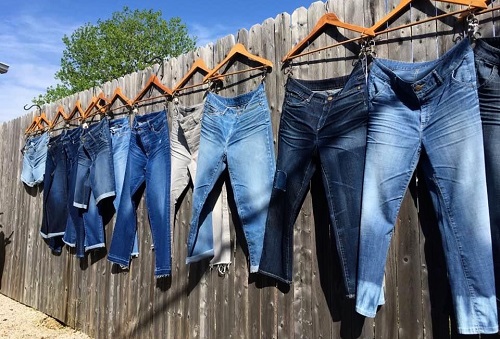 legalised the growing of legal hemp – is exploring the possibility of investing in the US supply chain.
Little emphasised, “It’s a unique crop, so coming up with the right stalk to provide the right fibre is challenging. We’ve experimented with different types of seed and various methods of decortication.”
Complete success
In 2019, Naveena (NDM), headquartered in Karachi, introduced fabrics featuring up to 51 per cent hemp content in blends with Tencel and recycled polyester and this year has developed the first 100 per cent hemp denims.
“The response to the fabrics we showed last year was incredible and we were looking forward to the response to this latest development – which everyone was asking for – at the Kingpins show in Amsterdam, which unfortunately was unable to go ahead,” says NDM’s Director of Marketing Rashid Iqbal. “We produced initial samples in an undyed state because we were not sure how the wet spun yarn would react in the dyeing, but I’m happy to say we have had success in this respect and are now able to provide one hundred per cent indigo dyed hemp denim.”
Environmental benefits
“Differentiation is the key in the highly-competitive denim industry and we have assisted our customers with trials and optimised processing parameters for a range of different fibres, including hemp, both at our Advanced Technology Centre in Germany and at their own mills around the world,” said Hans Wroblowski, Monforts Head of Denim. “Given the environmental benefits of hemp, and the liberalisation of its cultivation in many parts of the world, the interest in it now comes as no surprise. We have the technologies and know-how to help our customers to fully maximise their hemp denims at all post-weaving stages of production.”
The latest Monforts innovation for denim is the CYD yarn dyeing system. This technology is based on the effective and established dyeing process for denim fabrics that is now being applied for yarn dyeing.
The CYD system also integrates new functions and processes into the weaving preparation processes – spinning, direct beaming, warping and assembly beaming, followed by sizing and dyeing – to increase quality, flexibility, economic viability and productivity. A full CYD line is now available for trials at the company’s Advanced Technology Centre