FW
Luxury apparel growing at 13 per cent
The global luxury apparel market is expanding at a CAGR of 13.2 per cent.
Luxury apparel is a symbol of class and only people with a good financial background can afford them. The global market for luxury apparel is growing due to an increase in disposable incomes, which further leads to a rise in purchasing capacity of consumers. The young generation is propelling the market for luxury apparel. Another factor envisioned to boost demand is the emergence of online shopping services. It is easier to do shopping online instead of having to go places and try various outfits. The easy return facility has further boosted the market and attracted more prospective consumers. Digital marketing advertises the benefits of online shopping and inculcates a classy taste of fashion among people.
The global luxury apparel market is dominated by the Asia Pacific. The market in Asia Pacific is witnessing rapid growth due to the rise in disposable incomes, along with changes in lifestyles and improved standard of living especially in the emerging nations of China and India. Europe, on the other hand, has already attained maturity because of the presence of many luxury brands that have been doing business for the past few decades.
Brazilian and Swedish brands collaborate
Havaianas has collaborated with Happy Socks to launch a collection of matching split-toe socks and flip-flops.
Havaianas, based in Brazil, is a flip-flop brand. Happy Socks is a Swedish socks and underwear label. The collection consists of three box sets. Each box set includes one pair of socks and one pair of matching flip-flops with unique designs inspired by the snowy landscapes of Sweden and the sunny beaches of Brazil. These flip-flops and split toe socks can be worn all year long. The collection features three color combinations with quirky patterns. The first set is named the Animal Dot Set and is detailed with palm trees and reindeer. The second set is the Sport Set and is patterned with waves and beach umbrellas. The last box set is called The Nature Set, which is styled with snow-capped mountains alongside skiers, surfers and snowmen.
Havaianas has trendy designs in multi colored hues. Its collections have experiments with different colors and eclectic prints. Havaianas embodies Brazil’s fun, vibrant and spontaneous way of life. These festive flip-flops and sandals feature vivid prints with high-quality rubber soles for comfortable wear. Happy Socks, founded in 2008, has infused sock drawers around the world with a much-needed splash of color. These unisex socks are made from soft, long-lasting combed cotton.
Durst launches fifth generation Alpha textiles printers
Durst launched the fifth generation of its Alpha family of textiles printers at ITMA 2019. These printers feature Durst’s Super Multi pass technology which the manufacturer claims will provide 30 per cent better performance than comparable systems. The new technology is based around enhancements to print heads, inks, drying units and software and workflow upgrades.
The machines can be configured with water-based disperse-, acid- and reactive-based ink systems as well as Durst's new Advanced Digital Pigment (ADP). According to Durst, ADP is the first ink system to offer a one-step process with soft touch, brilliant colours and a wider colour space.
The Alpha technology platform offers a sustainable, flexible, and scalable solution for every application, even enabling waterless one-step production with the new Advanced Digital Pigment ink.
The Alpha 190 is a 1.9m-wide single-roll system that can print at speeds up to 990sqm/hr at single-pass 300x600dpi resolution. Its 3.3m-wide sibling, the Alpha 330, can print up to 1,470sqm/hr single pass in single-roll mode and 1,184sqm/hr in dual-roll mode.
Both print from eight colour channels in 32- and 64-head configuration. Various modular options are available for both machines, including knitwear and dual-roll options, small-roll, jumbo-roll and folded material entry and exit, and a second drying unit.
A patented SwiftJet pre-treatment system can also be added, intended to aid with short-run and fast-turnaround work.
A new sourcing model by Jeanologia at ITMA 2019
Jeanologia, the Spanish company leader in developing eco-efficient technology, will present the sourcing model of the future at ITMA 2019. This innovative production process marks the beginning of a new era in the textile industry.
This operational model delivers five fundamental benefits to the textile industry: it is eco-efficient, cost neutral, scalable, agile and digital; connecting design, production and consumer.
Combining the company’s hardware and software, it connects all its technology to achieve a production that is 100 per cent ecological without compromising product authenticity and adapting to the new market needs.
This new sourcing model developed at Jeanologia is completely eco-efficient as it has taken environmental impact into account throughout the product development. By being fully connected, it is possible to design and produce with zero environmental impact in any location in the world.
By simplifying processes, the model changes the way things are produced, making it easier to adjust supply and demand, revolutionizing production. It is cost neutral. For the same price you can get a better and more sustainable product, as well as recovering the investment.
Moving from an analogic to a digital model, creating a true revolution in the textile world. The connectivity makes it possible for all stages in the supply chain to work together using the same standards regardless of geographic location.
Beaulieu displays sustainable fibres and yarns at ITMA 2019
"Global raw materials’ provider based in Belgium, Beaulieu, is displaying an inspiring range of fibres, yarns and technical textiles at ITMA 2019. The range is extremely flexible and can replicate any type of staple fibre spinning technology, using different type of polymers and additives, and different type of cross sections. These high tenacity staple fibres HT8 offer unique high tensile strength without compromising on elongation."
 Global raw materials’ provider based in Belgium, Beaulieu, is displaying an inspiring range of fibres, yarns and technical textiles at ITMA 2019. The range is extremely flexible and can replicate any type of staple fibre spinning technology, using different type of polymers and additives, and different type of cross sections.
These high tenacity staple fibres HT8 offer unique high tensile strength without compromising on elongation. They provide opportunities to reduce geotextile system cost by maximising machine efficiency and ensure desired performance at reduced weight - up to 15 per cent compared with standard geotextile fibres.
New PET-core BICO staple fibres for hygiene products will be seen at the expo. The fibres are available in a dtex range from 1,3-6,7dtex/40mm in both polymer-configurations PP/PET (Polypropylene / Polyethylene terephthalate) and PE/PET (Polyethylene /Polyethylene terephthalate). The specific use of PET in the core improves the resilience/loft of the nonwoven. The use of PE in the sheath provides softness as required in top sheets, for example, while the configuration with PP in the sheath answers the requirements for ultrasonic bonding.
BFI’s new and unique polyolefin staple fibre UltraBond eliminates the need for latex or other chemical binders to consolidate nonwovens, contributing to a fully recyclable system. The award-winning innovation opens up a new path to create 100 per cent PP needlepunched fabrics which meet the same performance requirements while reducing the end-of-life environmental impact. CO2 emissions are reduced by 35 per cent over the full production process during fabrics’ production.
Shima features a comprehensive range of products at ITMA 2019
"Leading computerised knitting machine manufacturer Shima Seiki, featured a comprehensive line-up of its products, including new Whole garment knitting machines, computerised flat knitting machines, and computer graphic design systems, as well as various digital solutions ITMA 2019."
 Leading computerised knitting machine manufacturer Shima Seiki, featured a comprehensive line-up of its products, including new Whole garment knitting machines, computerised flat knitting machines, and computer graphic design systems, as well as various digital solutions ITMA 2019.
The company is exhibiting under the theme KNITify the World—Smart Solutions in Textiles. The theme illustrates the flexibility of Shima Seiki products for catering to various industries in addition to its traditional customer base in the apparel industry. In its approach to proposing knitting as an alternative manufacturing solution for non-fashion related industries, Shima Seiki demonstrates what was impossible to knit in the past can be knit now, and what was never even considered for knitting is now made just as well – if not better – with KNITification.
Three Wholegarment machines are on display including the new MACH2VS machine. he flexible and versatile MACH2VS is evolved from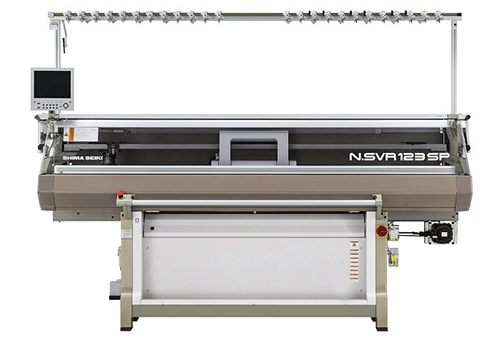 MACH2S machines and carries on the capability to knit in a range of production styles. As a conventional shaping machine, it is capable of all-needle knitting in its available range of 8 to 16 gauge, while Wholegarment knitwear can be produced in half-gauge fabrics.
A short-needle bed version of Shima Seiki's flagship Wholegarment machine, MACH2XS103 will also be on display. The machine features the company's original SlideNeedle on four needle beds of 40-inch (100cm) knitting width. MACH2XS123, slightly larger than MACH2XS103, is equipped with the dual takedown prototype option, as well as the optional tension control device that measures the stretch characteristic of yarn beforehand and uses that data to control yarn feed at the machine.
The benefits of Wholegarment knitting are furthermore showcased in the MADE2FIT area of the Shima Seiki booth, demonstrating mass-customisation as only on-demand knitting technology can provide.
Shima Seiki is also speaking on smart textiles and wearable technology at the ITMA Speakers Platform as part of the ITMA Innovation Lab. In addition to machine technology, the latest evolution of Shima Seiki's SDS-ONE APEX series 3D design system debuts at ITMA as an equally important factor in modern knit production.
SDS-ONE APEX4 provides all the functions you need in taking advantage of the integrated workflow that is the Total Fashion System. Not limited to the knit apparel industry, textile design and production requires the diversity to support ever-changing market needs, with increasing emphasis placed on speed from design to market and sustainability.
SDS-ONE APEX4 responds to such requirements by providing up to a 5x increase in programming and simulation speeds as compared to SDS-ONE APEX3. As part of its full support of planning and design needs, SDS-ONE APEX4 features the latest search functions using Artificial Intelligence (AI).
ITMA 2019: Sustainable trends and demand in focus at Tex Summit Global
"On the first day at ITMA 2019, China Textile Magazine organized the Tex Summit Global-a conference on the sustainable trends and demand in the textile industry with a focus on Chinese textile industry and Shaoxing district where largest concentration of textile manufacturing and dyeing finishing units is centered in China"
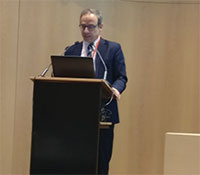 On the first day at ITMA 2019, China Textile Magazine organized the Tex Summit Global-a conference on the sustainable trends and demand in the textile industry with a focus on Chinese textile industry and Shaoxing district where largest concentration of textile manufacturing and dyeing finishing units is centered in China
In his welcoming address, GaoYong, Party Secretary & SG-General of China National Textile & Apparel Council, said, “Shaoxing is one of the greatest hub for textiles in China, especially for dyeing and printing. China wasgrowing at the rate was 3 percent, while in 2019, it is growing at only 2.9 percent. So far, the apparel sector has reported negative growth, while the export growth rate is 8 percent. The domestic demand is mainly coming from online sales, which is growing by 22 percent, representingone third of entire sales, against 8 percent growth.
Party added, “Majority of the growth is coming from polyester and manmade fibres, which has a global share of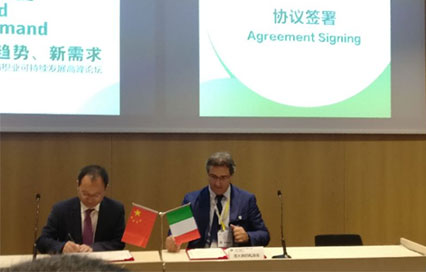 70 percent, while China has80 percent.” According to the study, China houses over 150 million people in its towns and cities who earn as much as people in developed countries.
Expressing his concern over the current political situation in China, Party avered, “Since April 2019, the whole environment has become more complex. Trade war has cost a new downsize in textile and apparel, especially last few months, as business is decreasing. Exports to the USA and the rest of the world have been largely impacted. If war actually happens, the situation will worsen further. Pricesof finished goods have declined, but price of fabrics and raw material have increased. This has made the whole situation complicated.
According to Party, the three main features and trends currently being observed in China include: A growing interest in building factories in foreign countries like South Asia, Bangladesh, Vietnam, Cambodia, etc; development of technology from online retail front and green sustainability. “We are now accelerating adjustments that require new investment, high technology etc.,” he added.
Dr Christian Schindler, DG, ITMF made an interesting presentation on “The outlook for the development of the global textile industry and interpretation of global textile machinery trade data” at the summit. He presented various trade statistics that indicatedthe countries that are growing across the world. “Changing consumption patterns, growth in online retail, decrease in energy consumption and recycling, etc as the main drivers of this change,” he noted.
“However, continuing political tensions in Turkey, elections in India and trade war in China have impactedthe buyer sentiments,” Schindler added. Suggesting, what to expect from future, he noted, “Investing in high technology, increasing productivity and depending less on human resource to balance the labor cost increase, increasing consumption of polyester fibre and polyester filament will reduce water consumption, chemical process, energy consumption, driving the industry to next level.
He also indicated based on the statistics, design development and manufacturing with new bio based fibres, digital printing, product development based on integration of supply chain and intelligent manufacturing with reducing cost, better automation, productivity, flexibility and quick market response are the trends that are being foreseen.
Mimaki Hybrid printer emphasises accessibility oftextile printing
"Mimaki Engineering, a leading manufacturer of inkjet printers and cutting systems, launched the first global technology demonstration of a brand-new hybrid digital textile printer from the TX300P series at ITMA 2019 . Uniquely featuring both direct-to-textile and direct-to-transfer print capabilities, the new printer achieves unparalleled flexibility in ink combinations and substrates – opening new profitable opportunities for businesses."
 Mimaki Engineering, a leading manufacturer of inkjet printers and cutting systems, launched the first global technology demonstration of a brand-new hybrid digital textile printer from the TX300P series at ITMA 2019 . Uniquely featuring both direct-to-textile and direct-to-transfer print capabilities, the new printer achieves unparalleled flexibility in ink combinations and substrates – opening new profitable opportunities for businesses.
The new printer is an evolution of the Mimaki TX300P-1800, with the added capability of printing direct-to- transfer. Crucially, print service providers will benefit from enhanced versatility in terms of fabrics, applications and targeted markets. This affords smaller print service providers with an opportunity to provide a full range of textile printing applications with just one system.
“The textile market is still relatively early-on in the adoption of digital printers, with most textiles being printed in the conventional way and a lot of large players dominating the market. With this new hybrid printer, Mimaki has provided an affordable solution that lowers the barriers to entry for smaller print providers,” says Ronald van den Broek, General Manager Sales EMEA. “For larger volume production houses, the printer is valuable for smaller runs and the myriad benefits digital production provides.”
“The features of this new hybrid printer will enable textile and garment manufacturers to achieve unparalleled flexibility and enhanced application opportunities for increased business growth. With this product Mimaki is effectively democratising accessibility to textile printing, and with solutions like this in the market, we expect to see improved growth of digital printing in textiles,” van den Broek concludes.
VDMA goes digital with Industrie 4.0 at ITMA 2019
"At the first at press conference at ITMA, spokespersons of twelve renowned VDMA member companies showed cased the impact of Industry 4.0 solutions on the textile process chain. The prominent companies that participated included Brückner, KM.ON from Karl Mayer, Mayer & Cie, Oerlikon, Monforts, Sedo -Treepoint and Trützschler among the others."
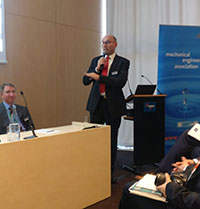 At the first at press conference at ITMA, spokespersons of twelve renowned VDMA member companies showed cased the impact of Industry 4.0 solutions on the textile process chain. The prominent companies that participated included Brückner, KM.ON from Karl Mayer, Mayer &Cie, Oerlikon, Monforts, Sedo -Treepoint and Trützschler among the others.
André Imhof, COO,Autefa Solutions said, “Industrie 4.0 is relevant only if it adds value as well as profits for the investors, mentioning, “Digitalisation succeeds when the focus is on customer benefits. Axel Pieper, CTO, Brückner Trockentechnik added, “Software innovations around textile machines are becoming increasingly important in product development.”
“In our view the textile industry needs custom-tailored IT solutions to reach the highest level of data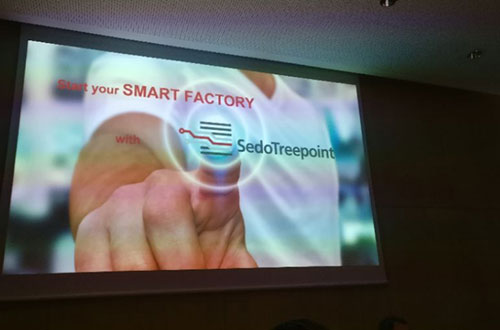 transparency – from fibre to finished product. Direct communication between man and machine does not only enable this consistently transparent presentation of all relevant data, but also gives employees flexible and, most importantly, mobile access to it”, avered Marcus Ott, Managing Director, Halo.
Antonia Gottschalk, Managing Director, KM.ON, a software start-up company of Karl Mayer stated,“We will build a bridge from machine building via applications and textiles up to the topic of Industry 4.0 at ITMA 2019.
We are showing seven innovative machines, giving an insight into the “Future of Textiles” and present new digital solutions of KM.ON. The products of our digital brand can be used by our customers and by other textile manufacturers to considerably improve their processes in all business units.”
Sebastian Mayer, Member of the Management, Mayer &Cie noted, “We aim to always be one step ahead. The digitisation offers us valuable opportunities to stay true to our company principle, beyond the developments in technology.”
André Wissenberg, Vice President Marketing, Corporate Communications and Public Affairs, Oerlikon Manmade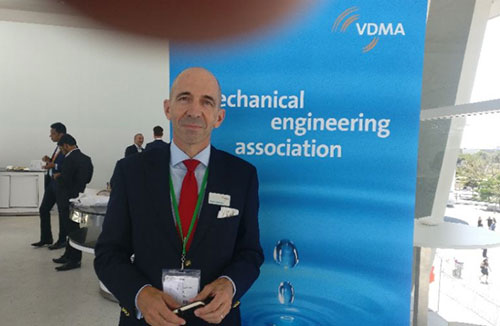 Fibers Segment: “Oerlikon invites all on a journey into the future of manmade fiber production. We are showing our vision of a sustainable and automated manmade fiber production in a spectacular virtual 4D showroom: "Clean Technology Smart Factory.” is the motto of the future.”
On his part, Andreas Hannes, Marketing Manager, Sedo -Treepoint said, “Digitalisation and the smart factory are big challenges– especially in dyeing and finishing, there is a high potential for savings and technological improvements.He further adds, “Our new developments shown at ITMA are designed for the Smart factory and will help customers to strengthen competitive advantages. We are your experts for process optimisation!”
Thomas Waldmann, MD, Textile Machinery, VDMA, talking exclusively with Sanjay Chawla, FashionatingWorld, about how successful has been the implementation of Industrie 4.0, Waldmannreplied , “It is not as high as expected, given the industry scenario nevertheless we suggest our VDMA members to participate and keep working on it and not to wait for others to start first, Industrie 4.0 largely being a concept of new digital world.”
Kornit Konnect’s new software at ITMA 2019 maximises productivity
"Kornit Digital, a worldwide market leader in digital textile printing technology, launched Kornit Konnect –a new cloud-based, mobile workflow software platform at ITMA 2019. The software enables businesses to maximise productivity of their digital printing solutions. This is the first phase in Kornit’s implementation of its industry vision of textile design, decoration and production being fueled by data-driven insights and performance metrics."
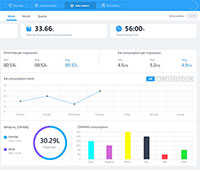 Kornit Digital, a worldwide market leader in digital textile printing technology, launched Kornit Konnect –a new cloud-based, mobile workflow software platform at ITMA 2019. The software enables businesses to maximise productivity of their digital printing solutions. This is the first phase in Kornit’s implementation of its industry vision of textile design, decoration and production being fueled by data-driven insights and performance metrics.
In its first phase, the Kornit Konnect enables businesses to monitor production, analyse insights and manage their fleet, in order to eliminate blind spots. It includes a fleet management dashboard, data driven benchmarks, actual production costs, and cost structures per job, making it easy for businesses to learn more, react faster and perform better.
Future phases and releases of the Kornit Konnect will enable deeper insights and actions as it comes to optimising production management and enabling a seamless software workflow environment for businesses of all sizes.
Konnect empowers businesses to make better-informed production decisions and act on them, with greater visibility and control over their operations. The company plans to frequently add new modules and features that customers can leverage for long-term business success.