FW
Fashion brands move from ownership to rental model
"As the fashion industry warms up to the growing trend of sustainability, concepts of reusing and recycling are gathering momentum. However, it will be a while before these are universally adopted. The trend of fast fashion has increased overall consumption. This needs to change if we wish to make positive environmental change."
 As the fashion industry warms up to the growing trend of sustainability, concepts of reusing and recycling are gathering momentum. However, it will be a while before these are universally adopted. The trend of fast fashion has increased overall consumption. This needs to change if we wish to make positive environmental change.
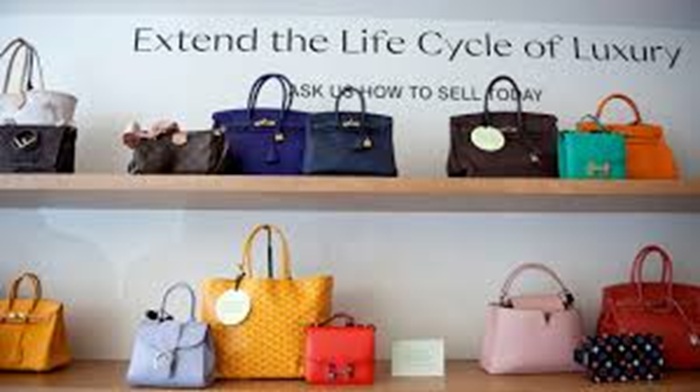
Brands are setting up return schemes, such as TheRealReal x Stella McCartney, with the trend of swishing’ clothes sweeping through the industry. Some brands are also extending the lifespan of their clothes by offering them on rent. This enables them to be innovative in today’s difficult retail climate.
Renting allows data collection on popular products, consumer trends
As fast fashion relies on brands for introducing runway looks to the high street as soon as possible, companies do not have time to gauge customer demand leading to oversupply and other issues related to the destruction of this excess stock. Renting clothes allows companies to gather data not only on the most popular products but also changing consumer behavior. This allows them to make changes to colors, cuts and prints without overproduction. The rental model also allows brands to ensure consumer awareness and loyalty by getting their pieces worn by real people, which is cheaper and more genuine than using influencers.
The rental model is not limited to only established luxury fashion brands and/or specific occasion wear. Companies ranging from Danish maternity and childrenwear brand Vigga to US label Nudie Jeans have also started renting clothes. Rent the Runway has launched an ‘unlimited’ service, which rents out ‘daily’ outfits for a monthly subscription. Such is the perceived success of renting clothing and accessories that Rent the Runway recently acquired a funding input of $20 million from Alibaba’s investors, putting the company’s value at $800 million, according to Allied Market.
Increase in valuation of global online rental brands
Companies following this model rely on the underlying value of brands that they stock. This new model, alongwith innovative technologies to manage storage and cleaning services is allowing brands to access new consumers. The total valuation of global online clothing rental brands, estimated at $1,013 milion in 2017 is likely to reach $1,856 million by 2023. If this trend continues, the future for fashion looks bright for both established and new brands. Brands now only need to introduce innovative schemes to lure customers.
Walmart, PVH to achieve sustainability by 2025
Global Retailers Walmart and PVH Corp plan to make their manufacturing operations as well as supply chains more sustainable by 2025. Walmart, which aims to use 50 per cent of recycled content by 2025, will source 100 percent more sustainable cotton for its private brands. Its stores in the US will source apparel and home textile products solely from suppliers working with textile mills that use the Sustainable Apparel Coalition’s (SAC) Higg Index Facility Environmental Module to measure and help improve environmental performance by 2022. These stores will house checkout carousels to provide reusable bags to its customers.
On its part, PVH Corp aims to reduce the 41.6 billion liters of water it requires in a year to make 30 million shirts. The company has also pledged to use 100 percent sustainable cotton by 2025.
UK may impose compliance code on companies
UK multinational companies may come under pressure to follow fair and clean practices in their global operations. This includes an end to exploitative working conditions, including modern slavery and child labor; toxic pollution; rampant destruction of rainforests; land-grabs and evictions of indigenous peoples and local communities; and violent attacks on human rights defenders.
Apparel brands, which do much of their sourcing from Asia, would potentially be hugely impacted by such regulations. There are still no laws in the UK specifically requiring companies to take action to prevent and rectify human rights abuses and environmental damage. Instead, companies seek to profit by undercutting more responsible operators who are trying to raise standards. Meanwhile, British consumers are at risk of buying products tainted by abuses and environmental devastation. A new law would increase protection for individuals and communities, workers, human rights defenders, and the environment. It would create clarity and a level playing field for companies.
Moves to regulate due diligence issues within global supply chains are already afoot at the EU level and within the UN as well as within individual EU states such as Germany and France. Around the world, policy makers, business leaders, academics and campaigners are coming together to work for legislative change to end irresponsible corporate practices.
Vietnam’s textile export earnings up 16 per cent
Vietnam’s earnings from garment and textile exports in 2018 were up 16 per cent. The country is now one of the biggest garment and textile exporters in the world. The Comprehensive and Progressive agreement for Trans-Pacific Partnership (CPTPP) is forecasted to create a driving force for Vietnam’s industry in 2019 and later. Strict regulations will prompt Vietnamese firms to make changes to develop more sustainably and win the trust of global consumers. It will also put pressure on companies to cooperate with one another to form supply chains and actively attract investment to improve their production and business performance.
More than 6000 businesses are operating in the textile-garment industry of Vietnam. Despite its relatively fast growth, the industry still has certain weaknesses, especially in compliance with rules of origin. This is considered one of the sector’s major challenges as it strives to capitalise on new-generation free trade agreements including the CPTPP. Businesses need to actively seek cooperation chances in terms of equipment and material supply so as to meet rules of origin in FTAs and enhance their competiveness in the global market. A switch from a made-to-order model to the production of goods created by themselves will help the sector gain strides in sustainability.
Bangladesh: BTMA demands VAT exemption for yarn and fabric
Bangladesh Textile Mills Association (BTMA) has urged the government to include yarn and fabric as VAT exempted items as the sale of local yarn and fabric has declined drastically. BTMA says, sale of fabric and local yarn in the country has reduced drastically and 50-60 per cent of the looms have remained closed for a long period of time. The yarn, fabric and other dress-making materials are being imported under mis-declaration and duty-free facilities, causing threat to the local mills. Woven dying mills have reduced their capacity below 40 per cent while export-oriented spinning mills are forced to sell their products at a lower rate compared to their production cost resulting in huge stockpiling of yarn and fabric.
BTMA has demanded an increase in cash incentives to 15 per cent from existing 4.0 per cent besides a strong monitoring to stop imports under mis-declaration and misuse of the bonded warehouse facilities. The association also urged the government to launch a drive in the textile producing areas to prevent sales of illegally imported yarns and fabrics and to ensure proper management of bonded warehouses.
UK companies rethink Turkish sourcing
If a no-deal Brexit deal goes ahead, UK companies will have to decide if the advantages of sourcing in Turkey – speed and flexibility – outweigh the additional costs 12 per cent tariffs would entail. New tariffs be temporary – they would apply for up to 12 months -- while a full consultation and review on a permanent approach to tariffs is undertaken. However, they would come at a difficult time for UK retailers, who are facing tough trading conditions and a weak sterling-to-euro and US dollar exchange rate. As a result, the threat of even temporary tariffs has caused concern among UK retailers and brands already cautious about sourcing from Turkey because of high costs, political unrest and ethical concerns. Hence, they may look at alternative sourcing destinations.
To go from no tariffs to tariffs on certain products would increase the cost of importing clothing from Turkey. That is a big enough number to make retailers think about changing their sourcing strategies.
So far there were clear advantages of sourcing from Turkey. Turkish factories offer fast repeats of popular styles. So, brands can buy smaller initial volumes of stock and see what happens, and so the warehouse isn’t full of poor-selling lines.
Levi Strauss women’s denim business sees good growth
Levi Strauss’ women’s business has grown 18 per cent. This has been the 15th consecutive quarter of growth in women’s with the last nine quarters being double-digit. As of now the women’s category sales represent about 30 per cent of Levi Strauss’ total sales.
US-based Levi Strauss is best known for men’s blue jeans. The underlying trend could well sustain growth for years to come as well, as more women - especially younger consumers are constantly eyeing fashion trends choose denim products. Jeans targeted at curvier women are a key selling item for Levi’s specifically and have spurred the rapid growth of the segment in the US and Mexico. That extends beyond jeans as jackets and tops are key items flying off shelves.
The global denim market is growing at a CAGR of 5.8 per cent. Denim jackets are the new power dressing. Celebrity acceptance of this fashion choice and adoption in fashion shows are an indicator that they can provide growth for manufacturers beyond traditional jeans sales. Jeans have always offered form, fashion, and function but now they are offering the comfort today’s consumers want. It’s a win-win for consumers, jeans manufacturers, and retailers.
Aquafil Group’s Econyl regenerated nylon leaves a positive impact on environment
Econyl regenerated nylon is made out of waste that’s been rescued from landfills and oceans around the world. It performs exactly like brand new nylon and can be recycled, recreated and remolded again and again. Virgin nylon depletes resources. Econyl has a positive environmental impact because it can be recycled infinitely. Econyl can be regenerated an infinite number of times without quality issues since it is a chemical recycling system, not a mechanical one. Econyl is generated from waste from pre-consumer textile scraps and industrial plastic as well as post-consumer waste including used carpets and fishing nets. For every 10,000 tons of Econyl raw material, 70,000 barrels of crude oil are saved. Using Econyl also reduces the global warming impact of nylon by up to 80 per cent compared with the material generated from oil. Designers can have the option to create styles using regenerated nylon over and over again without having to tap new resources to create virgin nylon.
Econyl was developed by the Aquafil Group in 2011. Aquafil, based in Italy, is a leading manufacturer of synthetic fibers for the textile industry. The company was established more than 50 years ago and is focused on developing material for the carpet and apparel industries. Over the past decade Aquafil has invested significant resources in the research and development of sustainable materials.
Technology aids apparel manufacturing and retail
Tech is revolutionizing how apparel is made, sold, and worn. Shoppers expect their in-store experiences to be just as seamless as online shopping, which places significant pressure on retailers to deliver.
Augmented reality mirrors are changing the way consumers try on clothes. A person can stand in the mirror and get to see what the apparel is going to look like. Not only does this save time and help them to visualize the fashion, it eliminates the need to try on clothing that hasn’t been cleaned or has been tried on by many people.
Retail workers with access to options such as enterprise mobile computers, tablets, and RFID tags can better move customers through a sale. Much like consumers would use their phones to glean product information or availability prior to visiting a store, store associates equipped with enterprise mobile computers and tablets can instantly access product information, inventory data and more — allowing them to provide customers with a higher level of service on the sales floor without leaving their side.
A smart shoe paired with an app to adjust for fit can remember, via a paired app, how tight or loose a person prefers their footwear — not just one setting, but in different situations like warm-ups, gameplay and while resting on the bench.
World cotton consumption to be record high in 2019-20
International Cotton Advisory Committee forecasts world cotton consumption to reach a record high level of 27.3 million tonne in 2019-20. This is an increase of 1.4 per cent compared to the previous season. Global production, during the period, will increase to 27.6 million tonnes, an increase of 5.7 per cent compared to the previous season. This forecast is supported by a six percent rise in global yields to 817 Kg/ha.
The ICAC says price model, the Cotlook A Index will average 81.25 cents per pound in the upcoming season. The Cotlook A Index reflects the price movements of raw cotton, with a focus on deliveries in Asia. The ICAC’s projection would be lower than the Cotlook A Index of 88 cents/lb in 2018/19 and 83 cents/lb in 2017/18. The CIF Bremen price index for cotton on the European northern continent stood at 88.85 US cents/lb on 3 April. The CIF Bremen index reflects the daily value of cotton and is published by the ‘Committee for Standards, for the Determination of Value Differences and for Price Quotations’ at the Bremen Cotton Exchange.
Increases in worldwide acreage and production are also expected in 2019/20 as farmers, especially in the United States, China, India and Pakistan respond to favorable cotton prices compared to competing crops.