FW
Azerbaijan is cultivating colored cotton
The country has already been growing brown and light-brown cotton. However, varieties of red, green, light pink and blue cotton are in the offing. The climate of Azerbaijan makes it possible to grow such varieties of cotton. The seeds come from China.
Cultivation of colored cotton makes it possible not to use chemical dyes for dyeing children's clothes but to make clothes from colored cotton. This variety of cotton is superior to traditional cotton in quality and fineness of the fiber. The country is reviving cotton production. The plan is to increase the crop area of cotton by about three times. The goal is to bring cotton production up to 5,00,000 tons by 2022 from the current 2,60,000 tons.
At the beginning of the eighties, Azerbaijan harvested up to a million tons of cotton a year. But then cotton growing declined and it could not receive the necessary investments for revival for a long time after that. Cotton is a drought-resistant plant, but it does not tolerate frost and low temperatures, and Azerbaijan meets these parameters. Cotton is seen as an alternative to the non-oil sector since it is used in various areas of life.
Subcontracting opportunities on the decline in Bangladesh
Subcontracting opportunities in the Bangladesh garment industry have nearly evaporated following the nation’s deadliest back-to-back industrial disasters, the 2012 Tazreen Fashions fire and 2013 Rana Plaza building collapse. These days, subcontracting is rarely allowed in garment factories owing to the poor compliance records of the small units. Anybody seeking to set up even a small factory and wanting to become a member of the BGMEA now needs to pass the association’s rigorous audit and inspection, something which had been lax in the past..
Nearly1,200 small and medium-sized factories were shut after the Rana Plaza collapse due to their failure to either achieve factory remediation or meet strong compliance requirements of buyers. According to the association’s estimate, the number of active garment factories affiliated with the BGMEA stood at 5,150 in the fiscal year of 2010-11and it reached 5,876 in 2012-13. But the number of factories, especially subcontracting ones, has begun to decline after the collapse, following which two foreign bodies, the Accord and the Alliance, started inspection and remediation. In just a span of one year, the number of BGMEA members declined to 4,222. Subcontracting still occurs in Bangladesh but on a very limited scale. As a result, factory owners are planning to subcontract work orders to some Sri Lankan factories.
Lagos Fashion Fair includes fashion shows, exhibitions and performances
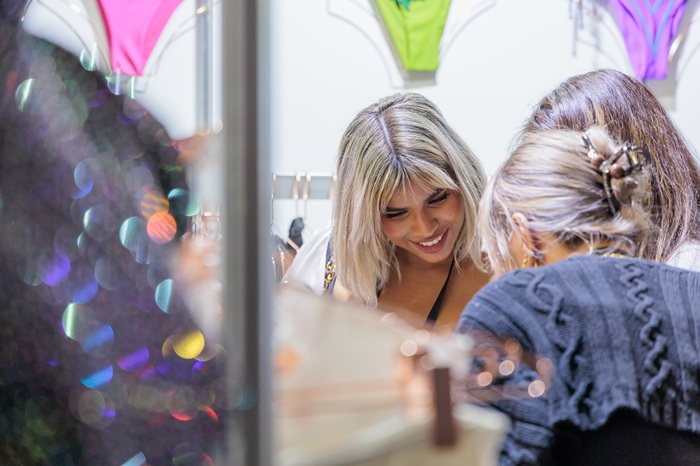
The Lagos Fashion Fair, held from the October 17 to 19 at the Eko Convention Centre, Eko Hotel and Suites, in Victoria Island, included Fashion shows by the best of local and international designers; exhibitions to showcase the finest fashion apparels and accessories; masterclass facilitated by top industry experts; celebrity appearances by Africa’s finest and talented stars; music performances by popular artistes; African Nail competition, Raffle draws and the celebration of Icons gala.
The three-day event brought together fashion and beauty enthusiasts, industry experts, designers, buyers, retailers and consumers, for an unparalleled shopping experience from the best local and international brands. The fair afforded exhibitors and visitors the chance to meet and network with other industry professionals, explore export opportunities, direct investment prospects, and view and buy the latest collections and innovations in the ready-to-wear garment industry.
Falling rupee may not help apparel exporters
The weak rupee may not really benefit Indian apparel exporters since the duty drawback rates are lower than expected. Overseas buyers are not passing on the benefit to exporters. The Indian rupee has hit an all-time low against the US dollar after having fallen more than 12 per cent this year.
The industry wants at least a 7.5 per cent rate of duty drawback. Exporters were expected to benefit from a weak rupee as they get more rupees while converting their dollar export earnings into Indian currency. The weak rupee was expected to give a cushion to apparel exporters who were heavily burdened by the sharp rise in the cost of imported raw materials. Especially for auto component players, the going has been good, with marquee vendors expressing happiness on the back of the shining dollar bringing cheer to exporters.
Businesses that are transacted in dollars (the IT, apparel, leather or textile sectors) would have made a substantial gain of seven to eight per cent. Those raising funds from the Indian market can rest assured as investments typically pour in with a one-year timeline. The current slide augurs well for those intending to raise money from the domestic market. However, the sentiment is that having a stable currency should be the way forward.
9th IATF to be held in Dubai World Trade Centre in November
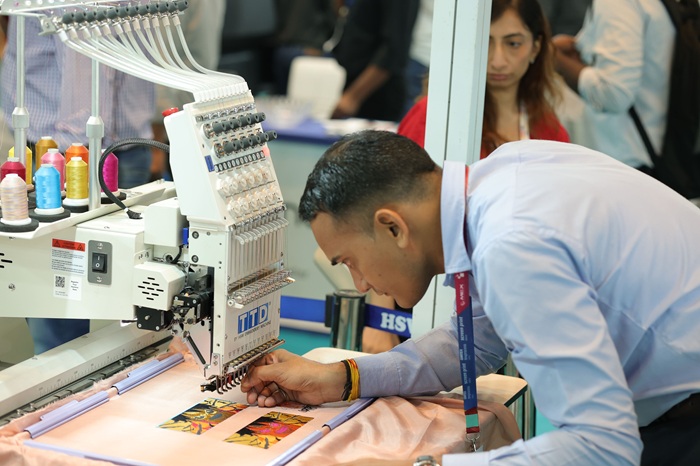
The 9th edition of International Apparel and Textile Fair (IATF), the industry's biggest showcase platform in the MENA region, will be held at the Dubai World Trade Centre, from November 12-14, 2018.
Organised by Nihalani Events Management, the fair will feature nearly 110+ exhibitors. It will bring together manufacturers and their agents along with some of the most influential buyers and designers to the MENA region. The event will provide an extensive platform to connect and network with industry professional, create long and promising professional relationship and giving all exhibitors an opportunity to expand their business boundaries.
The show’s new and past exhibitors will showcase fabric, haute couture, machineries and ready-made apparels and garments along with a new edition to the categories this year, footwear and hand bags. The exhibitors will travel from Turkey, China, Japan, Thailand, India, etc. They would also introduce new fashion trends, color creations and design solutions to the Middle Eastern and North African markets while making an impact within the industry.
China says no to textile and plastic waste
China will not accept textile or plastic waste from the rest of the world any more. The country used to take in more than half of the world’s rubbish, importing almost nine million metric tons of recyclable plastics a year. It started in the 1980s, helping to fuel the burgeoning economy, and grew into its own billion-dollar industry.
Unfortunately, this resulted in some of the worst pollution in the world, especially air pollution. People died and as a result there was a crackdown on pollution. Thousands of factories that didn’t meet environmental standards were closed. Since then China has been a leader in renewable energy, developing solar and wind technology, and building some of the world’s largest farms.
The United States, United Kingdom and the European Union were among those who exported most of their waste to China. Other Asian countries such as Vietnam, Malaysia and Thailand have seen a spike in recorded plastics imported, showing that western countries are simply finding somewhere else to dump their waste. However these countries have nowhere near the capacity or the infrastructure to deal with the numbers involved. The textile industry is one of the biggest polluters in the world, with clothing production having doubled in the last 15 years.
Benetton focusing on durability over speed to maintain market share
Benetton’s global footprint and brand recognition have shrunk but it is attempting a comeback. The brand is known for its controversial advertising campaigns with an emphasis on social issues such as race and religion. Benetton assembled a network of branded stores. A franchise model let it distribute direct and expand quickly. It used commission-driven agents to oversee regions, often planting several outposts in the same shopping districts. At one point, Benetton had six shops on New York’s Fifth Avenue, some virtually within sight of each other.
The brand built a sophisticated data network to track sales right down to store level and automated its factories and warehouses with Italian robotics, raising fashion from the artisanal to the industrial. It aimed to be flexible enough to respond to shifting taste and demand. It prided itself on its ability to produce, distribute and sell flash collections of products that were proving popular.
However, rivals learnt how to copy or defeat these same strengths. The family wrestled with generational change and the introduction of outside managers. The shock ad campaigns started to look pointlessly provocative. Benetton is now revisiting 30-year-old product lines and emphasising durability over speed.
Better deal likely for Bangladesh workers
A bill in Bangladesh has proposed labor-friendly measures. Some of the salient features of the bill are: giving workers more facilities — including reducing the percentage of workers’ participation required for forming trade unions at factories from 30 per cent to 20 per cent, prohibiting children from working in factories, and giving employees who work during festivals leave and wages for two days.
It also says support of 51 per cent workers would be needed as against the present two-thirds to call a strike. In case of natural death the family of the worker concerned will get enhanced compensation. In case of injury too the compensation amount has been hiked. Mentally and physically-challenged laborers cannot be employed in any risky work.
Registration has to be given to a trade union within 55 days of receiving the application. Earlier it was 60 days. The labor court has to deliver judgment in a case within 90 days from the date of filing. If it is not possible to announce the verdict in the stipulated time, the court will have to pass its order within 90 days. If a female worker gives birth before informing the authorities she will get an eight-week leave within three days after informing the authorities.
Not just location, the ‘Made in USA’ label is a stamp of quality
As per 2016 stats, US imported textiles and apparels worth $120 billion. However, the value of exports of the same variety is six times less. Despite this, 80 per cent Americans prefer to buy domestic made goods if given a choice and 60 per cent are willing to pay 10 per cent more for the “Made in America” label. Taken on its own, US manufacturing is the world’s ninth largest. Manufacturing’s contribution was around $2.25 trillion in 2016. The involvement of environmental issues also stands out in American manufacturing, with countless policies that other leading manufacturing countries simply do not have
 As per 2016 stats, US imported textiles and apparels worth $120 billion. However, the value of exports of the same variety is six times less. Despite this, 80 per cent Americans prefer to buy domestic made goods if given a choice and 60 per cent are willing to pay 10 per cent more for the “Made in America” label.
Taken on its own, US manufacturing is the world’s ninth largest. Manufacturing’s contribution was around $2.25 trillion in 2016. The involvement of environmental issues also stands out in American manufacturing, with countless policies that other leading manufacturing countries simply do not have. In addition, manufacturing in the US takes one-half to one-third the time of importing foreign- goods, not to mention reducing the million metric ton worth of emissions that global shipping is responsible for every year.
What makes an American product
According to a 2012 study by Harris Interactive, approximately 75 per cent of Americans agree that the country in which the product is manufactured is what makes it an American product. So Toyotas assembled in Texas or Kentucky is perceived as being more American than Chevrolets assembled in Mexico. More than 50 per cent stated they felt that a product must be “made from parts produced in the U.S.” for it to be considered American and 25 per cent said the product should at least be designed by an American company for it to be considered American.
Advantages of the Made in the USA label
The ‘Made in the USA’ label is not just an indicator of location it’s also a stamp of quality. Foreign imports may not have the same level of quality checks and standards. America-made products provide guaranteed safe, fair working conditions particularly in the manufacturing industry, the US oversight agencies, such as OSHA, the EPA, and other government regulatory bodies that provide regulations and controls to oversee safety and health.
Offering ‘Made in America’ products lets the country employ the US workforce. Investing in American-made products also puts money back into US manufacturing facilities and the American economy. Purchasing locally reduces carbon emissions associated with transportation overseas.
Rising shopping frequency causes dissatisfaction among online consumers
As per 2018 Pitney Bowes Global Ecommerce Study, 61 per cent of online retailers and marketplaces, who had prepared for record volumes of orders this holiday season, were disappointed by their experience during last holiday season. Consumers cited post-purchase experiences, including items arriving late, expensive shipping, tracking inaccuracies, confusing returns policies, and lost or incorrect items as reasons for their dissatisfaction. Though nearly 94 per cent of global consumers shop online; the frequency with which do so accelerates. Globally, 35 per cent of online shoppers shop at least once a week. In India, 68 per cent of online shoppers purchase from a marketplace as opposed to a shopping with an online brand.
 As per 2018 Pitney Bowes Global Ecommerce Study, 61 per cent of online retailers and marketplaces, who had prepared for record volumes of orders this holiday season, were disappointed by their experience during last holiday season. Consumers cited post-purchase experiences, including items arriving late, expensive shipping, tracking inaccuracies, confusing returns policies, and lost or incorrect items as reasons for their dissatisfaction.
Higher shopping frequency leads to dissatisfaction
Though nearly 94 per cent of global consumers shop online; the frequency with which do so accelerates. Globally, 35 per cent of online shoppers shop at least once a week. In India, 68 per cent of online shoppers purchase from a marketplace as opposed to a shopping with an online brand.
This increase in shopping frequency, however, contributes to a rise in consumer dissatisfaction. Individual consumers spend more time shopping online and waiting for products, creating a greater probability for a bad experience. As volumes rise, retailers struggle to keep up with demand in terms of physical infrastructure and the technology to manage it effectively.
Preference for ‘free over fast’
The study states, consumers’ judge their post-purchase experience even before placing orders. At the same time, they demand 'fast and free' service with only 47 per cent considering two-day free shipping as fast. Consumers rank 'free shipping' as more important than 'fast shipping'. Globally, 76 per cent consumers prefer 'free' over 'fast'. In India, 56 per cent of consumers prefer free shipping over faster delivery.
Post-purchase experience scores high
The study reveals, 90 per cent online shoppers in the US take some action in response to a bad post-purchase experience. Their reactions range from sharing their frustrations on social media to never purchasing from the offending site again. Among millennials, 30 per cent talk about their poor experience in an online review or social media post, potentially affecting the buying decisions of their entire social networks.
Successful high-growth retailers place a greater emphasis on the post-purchase consumer experience than their slower growth competitors. This includes providing services like free returns and day-definite guaranteed delivery. Around 54 per cent of high-growth retailers offer two-three-day free shipping, while 60 per cent of low-growth retailers offer four-seven-day free shipping.
The study states, marketplaces continue to soak up 60 per cent of online purchases. This also offers an opportunity to retailers to invest in their brand and delight consumers throughout the shopping and post-purchase experience. Around 61 per cent of online shopping occurs when the consumer knows specifically what brand and product they’re looking to buy. In these cases, more than half prefer to buy from a retailer website over an online marketplace.
The US, China, and Japan are the only countries where the number of cross-border shippers increased in 2018. Shoppers who shop cross-border do so more frequently leading to the growth in market. Globally, 12 per cent engage in cross border shopping at least weekly, up from 10 per cent in 2017.