FW

"While Pakistan’s garment sector can easily drive the country’s economy through exports, it has not been able to fully exploit the benefits of GSP Plus status so far, reveals World Trade Organization data. A recent study by the International Growth Centre highlights the private sector does feel too optimistic about realising the full potential of GSP Plus and has vocally expressed frustration at the challenges that remain."
While Pakistan’s garment sector can easily drive the country’s economy through exports, it has not been able to fully exploit the benefits of GSP Plus status so far, reveals World Trade Organization data. A recent study by the International Growth Centre highlights the private sector does feel too optimistic about realising the full potential of GSP Plus and has vocally expressed frustration at the challenges that remain.
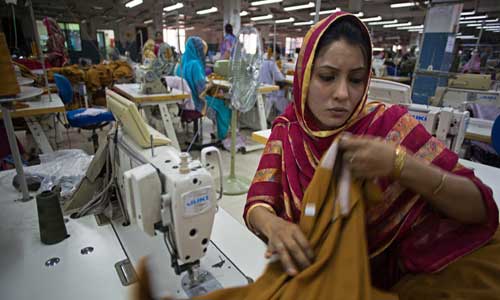
Their biggest concern is continued energy shortfall. In the last few years, the industry has operated below 70 per cent of full capacity due to this deficit. Production costs have also increased as firms employ alternate measures to ensure regular energy supplies. The energy crisis is expected to lessen in coming years as investments on energy projects planned under CPEC materialise. But in the interim, industry continues to struggle to meet production targets.
Not lucrative for investment?
Pakistan’s adverse business climate has been restricting investments in export manufacturing particularly by new EU-based clients. International buyers prefer suppliers from less risky countries, especially where physical engagement with firms is possible. Maplecroft, an international agency that ranks countries according to their investment climate, places Pakistan in the high-risk category. Pakistan fares much worse than Bangladesh on most categories. The report states without a coherent strategy to improve the business environment, the gains of GSP Plus cannot be fully availed.
Issues holding the country potential
Tax regime and custom clearance procedures are some of the burning issues faced by the industry. The industry is faces a higher duty on raw materials compared to other countries, which makes the final product more expensive. Due to cumbersome customs procedures and high duties on the import of artificial fibres and PTA (a raw material for the manufacture of polyester), the garments industry has been unable to move from existing cotton concentrated 80:20 mix to the globally demanded 50:50 mix in its exports.
Ray of hope
On a positive note, GSP Plus status has allowed the garments industry to maintain its export shares even improve them slightly despite the many challenges. The new incentive package for exporters, announced by the Prime Minister in January 2017, may ease some of the tax constraints. There is also some progress towards solving the energy crisis and lowering the tax burden.
But the desired benefit of the GSP Plus status, substantially higher exports, will be realised only when the energy, tax and customs challenges are addressed comprehensively. Improving Pakistan’s business environment will also be key to attracting foreign clients including Chinese investors, given that the Chinese garment industry is relocating to lower-cost developing countries and Pakistan offers the additional advantage of easy access to European markets.
"Ahmadabad’s textile market is worth around $25 billion, contributing nearly 12 per cent to India’s textile exports. It is backed by a strong supply chain from cotton production to textile machinery and now a thriving hub for apparels. As all resources are available close, the city can even quote an extremely fair price to the exporters, which makes it all the more a lucrative proposition."

Ahmadabad’s textile market is worth around $25 billion, contributing nearly 12 per cent to India’s textile exports. It is backed by a strong supply chain from cotton production to textile machinery and now a thriving hub for apparels. As all resources are available close, the city can even quote an extremely fair price to the exporters, which makes it all the more a lucrative proposition.
Managing workforce
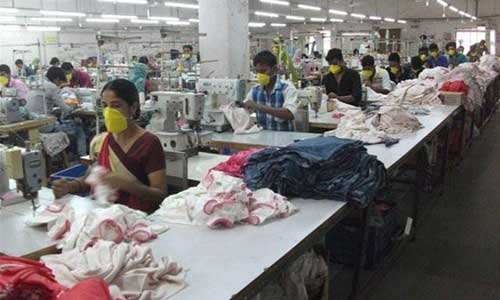
While there exists no labour related issues, owing to entrepreneurial nature, some of them start their own job work or small job shops after gaining experience. In lieu of this, companies are doing a commendable job in retaining skilled workforce. For instance, CA Patel Textiles is offering incentives to workers, and also training them to increase productivity. It runs programs in nearby villages to bring labour to the factory apart from offering living space at discounted rates, transportation, etc. Operating for close to 60 years, CA Patel Textiles, entered casual and semi-casual shirt manufacturing just six months before for its own brand ‘Italfic’ with 200 stitching machines. It further plans to install 800 stitching machines in the next two years.
Growing investments
Another manufacturer, Komal Texfab is now diversifying into jeans and ethnic wear manufacturing with an investment of nearly Rs50 crore. It is also going to double its circular knitting capacity which is currently 200 tonnes per month. Globe Textiles India, manufacturing two lakh jeans (majorly basic as well as semi-fashionable) for the Indian and the overseas market, is also increasing its stitching capacity. Kolkata based brand, AppleEye recently tied up for 25,000 garments per month with one such Ahmedabad-based company. Two years old, Bubble Bee Export House, which had seen 200 per cent growth last year, is in the process to install 250 stitching machines.
As a stakeholder says garmenting was already there in Ahmedabad but it was majorly for the domestic and unorganised market. However, for last few years, it is growing in an organised manner. There are hardly any big exporters in India who do not take fabrics/printing support from Ahmedabad, so they tend to have a fair idea about the fabric required for export.
Swapnil Patel, Director, CA Patel Textiles, highlights the positive business environment, good infrastructure such as electricity are driving factors for companies to venture into apparel business. Having an annual business of Rs. 300 crores, the company is expecting 30 per cent growth. The focus has shifted towards apparel with capacities enhanced at the fabric level and now companies want to cover the entire value chain.
Enhancing visibility
While things are moving at the right pace, the industry feels bringing overseas buyers to Ahmedabad is comparatively difficult. However, events like Textiles India help in this regard. Stakeholders say now companies should focus on attracting buying houses from Delhi-NCR and Bengaluru to visit Ahmedabad frequently as it is important to boost exports. Better prices and improved service can also provide solutions. Most apparel exports from Ahmedabad is to Middle Eastern countries rather than the US, EU or other countries. One of the reasons for this is Ahmedabad is not viable as competitive exporting countries have duty advantages in the US and EU. But local exporters feel with growing apparel manufacturing capacities, more companies from Ahmedabad will be able to cater to bulk buyers. It can be taken as a positive indication that some entrepreneurs accept and insist that the city needs to change its mindset, skillset for export, only then will it be able to challenge established apparel exporting hubs in India.
Expressing hope the industrial sector brings reforms to compete with regional competitors the Prime Minister of Pakistan Shahid Khaqan Abbasi has agreed to provide a relief package for pushing up textile exports. The PM has the government had largely fulfilled its responsibility on provision of gas and electricity.
Abbasi stated the multi-billion dollar China-Pakistan Economic Corridor project was the future of Pakistan and it would be completed at every cost. He maintained China was playing its role in the development of Gwadar and new airport and power plant were being established at a rapid pace. As many as 2,000 acres of land were handed over to China for setting up industries. To a query regarding the growing debts, the premier disclosed that loans were taken to boost production capacity.
He declared the rise in current account deficit was not worrisome as an increment in the import of heavy machinery was the root cause for that. If a loan is taken to supplement the volume of the economy, it is helpful for the country’s progress, added Khaqan Abbasi.
United Nations sanctions on North Korea's important textiles industry are expected to disrupt a business largely based in China and pose compliance headaches for clothing retailers in the United States and around the world.
The UN Security Council imposed a ban on North Korea textile exports and a ceiling on the country's import of crude oil ratcheting up sanctions designed to pressure North Korea into talks about its nuclear weapons and missile programs. Retailers in the United States and other countries have intentionally limited their exposure to North Korea in recent years, as tensions over the country's nuclear programme increased. The industry has sought to strengthen control over its supply chain since a textile factory collapse in Bangladesh killed more than 1,100 people in 2013.
Larger retailers, such as Walmart, have the ability to keep North Korea-produced goods out of their stores. But smaller brands may face enforcement challenges, feel experts. Textiles were North Korea's second-biggest export after coal and other minerals in 2016, totaling $752 million, reveals Korea Trade-Investment Promotion Agency figures. Nearly 80 per cent went to China. According to the North Korea experts, enforcement of the textile ban along North Korea’s 1,400-km border with China - where goods are sometimes smuggled across, often on boats at night - could be challenging.
Kigili is a textile retailer from Turkey with stores in Austria, France, Iran, Iraq, Azerbaijan, Georgia, Turkmenistan, Macedonia, Tajikistan, and China. Its overseas growth strategy is expanding with a franchise system at the moment. The company is in a search for a partner in India as it sees India as a major market with a young population of 1.3 billion, a growing middle class, a high urbanization rate and a fast-growing economy.
Kigili designs products in the countries where it operates, combining the cultural norms of the region with Kigili quality. Sometimes, it creates differentiations in colors and patterns and sometimes pays attention to the physical features of local people and applies them to the sizes of the products. For instance, men in the Far East have smaller body sizes and there is a special collection for the Chinese market. So it shrinks sizes and works on slim fit patterns.
The retailer attaches great importance to the digital world and e-commerce. Its turnover in e-commerce is growing by four to five per cent every year. It is the third largest store in Turkey in terms of e-commerce sales. It is the first men’s clothing brand to offer a shopping experience on Instastories and the Facebook store.
Functional fibers made from Israel-based Nilit Fiber’s special high quality nylon 6.6 deliver measurable results when it comes to performance, comfort, and well being. The fibers have energizing, cooling, warming and moisture-transporting properties.
Nilit is known for its brands Sensil and Sensil Breeze. The secret is in polymer and yarn production. Nilit does not finish its fibers and yarns but integrates mineral micro particles before the fiber is even spun.
The micro particles are added to the polymer, which permanently binds them into the spun fiber. While in conventional finishing the effects lessen with each wash cycle, Sensil Breeze’s functional properties last as long as the garment will. This is a result the customer can rely on.
Sensil Breeze is a cooling fiber. The cooling effect results from the fiber’s flat cross section and the integrated micro particles. They ensure a fast moisture transport to the outside, causing a strong ventilation effect which the wearer feels as a pleasant cooling touch to the skin.
The fiber’s cotton-like cross section makes the yarn smooth and supple, bringing great comfort to the wearer. The use of matte polymer ensures a soft surface, excellent air permeability and breathability of the fabric. In addition, Sensil Breeze naturally eliminates any unpleasant odors without chemical additives.
The South African subsidiary of the global trade fair company Messe Frankfurt has acquired Africa’s largest textile, footwear and apparel shows Source Africa and ATF (Apparel, Textile and Footwear). Source Africa and ATF will be added to Messe Frankfurt South Africa's portfolio of local fairs, which include the South African Festival of Motoring, Automechanika and Cape Town International Boat Show.
Until now, the events were organised by Leaders in Trade Exhibitions (LTE), which has been in the business of organising trade shows for over 25 years. Despite being satisfied with the success of the events, the company believes handing over the reins to an international organisation will help grow the shows on an international scale.
Since its inception in 2013, it has been the objective of Source Africa to promote African apparel, textiles and footwear and encourage linkages between international and regional buyers, manufacturers and suppliers, thereby promoting investment into manufacturing capacity in Africa with the goal of accelerating jobs for people.
Germany-based Messe Frankfurt is the third largest trade fair company in the world with operations in over 50 countries and is the leader, globally, in textile fairs. It organises over 134 trade fairs around the world with over 90,000 exhibitors and roughly 3.5 million visitors.
Lenzing has opened an Application Innovation Center in Hong Kong. New applications for Lenzing fibers will be developed and tested at the new facility among them are applications for recent innovations like the Refibra branded lyocell fiber and the EcoVero branded viscose fiber.
The center also enables prototype production of textile fabrics made of Lenzing fibers, from the concept, dyeing and finishing to the precise measurement of all product data. New applications will be tested for commercializing fiber innovations. This will contribute to Lenzing’s ability to even more quickly and effectively transfer its innovative strength to customers.
With this new center Lenzing can enhance the level of customer intimacy. It is closer to important Asian customers and partners along the value chain, creates a new dimension in its service offering. It can react more quickly to current trends and handle a broad spectrum of aspects on location relating to the application with its full range of fibers as well as unique fiber blends in collaboration with its supply chain partners. The aim is to develop highly aesthetic, emotional and functional products.
Apart from this Application Innovation Center, Lenzing has a R&D department and fiber processing laboratory in Austria and a fiber testing facility in Indonesia.
Indian bed sheet exporters cater majorly to international markets such as the US and Europe. Cotton is a key fabric for bed sheets because of its durability, comfort and breathability qualities.
India, China and Pakistan are the principal players in the global bed linen industry. These nations contribute around 60 per cent of total bed linen exports. South Africa and Latin America are emerging strong markets for Indian exporters. High purchasing power, on time payments, increased demand for Indian bed linen are some of the significant factors which are attracting more exporters to these markets.
Neutral and dark shades are currently ruling the bed sheet market like beige, grey, off white, lighter shades of blue and dark colors like navy blue and wine. There is a huge demand for colors like indigo, neutral colors followed by black, brown, grey, teal, turmeric, maroon and red.
Shree Lakshmi Cotsyn offers a variety of bed sheets like wider width, fitted, and antimicrobial finish. Bed sheets comprise nearly 40 per cent of its total home furnishing production. The company works with all the top brands and retailers across the globe.
Organic is a growing trend in the bed sheet business. Sadyaska is a New Delhi-based organic bedding manufacturer. Texuara is a GOTS certified company which deals in 100 per cent organic bedding products.
India vowed to step up its collaboration with Egypt in the textiles sector. It says there is an increase in textile machinery supplies to the Arab country. As per India's Ambassador to Egypt Sanjay Bhattacharyya, India and Egypt have a long tradition of exchanges in the textiles sector.
He says India is ready to work with Egypt towards attainment of its new textile policy goals in production as well as in trade and investments. Also India is well known for man-made fibers and has a wide presence globally as India's textile industry is the second in the world.
Nearly 37 Indian textile companies are participating in the exhibition that run till September 16 at the Cairo International Convention Centre. The Indian firms are part of a delegation from the Synthetic and Rayon Textiles Export Promotion Council (SRTEPC), an apex body of manufacturers/exporter of man-made fibre textiles, in coordination with Federation of Indian Export Organization (FIEO) and the Indian Embassy here.
India is currently in discussions with the Egypt to expand the presence of textile machinery supplies from India to Egypt. Indian textile machinery are not only good in terms of quality but also because India and Egypt has similar large populations and large labor force. So this kind of machinery will be good for the Egyptian market.
The exhibition will also host an 'India Pavilion which will showcase different varieties of fabrics, made-up items which are ready to wear, yarn and fibre. This can be an opportunity for the Egyptian buyers and traders to visit this exhibition to see all the participant Indian companies under one roof as it will be also an opportunity for discussing business, says Srijib Roy, Director of SRTEPC.
Roy also stated that Indian companies come to Egypt not to compete with the local industry but to cooperate with their Egyptian counterparts.